10 Beautiful Ways to Grow an Herb Garden on Your Deck
A deck can be one of the easiest places to grow fresh herbs at home. They stay close to the kitchen, you don’t need a traditional garden bed, and even a small collection of containers can provide plenty of fresh flavor throughout the growing season.
The trick is making your herb garden feel like part of the deck rather than a random gathering of pots. Terracotta planters, timber boxes, railing containers, vertical gardens, and raised planters can turn practical growing space into something that looks just as good beside your outdoor seating as it does when you are harvesting dinner.
Before deciding where everything will look prettiest, pay attention to the conditions your deck actually provides. Sun, shade, wind, reflected heat, and exposure can all affect container-grown herbs. Start with the right location for the plants, then use these deck herb garden ideas to make the arrangement beautiful as well as useful.
Quick Guide: Choosing a Deck Herb Garden
- Tiny deck: Try railing planters, a tiered stand, or a vertical herb garden to preserve valuable floor space.
- Sunny deck: Choose appropriately sized containers and herbs suited to the amount of direct sun your deck receives.
- Rental home: Use freestanding pots and plant stands rather than permanently attaching containers to walls or railings.
- Near an outdoor dining area: Create a compact culinary herb garden close to where you cook and serve food.
- Cottage look: Mix terracotta pots with timber planters and herbs with different heights and softly trailing growth.
- Modern deck: Use a smaller number of generous coordinating containers for a cleaner, less cluttered appearance.
Before you begin: Check the mature size and growing requirements of each herb, make sure every container can drain properly, and consider the combined weight of planters, wet growing medium, and mature plants when placing them on a deck or railing.
1. Create a Collection of Terracotta Herb Pots
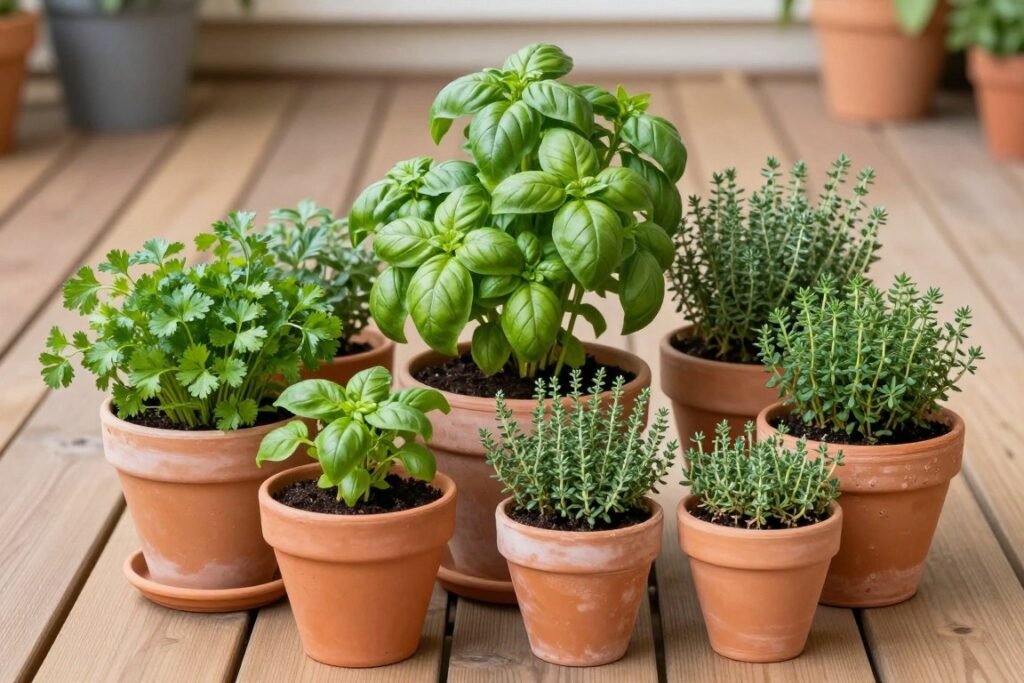
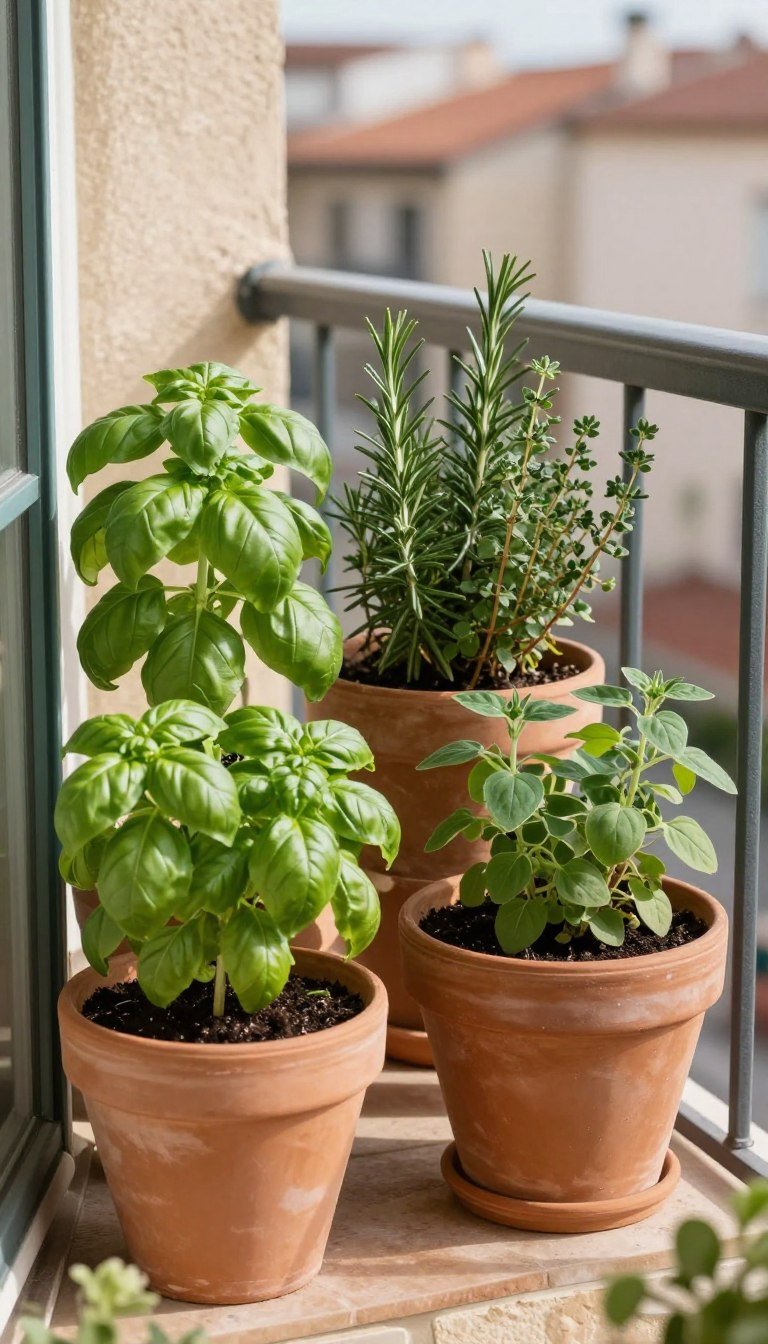
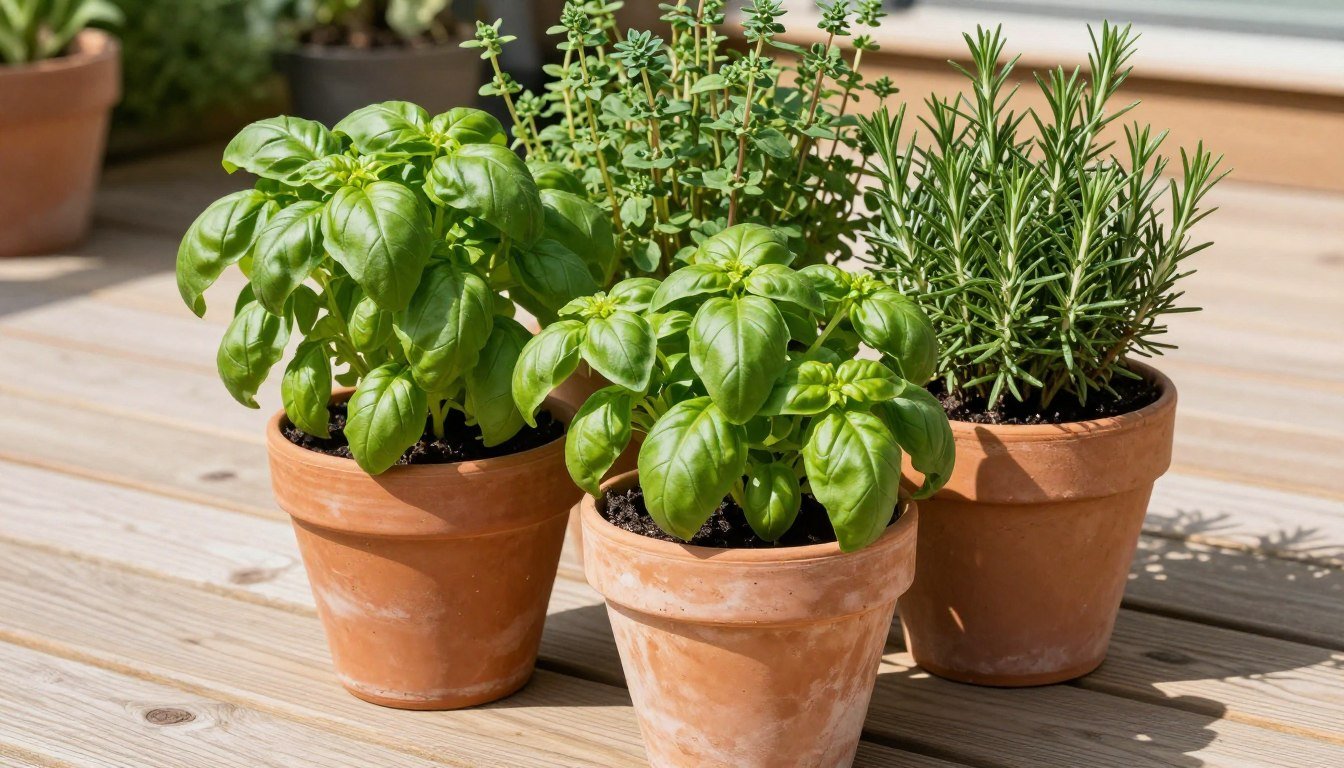
Terracotta pots are an easy way to make a deck herb garden feel established even when you are starting with only a handful of plants. Their warm, earthy color works particularly well against timber decking and fresh green foliage.
Rather than lining identical pots in a perfectly straight row, group several different sizes together. Place taller herbs toward the back and keep smaller or softly spreading plants closer to the front and edges. The arrangement will feel more like a tiny garden and less like temporary plant storage.
Terracotta is porous and can lose moisture relatively quickly, particularly on a sunny or windy deck. Check the growing medium regularly and water according to what each plant actually needs rather than treating every pot exactly the same.
Make the Pots Look Intentional
- Repeat the same terracotta finish throughout the group.
- Mix two or three pot sizes to create different heights.
- Cluster containers rather than scattering them around the entire deck.
- Leave enough room for each herb to reach its mature size.
- Add simple plant labels if several young herbs look similar.
Designer detail: A cluster of five thoughtfully arranged pots usually looks more intentional than five individual containers dotted randomly around the deck.
2. Grow Herbs Along the Deck Railing
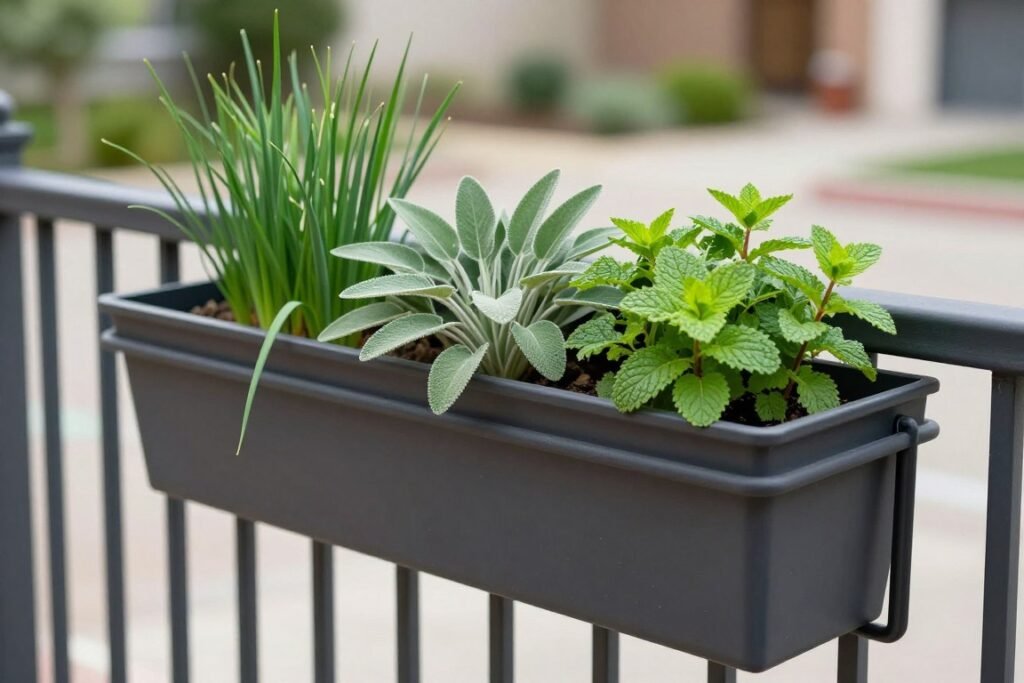
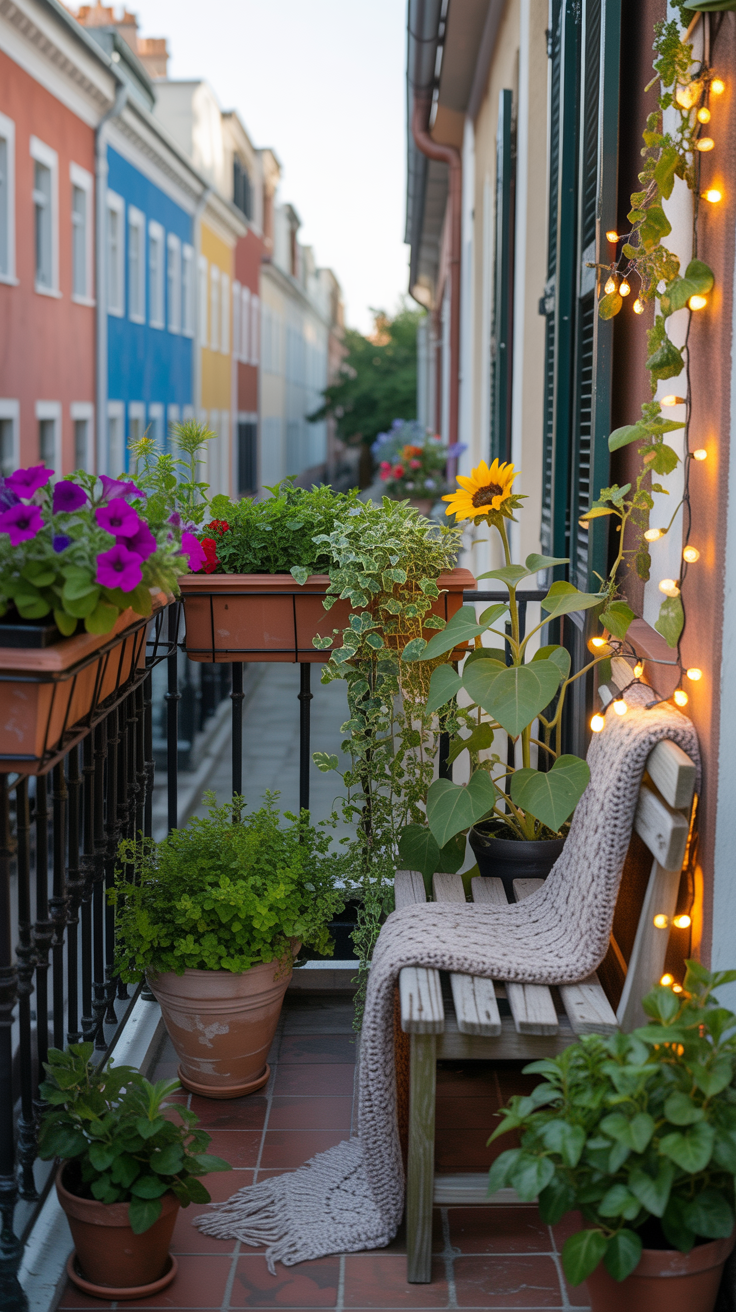
Railing planters make use of space that would otherwise do very little, making them especially useful on compact decks where you want to preserve as much floor area as possible.
You could create a continuous run of herbs along one section of railing or use just two or three planters near the part of the deck closest to the kitchen. Keeping frequently harvested herbs nearby makes it much more convenient to snip what you need while cooking.
Choose containers specifically designed for your type of railing and install them securely according to the manufacturer’s guidance. Think about the weight of the planted container, wind exposure, and where excess water will drain before deciding on the final position.
Make Railing Space Work Harder
- Choose railing planters designed for secure installation.
- Keep frequently harvested herbs within comfortable reach.
- Consider where excess water will drain.
- Allow enough room for plants to mature without becoming overcrowded.
- Follow the railing and planter manufacturer’s load and installation guidance.
Small deck tip: Railing planters give you useful growing space without sacrificing the floor area you need for chairs, a dining table, or comfortable circulation.
3. Build a Tiered Herb Garden in One Corner
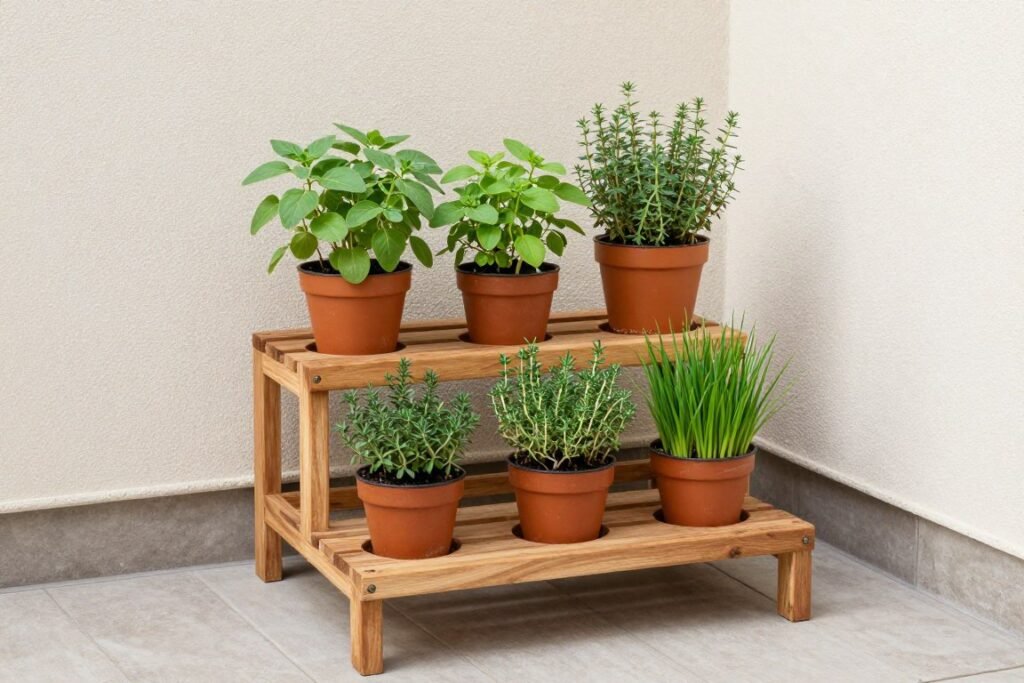
A tiered planter lets you grow several herbs within a relatively small footprint by using height rather than spreading individual containers across the deck.
Position the stand in a corner that provides suitable growing conditions, then arrange the herbs according to their mature size and light requirements. A mixture of upright herbs and softer spreading plants can make even a simple timber stand look lush and established.
If you prefer flexibility, use a purpose-made tiered plant stand with individual removable pots. This makes it easier to move one herb, replace a struggling plant, or adjust watering without disturbing the rest of the arrangement.
Plan the Levels
- Position taller herbs so they don’t heavily shade smaller plants.
- Make sure every level remains accessible for watering and harvesting.
- Allow water to drain without collecting around lower containers.
- Choose a stable structure suitable for the combined weight of the plants and pots.
- Match each herb to the amount of light available at its particular level.
Space-saving idea: A tiered garden can turn one awkward deck corner into enough growing space for several of the herbs you use most often.
4. Use a Raised Herb Planter Beside the Outdoor Dining Area
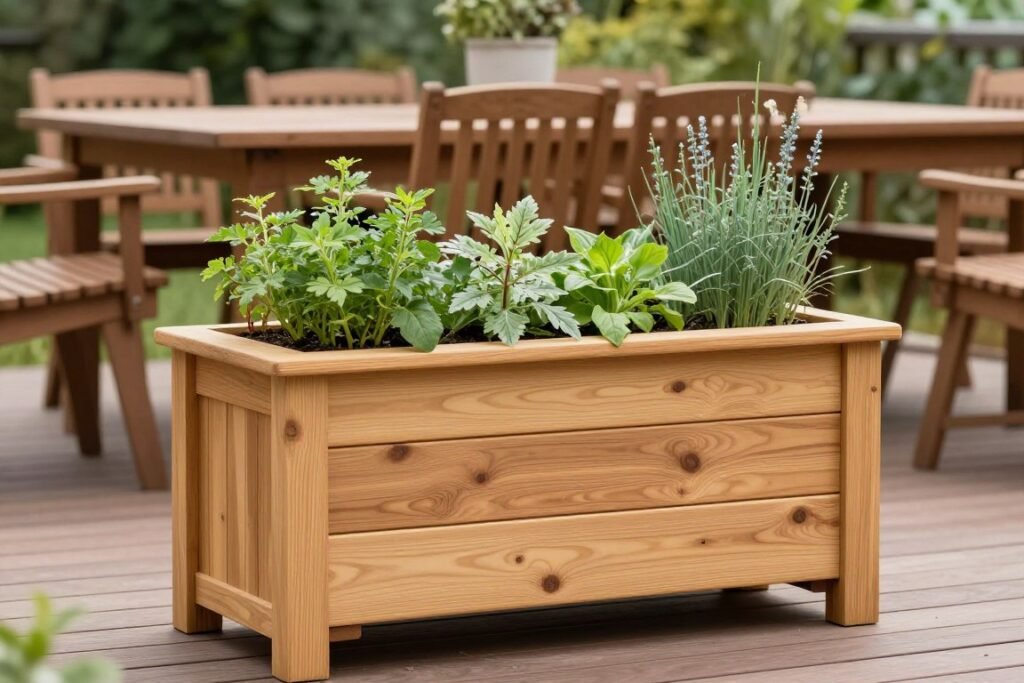
A raised planter can make an herb garden feel like a deliberate part of the deck design, particularly when it sits beside an outdoor dining or cooking area.
Choose a planter at a comfortable working height so you can water and harvest herbs without constantly crouching down. Timber can blend beautifully with wooden decking, while a simple dark planter can create a cleaner look in a contemporary outdoor space.
If several herbs will share one planter, choose plants with reasonably compatible growing requirements and give each enough room to develop. Herbs with very different needs can be kept in individual inner pots while still appearing to be part of one coordinated display.
Create a Useful Cooking Garden
- Choose herbs you genuinely use in everyday cooking.
- Keep the planter reasonably close to the kitchen or outdoor cooking area.
- Use plant labels while new herbs are becoming established.
- Give larger herbs enough room to reach a healthy mature size.
- Keep the planter clear of hot cooking equipment and busy walkways.
Why it works: Herbs are much more likely to make it into dinner when harvesting them doesn’t require shoes, a flashlight, and an expedition to the far end of the garden.
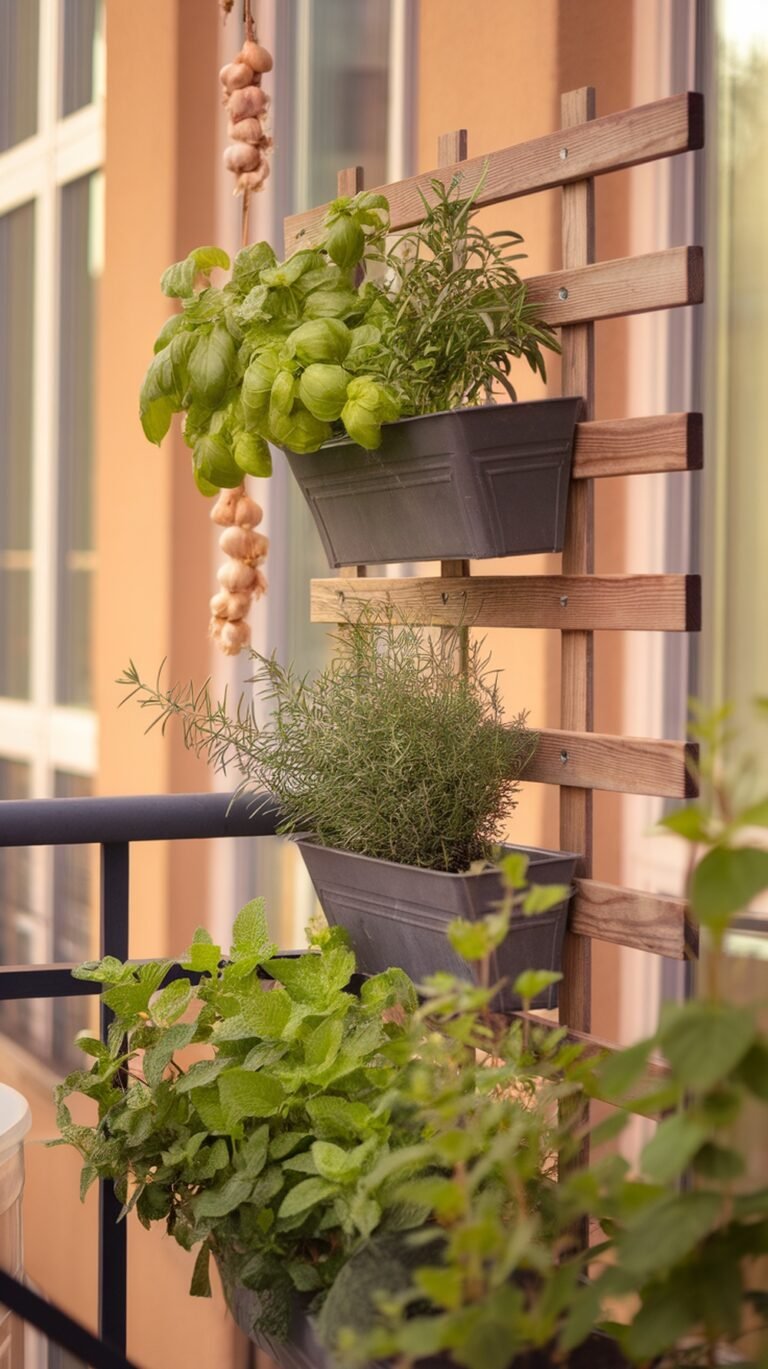
5. Create a Vertical Herb Wall
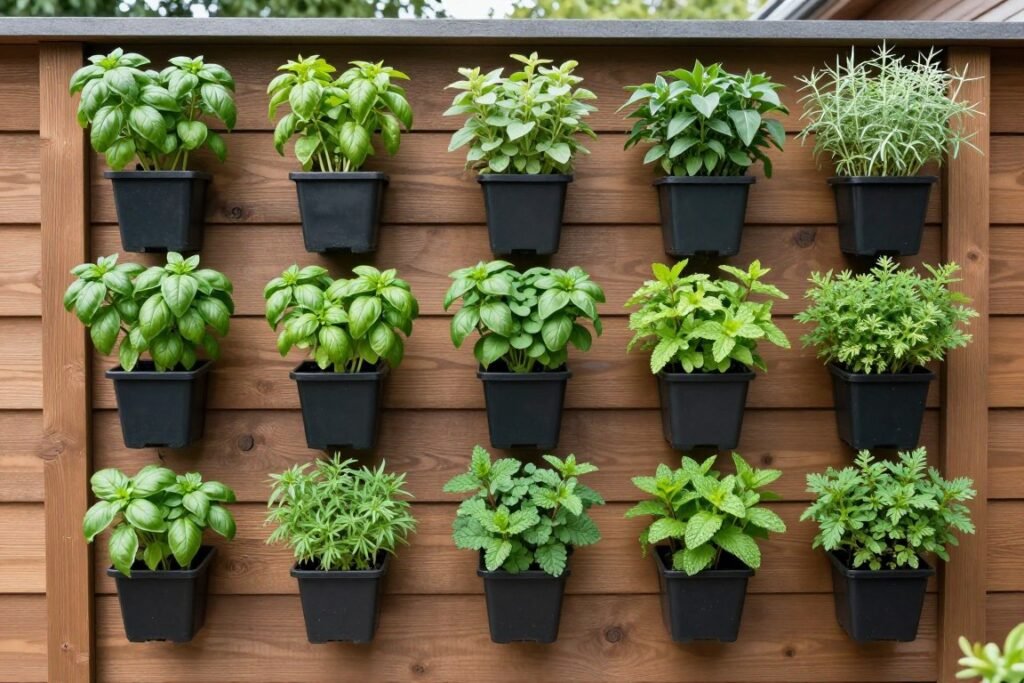
When deck floor space is limited, take the herb garden upward. A vertical growing system can turn an unused wall or suitable privacy screen into a productive green feature without crowding your seating area.
Individual removable pots are particularly practical because you can adjust, replace, or care for one herb without disturbing everything else. Arrange the containers in neat rows for a more contemporary look or stagger them slightly for a softer garden feel.
Plan the arrangement around the eventual size of the herbs rather than the tiny plants you bring home from the nursery. A vertical garden that looks wonderfully spacious on planting day can become overcrowded surprisingly quickly once everything starts growing.
Before You Install a Herb Wall
- Watch how sunlight moves across the location during the day.
- Plan where excess water will drain.
- Leave enough room for the mature size of each herb.
- Make sure every container remains accessible for watering and harvesting.
- Use a mounting system appropriate for the supporting structure and expected loaded weight.
Safety note: Containers filled with wet growing medium can become surprisingly heavy. If a vertical garden is attached to a deck structure, wall, or privacy screen, make sure both the support and the fixings are suitable for the intended installation.
6. Create a Rolling Herb Garden Cart
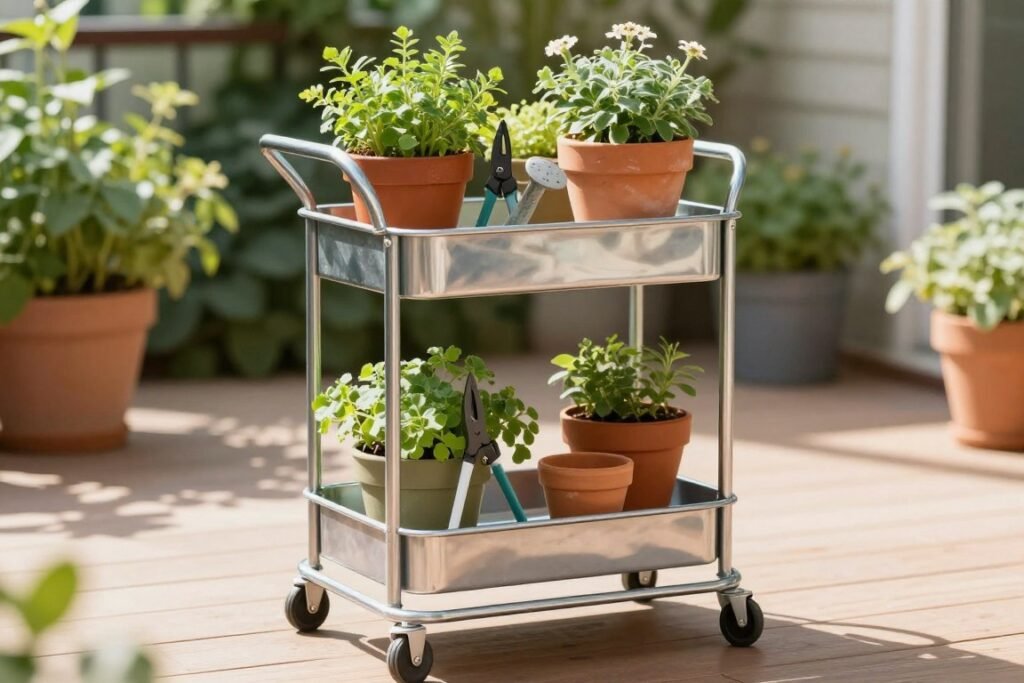
A rolling cart is a clever option when you want your deck herb garden to stay flexible. Instead of committing several containers to one permanent position, you can keep them together on a compact mobile station.
Use the upper level for herbs you harvest regularly and the lower shelves for smaller pots or lightweight gardening supplies. Choose a cart designed to cope with outdoor conditions and the expected weight rather than repurposing delicate indoor furniture.
Mobility can also be useful when the deck needs to serve several purposes. The entire herb garden can be repositioned when you are entertaining or need more floor space, provided the plants are still kept in conditions that suit their individual growing needs.
Make the Cart Practical
- Choose a stable cart with suitable wheels or casters.
- Keep heavier containers on lower levels where appropriate.
- Use pots with proper drainage.
- Avoid overloading the shelves.
- Secure or reposition the cart during unsuitable weather conditions.
Flexible option: A mobile herb garden works particularly well on a multipurpose deck because you can move the entire growing zone rather than shifting individual pots one at a time.
7. Grow Herbs in a Long Planter Box
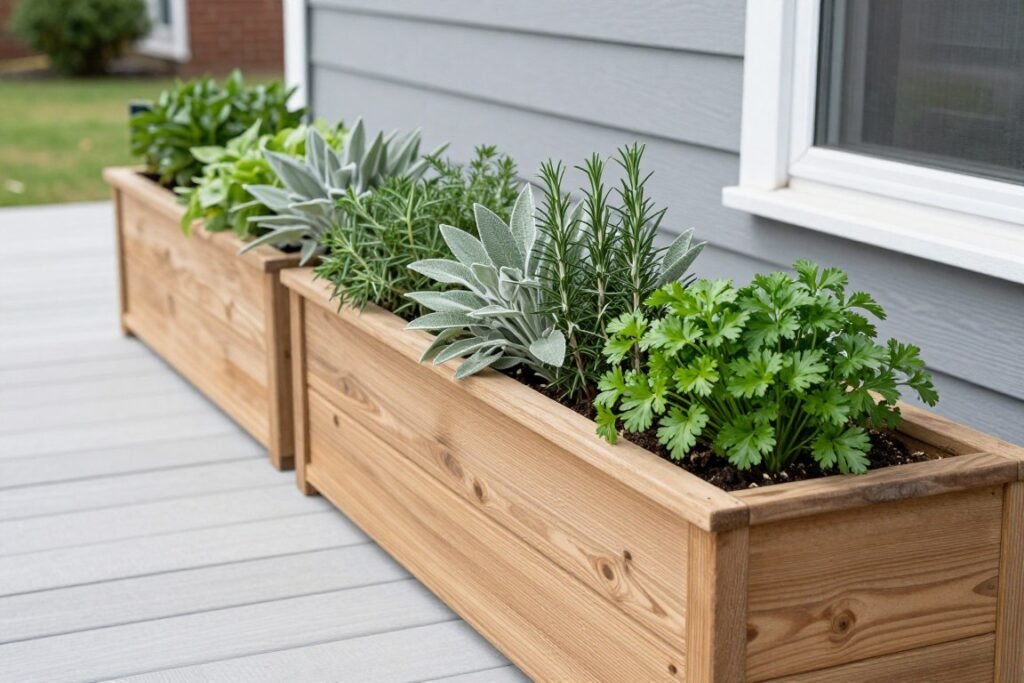
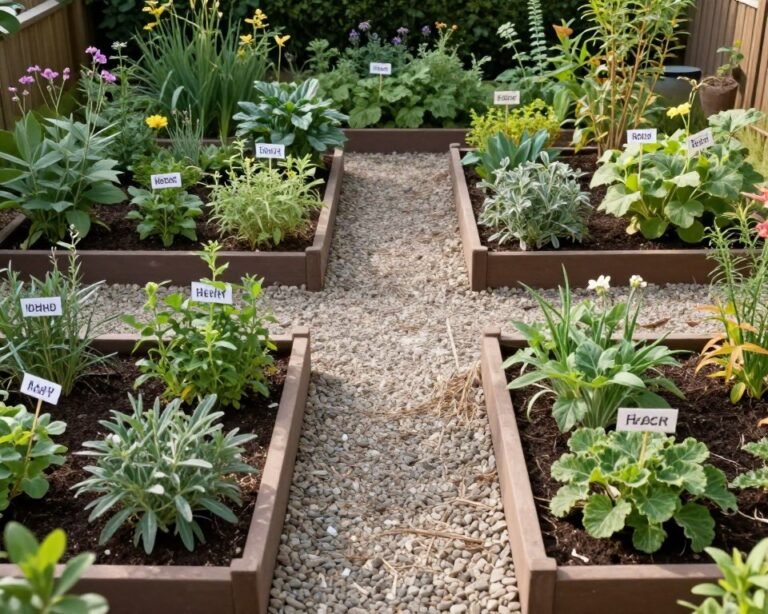
A long rectangular planter can give you the look of a miniature herb bed without needing any actual garden ground. It is also a good way to make several herbs feel like one intentional feature rather than a collection of unrelated pots.
Position the planter along the edge of the deck, beside a seating area, or against a suitable wall where it won’t interfere with circulation. Mix herbs with different heights and leaf shapes to keep the arrangement visually interesting.
If the herbs will share the same growing medium, choose plants with reasonably compatible needs. Another option is to place individual pots inside a larger decorative planter, allowing you to manage each herb separately while keeping the streamlined appearance.
Plan Before You Plant
- Check the mature size of each herb.
- Allow enough spacing and airflow between plants.
- Group herbs with reasonably compatible growing needs.
- Make sure the container can drain properly.
- Position larger herbs where they won’t overwhelm smaller plants.
Most streamlined look: One generous planter filled thoughtfully can make a contemporary deck feel calmer than a dozen small containers scattered around the perimeter.
8. Turn a Freestanding Ladder Into an Herb Garden
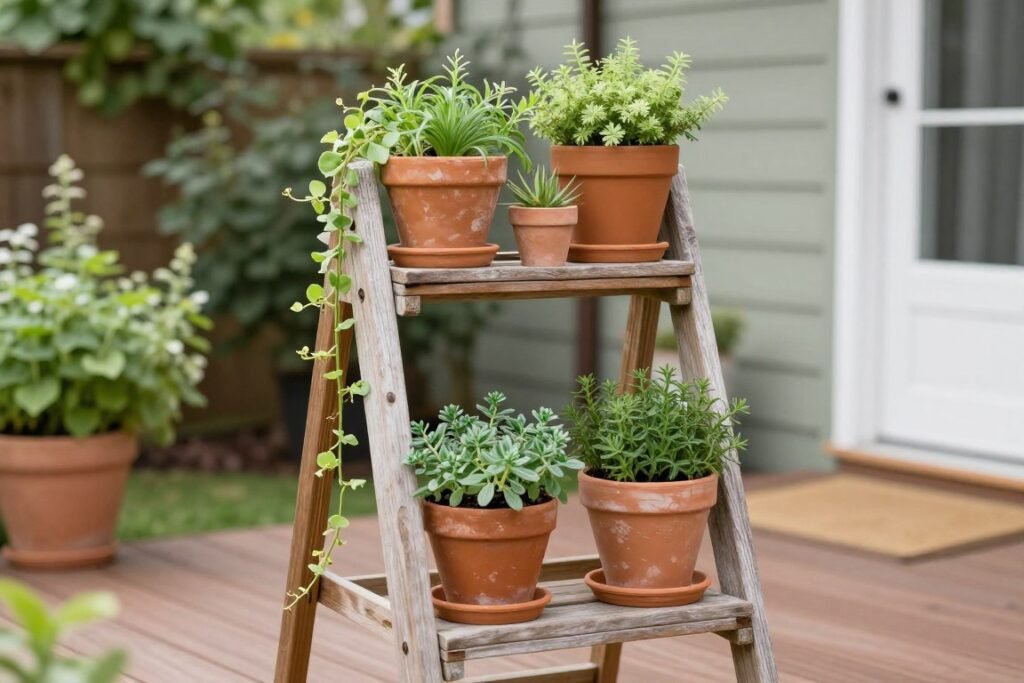
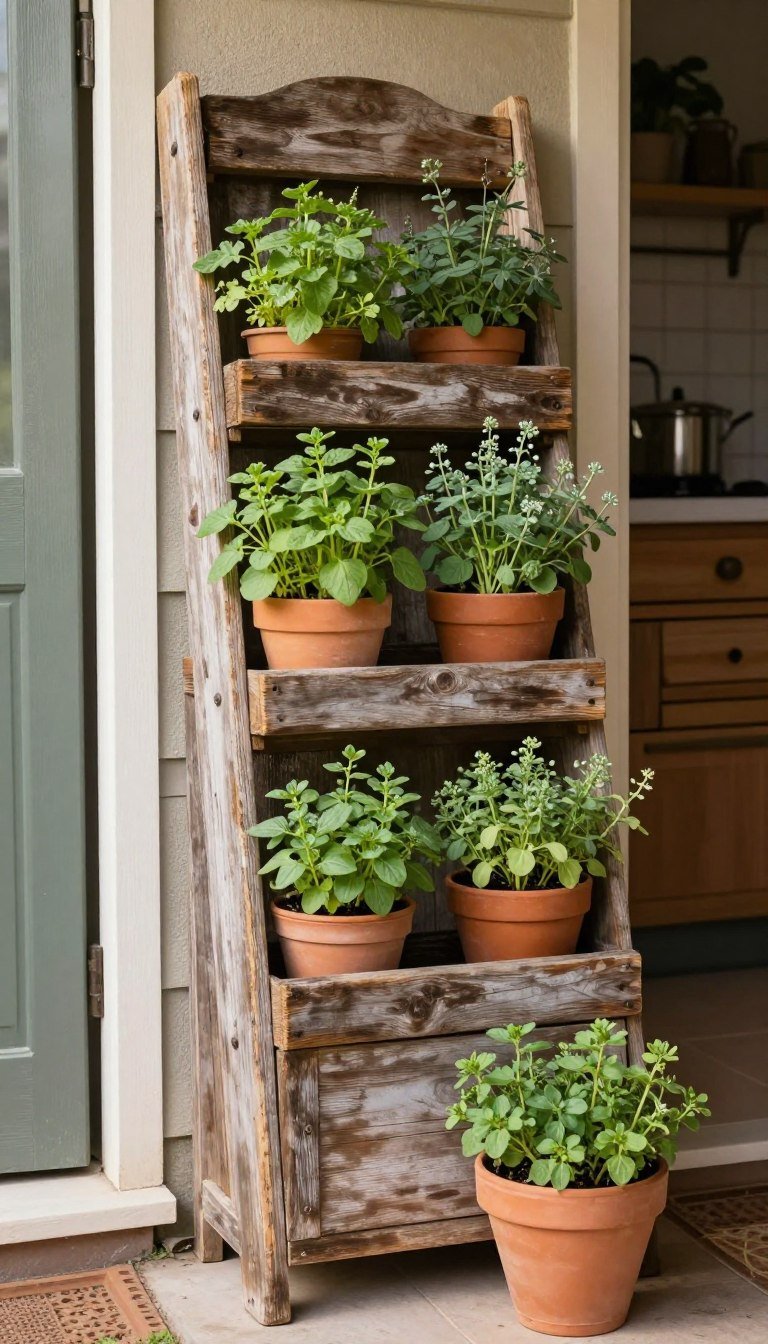
A purpose-made ladder planter or stable tiered plant stand gives you several levels of growing space while taking up relatively little deck floor. It can also turn a plain corner into an attractive vertical feature.
Arrange individual pots across the levels and keep the herbs you harvest most frequently where they are easiest to reach. Terracotta containers create a relaxed cottage or Mediterranean look, while simple matching pots can make the same arrangement feel more contemporary.
This is particularly useful if you don’t want to attach anything permanently to walls or railings. Choose a stand designed for plant display and outdoor use, and make sure it remains stable once the pots and wet growing medium are added.
Style the Levels
- Repeat similar pots for visual consistency.
- Mix upright herbs with softer spreading varieties.
- Position heavier containers appropriately.
- Leave enough space between levels for mature plant growth.
- Keep every pot accessible for watering and harvesting.
Rental-friendly idea: A freestanding plant stand gives you useful vertical growing space without permanently altering the deck, wall, or railing.
9. Create a Mediterranean Herb Corner
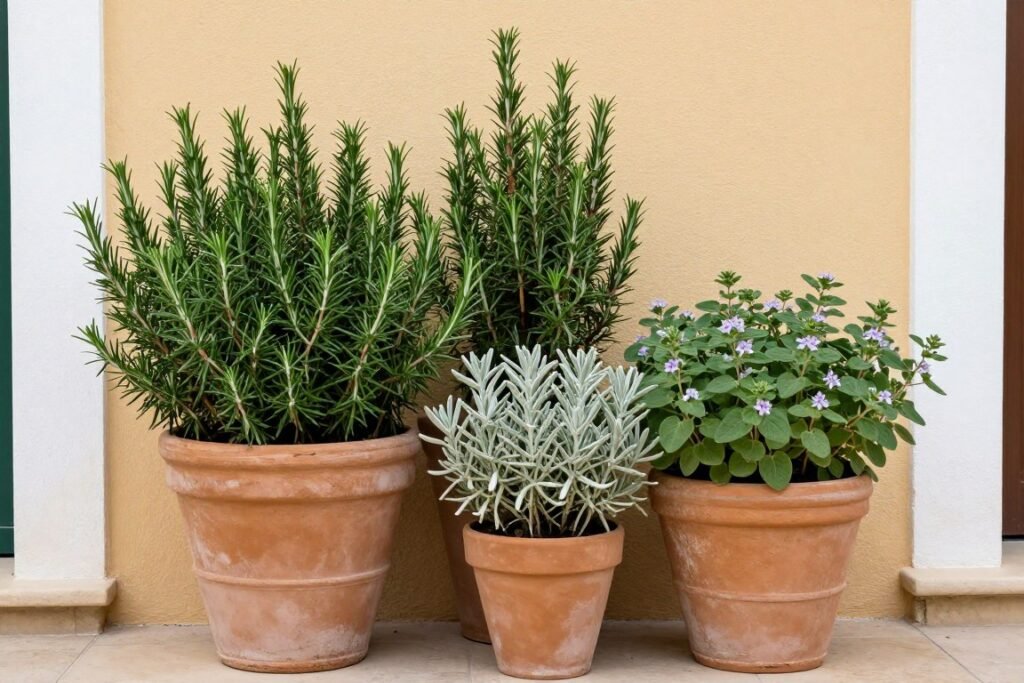
If you want your herb garden to feel decorative as well as productive, create a Mediterranean-inspired corner using terracotta pots, warm natural materials, and herbs suited to the conditions your deck provides.
Rosemary, thyme, oregano, and sage can create a beautiful combination when your climate and growing conditions suit them. Their different leaf shapes, colors, and growth habits add plenty of texture without needing ornamental flowers to make the display interesting.
Cluster the pots beside a wall, bench, or outdoor dining area while leaving enough space for airflow and maintenance. A few generously sized containers will usually create more impact than lots of tiny pots competing for attention.
Create the Look
- Use warm terracotta or aged clay containers.
- Mix several pot heights while repeating the same general finish.
- Choose herbs suited to the available sun and your local conditions.
- Add a simple timber or metal plant stand if you need extra height.
- Keep the overall color palette natural and understated.
Creates this effect: Aromatic greenery, weathered terracotta, and warm timber can make an ordinary deck corner feel a little like an outdoor Mediterranean kitchen terrace.
10. Build a Dedicated Herb Station Near the Kitchen Door
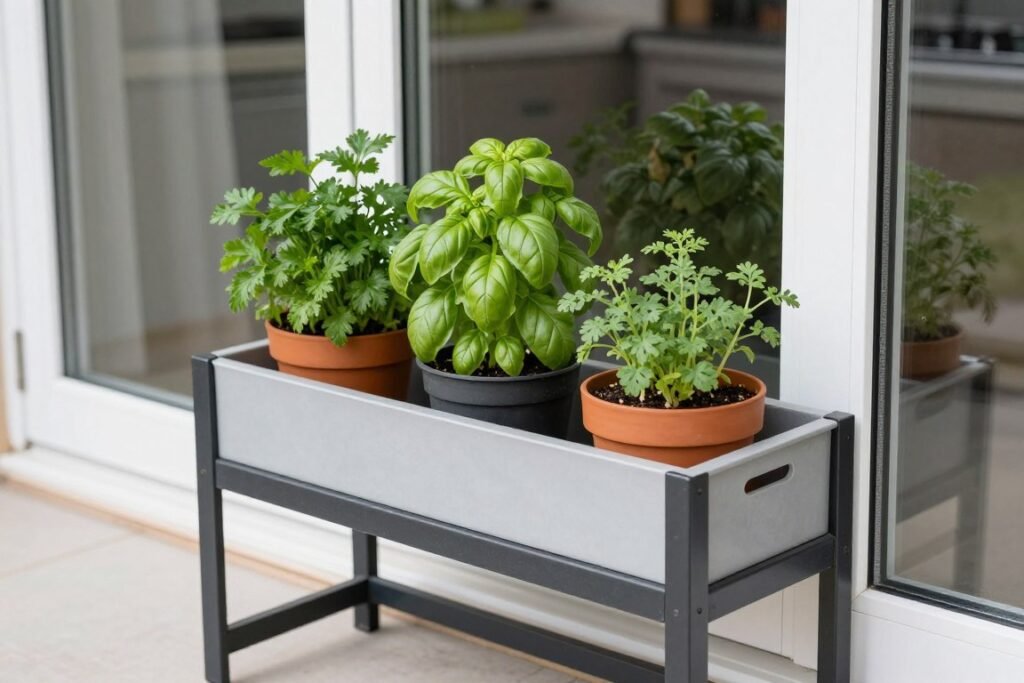
One of the most practical places for a deck herb garden is close to the kitchen door. When basil, parsley, chives, thyme, and other frequently used herbs are only a few steps away, they are far more likely to make their way into everyday meals.
Create a small station using a raised planter, an outdoor plant stand, or a coordinated collection of containers. Keep only genuinely useful gardening accessories nearby so the area doesn’t slowly become the outdoor equivalent of the kitchen junk drawer.
Convenience shouldn’t override growing conditions, though. If the area beside the kitchen door is too shaded, exposed, or otherwise unsuitable for your chosen herbs, move the garden to a better position and keep the arrangement practical in another way.
Stock Your Herb Station
- Herbs you cook with regularly.
- Clear plant labels.
- A suitable watering can stored safely nearby if useful.
- Clean gardening snips stored appropriately.
- A small container for necessary gardening accessories.
Best everyday option: The most successful herb garden is often the one positioned somewhere you naturally pass every day. Convenience makes it easier to notice when plants need attention and much more likely that you will actually use what you grow.
Best Herbs to Grow on a Deck
Many culinary herbs grow happily in containers, making them a natural choice for decks and patios. The best varieties for your space will depend on your climate, the amount of light available, container size, and how exposed the deck is to wind and weather.
- Basil: A useful summer cooking herb when given suitable warmth, light, moisture, and protection from cold conditions.
- Parsley: A practical container herb and worth keeping close to the kitchen if you use it regularly.
- Chives: Compact, upright, and convenient for smaller container gardens.
- Thyme: Compact and particularly attractive around the edges of suitable planters.
- Oregano: Its spreading habit can soften the edge of a pot or raised planter.
- Rosemary: Fragrant and structural, but give it enough space as the plant matures.
- Sage: Its softly textured foliage adds contrast to a collection of culinary herbs.
- Mint: A good candidate for its own container because its vigorous growth can overwhelm neighboring plants when grown together.
Easy starting point: Choose three or four herbs you already buy or cook with regularly. There is little benefit in growing ten varieties if half of them never make it into the kitchen.
How to Arrange Herbs on a Small Deck
On a small deck, resist the temptation to spread individual pots across every available corner. Concentrating the plants into one or two defined growing zones usually makes the deck feel larger and keeps watering and harvesting much easier.
- Use securely installed railing planters where appropriate to preserve floor space.
- Grow upward with a stable vertical planter or tiered stand.
- Group several pots together instead of scattering them around the deck.
- Keep main walkways, doors, and steps clear.
- Place frequently harvested herbs within comfortable reach.
- Repeat a planter material or finish to reduce visual clutter.
Small space reassurance: You don’t need ten different herbs to make the garden worthwhile. Three or four varieties that you regularly use can create a productive little deck garden without overwhelming your outdoor space.
How to Make a Deck Herb Garden Look Beautiful
The easiest way to make container herbs look intentional is to repeat a few design elements throughout the garden. The plants themselves can all be different while the containers, materials, and placement create the visual connection.
- Repeat one material: Terracotta, timber, or one coordinated planter finish can tie separate containers together.
- Vary the height: Combine floor pots, raised planters, and vertical growing where appropriate.
- Group containers: Small collections usually look stronger than isolated pots scattered around the deck.
- Mix plant shapes: Combine upright, compact, and softly spreading herbs for a more natural arrangement.
- Leave breathing room: Allow enough space for plants to mature and for people to move comfortably around the deck.
Designer detail: Repeating the same pot material two or three times is often enough to make an eclectic collection of herbs feel coordinated without making everything perfectly matched.
Keeping Container Herbs Healthy on a Deck
Herbs growing in containers can experience quite different conditions from plants growing directly in the ground. Sun, reflected heat, wind, container material, and pot size can all affect how quickly the growing medium dries and how comfortable the plant is in its location.
- Check moisture regularly: Water according to the plant and current conditions rather than relying on one rigid schedule.
- Provide drainage: Use containers suitable for growing plants and avoid leaving roots sitting permanently in water.
- Watch the light: Choose herbs suited to the amount of sun the deck actually receives.
- Harvest appropriately: Regular harvesting can help keep many culinary herbs manageable and productive.
- Allow for growth: Move plants into larger containers when they genuinely need additional root space.
- Inspect regularly: Check leaves and stems for signs of pests, disease, or environmental stress.
Maintenance tip: Don’t assume every pot needs watering just because one does. Container size, plant type, sun, wind, and planter material can all affect how quickly individual pots dry.
Common Deck Herb Garden Mistakes
A beautiful arrangement still needs to work as a garden. Avoiding a few common mistakes can make the difference between herbs that remain useful all season and an attractive display that struggles after a few weeks.
- Choosing a location purely for appearance: Growing conditions should come before styling.
- Using pots that are too small: Tiny containers can dry quickly and may not provide enough room for larger herbs as they mature.
- Planting incompatible herbs together: Plants sharing the same growing medium should have reasonably similar needs.
- Forgetting mature size: Design around the plant each herb will become rather than the small nursery plant you start with.
- Blocking walkways: Keep planters away from doors, steps, exits, and important circulation areas.
- Ignoring weight: Large containers filled with wet growing medium can become very heavy. Consider the capacity of the deck and any supporting structures, and seek appropriate professional advice if you are unsure.
An Easy Deck Herb Garden Formula
If you want to start growing herbs without turning the entire deck into a gardening project, keep your first arrangement simple. You can always add more once you know which plants perform well in the space.
- Choose the location: Find a convenient spot with growing conditions suited to the herbs you want.
- Pick three to five herbs: Start with varieties you regularly use in the kitchen.
- Choose suitable containers: Give the plants enough growing space and make sure the pots can drain.
- Repeat one or two materials: Coordinating planters will make the collection feel intentional.
- Create one growing zone: Group the containers instead of scattering them across the deck.
- Keep everything accessible: Make watering, checking, and harvesting easy.
- See what thrives: Add more herbs only after you know how the first group performs in the space.
Final Thoughts
You don’t need a large backyard or traditional vegetable garden to grow useful herbs at home. A suitable section of deck, a few well-chosen containers, and herbs you genuinely enjoy cooking with can be enough to create a productive little garden.
Use railing planters and vertical gardens when floor space is tight, group terracotta pots for a relaxed Mediterranean feel, or choose one generous raised planter if you prefer a cleaner look. Keeping the garden reasonably close to the kitchen can make it even more useful.
Start with the growing conditions, choose containers that work safely in the space, and then make the arrangement beautiful. When the herbs are healthy, easy to reach, and filled with varieties you actually use, your deck garden becomes part of everyday cooking rather than something you simply walk past.