12 Balcony Herb Garden Ideas for Growing Fresh Herbs in Small Spaces
You don’t need a large garden to grow fresh herbs. A sunny balcony, a few well-chosen containers, and some clever planning can provide enough space for everything from basil and parsley to rosemary, thyme, and mint.
The trick is to use the space you have rather than trying to recreate a full-size herb garden several floors up. Railings, walls, corners, shelves, and vertical planters can all become useful growing areas while still leaving enough room to sit outside and enjoy your balcony.
Before buying plants, spend a little time noticing how much direct sun your balcony receives and whether it is particularly exposed to wind. Herbs have different growing needs, so choosing plants and containers for your actual conditions will make the garden much easier to maintain.
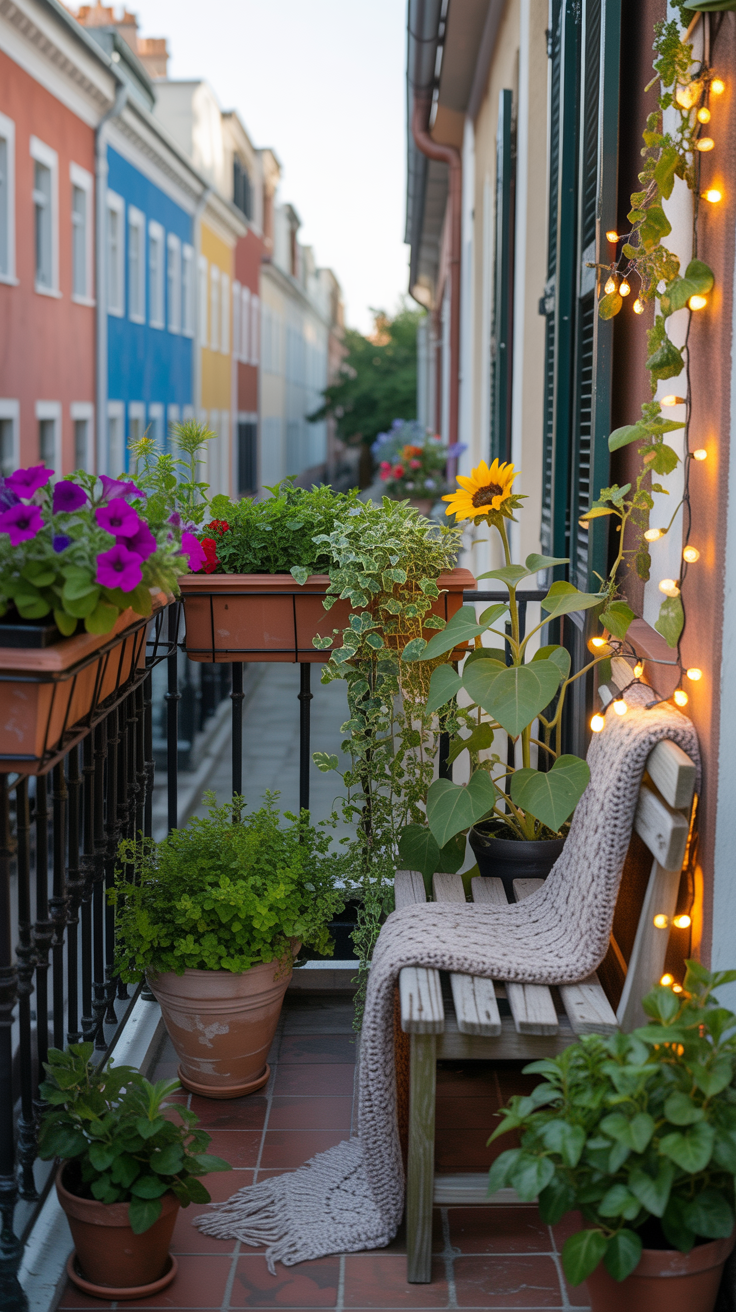
Quick Guide: Planning a Balcony Herb Garden
- Sunny balcony: Mediterranean herbs such as rosemary, thyme, oregano, and sage generally appreciate plenty of sun and good drainage.
- Partially shaded balcony: Parsley, chives, mint, and some other leafy herbs may be more forgiving, depending on your climate and exact conditions.
- Tiny balcony: Use vertical planters, compact shelving, and securely installed wall or railing systems where permitted.
- Windy balcony: Choose stable containers and position more delicate plants in sheltered areas.
- Beginner garden: Start with a few herbs you regularly cook with rather than trying to grow everything at once.
- Easy maintenance: Group plants with broadly similar light and watering requirements.
Before you begin: Check any building, lease, or balcony rules before attaching planters, trellises, shelving, or other structures. Containers filled with wet growing medium can become surprisingly heavy, and anything positioned near or over a railing needs to be securely installed so it cannot fall. Keep drainage points, access routes, and safety barriers completely clear.
1. Create a Collection of Terracotta Herb Pots
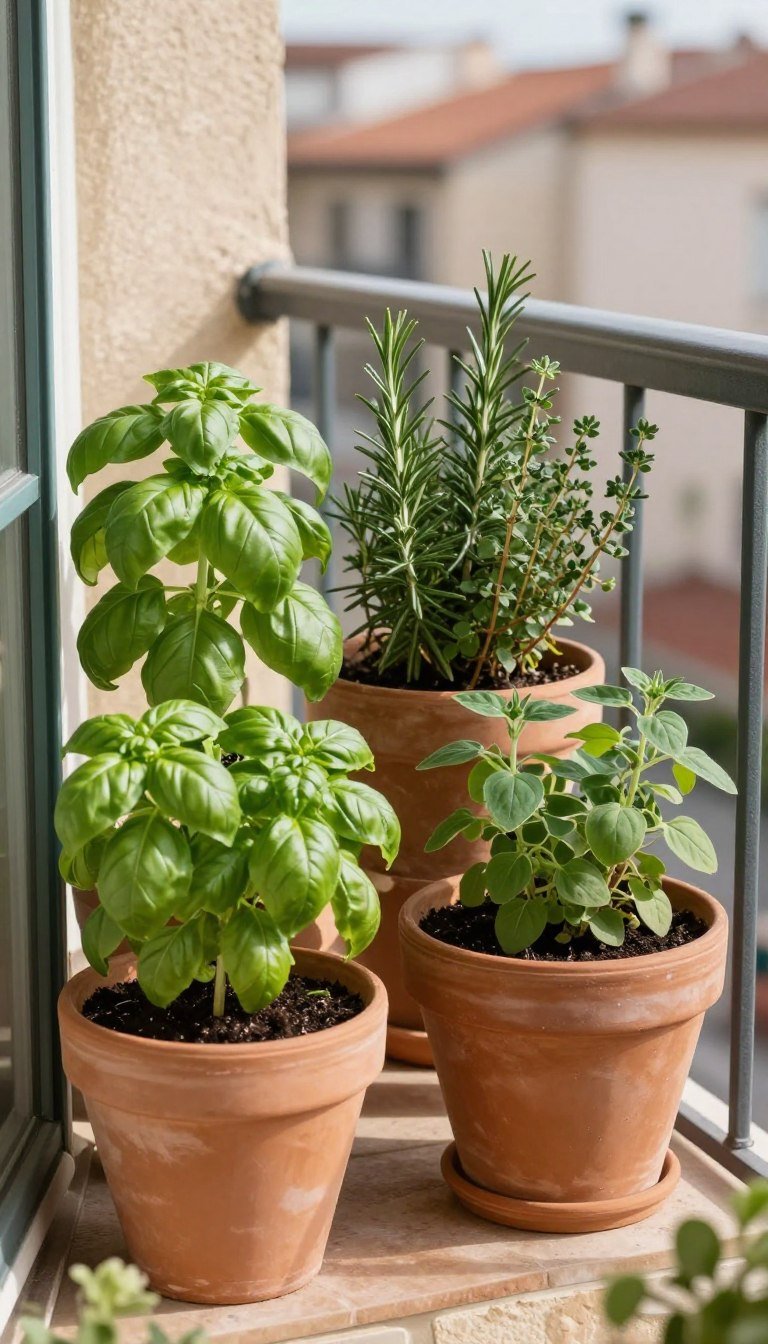
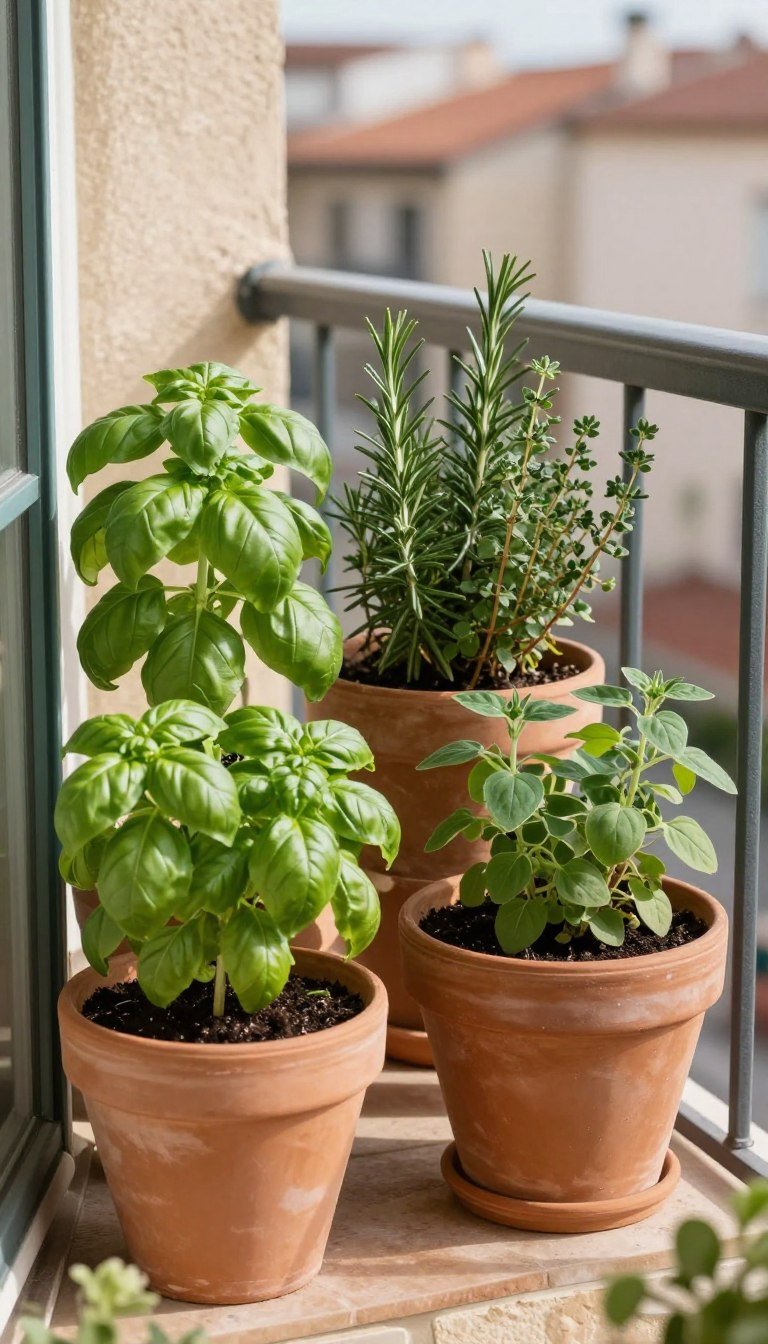
Sometimes the simplest balcony herb garden is also the prettiest. A collection of terracotta pots in different sizes creates a relaxed Mediterranean feel while allowing each herb to have its own growing space.
Individual containers are particularly useful when herbs have different watering requirements. Rosemary and thyme, for example, generally prefer freer-draining conditions than herbs that appreciate more consistent moisture, so separate pots give you much greater control.
Arrange larger containers toward the back and smaller ones in front, while making sure each plant receives the light it needs. Terracotta is porous, and smaller pots can dry relatively quickly in warm or windy weather, so check the growing medium rather than automatically watering every container on the same schedule.
Try Growing
- Rosemary.
- Thyme.
- Oregano.
- Basil.
- Parsley.
Why it works: Separate pots let you adjust the position and care of individual herbs as their light, shelter, and watering needs change.
2. Build a Vertical Herb Garden
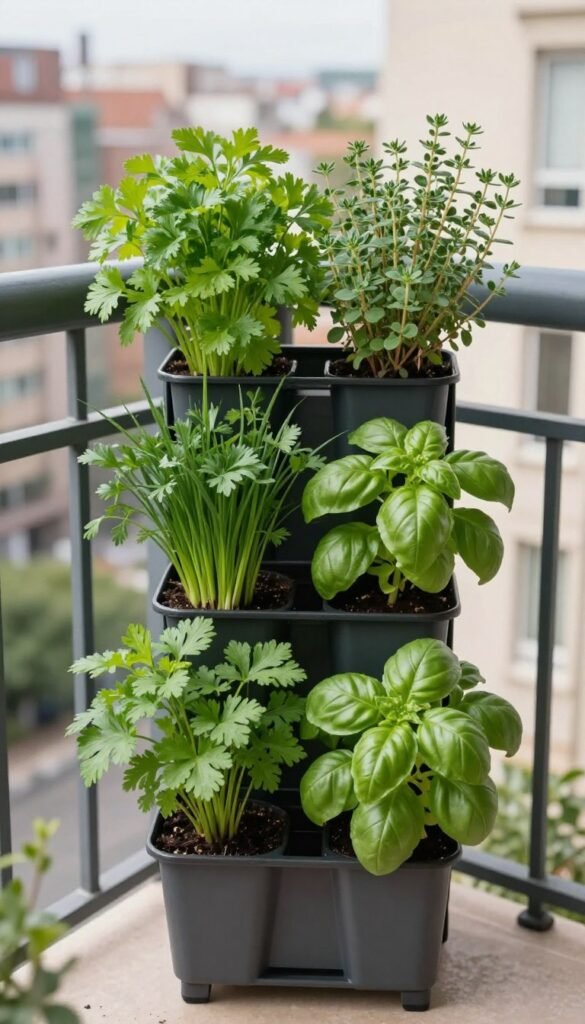
When floor space is limited, start looking upward. A vertical planter can hold several herbs while using only a narrow strip of balcony space, leaving more room for seating and everyday use.
A purpose-made freestanding system is often one of the simplest options because it doesn’t necessarily require permanent attachment to the building. If you are considering a mounted system, check what is permitted and make sure the supporting structure and fixings are suitable for the fully loaded weight.
Pay attention to drainage and moisture on every level. Upper containers may experience more sun and wind, while lower pockets can remain shaded or receive drainage from above, so check each section individually rather than treating the whole planter as one large pot.
Good Herbs for a Vertical Display
- Parsley.
- Chives.
- Thyme.
- Oregano.
- Compact varieties of basil.
Small space tip: A narrow vertical planter can provide several growing pockets while preserving valuable balcony floor space for a chair, small table, or clear walkway.
3. Turn a Plant Stand Into a Herb Garden
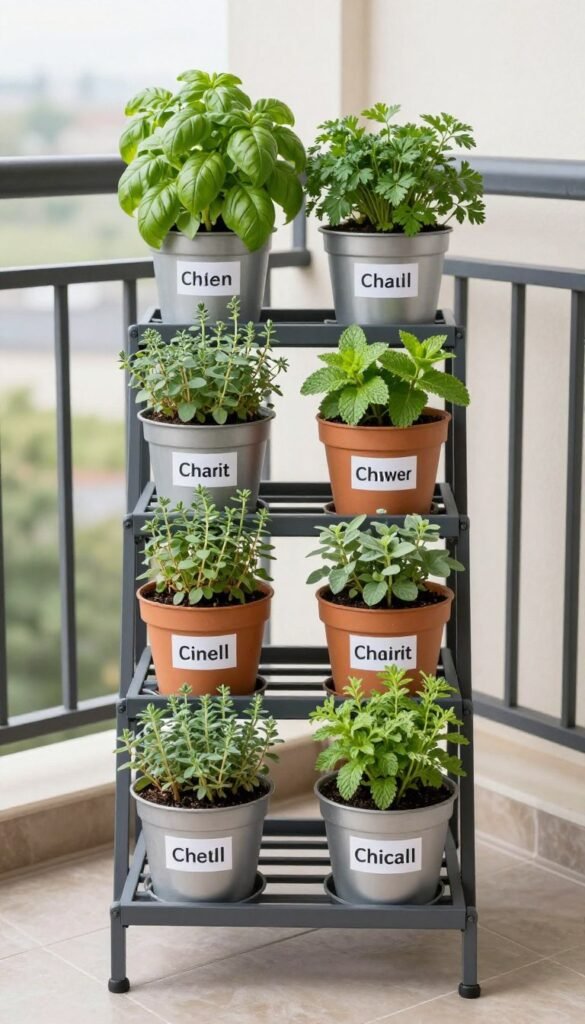
A tiered plant stand is one of the easiest ways to fit more herbs onto a small balcony without permanently attaching anything to a wall. Each level becomes another little growing shelf, allowing several pots to occupy the footprint of one compact piece of furniture.
Arrange the herbs according to the actual conditions on each level rather than simply putting the tallest plants at the top. Upper shelves may receive more sun and wind, while lower ones can be shaded by the structure or plants above.
Choose a sturdy stand designed or suitable for outdoor conditions and distribute the weight carefully. On an exposed balcony, stability is much more important than squeezing one final pot onto the top shelf.
Make a Plant Stand More Practical
- Use lightweight but stable pots where appropriate.
- Add simple plant labels.
- Manage drainage with suitable saucers or another appropriate method.
- Keep frequently harvested herbs at an easy-to-reach height.
- Leave enough spacing for healthy growth and airflow.
Easiest upgrade: If you already own a suitable outdoor plant stand, moving your existing herb pots onto it can instantly free up floor space without buying a specialist growing system.
4. Grow Herbs in a Balcony Railing Planter
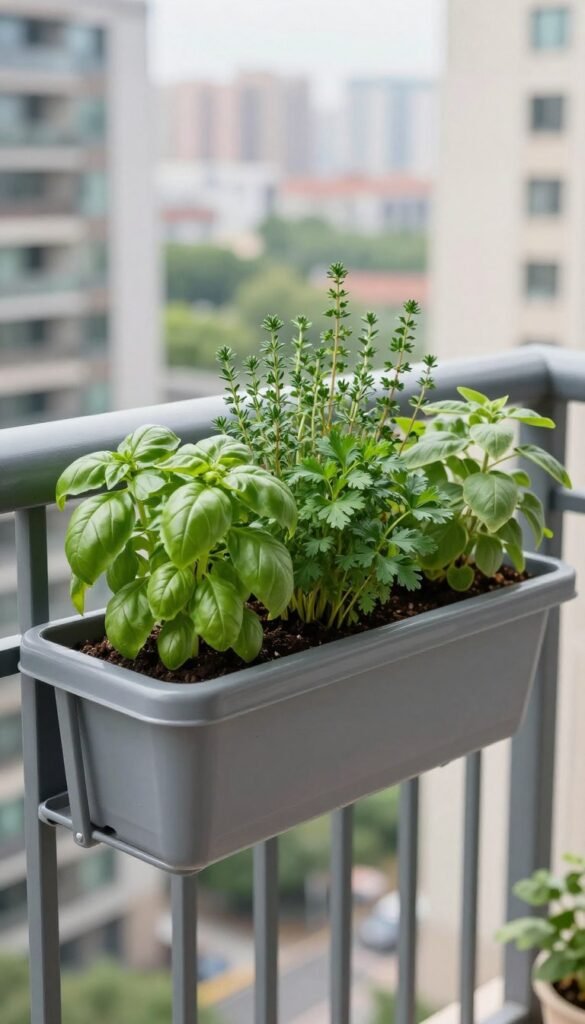
Railing planters can turn otherwise unused space into a productive little herb garden. They are particularly helpful on balconies where there is barely enough room for a chair, never mind a collection of large floor pots.
Safety comes first with this idea. Use a planter and mounting system specifically suitable for your railing, follow the installation guidance, and comply with any building rules. Containers should be positioned so there is no risk of them becoming loose or falling onto people or property below.
Railing planters can also be more exposed to sun and wind than pots positioned closer to the building. Check moisture regularly during warm or breezy weather and make sure excess water drains somewhere appropriate.
Compact Herbs to Consider
- Chives.
- Parsley.
- Thyme.
- Oregano.
- Suitable compact basil varieties.
Practical detail: Don’t choose a railing planter based on appearance alone. Secure installation, fully loaded weight, drainage, and exposure to wind are all important considerations on an elevated balcony.
5. Give Mint Its Own Container
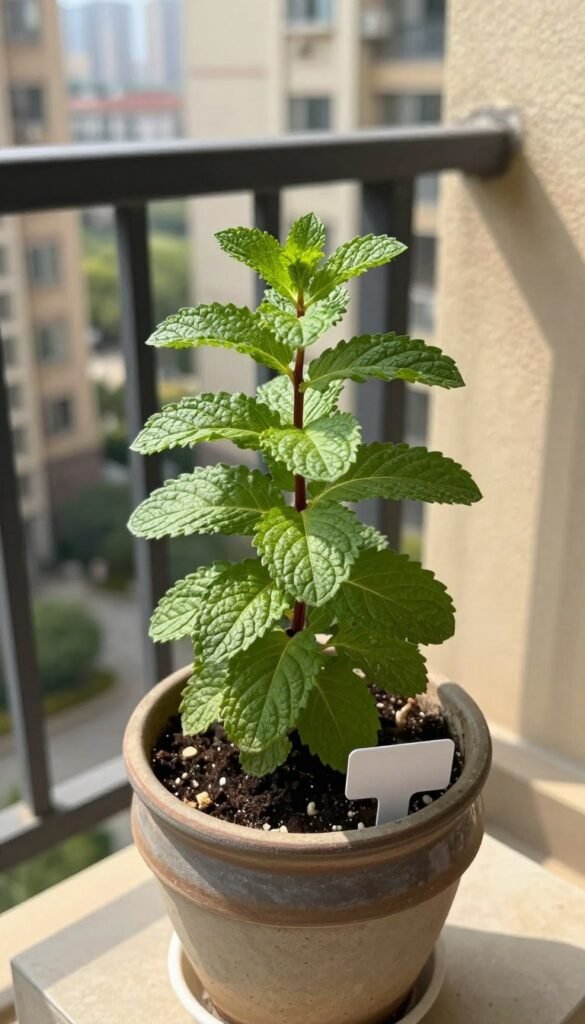
Mint is wonderfully useful in drinks, salads, sauces, and desserts, but it also has a reputation for spreading enthusiastically when given the opportunity. Growing it in its own container keeps it separate from the rest of your balcony herbs and makes that vigorous growth much easier to manage.
Choose a pot with adequate room and drainage, then position it according to the conditions suitable for the variety you are growing. Container-grown mint still needs regular attention because pots can dry considerably faster than open garden soil.
If you grow more than one type of mint, separate labeled pots also make it much easier to remember which is which. Peppermint tea becomes considerably less mysterious when the labels haven’t disappeared.
Make a Mint Pot More Useful
- Choose a suitably sized container.
- Make sure it has good drainage.
- Add a simple plant label.
- Harvest regularly where appropriate.
- Keep it separate from herbs that prefer substantially drier conditions.
Why it works: Keeping mint contained gives you plenty to harvest while preventing it from competing for growing space with your other herbs.
6. Create a Mediterranean Herb Corner
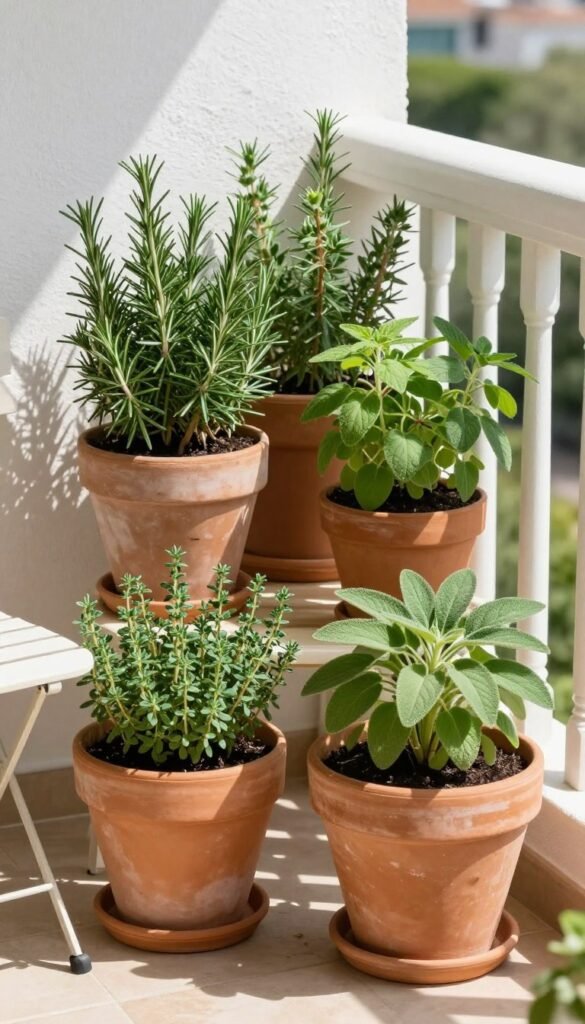
If your balcony receives plenty of direct sun, dedicate one corner to herbs associated with Mediterranean cooking. Rosemary, thyme, oregano, and sage can create a beautiful mixture of silvery and deep green foliage while giving you plenty of useful ingredients for the kitchen.
These herbs generally appreciate good drainage and can be well suited to sunny conditions, although their individual requirements are not identical. Keeping them in separate pots gives you greater control over watering and makes it easier to move one plant if it needs a slightly different position.
Terracotta works beautifully with this style, especially when you mix two or three pot sizes rather than using lots of unrelated containers. If space allows, a small café chair or table nearby can make the herb-growing area feel like part of the balcony design rather than a separate gardening project.
Build the Corner With
- Rosemary.
- Thyme.
- Oregano.
- Sage.
- Terracotta or other suitable outdoor pots.
Most timeless option: A simple collection of terracotta pots and Mediterranean herbs looks attractive enough to become part of the balcony decor while remaining genuinely useful in the kitchen.
7. Grow Herbs in a Narrow Balcony Window Box
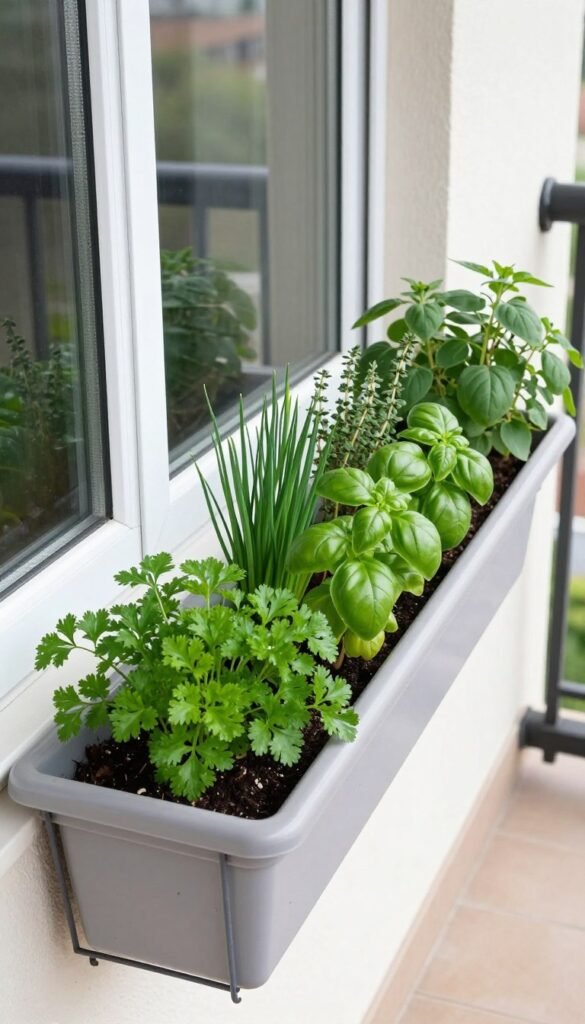
A long, narrow planter can hold several herbs without taking up the floor space required by individual pots. It is a particularly useful option when you want to make the most of the balcony perimeter while keeping the center clear.
Place the planter on a suitable ledge, shelf, or secure support where the herbs receive the light they need. If several plants will share the same growing medium, choose herbs with reasonably compatible requirements because they won’t be as easy to water individually.
Make sure the planter has appropriate drainage and enough room for the herbs to mature. Anything positioned at height should also be securely supported and comply with the rules for your balcony.
Herbs to Consider for a Long Planter
- Parsley.
- Chives.
- Thyme.
- Oregano.
- Suitable compact basil varieties.
Small space tip: A narrow rectangular planter uses the edges of the balcony rather than taking up valuable space in the center, making it easier to preserve room for seating and circulation.
8. Turn a Small Ladder Shelf Into an Herb Garden
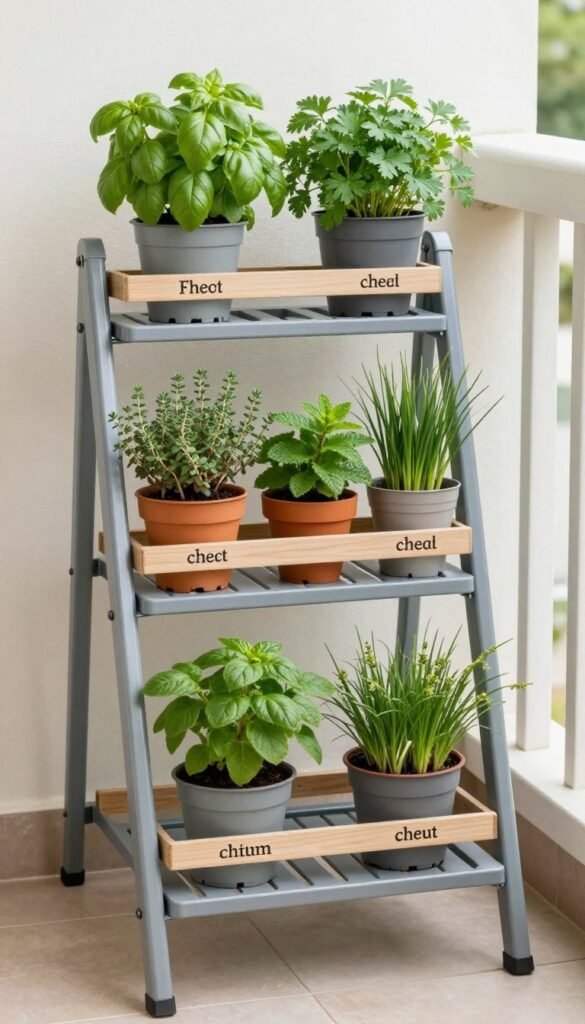
A compact ladder-style shelf gives you several levels of growing space while maintaining a relatively small footprint. It can also make an assortment of individual herb pots look like one intentional display.
Arrange plants according to the actual conditions on each level rather than simply putting the tallest ones at the top. Upper shelves may receive more sun and wind, while lower levels can be shaded by both the structure and the plants above.
Choose an outdoor-suitable unit and think carefully about stability, particularly on an exposed balcony. Avoid top-heavy arrangements and follow any relevant building requirements for outdoor furniture or shelving.
Make the Most of Each Shelf
- Position plants according to their light requirements.
- Keep frequently harvested herbs easy to reach.
- Leave enough room for mature plant growth.
- Manage drainage so water doesn’t create problems below.
- Avoid making the upper shelves excessively heavy.
Budget friendly version: If you already have a sturdy outdoor shelving unit that is suitable for the conditions, try using that before buying a specialist herb planter.
9. Create a Balcony Herb Garden Around a Small Table
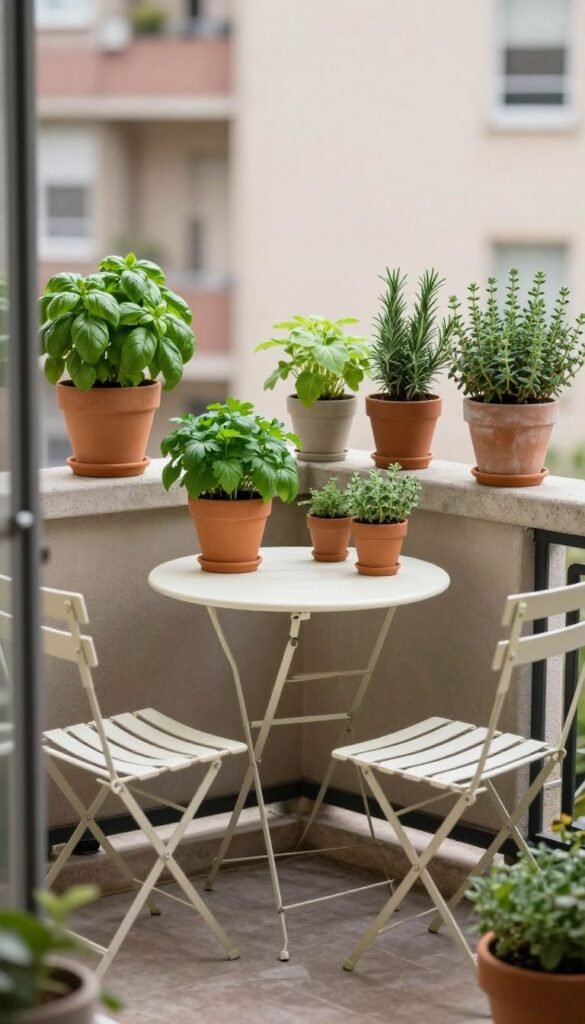
Your herb garden doesn’t have to occupy a separate gardening zone. Arrange a few pots around a compact bistro table and the plants become part of the balcony’s everyday living space.
Place larger containers toward the edges and group smaller pots where they receive appropriate light without getting in the way. Keeping herbs close to where you sit also makes it easier to notice when a plant needs water, pruning, or harvesting.
Leave enough clear floor space to move comfortably between the door, table, and chairs. A productive herb garden is wonderful, but not if reaching your seat requires an obstacle course through seventeen pots of parsley.
For a Relaxed Balcony Garden Add
- A compact outdoor table.
- One or two comfortable chairs.
- Herbs arranged in two or three different pot sizes.
- A few suitable flowering plants if space allows.
- Plenty of clear access to the balcony door and drainage points.
Why it works: Combining the growing and seating areas prevents a tiny balcony from feeling divided into even smaller sections and lets the greenery become part of the overall design.
10. Grow Herbs on a Wall-Mounted System
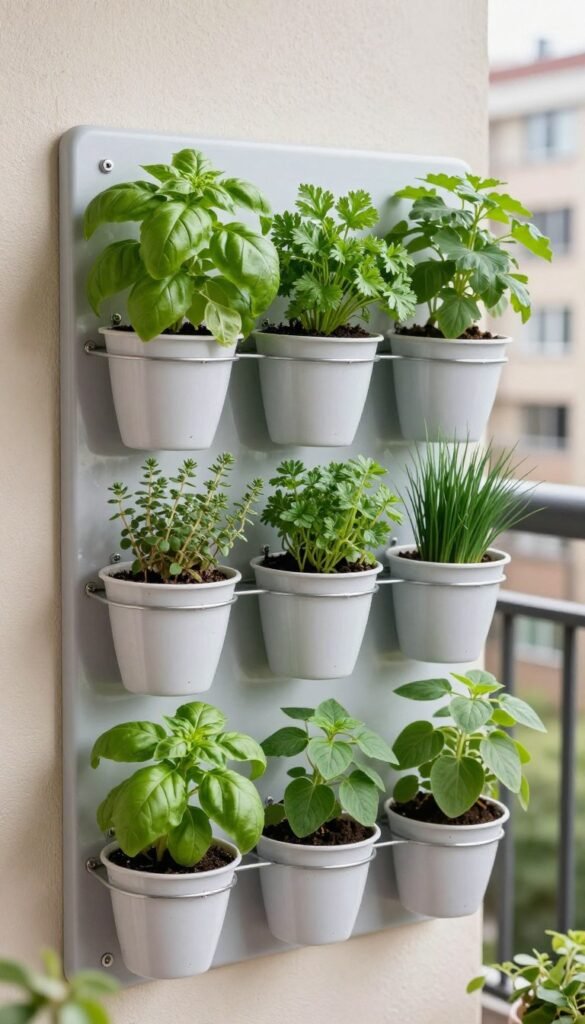
A wall-mounted herb garden can free almost all of the balcony floor, making it an appealing option when every inch matters. Individual pots or a purpose-made planting system can turn an otherwise unused vertical surface into a living wall of useful greenery.
This isn’t a case of simply putting a few screws into an exterior wall and hoping for the best. First check whether attachments are permitted, identify the type of supporting structure, and use a system and fixings appropriate for the expected loaded weight.
Remember that wet growing medium, containers, and mature plants can add considerable weight. Drainage also needs careful planning so water doesn’t damage building surfaces or run onto neighboring property.
Before Installing a Wall Garden Check
- Building, lease, or management restrictions.
- The supporting structure and suitable fixings.
- The fully loaded planter weight.
- Water drainage and runoff.
- Wind exposure.
- Safe access for watering and harvesting.
Best placement: Use a permitted surface that receives suitable light for the herbs you want to grow without obstructing doors, windows, ventilation, drainage, or essential access.
11. Create a Shady Balcony Herb Garden
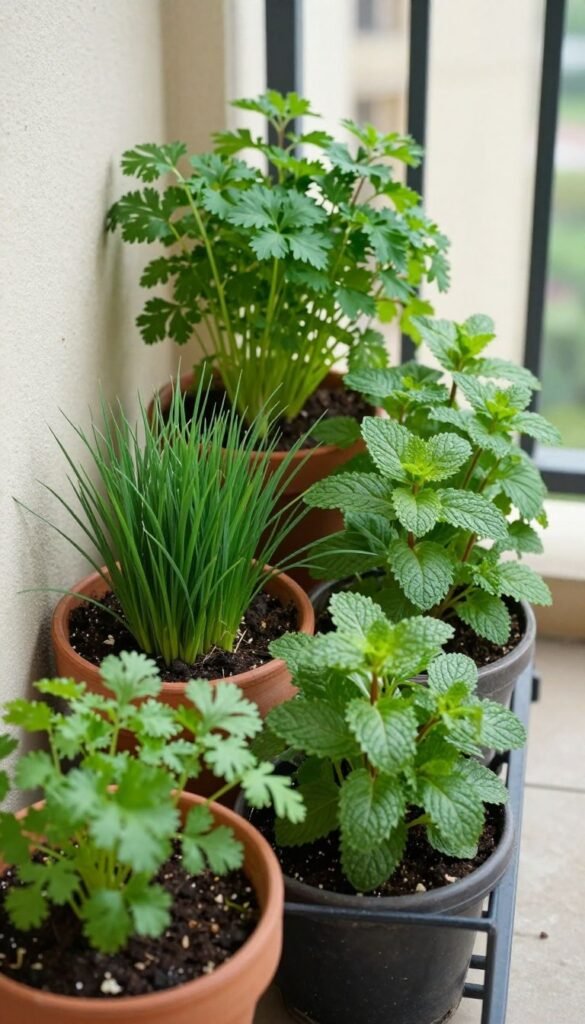
A balcony that doesn’t receive strong all-day sun can still provide useful herb-growing space. The key is choosing plants suited to the light you actually have rather than filling the balcony with sun-loving herbs and wondering why everyone looks miserable.
Parsley, chives, and mint can often cope with some partial shade, although performance varies according to climate, season, variety, and the exact amount of available light. Even herbs that tolerate lower-light conditions still need useful daylight rather than a permanently dark corner.
Watch how sunlight moves across the balcony at different times of day. You may discover that one small area receives several hours of useful light even though the rest is shaded by the building.
Herbs to Consider for Partial Shade
- Parsley.
- Chives.
- Mint.
- Coriander or cilantro, depending on your growing conditions.
- Other leafy herbs suited to your climate and available light.
Practical detail: “Partial shade” can describe a wide range of conditions. Use plant-specific growing guidance and observe your own balcony rather than assuming every lower-light herb will thrive in exactly the same position.
12. Create a Mini Kitchen Herb Garden Near the Balcony Door
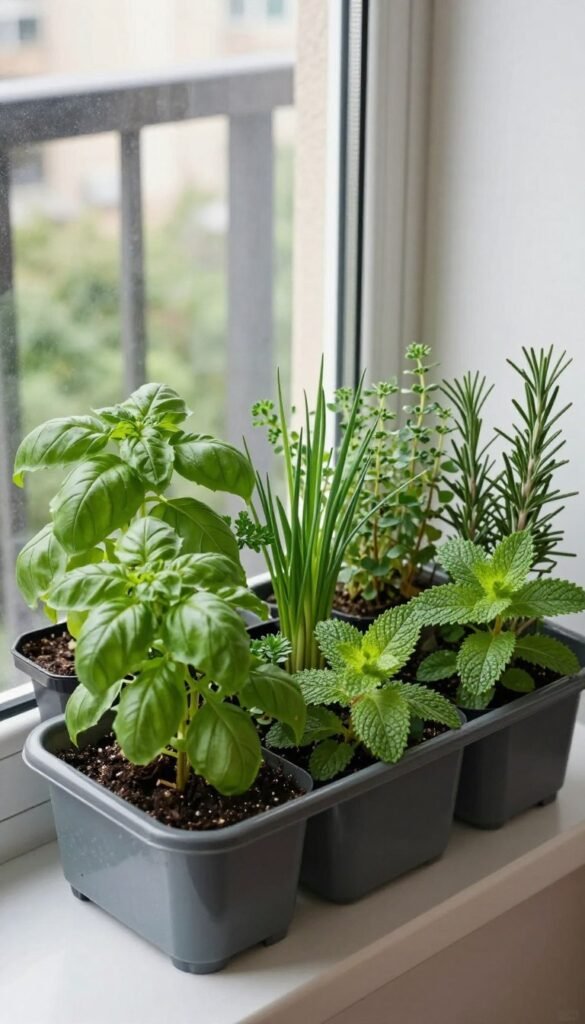
If you want to actually use your herbs rather than admire them from the kitchen window, keep the varieties you cook with most often reasonably close to the balcony door. Convenience makes a surprising difference to how often fresh herbs end up in meals.
A compact group of basil, parsley, chives, thyme, or whatever your household regularly uses can become a miniature kitchen garden. Individual pots allow you to give each plant the conditions it needs while keeping the whole collection together visually.
Keep the doorway and required access completely clear. Containers should make the balcony more useful, not create a collection of trip hazards every time you step outside carrying dinner.
Choose Herbs You Actually Cook With
- Basil: Useful for pasta, salads, and sauces.
- Parsley: A versatile choice for everyday cooking.
- Chives: Handy for eggs, potatoes, and salads.
- Thyme: Useful for roasted vegetables and savory dishes.
- Rosemary: A flavorful addition to suitable roasted and baked dishes.
- Mint: Useful for drinks, salads, sauces, and desserts.
Easiest upgrade: Start with three herbs you already buy regularly. A small productive garden is far more useful than fifteen pots of herbs you rarely eat.
How to Choose Herbs for Your Balcony
The best herbs for your balcony depend on more than the size of the space. Light, wind, temperature, container size, drainage, and how frequently you are able to water all affect what will grow successfully.
- Lots of sun: Consider herbs such as rosemary, thyme, oregano, and sage where they suit your climate.
- Some shade: Parsley, chives, and mint may be worth considering.
- Very small space: Look for compact varieties and use individual pots, shelves, or vertical growing systems.
- Exposed balcony: Prioritize stable containers and more sheltered positions.
- Beginner gardener: Start with a small number of herbs and learn how quickly their containers dry in your particular conditions.
- Cooking garden: Give the most convenient growing space to herbs you genuinely use.
Quick guide: Choose the balcony conditions first and the herbs second. Trying to force the wrong plant into the prettiest available corner usually creates more work rather than a better garden.
How to Arrange Herbs on a Small Balcony
Instead of lining every pot along the floor, think about the balcony in layers. Using different heights lets you increase growing space without making the area feel cluttered.
- Floor level: Use stable larger containers where the balcony structure and layout allow.
- Mid level: Add a sturdy outdoor plant stand or shelf.
- Higher level: Consider securely installed wall or railing planters where permitted and appropriate.
- Sunny areas: Position herbs according to their individual light requirements.
- Sheltered corners: Use these for plants that benefit from protection from strong wind.
- Near the door: Keep frequently harvested herbs convenient without blocking access.
Small space reassurance: Leave some empty space. Being able to sit outside and enjoy your herbs is considerably nicer than turning the entire balcony into one enormous plant shelf.
How to Keep Balcony Herbs Healthy
Container herbs rely on you more heavily than plants growing in open ground because their roots have access to a limited amount of growing medium, moisture, and nutrients. A few regular checks can prevent many common problems.
- Check moisture regularly: Don’t assume every pot needs watering at exactly the same time.
- Provide drainage: Use containers and growing media appropriate for the plants while managing runoff responsibly.
- Watch the wind: Elevated balcony conditions can be considerably more exposed than gardens at ground level.
- Harvest appropriately: Regular harvesting can encourage useful growth in many culinary herbs, but avoid removing excessive foliage at once.
- Feed when appropriate: Follow guidance for the particular herb and growing medium rather than treating every plant identically.
- Check for pests and disease: Inspect leaves and stems regularly so problems can be identified early.
- Adjust through the seasons: Sun exposure, temperature, watering requirements, and plant growth can change significantly throughout the year.
Maintenance tip: A quick check of the pots every day or two during warm weather is often more useful than following a rigid watering calendar. Let the condition of the individual plant and growing medium guide you.
Common Balcony Herb Garden Mistakes to Avoid
A balcony herb garden is relatively simple to start, but a few common mistakes can make it much harder to maintain than necessary.
- Choosing herbs before checking the light: Observe the balcony first and choose plants second.
- Putting every herb in one container: Plants with very different moisture and growing requirements are often easier to manage separately.
- Using containers without appropriate drainage: Excess water around the roots can cause serious problems for many herbs.
- Using pots that are too small: Tiny containers can dry quickly and may restrict healthy growth.
- Ignoring wind: Elevated balconies can be much more exposed than they appear from indoors.
- Overcrowding the balcony: Maintain clear access, drainage points, and safe circulation.
- Attaching heavy planters without checking first: Consider building rules, structural suitability, secure installation, and the fully watered weight.
- Growing herbs you never use: Give the best space to plants that will actually make their way into your kitchen.
An Easy Balcony Herb Garden Formula
If you’re starting from scratch, you don’t need a complicated planting plan. Begin small and expand once you understand the light, wind, and watering conditions on your balcony.
- Observe the light: Note how much direct sunlight different parts of the balcony receive.
- Check the exposure: Consider wind and any building or lease restrictions.
- Choose three to five herbs: Prioritize varieties you regularly use.
- Select suitable containers: Give plants adequate space and appropriate drainage.
- Separate different needs: Give herbs with substantially different growing requirements their own pots where practical.
- Add height if needed: Introduce a stable shelf or vertical planter if you need more growing space.
- Keep useful herbs convenient: Place frequently harvested varieties somewhere easy to reach without obstructing access.
- Review regularly: Check moisture, growth, pests, and changing light conditions as the season progresses.
A Note About Using Homegrown Herbs
If you plan to eat what you grow, make sure plants are correctly identified as edible culinary herbs and have been grown and treated appropriately for food use. Avoid eating an unfamiliar plant simply because it resembles an edible herb, and wash harvested herbs appropriately before using them.
Take additional care if you are considering herbs for medicinal purposes. A plant being natural or homegrown doesn’t automatically make it suitable for medicinal use, particularly for children, during pregnancy, with health conditions, or alongside medications. Seek appropriate professional advice when needed.
Final Thoughts
A small balcony can produce a surprisingly useful collection of fresh herbs when every bit of space is used thoughtfully. Individual pots, narrow planters, shelves, vertical gardens, and securely installed railing systems can all increase growing space without sacrificing the entire balcony.
Start with the conditions you actually have. A sunny, exposed balcony needs a different planting plan from a sheltered space that receives only a few hours of direct light, and choosing herbs accordingly will save plenty of frustration later.
Most importantly, grow what you’ll use. Three thriving pots of basil, parsley, and rosemary near the kitchen door can be far more rewarding than an elaborate herb garden filled with plants you never remember to pick.