12 Medicinal Herb Garden Layout Ideas for Growing Useful Herbs
A well-planned herb garden can give you beauty, flavor, fragrance, and a useful place to grow herbs for teas, culinary preparations, aromatic blends, and simple home remedies. The right layout makes each plant easier to see, water, identify, and harvest.
You do not need a large yard. Containers, a sunny border, a raised bed, or a small courtyard can hold many useful herbs when the space is arranged with care.
Quick Guide: Choose the Right Medicinal Herb Garden Layout
Start with the conditions you already have. A layout based on sunlight, drainage, mature size, and access will usually work better than one based only on appearance.
- Small garden: Use containers, a narrow border, or a compact raised bed.
- Easy harvesting: Arrange frequently used herbs close to paths and the house.
- Lots of varieties: Divide a larger bed into sections based on growing conditions or plant size.
- Dry sunny garden: Group Mediterranean-style herbs that prefer sharp drainage and plenty of sun.
- Moister area: Reserve a separate section for herbs that prefer richer soil or more consistent moisture.
- Spreading herbs: Consider pots or contained areas for vigorous plants that may otherwise take over.
Check the mature size and specific requirements of every herb before planting. Not all herbs enjoy the same soil, sun, or watering schedule. Grouping plants by similar needs is usually easier to maintain than arranging them only by color or appearance.
1. Create a Four-Square Medicinal Herb Garden
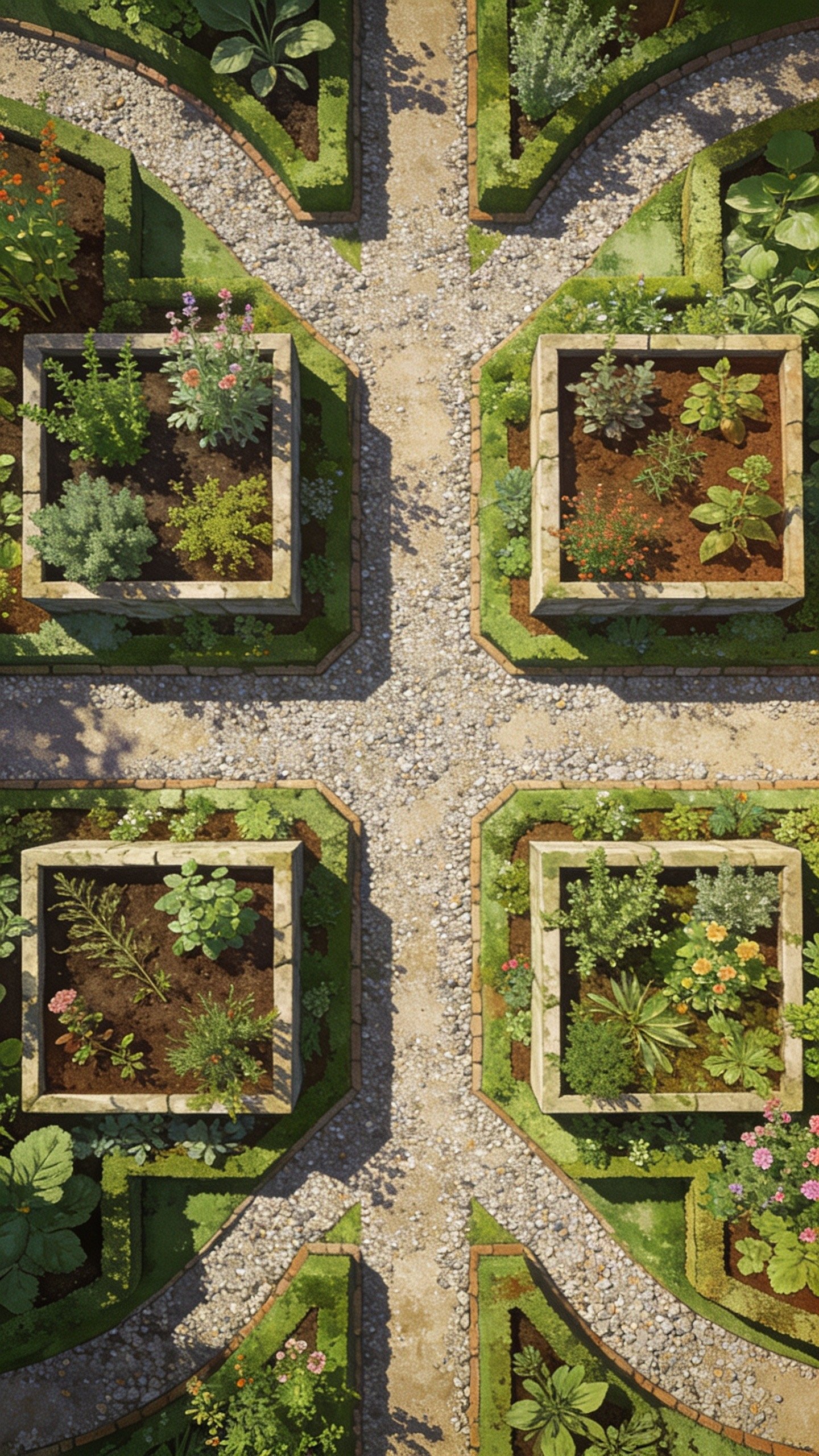
Central paths make a small garden easier to reach.
A four-square garden is a simple way to bring order to a mixed collection of herbs. Divide a square or rectangle into four beds with narrow paths crossing through the center. Each bed can have a clear purpose.
For example, one section may contain sun-loving herbs, another may hold plants that prefer more moisture, and the remaining beds may be reserved for frequently picked herbs or taller flowering plants. Central paths let you reach the plants without stepping into the soil or compacting it.
Divide the Four Beds By
- Sun-loving herbs.
- Plants needing more moisture.
- Frequently harvested herbs.
- Taller flowering or perennial herbs.
The simple geometry keeps a varied herb garden looking intentional. It also gives you clear routes for watering, trimming, weeding, and harvesting.
2. Build a Raised Bed Medicinal Herb Garden
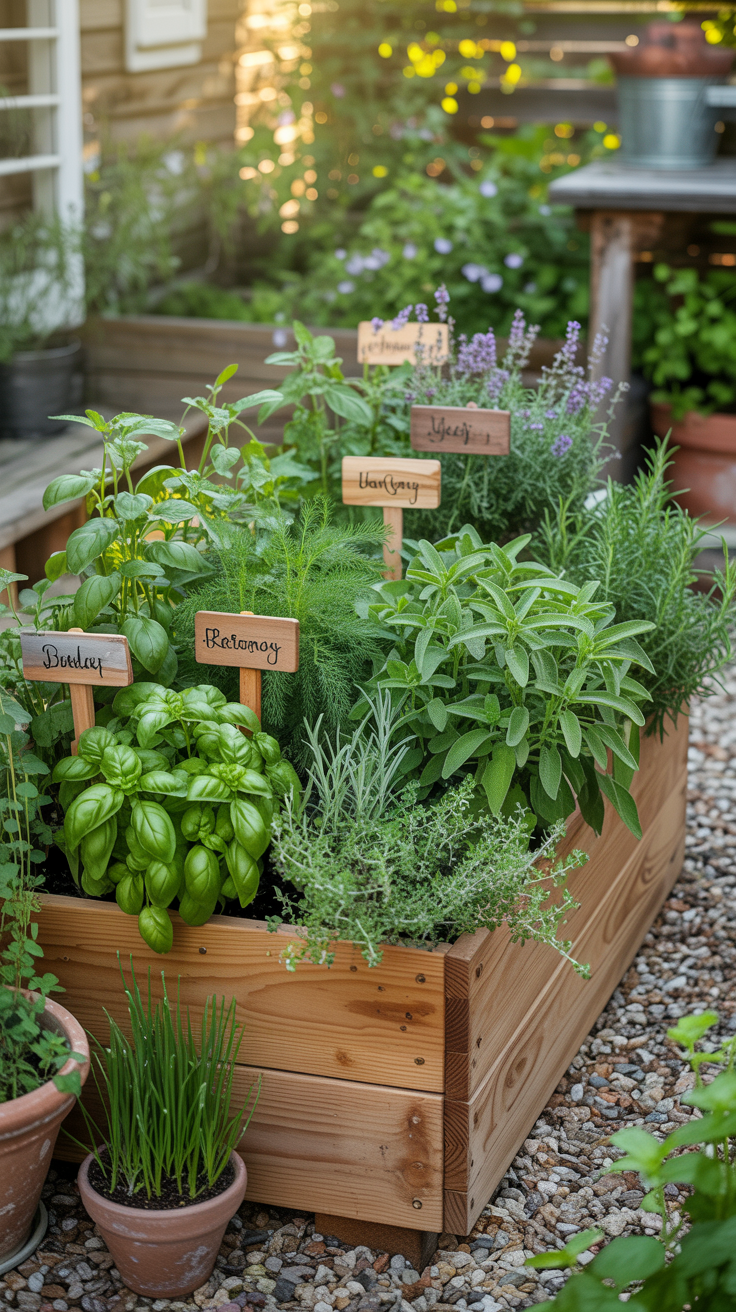
Plan for mature growth, not nursery-pot size.
Raised beds give you a defined planting area and more control over soil conditions. They can also make tending and harvesting more comfortable, especially when bending is difficult.
Place taller plants toward the back or center, depending on where you stand. Keep smaller herbs near the edges. Do not fill every gap with young plants. Many herbs grow much larger after their roots settle.
Some herbs prefer fertile, moisture-retentive soil. Others perform better in lean, sharply drained soil. If one herb needs dramatically different soil or moisture conditions, a separate container may be easier than forcing one bed to suit everything.
- Taller plants where they will not shade smaller herbs unnecessarily.
- Frequently picked herbs near the edges.
- Enough mature spacing between plants.
- Easy access from at least one side.
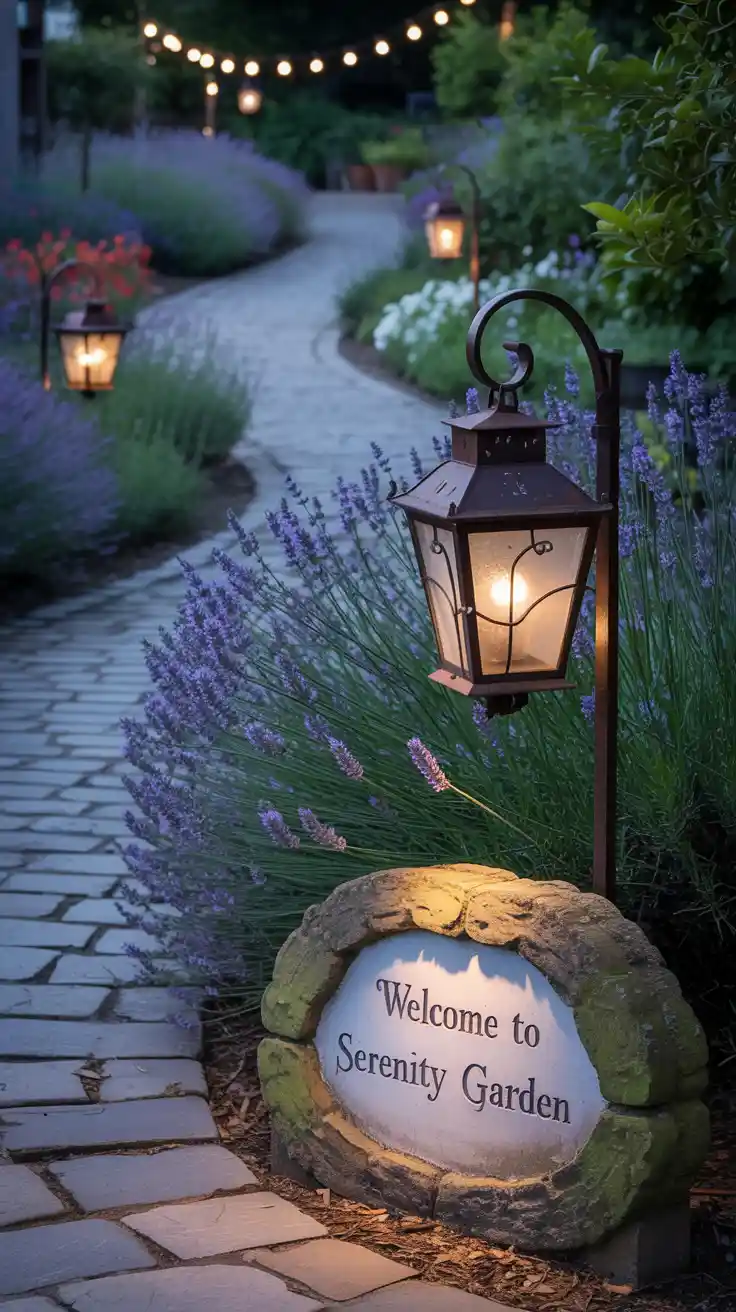
3. Design a Medicinal Herb Garden Around a Central Path
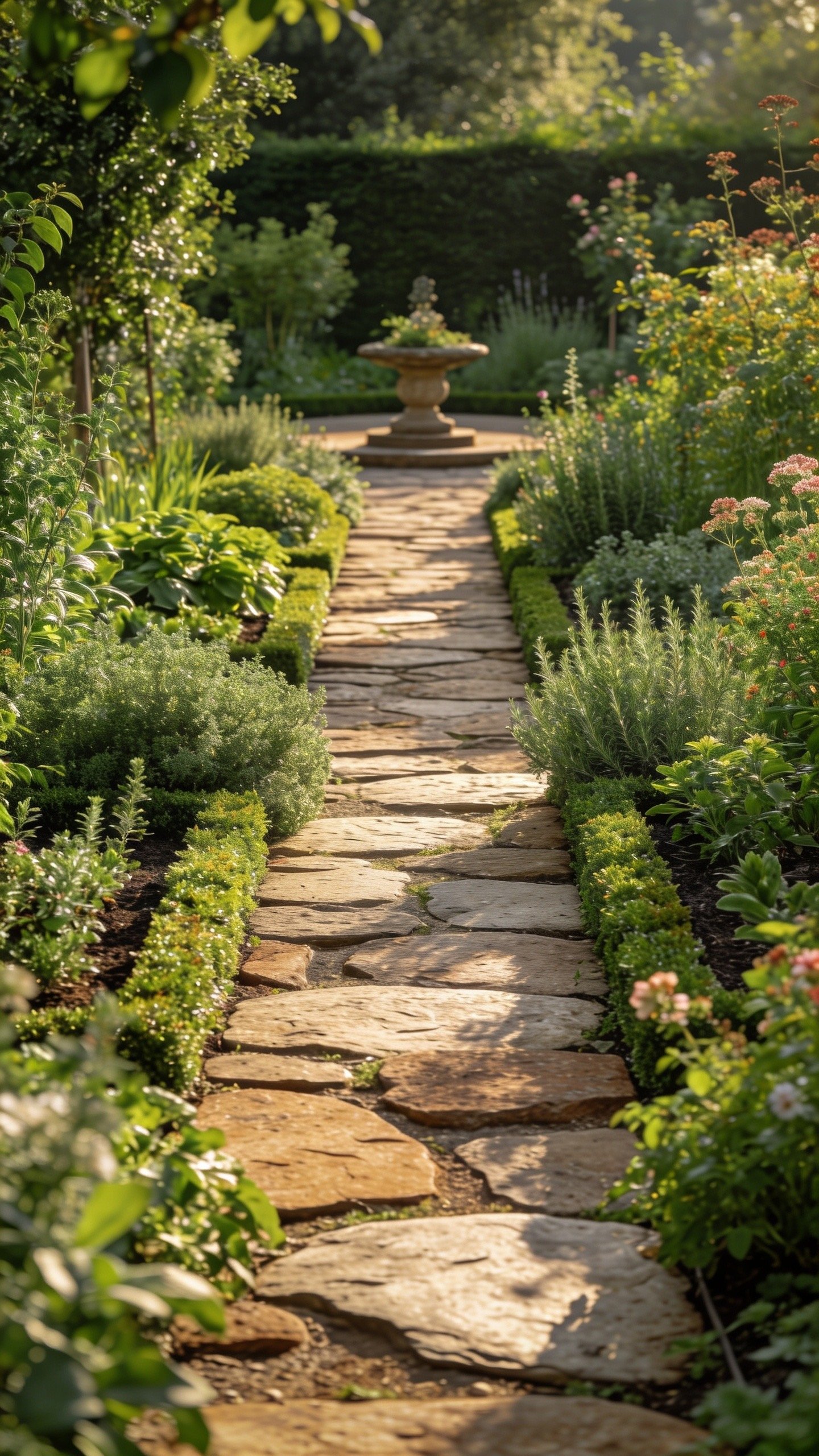
Keep everyday herbs close to the route you already use.
A central path can make a plain plot feel designed and functional. Run a path through a long rectangle or side garden, then place beds on either side. Keep herbs that you use most often close to the walkway.
Gravel, stepping stones, brick, or another suitable surface can create a clean place to stand. Low-growing aromatic plants can soften the edge, while flowering herbs add color and movement.
- Herbs you harvest regularly.
- Low-growing aromatic plants.
- Flowering herbs that soften the path edges.
- Plants that are easy to identify at a glance.
Repeat the same two or three herbs at intervals. Repetition gives an eclectic collection a more cohesive garden design.
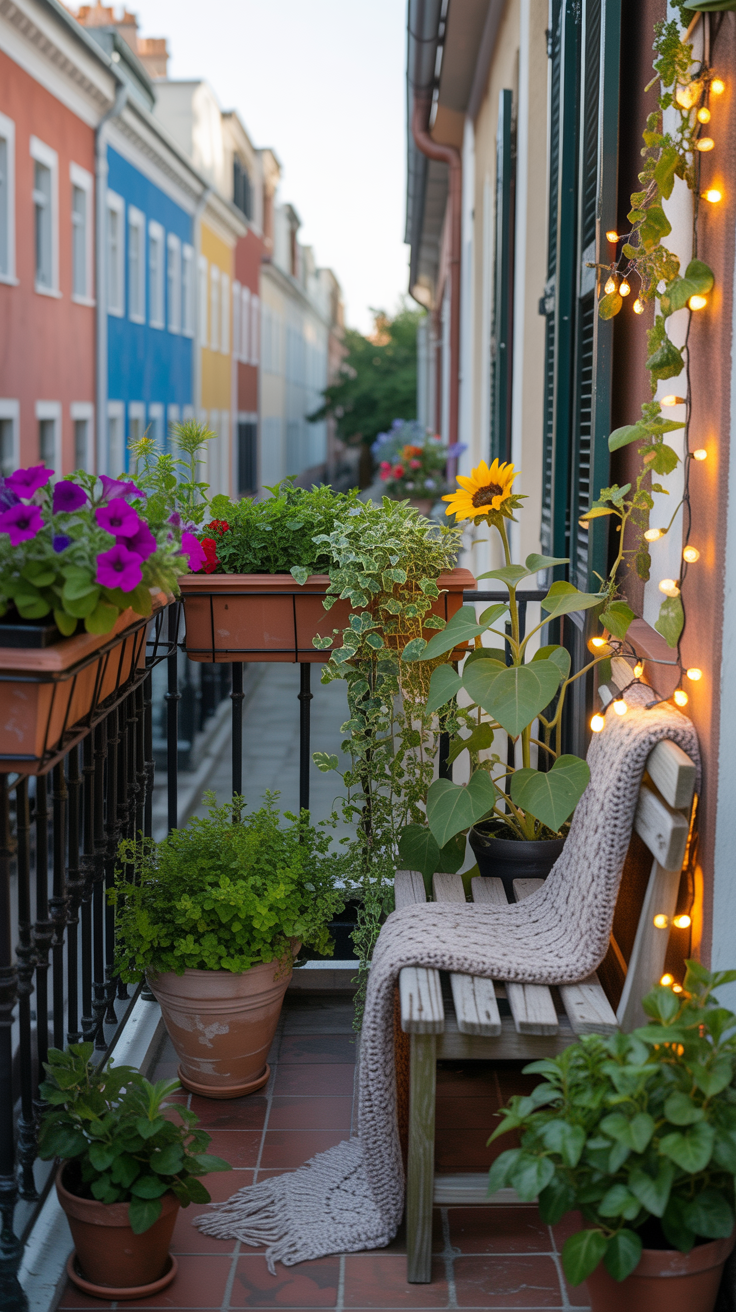
4. Make a Container Medicinal Herb Garden
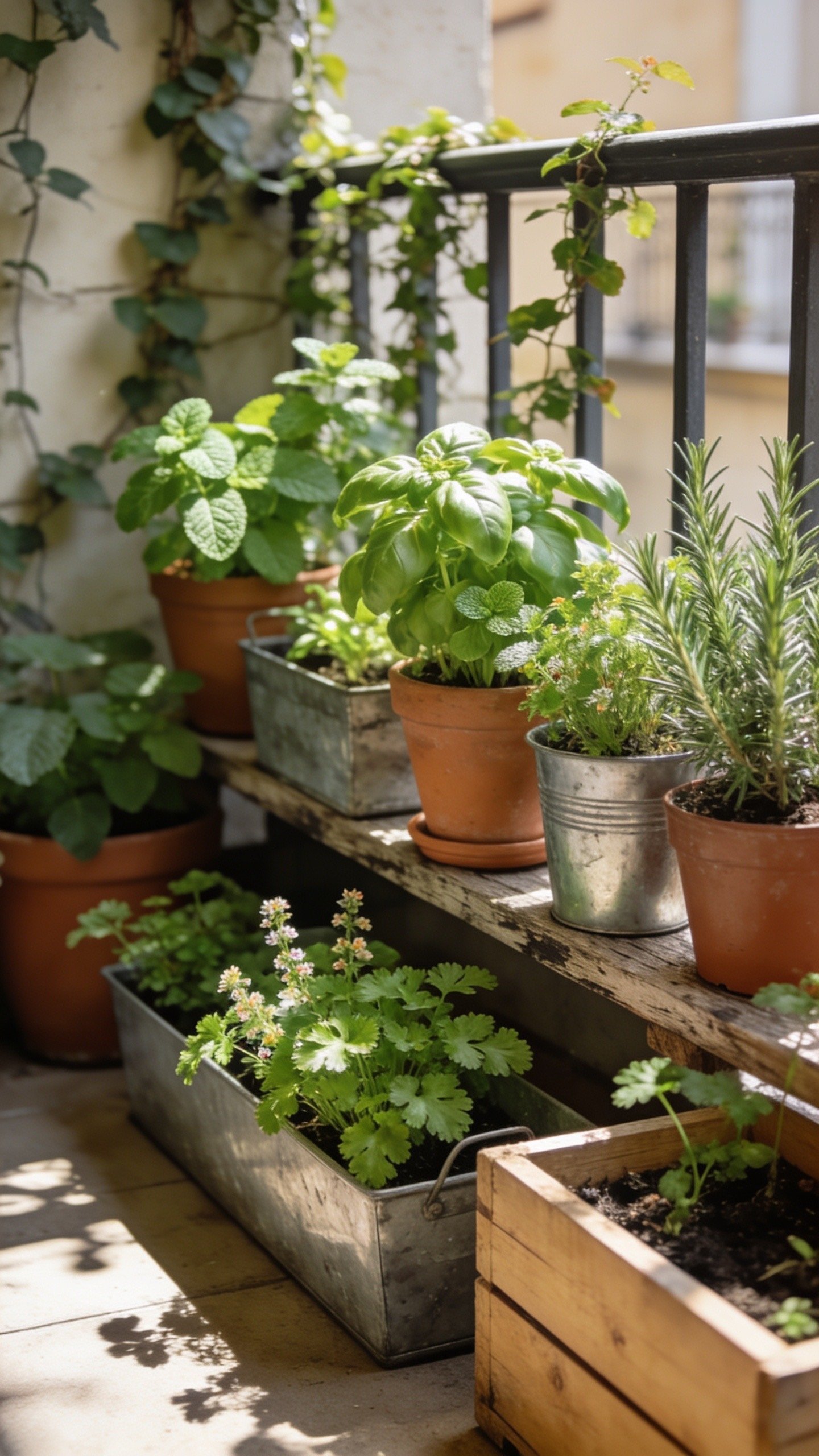
Separate pots make different growing needs easier to manage.
Containers suit patios, balconies, courtyards, and very small gardens. Each pot can have its own soil, drainage, and watering plan. This is useful when one herb likes dry soil while another prefers more moisture.
Use several pot sizes instead of making every container identical. Put larger plants in deeper pots and smaller herbs toward the front. Plant stands, steps, and different heights help you use vertical space without making harvesting difficult.
- Limited garden space.
- Different soil requirements.
- Vigorous spreading plants.
- Moving tender plants when needed.
Containers can help control vigorous mint and other spreading herbs. Check whether each plant is suited to container growing and whether it will need more room later.
5. Create a Sunny Mediterranean Medicinal Herb Bed
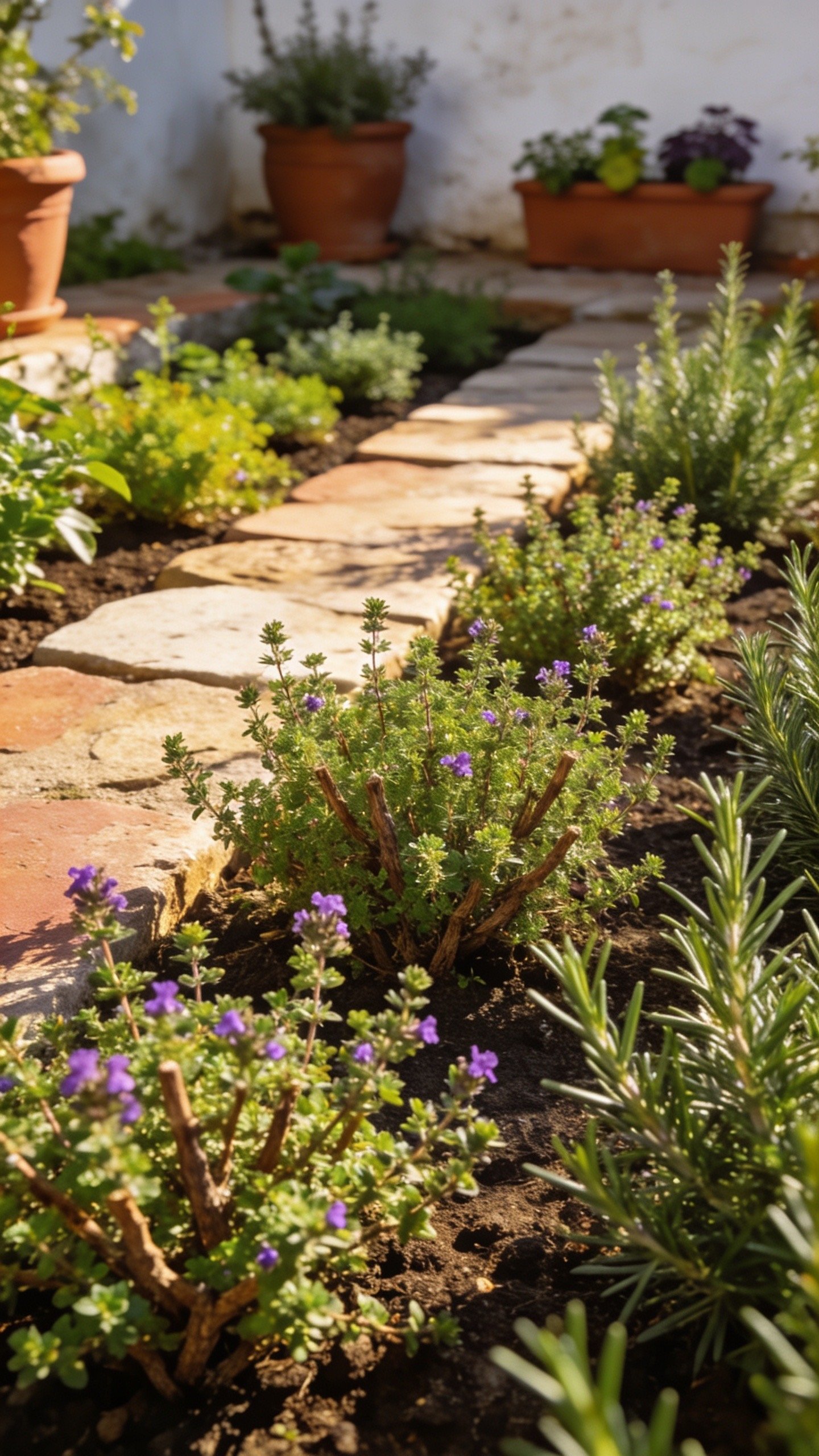
Group herbs by water needs before grouping them by color.
A sunny, well-drained bed is a natural home for herbs with Mediterranean-style preferences. Grouping them together prevents drought-tolerant plants from being watered like herbs that prefer consistently moist soil.
- Lavender.
- Rosemary.
- Thyme.
- Sage.
Gravel, stone, and terracotta accents can reinforce the dry-garden look. Still, check each plant and your local climate before assuming every Mediterranean herb will survive outdoors year-round.
Silver-green foliage and woody stems give this herb garden design a calm, cohesive appearance. It can look ornamental even when you are not harvesting.
6. Plant a Medicinal Herb Garden in Concentric Circles
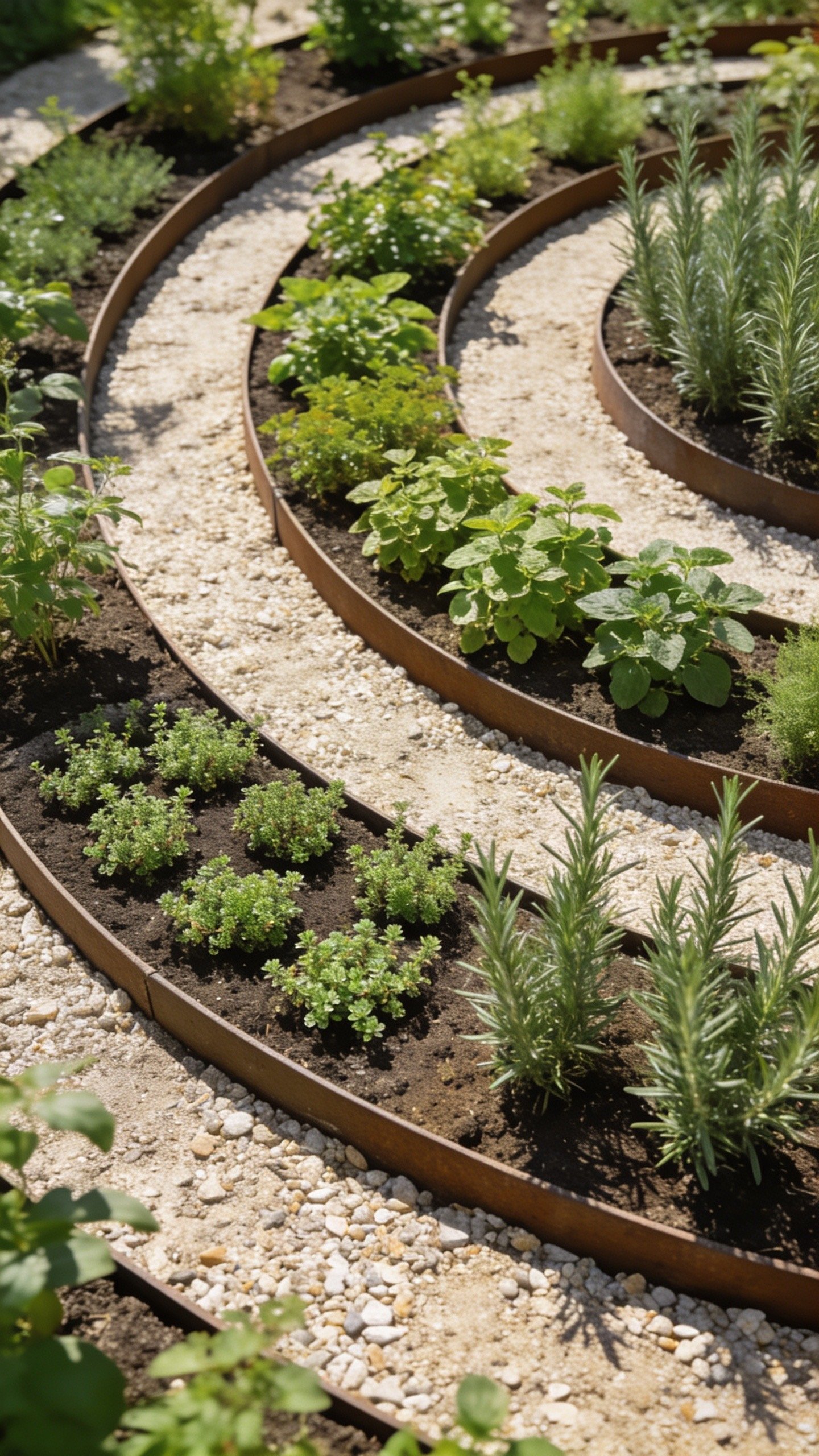
Access points are essential in circular garden layouts.
Two or three planting rings can turn useful herbs into a strong landscape feature. Add narrow access points so you can reach the center without stepping over the beds.
The middle may hold a taller architectural herb, a simple pot, or a decorative feature. You can organize the rings by plant height, color and flowering season, water requirements, or how often each herb is harvested.
- Plant height.
- Color and flowering season.
- Water requirements.
- How frequently each herb is harvested.
This layout works best where the garden is visible from several directions. Keep the rings narrow enough to weed, water, and harvest comfortably.
7. Create a Medicinal Herb Garden With Keyhole Access
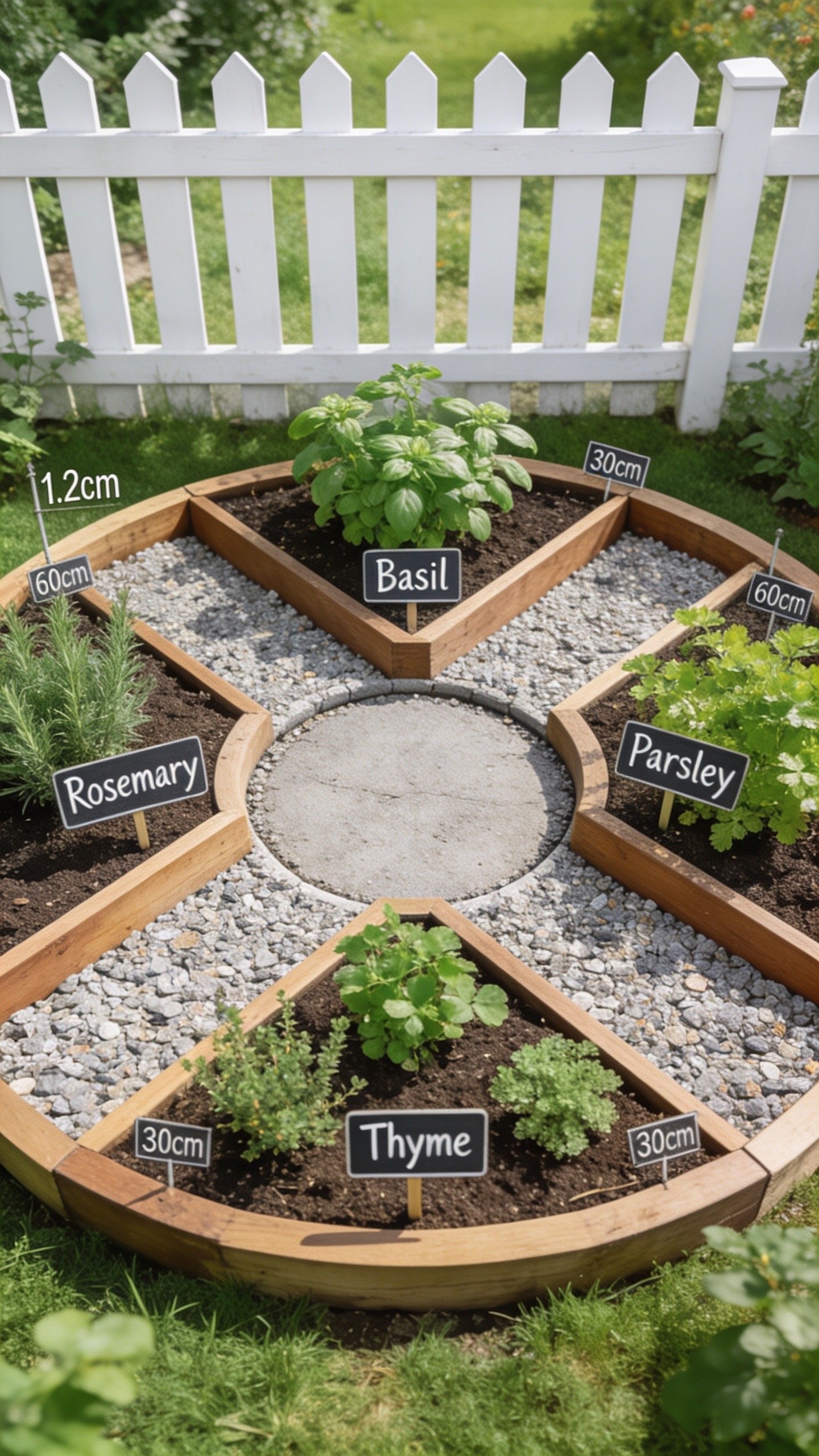
Curved access can make a small garden feel generous.
A keyhole bed curves around a narrow access path, allowing you to fit plenty of herbs into a compact area while keeping most of the planting comfortably within reach.
Use the inner edge for herbs you harvest frequently, then give taller or larger plants more room toward the back or outer curve. The layout can be particularly useful when you want generous planting space without creating paths around every side of the bed.
Plan a Keyhole Garden Around
- Frequently harvested herbs close to the path.
- Taller plants toward the outer edge where appropriate.
- Compatible plants grouped by watering needs.
- Enough access to reach every part of the bed comfortably.
Small-space tip: Curved access can make a compact garden feel surprisingly generous, but keep the bed shallow enough that you can reach every plant without performing garden gymnastics.
8. Grow a Medicinal Herb Garden Along a Fence
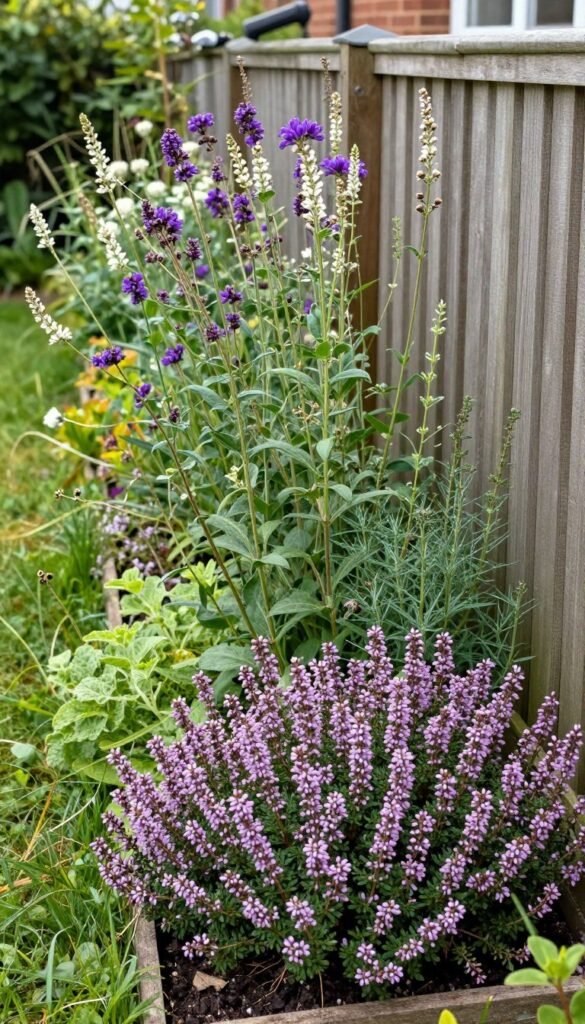
Keep a fence border narrow enough to harvest without leaning far.
A narrow strip beside a fence can become a productive herb border without taking over the center of the garden. Arrange plants in layers so each one remains visible and easy to reach.
Place taller herbs and flowering plants toward the back, medium-height plants through the middle, and compact herbs along the front. Keep anything you harvest regularly within comfortable reaching distance.
Observe the area before planting. A fence can create shade or a rain shadow, and soil beside it may behave differently from soil in the open garden.
Layer the Border With
- Taller herbs and flowering plants toward the back.
- Medium-height plants through the middle.
- Compact herbs along the front.
- Frequently harvested plants within easy reach.
Practical detail: Keep a fence border narrow enough to harvest comfortably. A beautiful plant at the back is considerably less useful when reaching it requires leaning across three others.
9. Design a Tea Herb Garden Layout
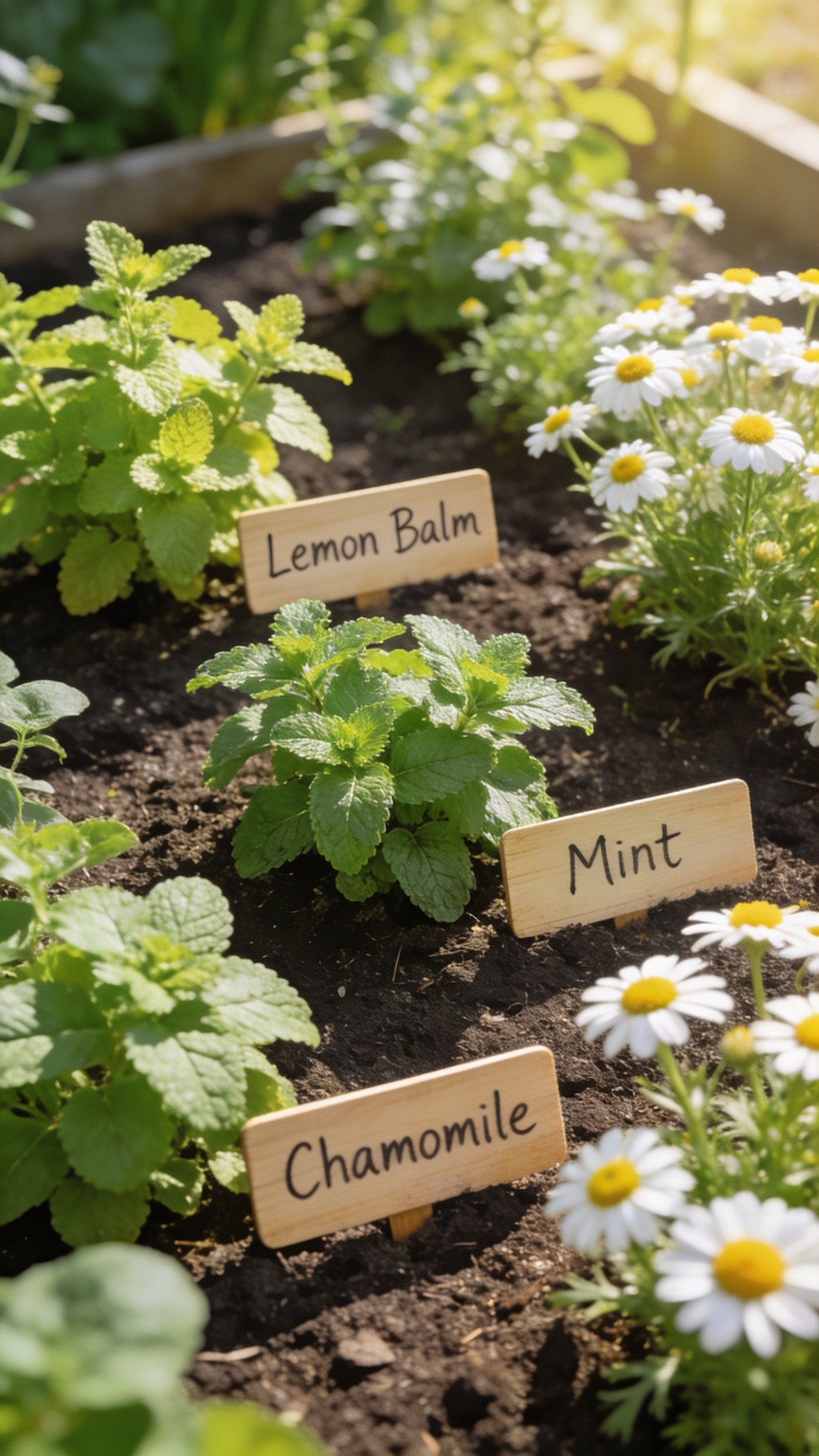
Label plants clearly, especially when several leaves look alike.
If herbal teas are one of your main reasons for planting, dedicate a bed or group of containers to herbs traditionally used for infusions. Chamomile, lemon balm, mint, and lavender are familiar examples.
These plants do not necessarily need identical growing conditions, so use adjoining sections or separate containers when their soil, sunlight, or moisture requirements differ. Mint deserves particular attention because it can spread vigorously when conditions suit it.
Make a Tea Garden Easier to Use With
- Clearly labeled plants.
- Easy harvesting access.
- Separate containers for vigorous spreaders where appropriate.
- Different planting zones when moisture requirements vary.
Safety note: A plant being traditionally associated with herbal tea does not automatically make it suitable for everyone to consume. Correct identification and appropriate health guidance still matter.
10. Create a Cottage-Style Medicinal Herb Garden
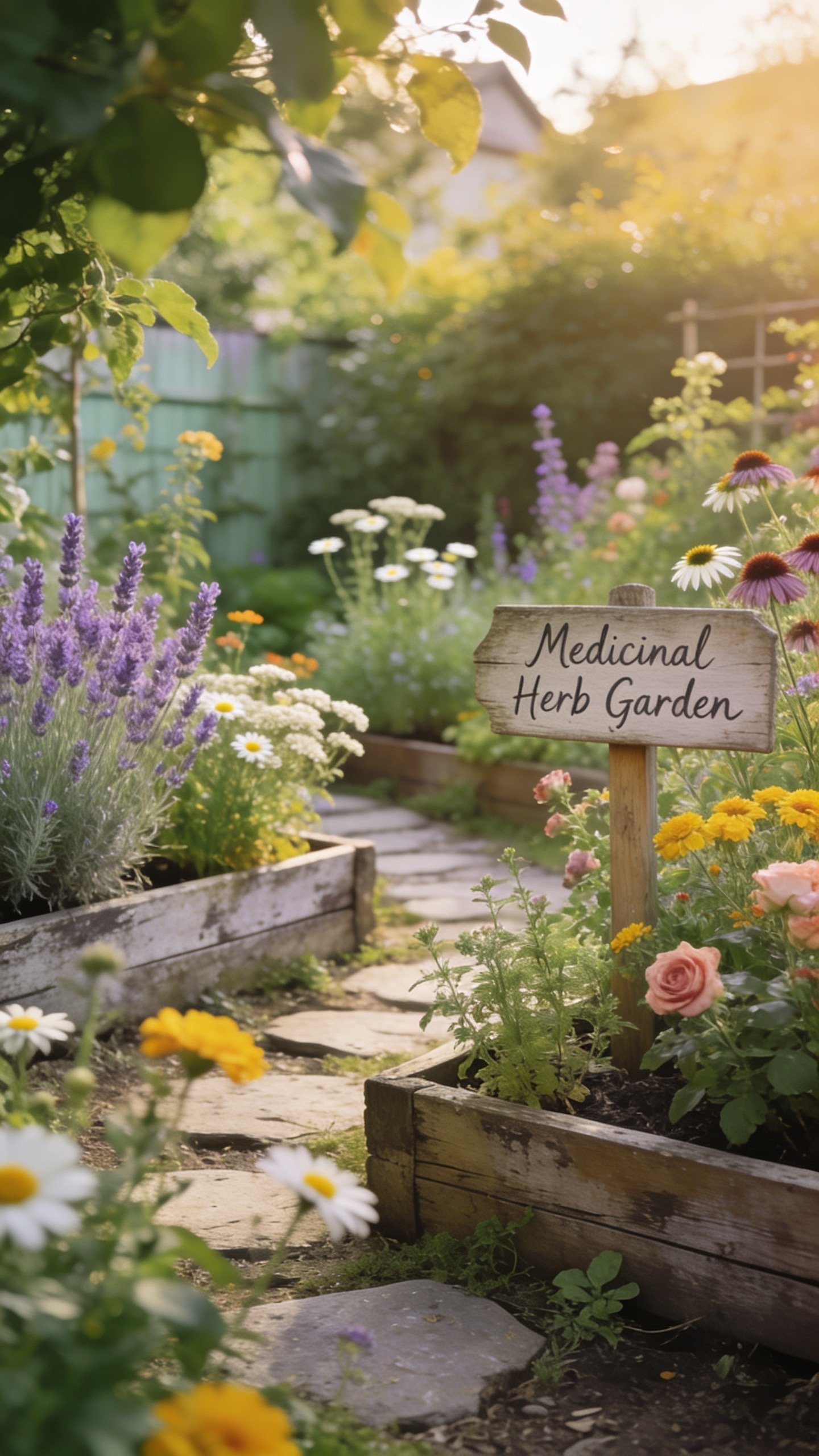
Informal planting still benefits from clear labels and repeated groups.
A medicinal herb garden does not need to look clinical or perfectly ordered. Layered planting, flowering herbs, and informal paths can create a relaxed cottage-garden effect while keeping the space productive.
Calendula, chamomile, echinacea, and lavender can bring flowers among leafy herbs, while stepping stones or a narrow gravel path keep the planting accessible. Repeating small groups of the same plant helps stop an informal scheme from looking chaotic.
Create the Cottage Look With
- Flowering herbs mixed with foliage.
- Curved or informal paths.
- Repeated clusters of the same plant.
- Natural materials such as gravel, brick, or timber.
Designer detail: Cottage planting may look spontaneous, but repetition and clearly defined paths provide the quiet structure underneath all that charming abundance.
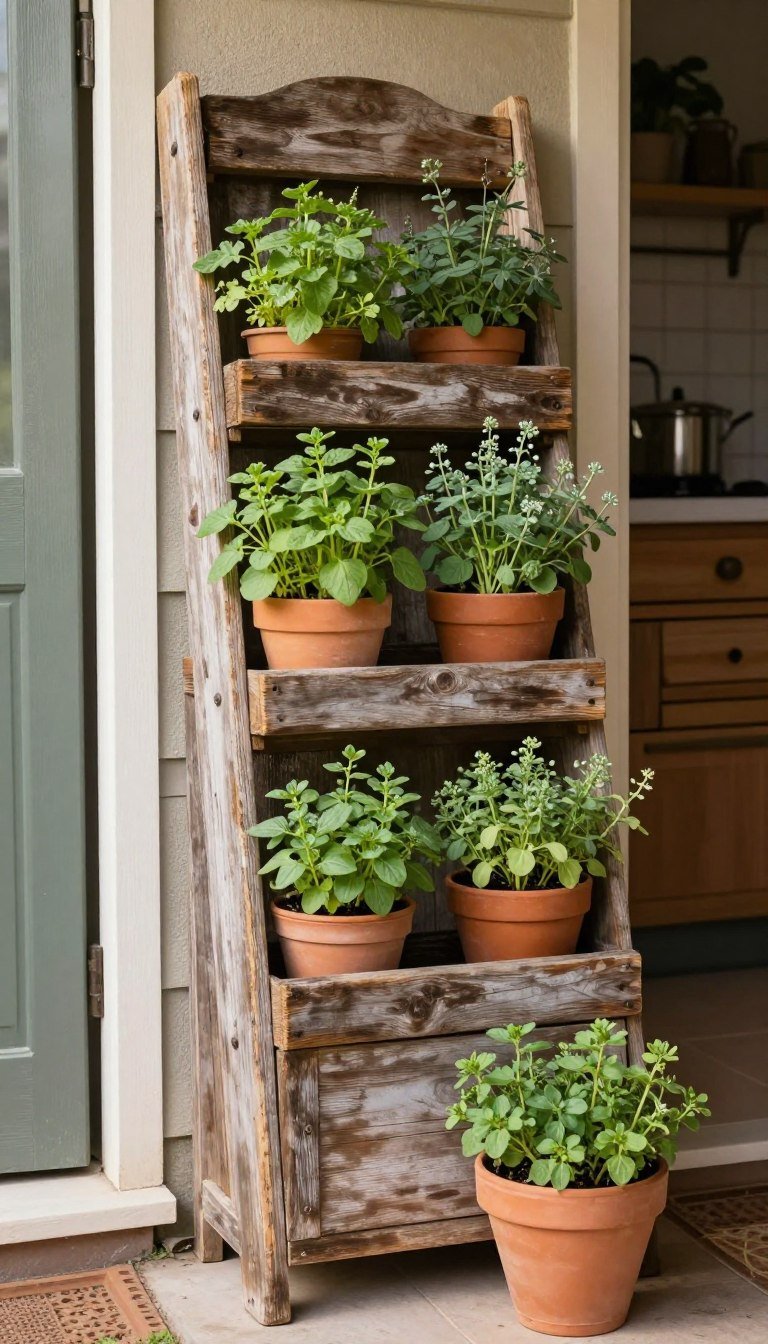
11. Build a Tiered Medicinal Herb Garden
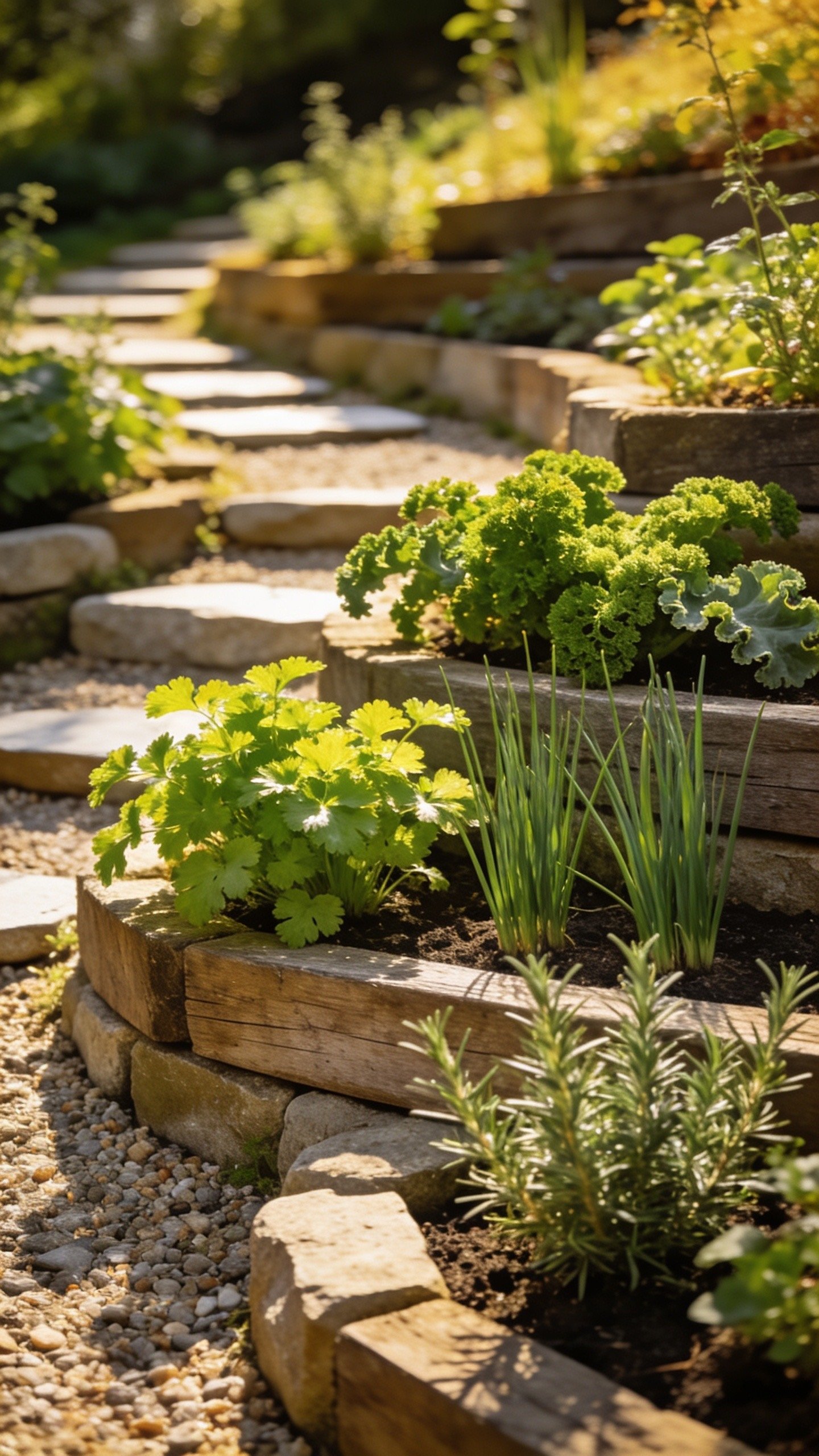
Check each level for different drainage and drying rates.
Tiered layouts work particularly well when floor space is limited or the garden sits on a slope. Multiple levels create separate planting zones and allow more herbs to remain visible.
Place frequently harvested herbs at a comfortable reaching height and use compact or cascading plants to soften the edges. Taller plants can occupy suitable upper or rear levels as long as they do not unnecessarily shade smaller herbs.
Remember that raised and tiered areas can drain and dry at different rates. Check the soil on each level rather than assuming every tier needs exactly the same watering schedule.
Arrange the Levels With
- Taller plants on suitable upper or rear levels.
- Compact herbs near accessible edges.
- Plants with similar moisture needs together.
- Frequently harvested herbs at comfortable reaching height.
Small-space tip: You do not need an elaborate staircase of planting beds. Even two different heights can give a compact herb garden more growing room and visual interest.
12. Create a Medicinal Herb Garden Close to the Kitchen
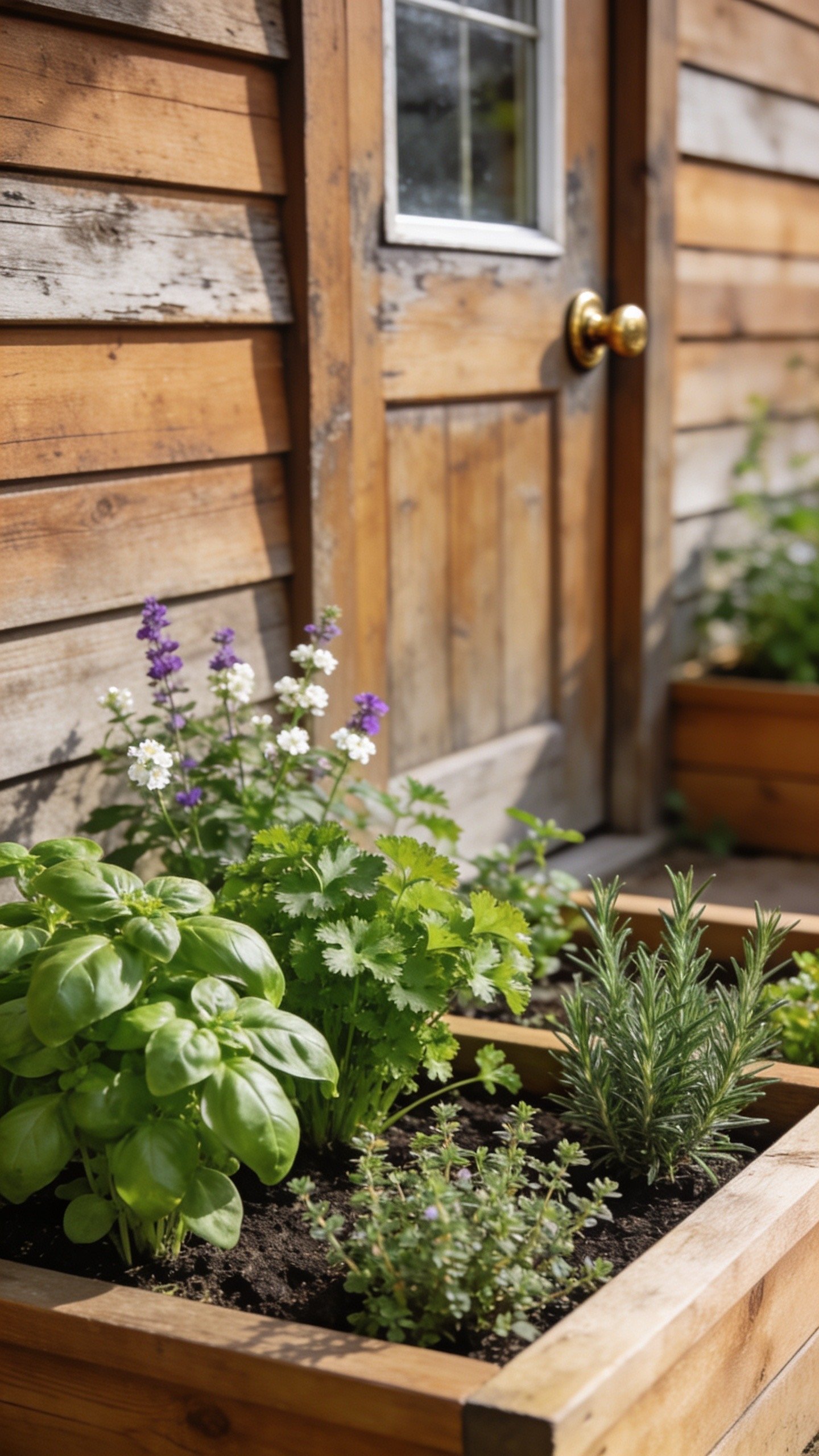
Convenience often matters more than elaborate garden design.
A bed or collection of containers beside the kitchen door makes frequently used herbs much easier to harvest. This works particularly well for plants with both culinary and traditional herbal associations.
Rather than separating “medicinal” and “culinary” herbs rigidly, think about how often you use each plant. Put everyday herbs closest to the house and leave larger perennials or less frequently harvested plants farther away.
Keep Close to the Kitchen
- Herbs you harvest regularly.
- Plants that need frequent checking or watering.
- Container-grown spreading herbs.
- Clearly labeled plants used for more than one purpose.
Most practical option: The best herb garden is not necessarily the most elaborate. It is the one that makes it easy to step outside, check the plants, and actually use them.
You Might Also Like
How to Plan a Medicinal Herb Garden Layout
Sunlight, soil, drainage, available space, and local climate determine which herbs can realistically grow well together. Spend a little time observing the garden before buying plants or seed.
- Map the sunlight: Notice which areas receive full sun, partial shade, or prolonged shade.
- Check drainage: Avoid grouping moisture-loving plants with herbs that require much drier conditions.
- Research mature size: A small nursery plant may eventually need considerably more room.
- Consider access: You should be able to harvest without stepping on or leaning across other plants.
- Identify vigorous growers: Plants with spreading habits may be easier to manage in containers or defined areas.
- Think about frequency of use: Keep regularly harvested herbs in the easiest positions.
Sketch the garden on paper and mark the paths or access points first. Add the planting zones afterward. It is much easier than enthusiastically filling every available inch and discovering later that you have nowhere to stand.
Ready to plan your planting zones?
Use the seven-step layout formula below to match your herbs with the light, soil, moisture, and access your garden already provides.
How to Group Medicinal Herbs in the Garden
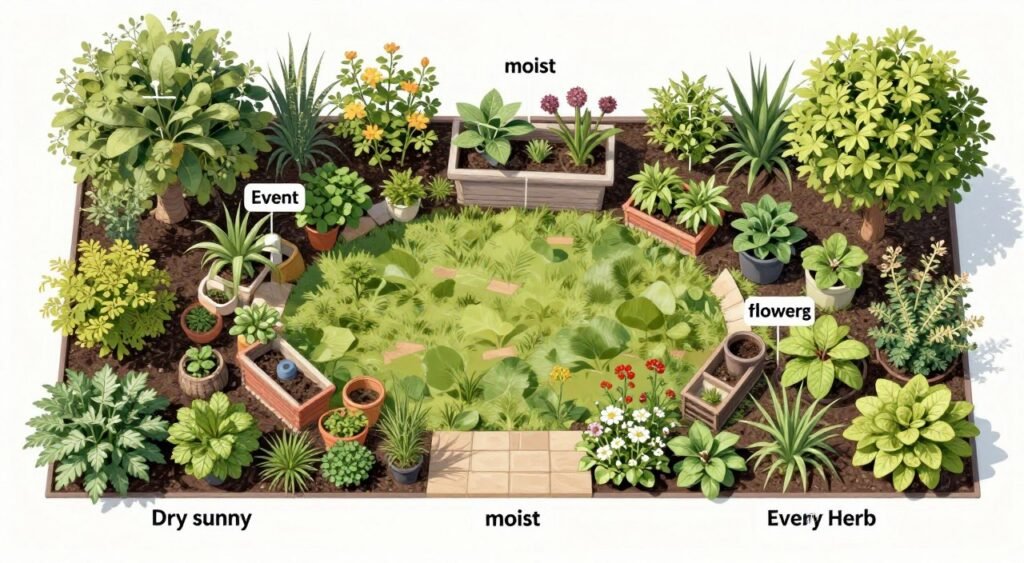
Plant compatibility begins with growing conditions.
Grouping herbs by growing requirements is generally more useful than arranging them solely by traditional uses. Plants associated with similar preparations may need very different amounts of sunlight, water, or drainage.
- Dry and sunny area: Reserve this for suitable herbs that prefer strong drainage and plenty of light.
- More consistently moist area: Use this for plants that dislike drying out excessively.
- Container zone: Useful for vigorous plants or herbs needing their own soil conditions.
- Flowering section: Group compatible flowering herbs where they can also contribute ornamental color.
- Everyday section: Keep frequently harvested plants closest to the main path or house.
Why it works: Grouping by growing conditions reduces watering problems and makes routine care much simpler.
Medicinal Herb Garden Ideas for Small Spaces
A traditional garden bed is not required. A manageable collection of herbs you will genuinely use can be more rewarding than dozens of varieties that become crowded and difficult to identify.
- Use containers: Individual pots make it easier to control different growing conditions.
- Try a narrow raised bed: Position it against a suitable sunny boundary while keeping every plant within reach.
- Use different heights: Plant stands and tiered arrangements can increase growing space on a patio.
- Choose carefully: Prioritize herbs you will realistically harvest rather than collecting plants simply because they are traditionally described as medicinal.
- Keep labels visible: Correct identification is especially important when several herbs have similar foliage.
Basil, parsley, thyme, mint, lemon balm, and rosemary can suit many compact garden plans, but their exact requirements vary by species, cultivar, climate, and site. Check appropriate local growing guidance before planting.
Small-space rule: Start with a few herbs you genuinely want to grow, leave room for them to mature, and add more only after you see how the first group performs.
Make a small space work harder
Choose one accessible herb garden layout, leave room for mature growth, and add new plants only after you understand how the first group performs.
Common Medicinal Herb Garden Layout Mistakes to Avoid
A beautiful plan can quickly become difficult to maintain when mature size, growing conditions, and accessibility are overlooked.
- Planting everything too close together: Check mature spacing rather than judging by the size of young plants.
- Treating every herb the same: Sunlight, moisture, soil, and drainage requirements can vary considerably.
- Putting tall plants in front of smaller ones: Consider how shadows will change as plants mature.
- Ignoring spreading habits: Some herbs can move well beyond their intended planting area when conditions suit them.
- Making beds too difficult to reach: Practical harvesting access should be part of the layout from the beginning.
- Forgetting labels: Accurate identification matters when plants are intended for culinary or traditional herbal use.
- Assuming “natural” automatically means safe: Plants can have contraindications, side effects, interactions, or toxic parts even when they have a history of traditional use.
St. John’s wort is one example of a plant that deserves particular caution because traditional use does not remove the possibility of significant interactions or other concerns. Keep questions about safe use separate from decisions about where a plant looks good in the garden.
An Easy Medicinal Herb Garden Layout Formula
If you are starting a new herb garden, use this simple sequence. You can always expand the planting later after you learn which herbs thrive in the space and which ones you actually use.
- Choose a suitable growing area and record its sunlight throughout the day.
- Select a manageable number of correctly identified herbs suited to your conditions.
- Group plants according to sunlight, soil, drainage, and moisture needs.
- Place taller plants where they will not unnecessarily shade smaller ones.
- Keep frequently harvested herbs close to paths or the house.
- Give vigorous plants their own containers or appropriately contained areas where needed.
- Label everything clearly and leave enough room for mature growth.
Why this formula works: The shape of the garden can change completely—from a raised bed to a cottage border or keyhole layout—but the basic principles of suitable conditions, access, and mature spacing remain the same.
Final Thoughts
A medicinal herb garden can be every bit as attractive as an ornamental border while giving you a practical collection of useful plants. The best layout depends less on having a large garden and more on putting the right herbs in the right conditions.
Choose a neat raised bed, cottage-style border, patio containers, or compact keyhole garden. Start with herbs suited to your climate and growing space, group compatible plants together, and make sure harvesting and routine care are easy.
Remember that growing a plant safely and using it safely are separate matters. Correct identification and reliable professional guidance are particularly important for children, pregnancy or breastfeeding, existing medical conditions, allergies, and anyone taking medication. Traditional use alone does not establish that a particular herb is suitable, effective, or safe for you.