12 Country Front Garden Ideas for a Welcoming Entrance
A country-style front garden should feel welcoming before you’ve even reached the front door. Think softly overflowing borders, traditional paths, climbing roses, weathered pots, and the slightly relaxed planting that makes a home look as though it has settled comfortably into its surroundings.
You don’t need a sprawling cottage or acres of land to create the look, either. A small front yard can capture just as much country charm with a narrow flower border, a pretty gate, a few generous containers, or one beautiful climber framing the entrance.
The most convincing spaces balance prettiness with practicality. These country front garden ideas combine flowers, pathways, boundaries, and simple architectural details to create an entrance that feels warm, established, and inviting throughout the seasons.
Quick Guide: Choose Your Country Front Garden Look
- Classic cottage: Roses, lavender, foxgloves, informal borders, and a traditional gate.
- Small front garden: Concentrate planting around the path and doorway rather than filling every available space.
- Low-maintenance look: Use repeat planting, hardy shrubs, suitable perennials, and simple evergreen structure.
- More privacy: Consider hedging or appropriate screening while keeping the entrance visible and welcoming.
- Instant charm: Add generous containers, a beautiful front-door color, and seasonal planting.
- Established country feel: Mix natural materials such as stone, brick, timber, gravel, and terracotta.
Before planting, think about how the garden actually functions. Keep the route to the door comfortable, maintain necessary visibility, and choose plants suited to your soil, climate, sunlight, and available space. A front garden should be charming, but nobody wants to fight through a rose bush every time they bring the groceries home.
1. Line the Path With Romantic Cottage Flowers
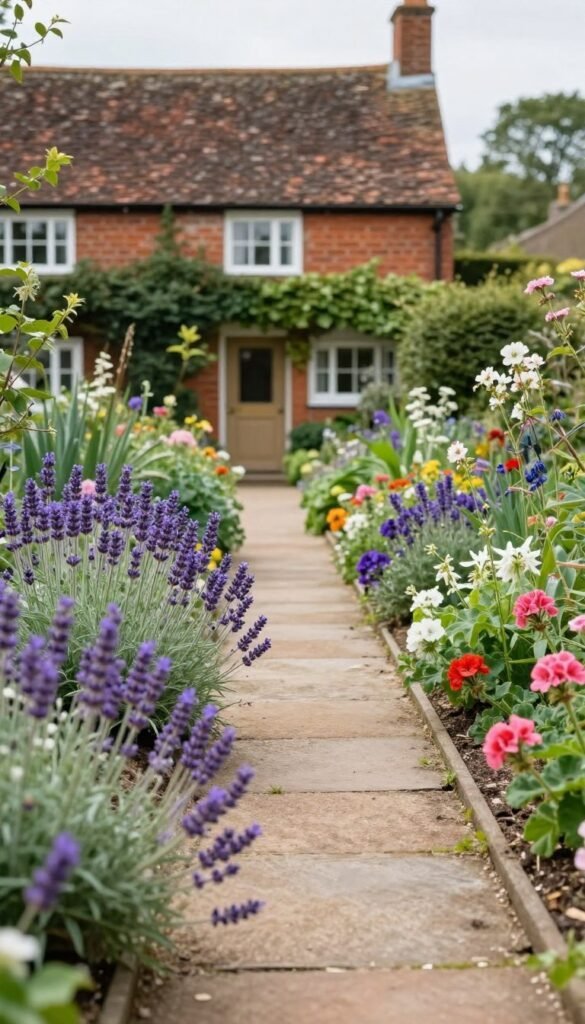
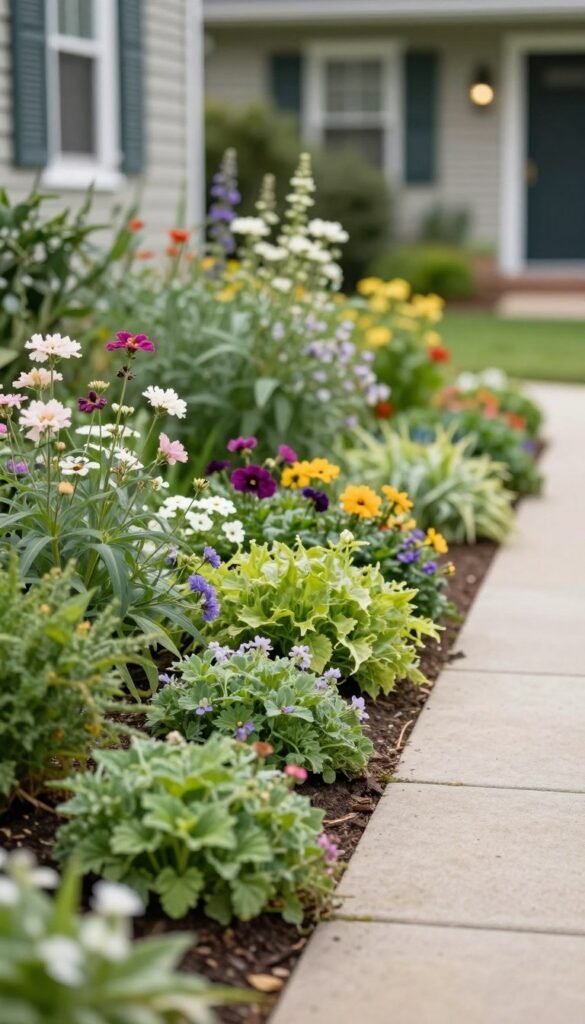
A flower-lined path immediately creates that abundant country garden feeling. Rather than keeping plants confined to rigid beds far from the walkway, allow suitable flowers and foliage to soften the edges and gently frame the route toward the house.
Choose a mixture of plants with different heights and flowering periods so the border doesn’t rely on one spectacular week of color. Depending on your growing conditions, you might combine hardy geraniums, salvias, catmint, lavender, roses, foxgloves, or other cottage-style favorites suited to your area.
Keep mature plant sizes in mind and leave enough clear path width for comfortable access. The goal is charmingly informal, not an obstacle course with bees.
Create a Layered Border
- Low-growing plants along the path edge.
- Medium-height perennials through the middle.
- Taller flowers toward the back where appropriate.
- Shrubs or roses for longer-term structure.
Creates this effect: Layering plants at different heights gives a relatively narrow border the lush, established appearance associated with traditional country gardens.
2. Frame the Front Door With Climbing Roses
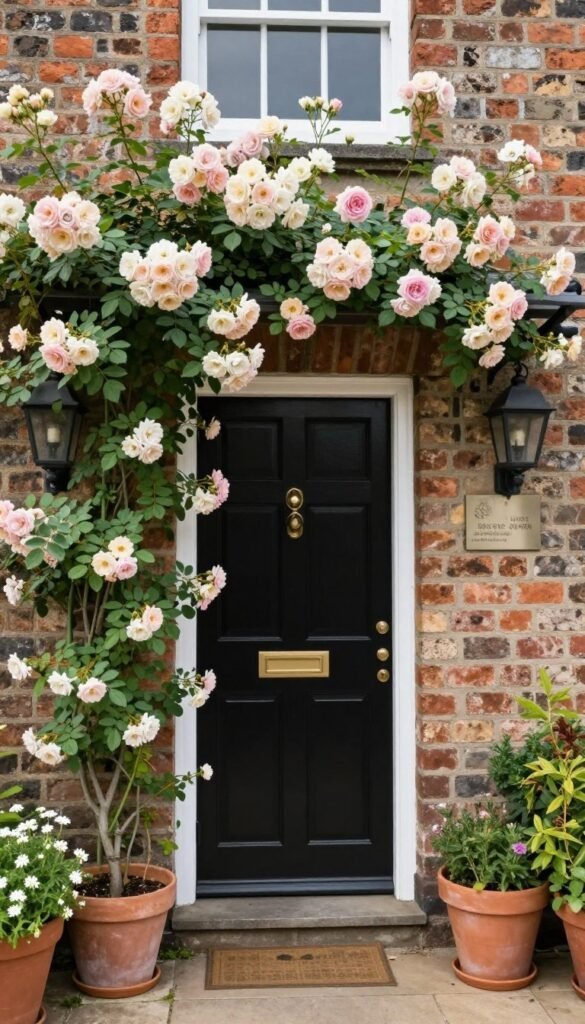
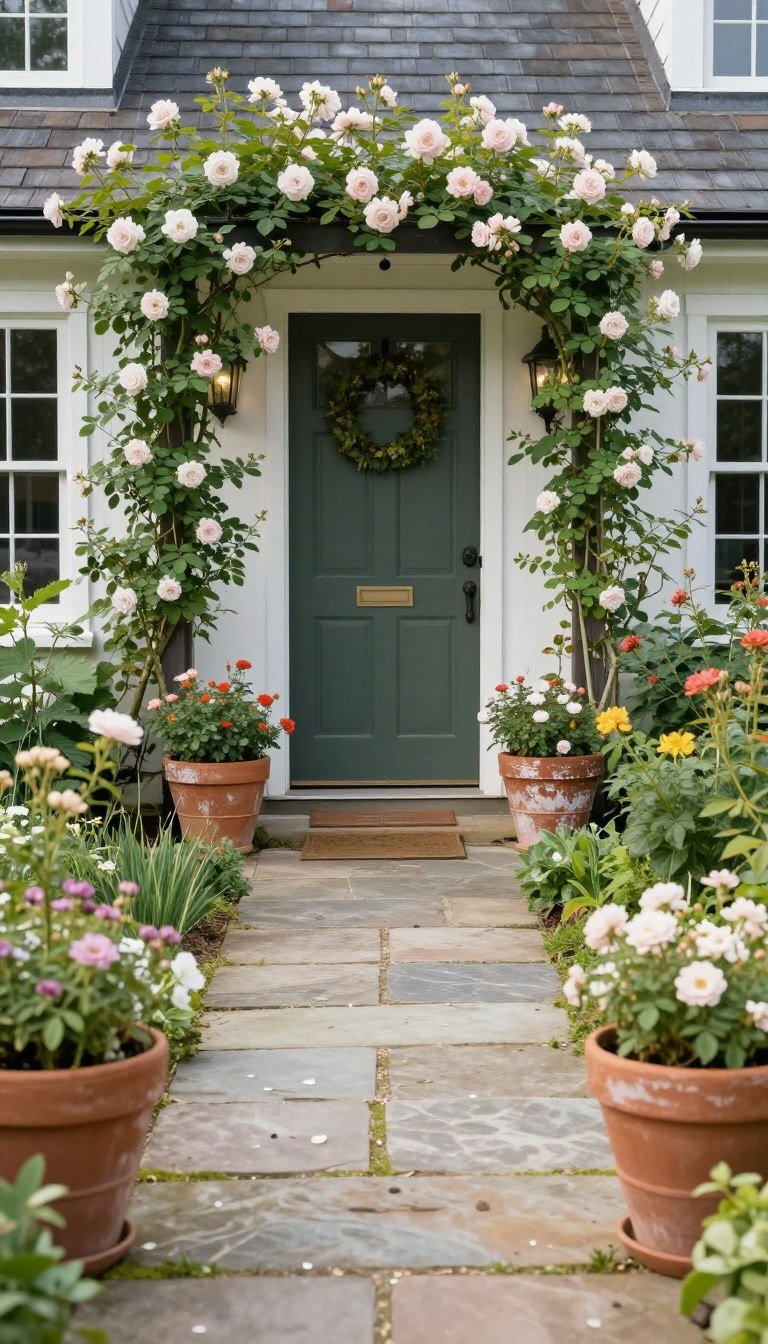
Few things say country garden quite like roses growing around an entrance. A well-positioned climbing rose can soften brick, stone, or rendered walls and make even a fairly simple doorway feel romantic and established.
Choose a variety suitable for your climate, aspect, available space, and intended support. Climbing roses require proper training and maintenance rather than simply being left to attach themselves to the building.
Keep growth managed around doors, windows, gutters, lights, and pathways. You want the flowers framing the architecture rather than slowly claiming ownership of the entire house.
Complete the Entrance With
- Traditional wall lanterns.
- Terracotta pots.
- A simple doormat.
- Classic door hardware.
Most timeless option: Soft pink, cream, or white roses create a romantic look that works beautifully with traditional brick, stone, and painted exteriors.
3. Add a Traditional Garden Gate
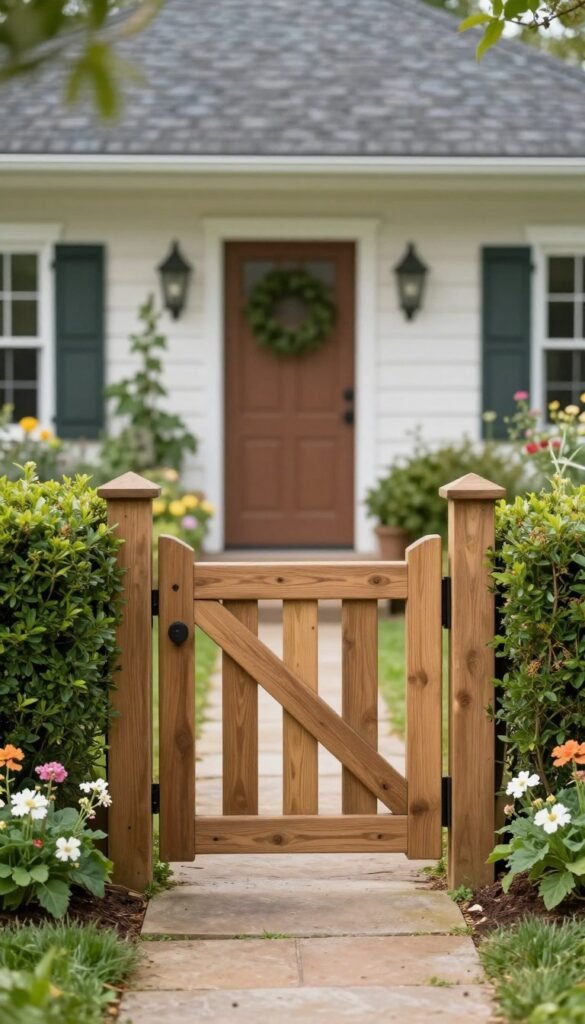
A garden gate creates a wonderful sense of arrival, even when the distance between the sidewalk and front door isn’t particularly large. Timber and simple painted designs feel especially appropriate for country-style gardens.
Surround the gate with planting rather than leaving it isolated. Low hedging, cottage flowers, or appropriately supported climbers can help the entrance feel like part of the garden instead of a purely functional boundary.
Make sure the gate opens comfortably, provides the access you need, and complies with any relevant local requirements. Keep latches and pathways easy for visitors to use.
Country Gate Details
- Painted or natural timber.
- Simple traditional hardware.
- Low planting on either side.
- A clearly defined path beyond.
Easiest upgrade: If you already have a suitable gate, a fresh finish and refreshed planting around it may be enough to completely change the first impression.
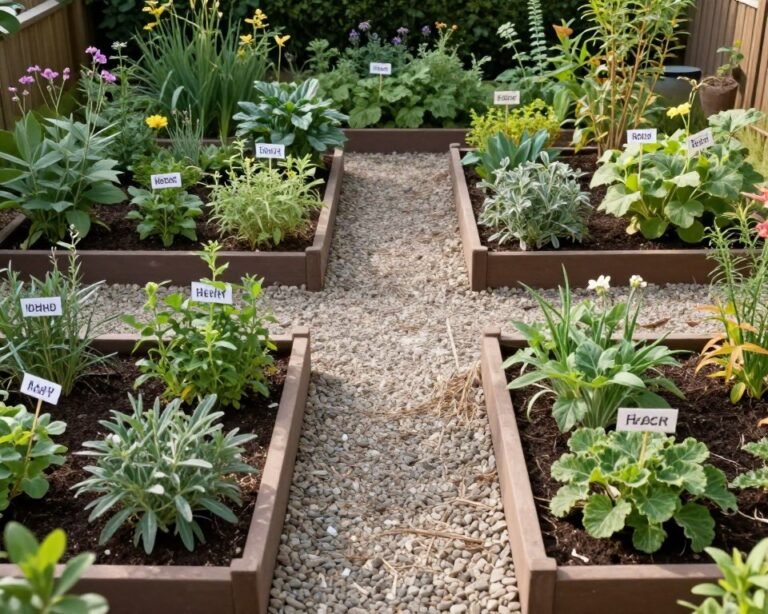
4. Use Gravel for a Relaxed Country Path
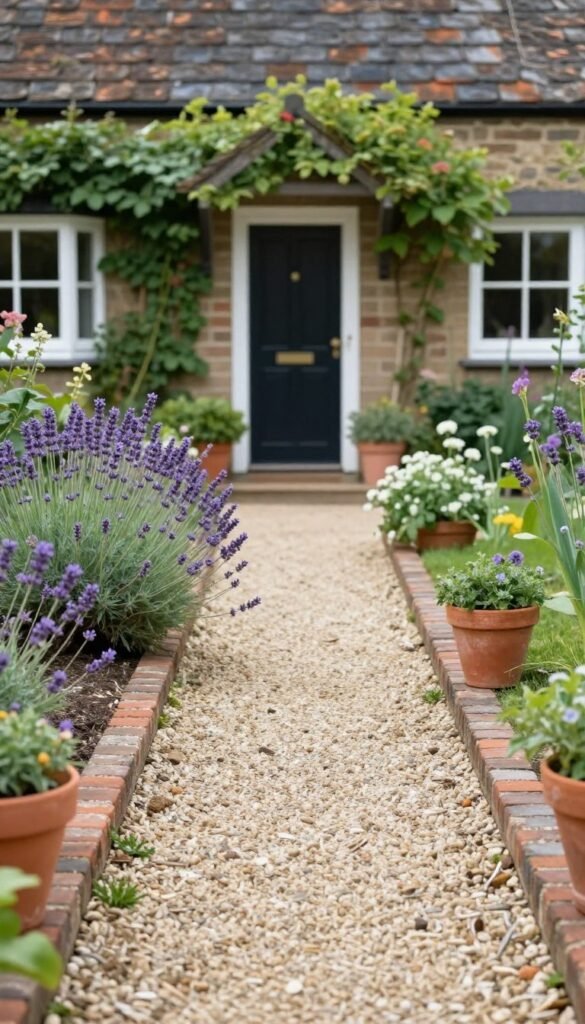
Gravel can give a front garden an informal country character while providing a clear visual route toward the entrance. Its natural texture works beautifully beside brick, stone, timber, clipped hedging, and loose cottage planting.
Good preparation underneath matters if you want the path to remain practical. Consider edging, drainage, the appropriate depth and type of material, accessibility, and how the surface will behave on slopes or in your local weather conditions.
For a softer look, allow suitable low-growing plants to approach the edges while keeping the main walking surface comfortably clear.
Pair Gravel With
- Brick or stone edging.
- Lavender and herbs.
- Informal perennial borders.
- Terracotta containers.
- Traditional timber gates.
Designer detail: Repeating the same natural material elsewhere, perhaps in a side path or around containers, helps the gravel feel integrated into the garden rather than added as an afterthought.
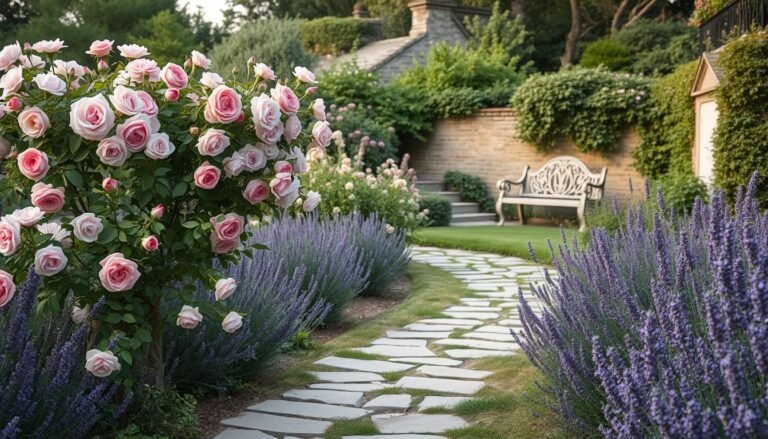
5. Plant Lavender Along the Entrance
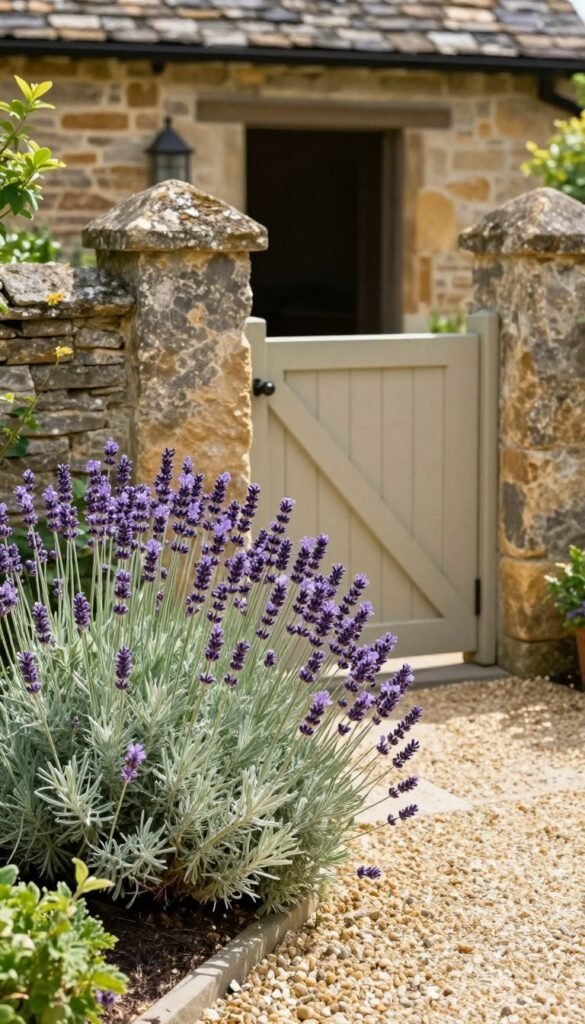
Lavender can create a beautiful rhythm along a sunny entrance, with silvery foliage providing structure even before the flowers appear. When in bloom, the purple tones work especially well with warm stone, brick, gravel, and painted timber.
It isn’t suitable for every garden, however. Lavender generally performs best with plenty of sun and good drainage, and the right species or cultivar will depend on your climate and growing conditions.
Rather than squeezing plants tightly together for instant fullness, consider their mature spread and keep enough clearance from the path. This helps preserve airflow and prevents the entrance from becoming unnecessarily restricted.
Try Lavender With
- Roses.
- Salvias.
- Catmint.
- Ornamental grasses.
- Warm stone or gravel.
Why gardeners love it: Where conditions suit it, lavender combines flowers, fragrance, foliage, and a naturally relaxed shape in one relatively simple planting choice.
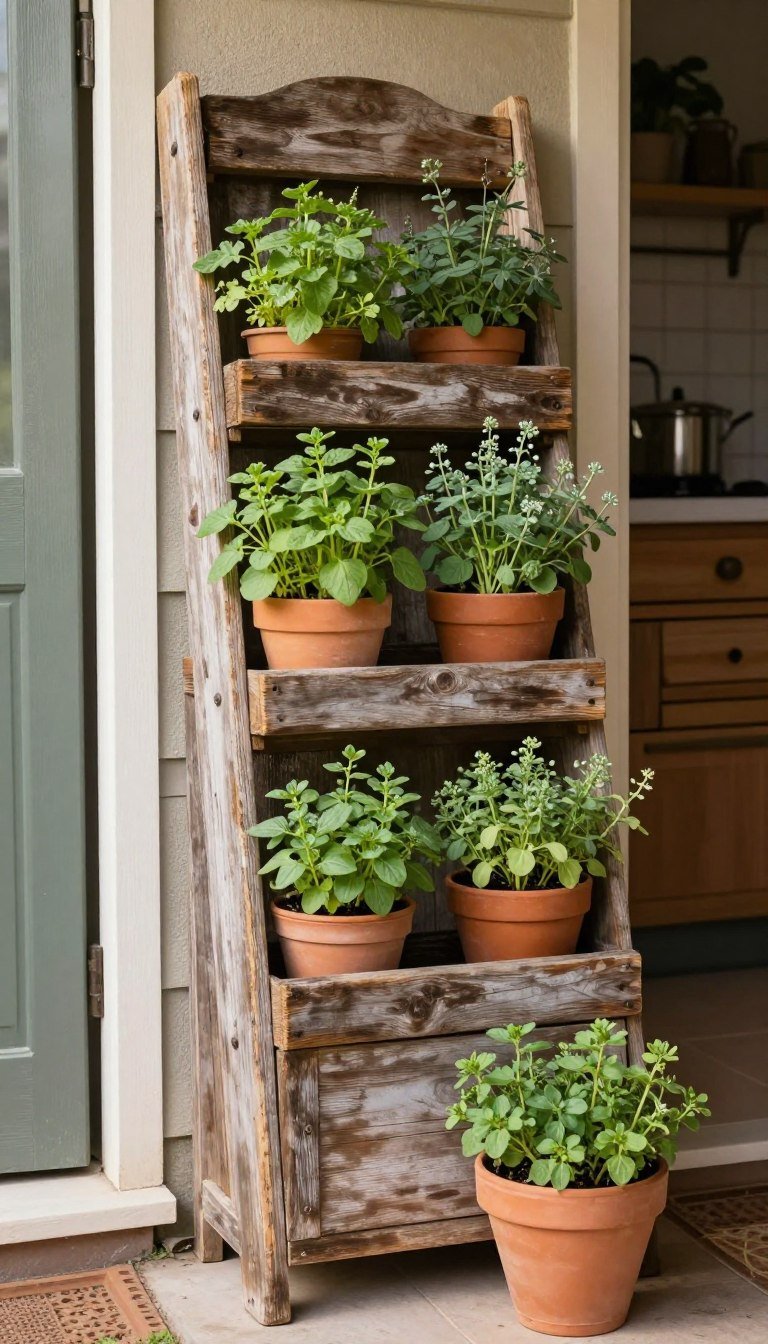
6. Create an Abundant Front Door Container Display
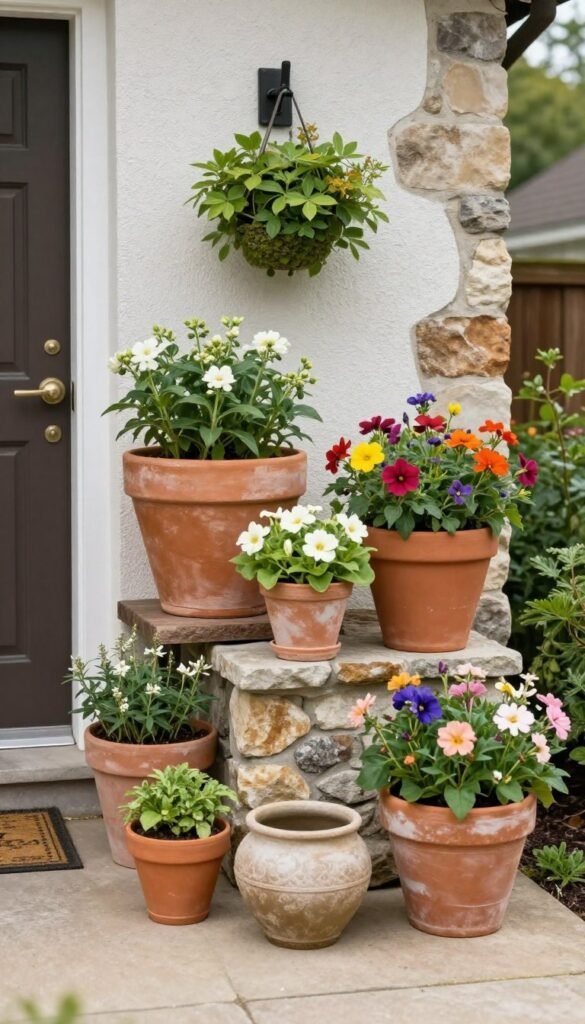
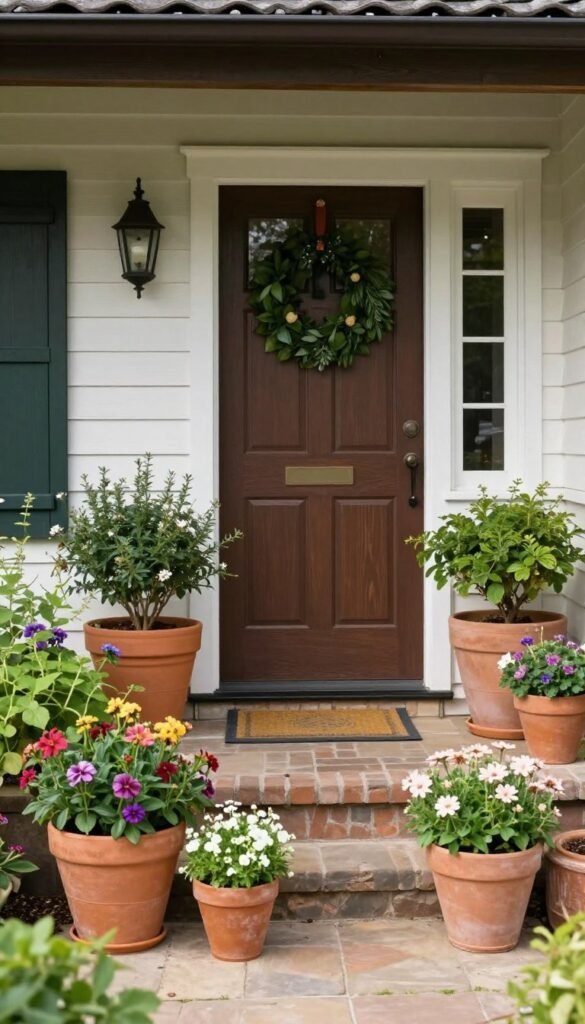
Containers are one of the quickest ways to give a small front garden country charm. Grouping several pots near the entrance creates the impression of abundant planting without requiring a large flower bed.
Mix pot sizes rather than using identical containers in a rigid row. Terracotta, aged stone-effect finishes, and simple glazed pots can all work beautifully, particularly when the colors and materials relate to the house.
Choose plants for the amount of light the doorway actually receives and remember that containers generally require more regular watering than plants growing directly in the ground.
Easy Container Formula
- One larger structural plant.
- Two or three flowering plants.
- Soft trailing foliage where appropriate.
- A mixture of complementary pot sizes.
Small space tip: Concentrate containers beside the doorway or against the house rather than lining the entire path, keeping valuable walking space open while still creating plenty of impact.
7. Define the Garden With a Low Country Hedge
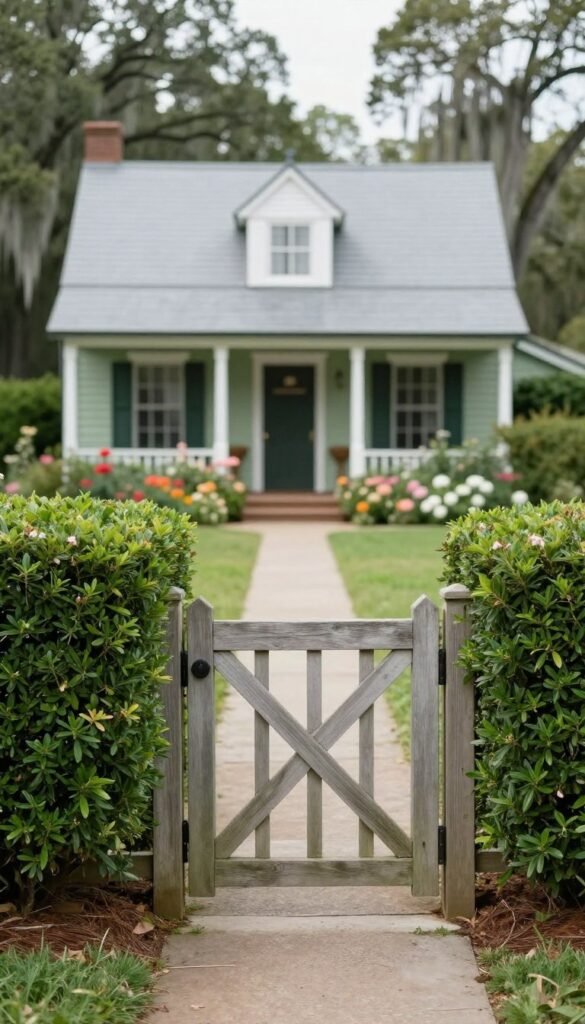
A low hedge can give a country front garden structure without making the entrance feel closed off. It creates a clear boundary, provides a green backdrop for flowers, and can make even a relatively small garden feel more established.
The best hedge will depend on your climate, soil, available space, and how much maintenance you’re willing to do. Some varieties naturally stay compact, while others need regular trimming to prevent them from becoming too wide or tall for a small front yard.
For a softer country look, pair a simple hedge with looser flowering plants. That mix of structure and abundance is what stops the garden from feeling either too formal or completely unruly.
Use a Low Hedge To
- Define the front boundary.
- Frame a traditional garden gate.
- Create structure behind flower borders.
- Separate pathways from planting.
Practical detail: Check the mature height and spread before planting. Choosing a hedge that naturally suits the available space can save you a considerable amount of trimming later.
8. Introduce a Rustic Brick or Stone Path
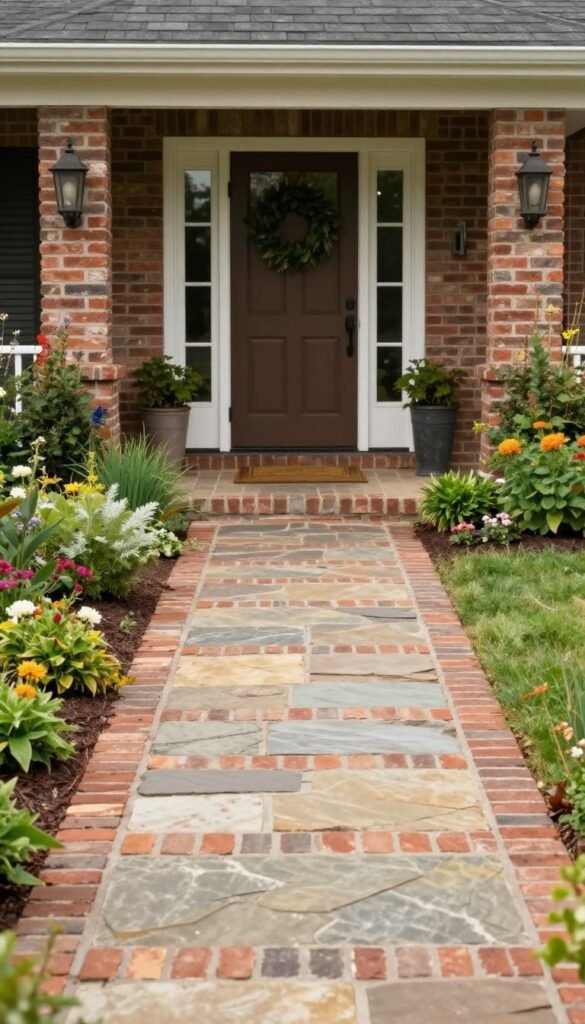
Natural-looking paving can instantly change the character of a front garden. Brick, stone, and other traditional-style materials bring warmth and texture that sit beautifully beside informal planting.
A gently curved route can work well in a larger cottage garden, while a straight path often makes more sense in a compact front yard. Either can feel country-inspired when the edges are softened with planting and the materials relate to the house itself.
Whatever style you choose, prioritize a stable, appropriately constructed walking surface with suitable drainage. A front path may be pretty, but it still has a job to do every single day.
Country Path Materials
- Traditional brick.
- Natural stone.
- Stone-effect paving.
- Gravel with defined edging.
Budget-friendly version: If replacing the entire path isn’t practical, refresh the borders and add coordinated containers nearby. An existing walkway can feel much more intentional once the planting around it supports the country look.
9. Add a Small Flowering Tree for Height
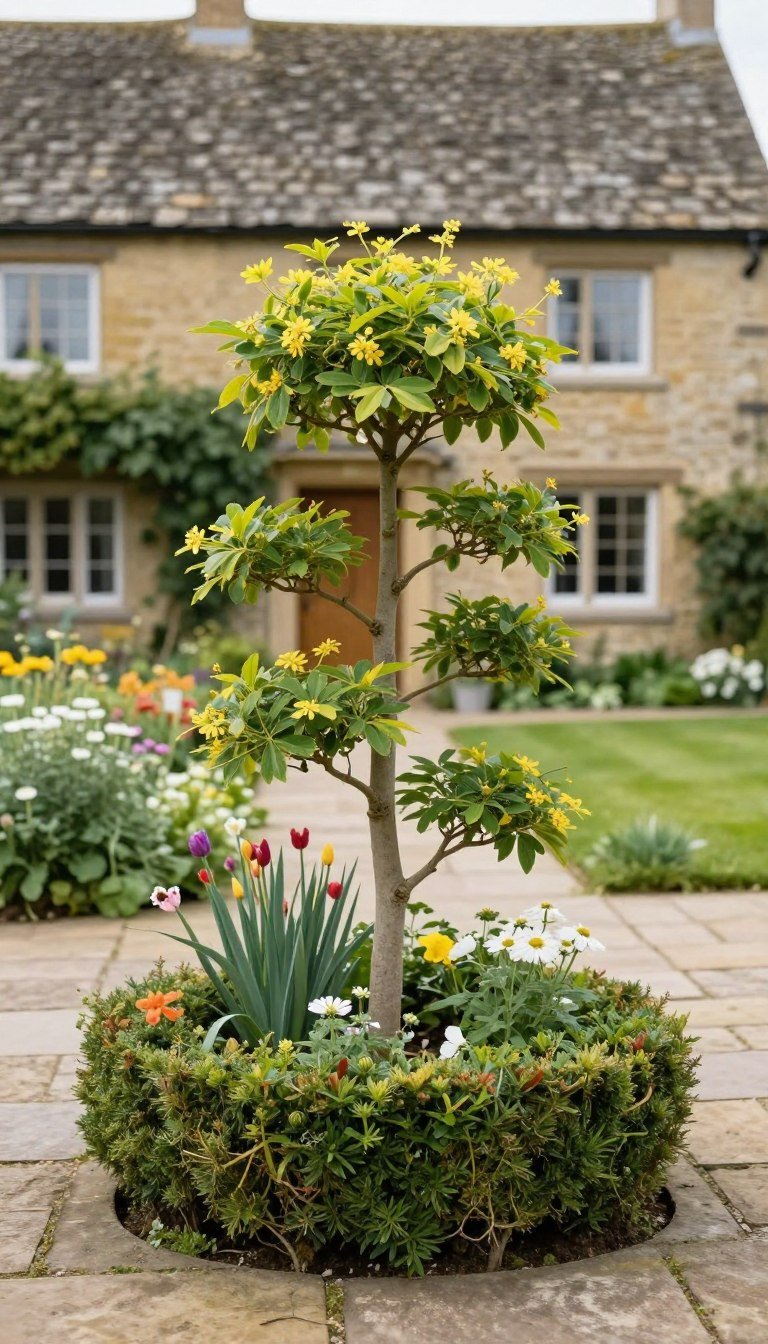
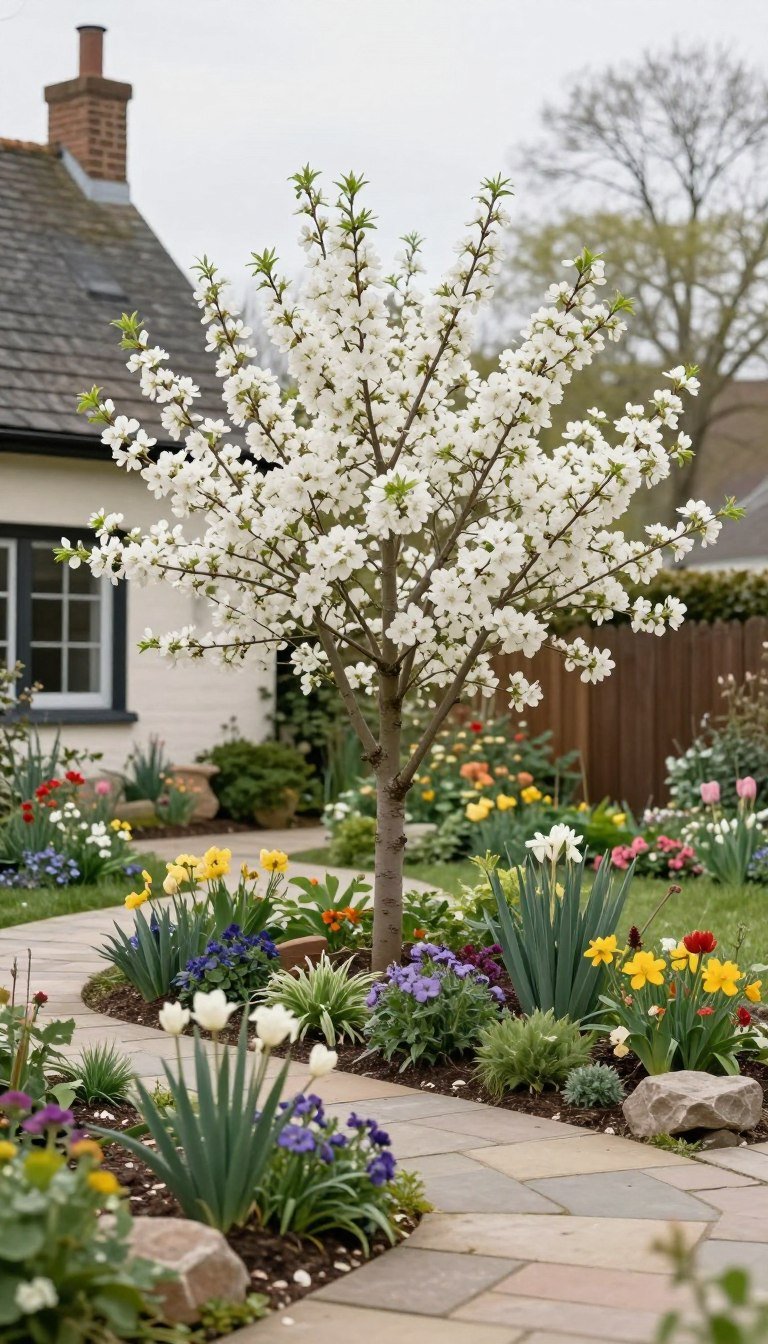
Front gardens often contain plenty of low planting but very little at eye level. A carefully chosen small tree can introduce height, seasonal interest, and a stronger sense of structure without requiring a huge amount of ground space.
Flowering crabapples, ornamental cherries, serviceberries, magnolias, and other compact trees may be possibilities depending on your climate and site. The important part is choosing for mature size rather than how conveniently tiny the tree looks at the garden center.
Consider roots, overhead cables, foundations, paths, visibility, and the eventual spread of the canopy before planting. A tree that genuinely suits the space should enhance the house rather than spend the next decade trying to move into it.
Look for a Tree With
- A mature size appropriate for your garden.
- Flowers, berries, foliage, or attractive bark for seasonal interest.
- Growing requirements suited to your site.
- A shape that won’t obstruct important access or visibility.
Why it works: One well-positioned tree can give a small garden a sense of permanence and maturity that would otherwise require considerably more planting.
10. Dress the Windows With Country-Style Window Boxes
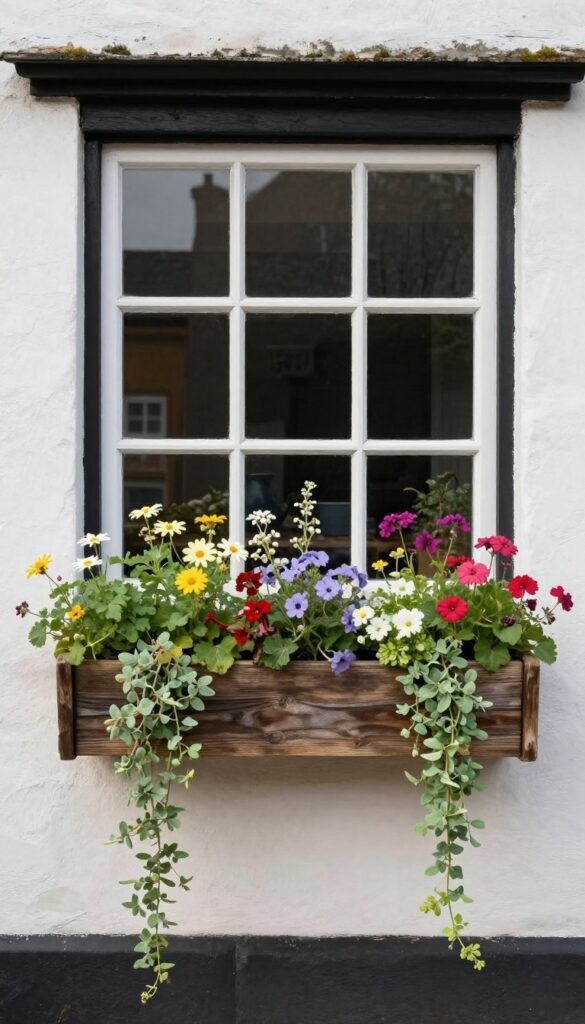
If planting space at ground level is limited, take some of the garden upward. Window boxes filled with flowers and foliage can visually connect the house to the garden while adding country charm without using any additional yard space.
For a relaxed look, combine upright plants with softer foliage that spills slightly over the edges. Keeping the palette to two or three main colors usually looks more considered than filling each box with every flower available.
Make sure window boxes are securely installed, have appropriate drainage, and can be safely reached for watering and maintenance. Choose plants according to the amount of sun or shade the windows actually receive.
Window Box Styling Ideas
- Use two or three main flower colors for a cohesive display.
- Mix flowers with foliage for a fuller look.
- Repeat a few plants already growing elsewhere in the garden.
- Choose boxes that complement the exterior materials of the house.
Small space tip: Window boxes are especially useful when most of the front garden needs to remain open for a pathway, driveway, or other practical purpose.
11. Fill the Borders With an Informal Mix of Flowers and Foliage
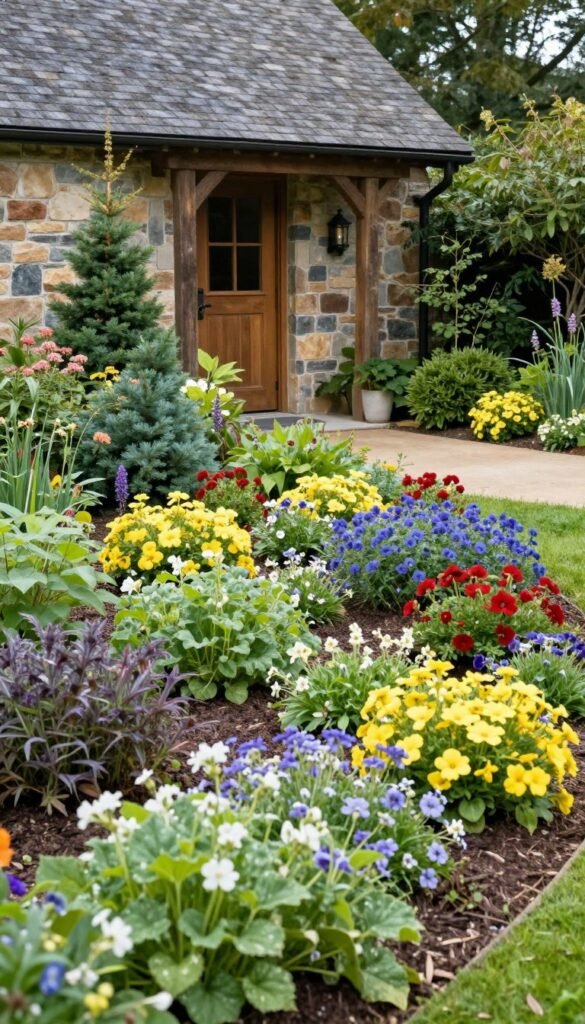
The most inviting country gardens rarely look as though every flower has been assigned an exact square of soil. Instead, plants overlap visually, foliage mingles, and repeated colors help tie the whole border together.
That relaxed appearance still benefits from planning. Combine longer-lasting structural plants with seasonal flowers, vary the heights, and repeat several key varieties throughout the garden instead of planting one of everything that catches your eye.
Think beyond peak flowering season too. Foliage, seed heads, evergreen structure, bark, berries, and bulbs can all help the front garden remain interesting for far longer than a few weeks in summer.
Build the Border in Layers
- Start with structure: Use shrubs or architectural plants as the backbone.
- Repeat perennials: Plant suitable varieties in small groups rather than isolated singles.
- Add seasonal interest: Tuck spring bulbs between established plants.
- Use foliage: Let leaves carry the border between flowering periods.
- Soften the edges: Allow appropriate plants to spill naturally toward paths and walls.
Designer detail: Repeating the same three or four plants at intervals usually creates a more cohesive garden than buying a different variety for every available gap.
12. Add a Welcoming Garden Bench
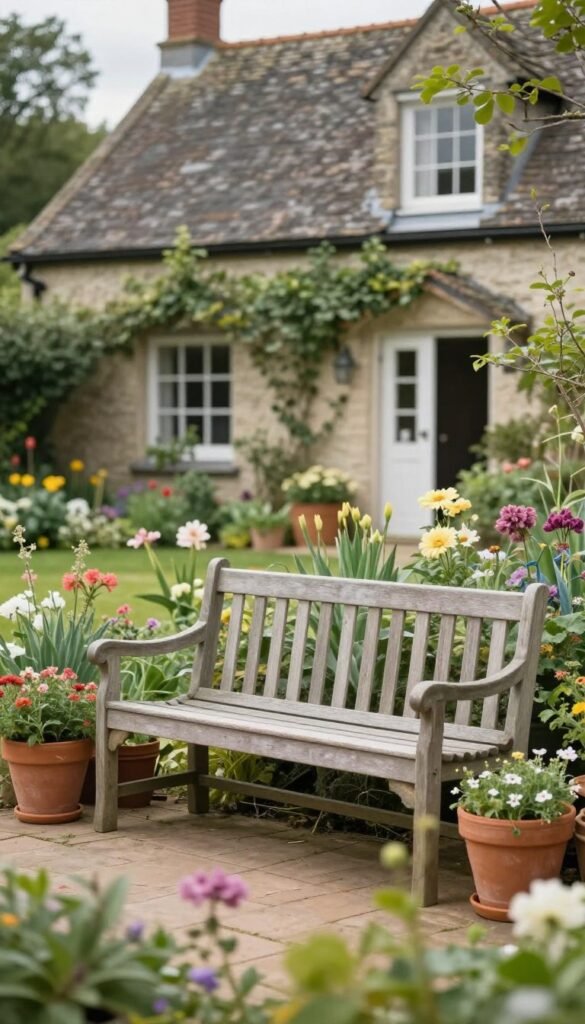
A bench gives a country front garden an instantly lived-in quality. Even if nobody regularly sits there with a cup of tea admiring the roses, it suggests that they absolutely could, which is half the charm.
Choose a position that doesn’t interfere with the main route to the house. A sheltered wall, wider section beside the entrance, or small paved area surrounded by planting can work beautifully.
Timber, painted wood, metal, and other weather-suitable materials can all complement a country garden. Choose outdoor furniture designed for the conditions it will experience and maintain it appropriately so it ages gracefully rather than simply falling apart.
Style a Country Garden Bench With
- Terracotta pots nearby.
- Flowering borders around the seating area.
- A small side planter or container.
- Outdoor cushions when appropriate for the weather.
Best placement: Tuck the bench slightly into the planting rather than leaving it stranded in the middle of an open area. It will feel much more like part of the garden.
You Might Also Like
How to Create a Country Look in a Small Front Garden
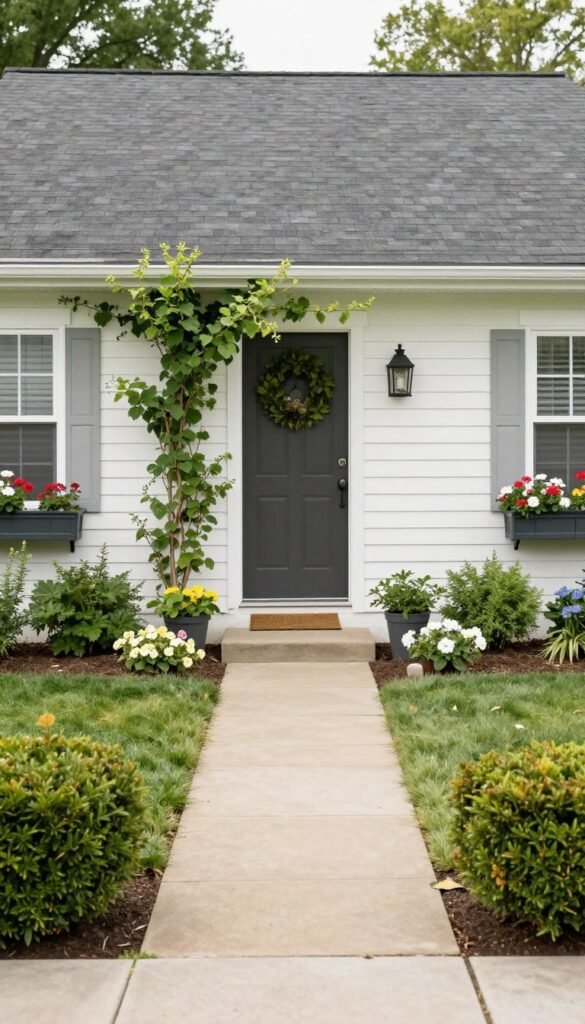
A small front garden doesn’t need every traditional country feature at once. In fact, choosing just a few strong elements usually creates a more convincing result than trying to squeeze a gate, tree, bench, six flower beds, and half a cottage garden into a tiny space.
- Concentrate planting around the entrance: Make the front door the main focal point.
- Use vertical space: Climbers and window boxes add flowers without taking up much ground.
- Repeat plants: A smaller selection used several times can make the garden feel calmer and larger.
- Keep the path generous: Don’t sacrifice comfortable access simply to squeeze in another row of flowers.
- Use containers strategically: Group pots where they make the greatest visual impact instead of scattering them everywhere.
- Keep boundaries proportionate: Lower hedges and open-style gates can provide definition without visually enclosing a tiny garden.
Easiest small-space formula: Start with a clear path, one strong planting area, one vertical feature, and a coordinated group of containers. That is often enough to create the country feeling without making the entrance crowded.
Give Your Country Front Garden Year-Round Structure
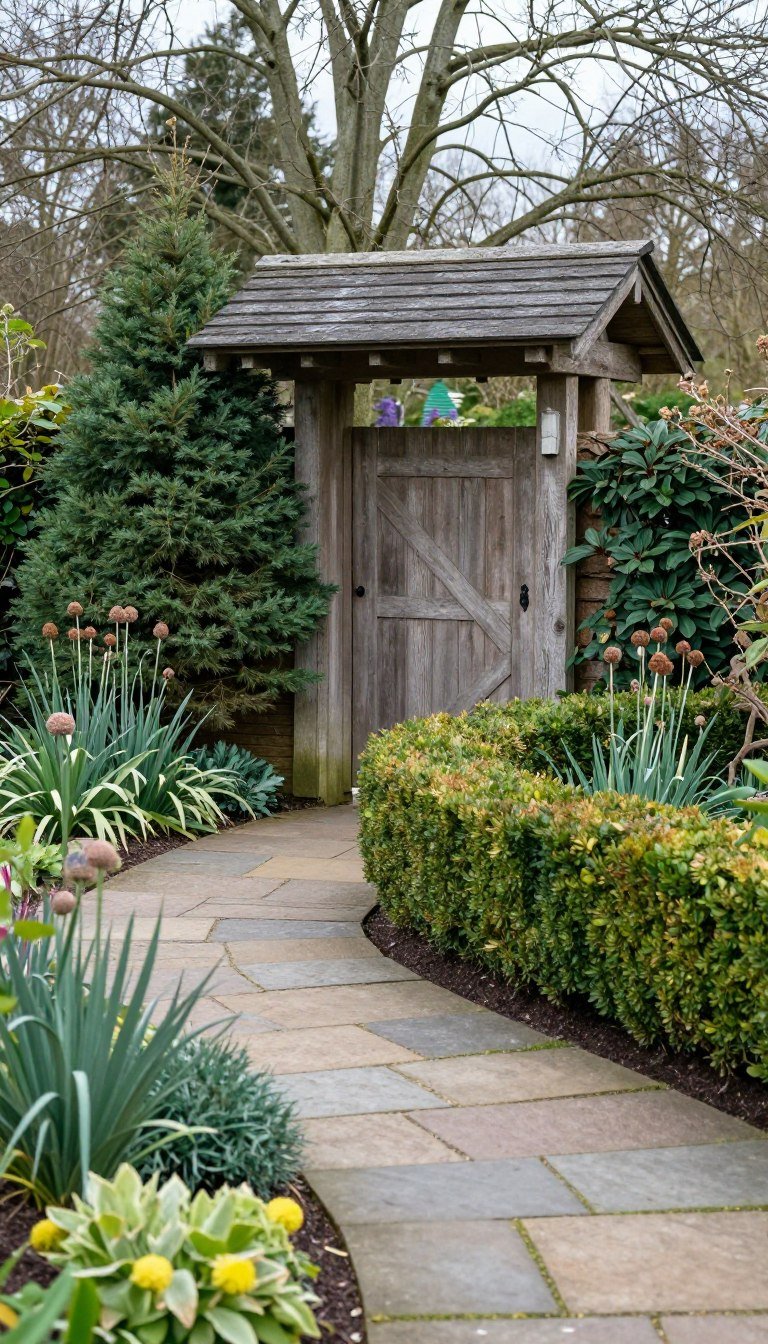
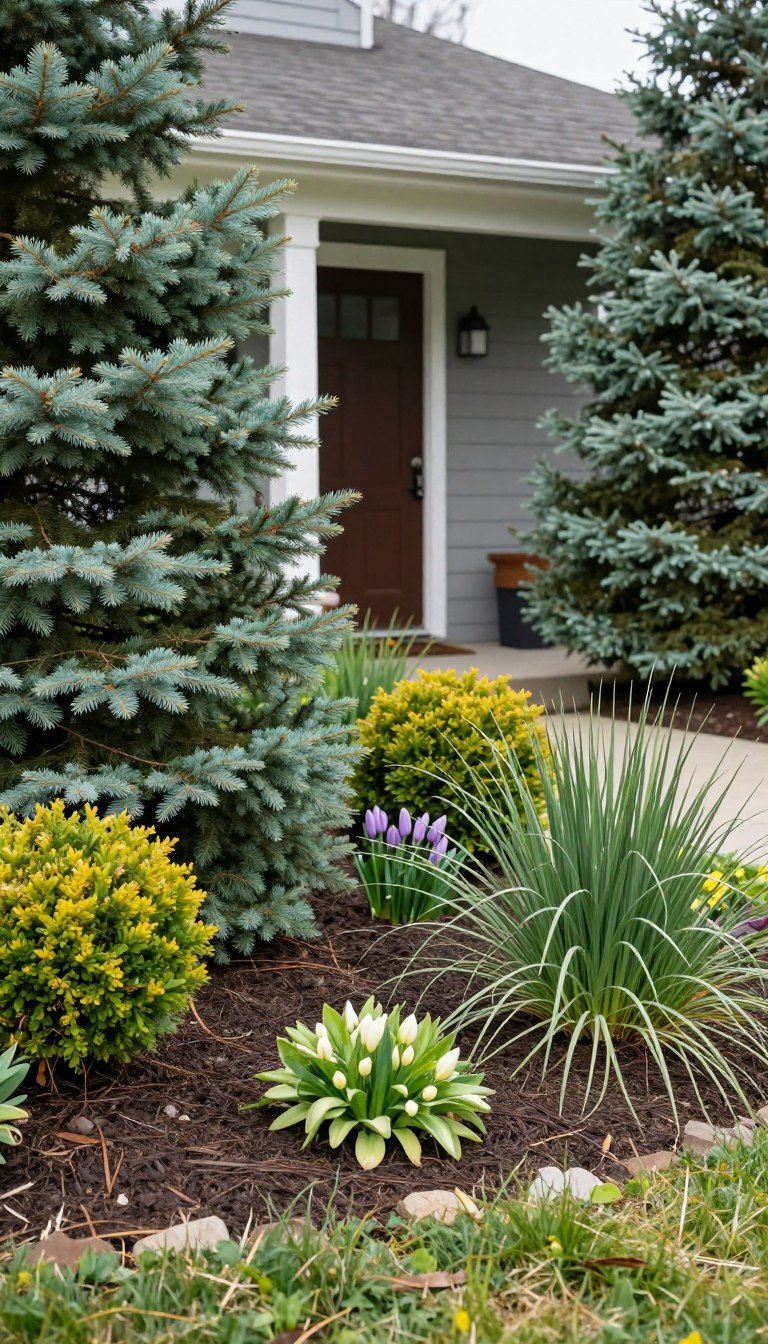
Country gardens are often photographed when every flower is performing beautifully, but your front entrance has to exist during the other months too. Building some permanent structure into the design prevents the garden from looking completely empty once the main flowering season ends.
- Include suitable evergreen shrubs where appropriate.
- Use hedging to create a permanent framework.
- Choose some plants for attractive foliage, bark, berries, or seed heads.
- Add spring-flowering bulbs between established plants.
- Use pots near the doorway for easy seasonal changes.
- Let paths, gates, walls, and other hard landscaping provide structure throughout winter.
Most useful approach: Think of flowers as one layer of the garden rather than the entire design. Paths, boundaries, foliage, shrubs, and architectural plants should still give the entrance shape when very little is blooming.
Common Country Front Garden Mistakes to Avoid
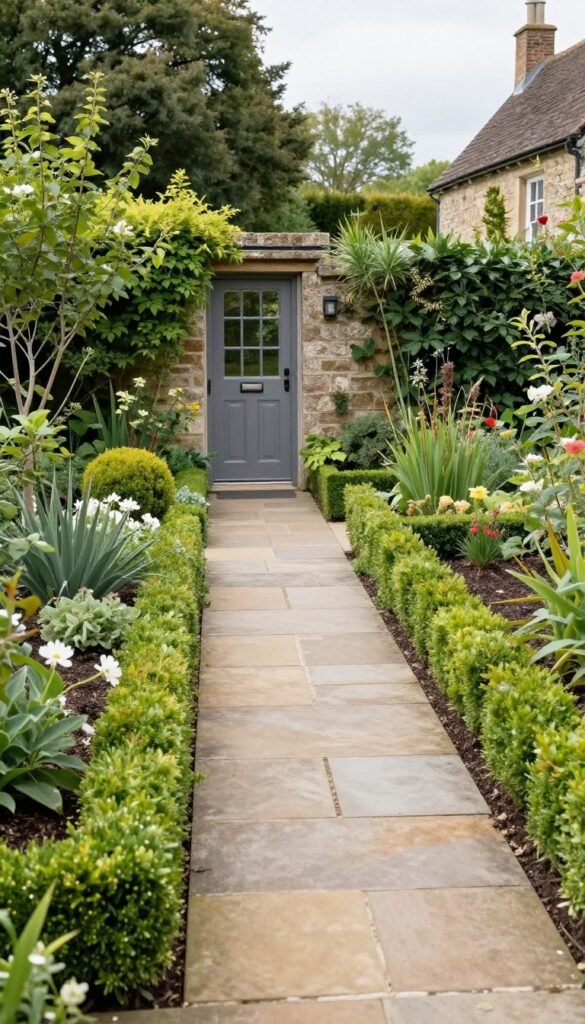
The relaxed country look can be wonderfully forgiving, but there’s a difference between informal and completely unplanned. A little restraint keeps all that abundant planting looking charming rather than chaotic.
- Overfilling the path edges: Remember how large plants will become, not just how small they are when planted.
- Choosing plants only for flowers: Include foliage and structure so the garden remains attractive for longer.
- Ignoring growing conditions: Match plants to your climate, soil, drainage, and available sunlight.
- Using too many unrelated materials: Repeating brick, stone, timber, gravel, or terracotta creates a more cohesive look.
- Blocking the entrance: Keep gates, pathways, steps, doors, and important sightlines clear.
- Forgetting mature plant size: That adorable little shrub at the garden center may have considerably bigger plans.
- Making everything perfectly symmetrical: A little variation and softness often suits a country garden better than rigid repetition.
An Easy Country Front Garden Formula
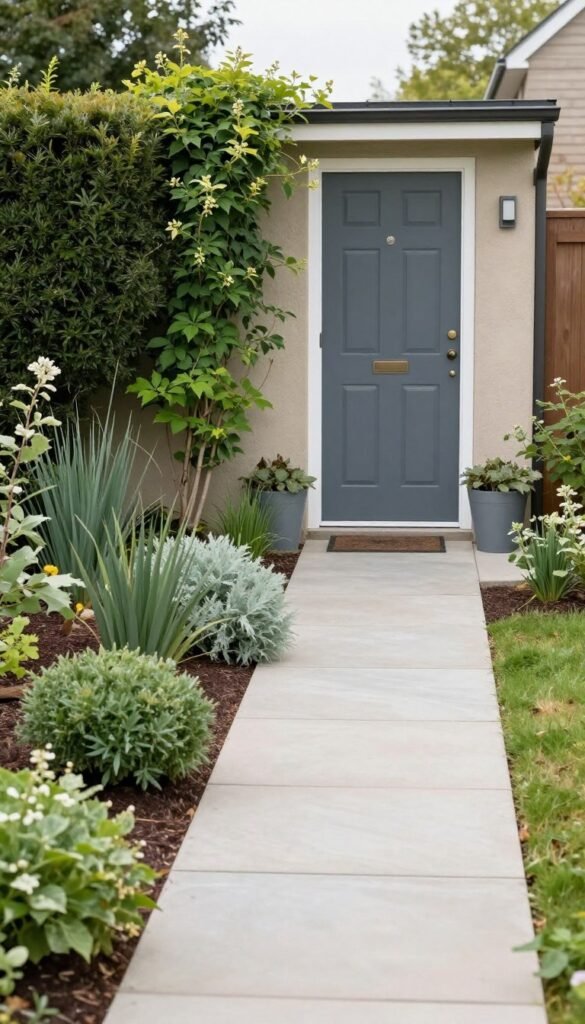
If you’re starting with a fairly plain front garden and aren’t sure where to begin, keep the first version simple. You can always add more planting as the garden develops.
- Define a clear and practical route to the front door.
- Choose one main natural-looking hardscape material.
- Add structural planting around the boundaries or house.
- Fill borders with repeated groups of cottage-style plants suited to the site.
- Add one vertical feature such as a climber, small tree, or window box.
- Finish the entrance with a few coordinated pots and simple seasonal details.
This gives you enough variety to create that layered country feeling while keeping the overall garden cohesive and manageable. As plants mature, you can fill small gaps rather than trying to complete the entire garden in one weekend.
Final Thoughts
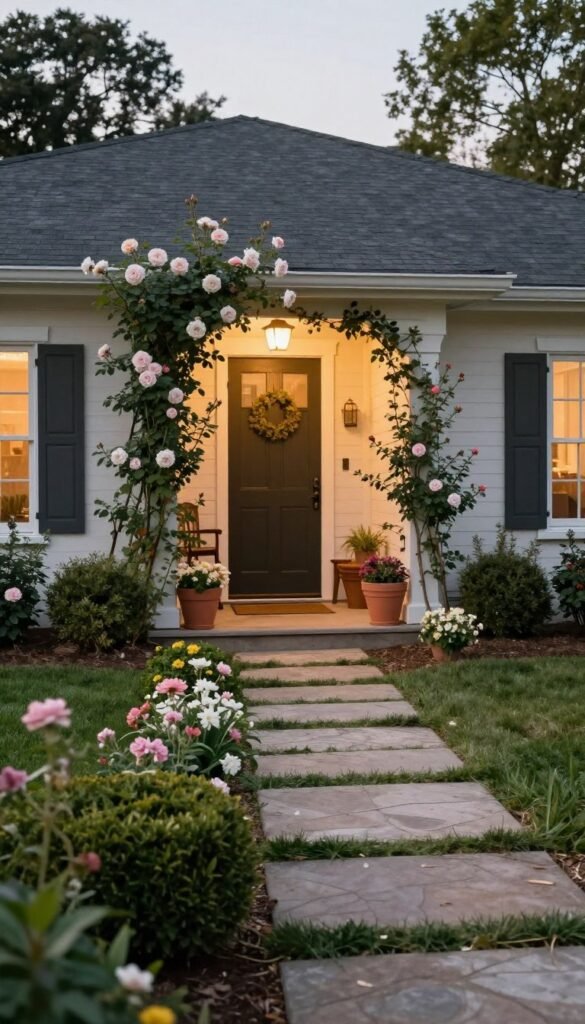
A welcoming country front garden isn’t about making everything perfect. Much of its charm comes from the combination of structure and softness: a clear pathway surrounded by loose flowers, a traditional gate beside an informal hedge, or a tidy front door framed by roses and slightly weathered terracotta pots.
Start with the entrance and work outward. Make the path practical, choose plants that genuinely suit the conditions, repeat a few materials and flowers throughout the space, and allow the garden to become a little more abundant with time.
Whether you have a generous front yard or a tiny patch beside the door, that’s more than enough to create an entrance that feels warm, established, and unmistakably country.