12 Rustic Vertical Herb Garden Ideas for Small Outdoor Spaces
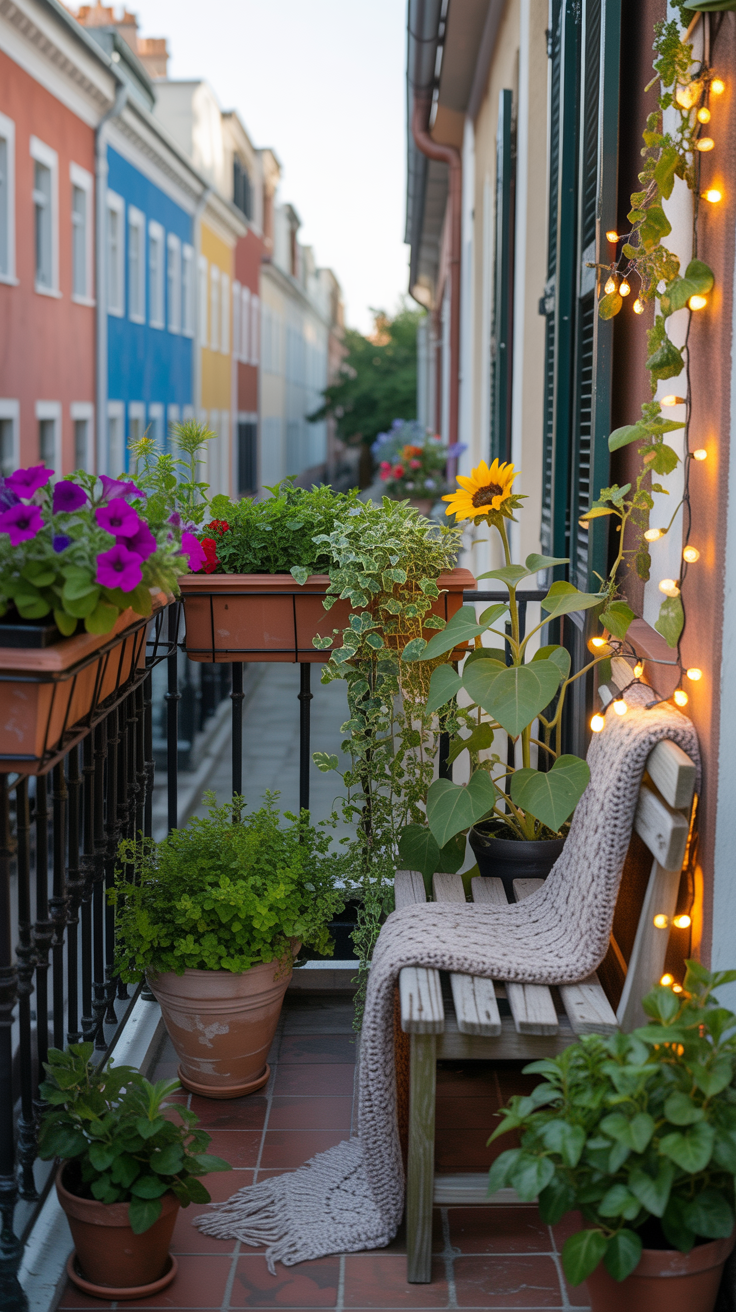
A vertical herb garden solves two small-space problems at once. It gives you somewhere to grow fresh herbs when ground space is limited, and it turns a blank fence, wall, balcony, or narrow backyard into something useful and beautiful.
This post includes affiliate links. If you make a purchase through them, I may earn a small commission at no extra cost to you. More details here.
Better still, the rustic version doesn’t need to be expensive. Old crates, a weathered ladder, lengths of guttering, tin cans, and terracotta pots can grow just as much basil, thyme, and mint as a purpose-built kit — and often look far more charming.
These rustic vertical herb garden ideas range from pallets and ladders to hanging tins, trellises, railing planters, and repurposed containers. You’ll also find practical advice on choosing herbs, drainage, watering, and positioning your garden so it stays easy to use.
Quick Guide: Build a Vertical Herb Garden
- Choose a structure: Try a pallet, ladder, crates, trellis, railing, or tiered stand.
- Pick your containers: Terracotta pots, tins, galvanized buckets, baskets, and guttering all work well.
- Grow useful herbs: Mint, parsley, chives, thyme, oregano, basil, and rosemary are good choices.
- Plan for drainage: Every container needs drainage holes and somewhere for excess water to go.
- Match herbs to the light: Sun-loving herbs such as rosemary, thyme, oregano, and basil appreciate a bright position, while parsley, mint, and chives can cope with some partial shade.
- Keep it convenient: Put the herbs you use most somewhere you can reach easily from the kitchen.
Easy styling rule: Keep frequently used herbs around waist or chest height. A vertical garden becomes much more useful when you can snip parsley or thyme without moving pots or reaching awkwardly.
1. Turn a Wooden Pallet Into a Herb Wall
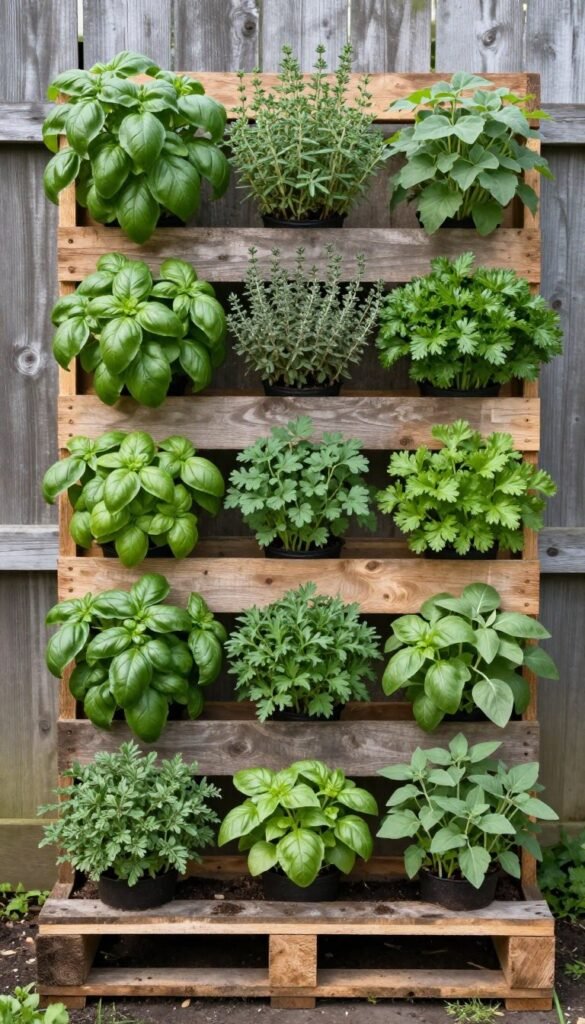
A pallet planter is a classic small-space solution because one upright pallet can provide several rows of planting space while taking up very little ground.
Line the back and planting sections with sturdy landscape fabric, fill them with good-quality potting mix, and secure the pallet firmly against a wall or fence. If possible, plant it while it is lying flat and allow the herbs to establish before standing it upright.
Worth checking first: Choose a clean pallet with a clear HT stamp, which means it has been heat-treated. Avoid pallets marked MB, as these were treated with methyl bromide. It’s also best to reject pallets that are painted, badly stained, oily, have a chemical smell, or have an unknown history when you’re growing edible plants.
2. Lean an Old Ladder Against the Wall
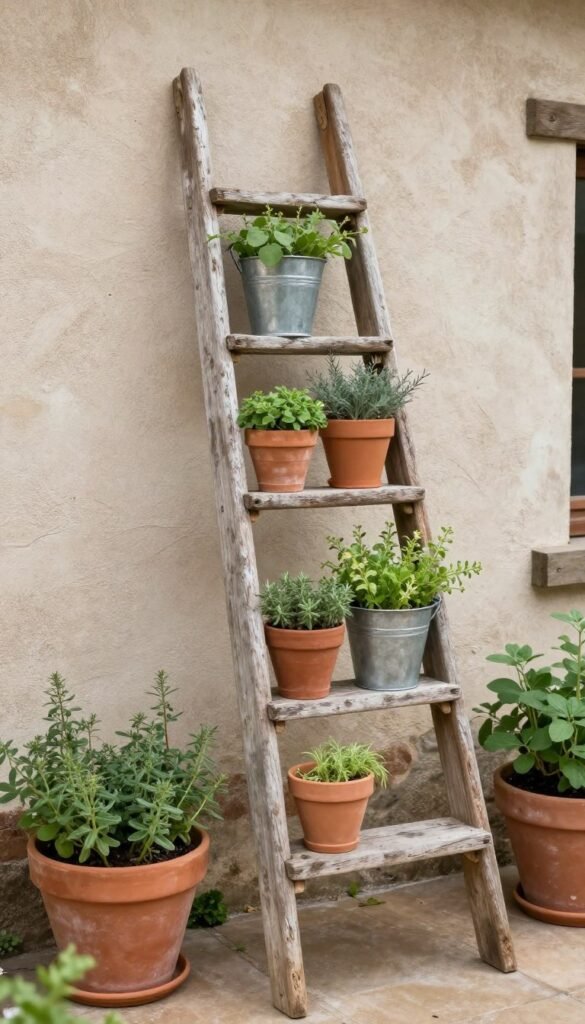
An old wooden ladder is one of the simplest ways to create a rustic vertical herb garden. Place pots directly on wide rungs, attach narrow shelf boards, or hang small buckets from hooks along the sides.
Weathered wood adds instant character, but make sure the ladder is stable. A leaning ladder should be secured at the top so it can’t shift in strong winds.
Easiest upgrade: A freestanding stepladder gives you planting space on both sides without needing to drill into a wall. It can also be moved around the garden as the sun changes through the season.
3. Stack and Mount Wooden Crates
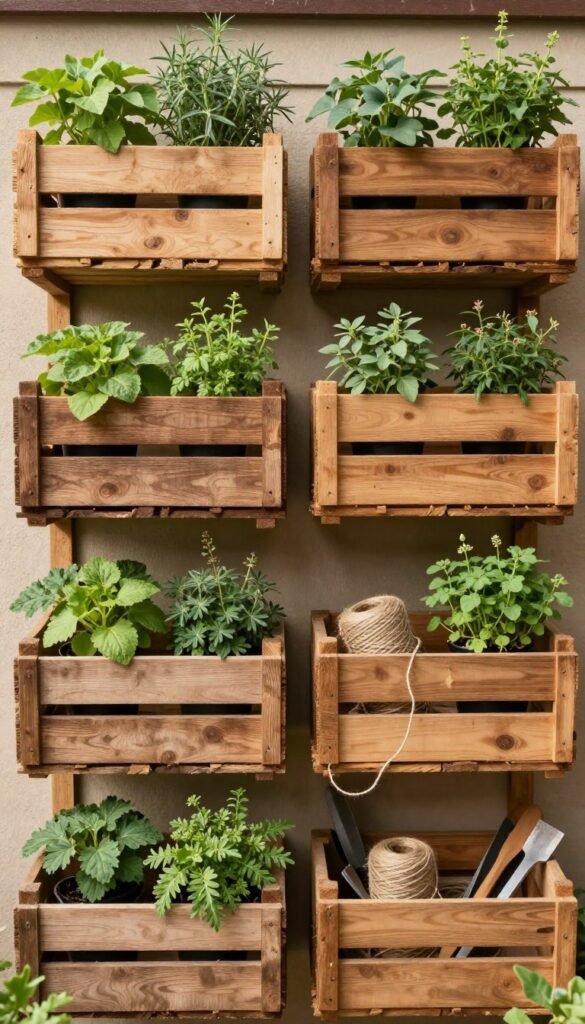
Wine crates and old apple boxes are especially useful because they provide more soil depth than many wall-mounted planters. Arrange them in a staggered pattern rather than a perfect grid for a softer, collected look.
Line each crate with landscape fabric, add several drainage holes, and protect exposed wood with a plant-safe outdoor finish if the crates will be left outside year-round.
Small-space advantage: Deeper containers hold moisture for longer, so herbs grown in crates generally need less frequent watering than those planted in small wall pots.
4. Hang Tin Cans and Galvanized Buckets on a Fence
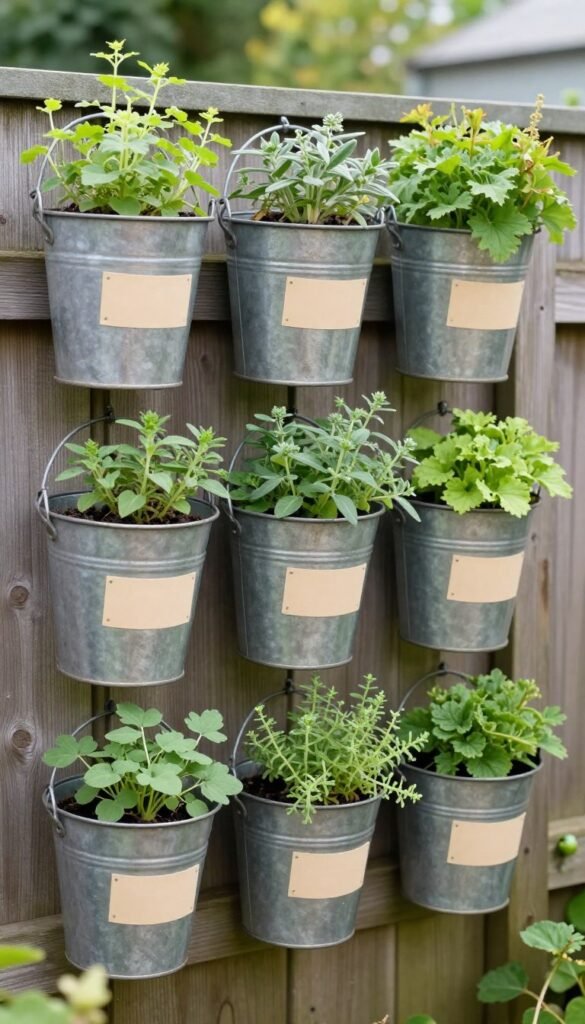
Large food tins, galvanized buckets, and old enamel mugs can all become inexpensive herb planters. Add several drainage holes, smooth any sharp edges, and hang them from hooks or sturdy wire.
A neat row works well along a fence, while a loose arrangement at different heights creates a more relaxed cottage-garden look. Simple handwritten labels add another rustic detail.
Practical detail: Small metal containers can become hot and dry very quickly in direct afternoon sun. Position them where they receive some later-day shade or be prepared to check the soil frequently during warm weather.
5. Build a Gutter Garden Along a Wall
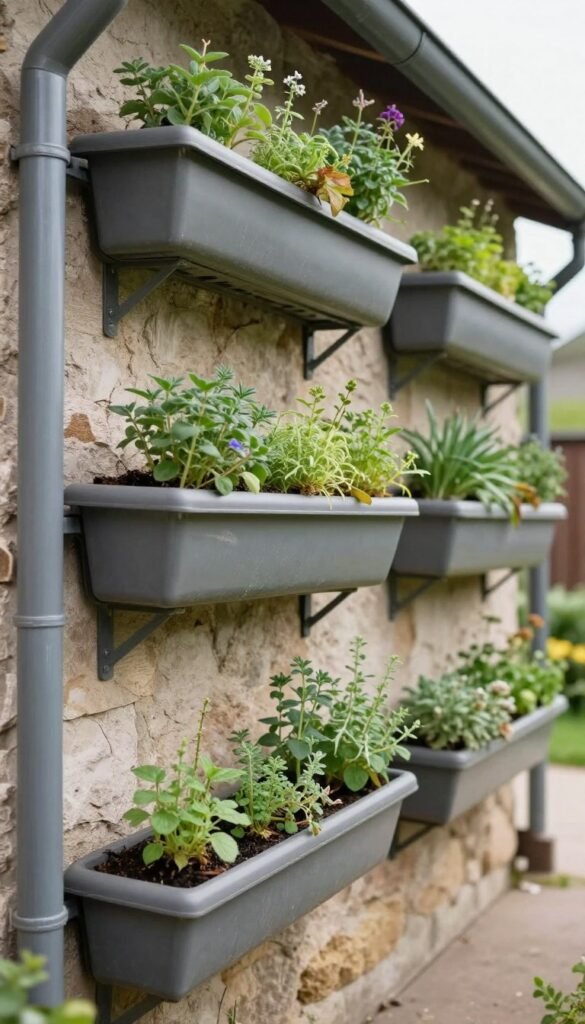
Lengths of guttering mounted in horizontal rows create a slim vertical garden that works particularly well in side yards and narrow passages.
Add end caps, drill drainage holes along each length, and leave enough space between the rows for herbs to grow without becoming crowded. Because guttering is shallow, use it for compact herbs such as thyme, chives, oregano, and parsley rather than large rosemary or sage plants.
Best for narrow spaces: A gutter garden projects only a short distance from the wall, leaving paths and walkways almost completely clear.
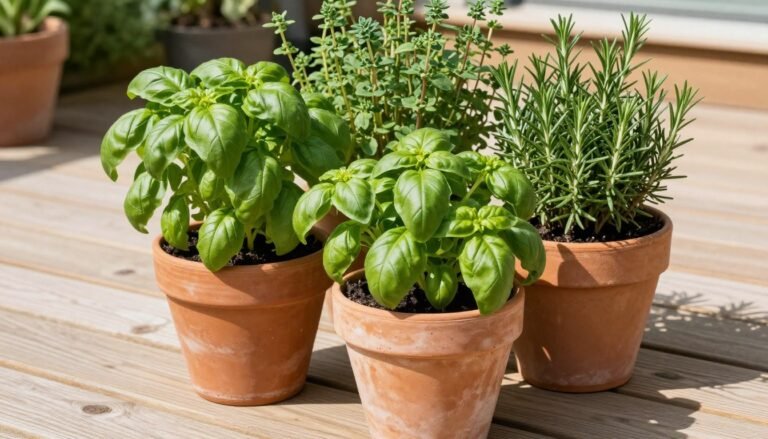
6. Fix Terracotta Pots to a Wall Rail
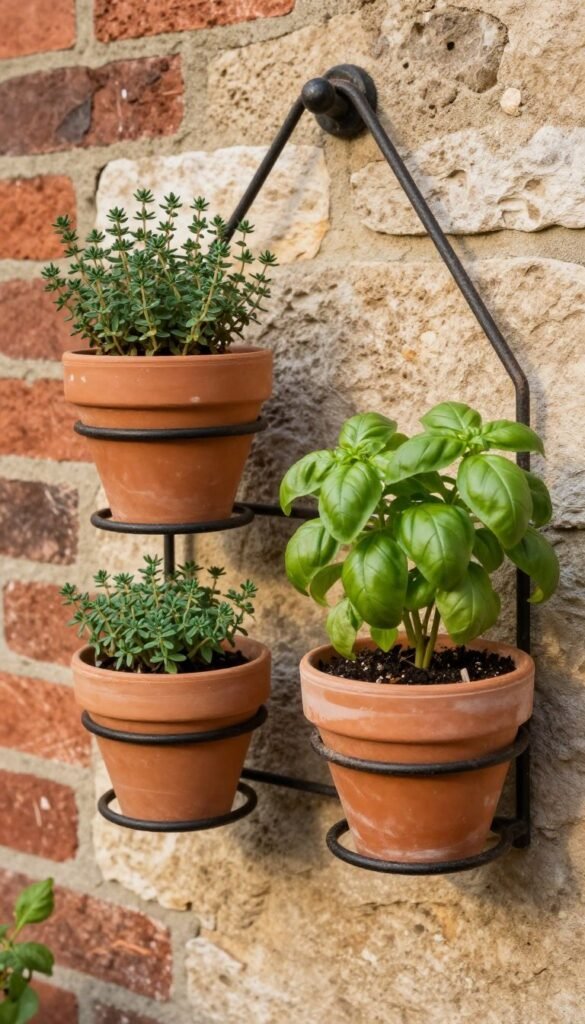
Terracotta pots suspended from a simple metal rail create one of the most timeless vertical herb garden combinations. The warm clay looks particularly good against brick, stone, or weathered timber.
Choose holders that allow individual pots to be lifted out for watering and replanting, and avoid pots that are too small. Terracotta loses moisture quickly, especially during summer.
Most timeless option: Plain terracotta paired with black or aged metal becomes more attractive as the pots weather naturally over time.
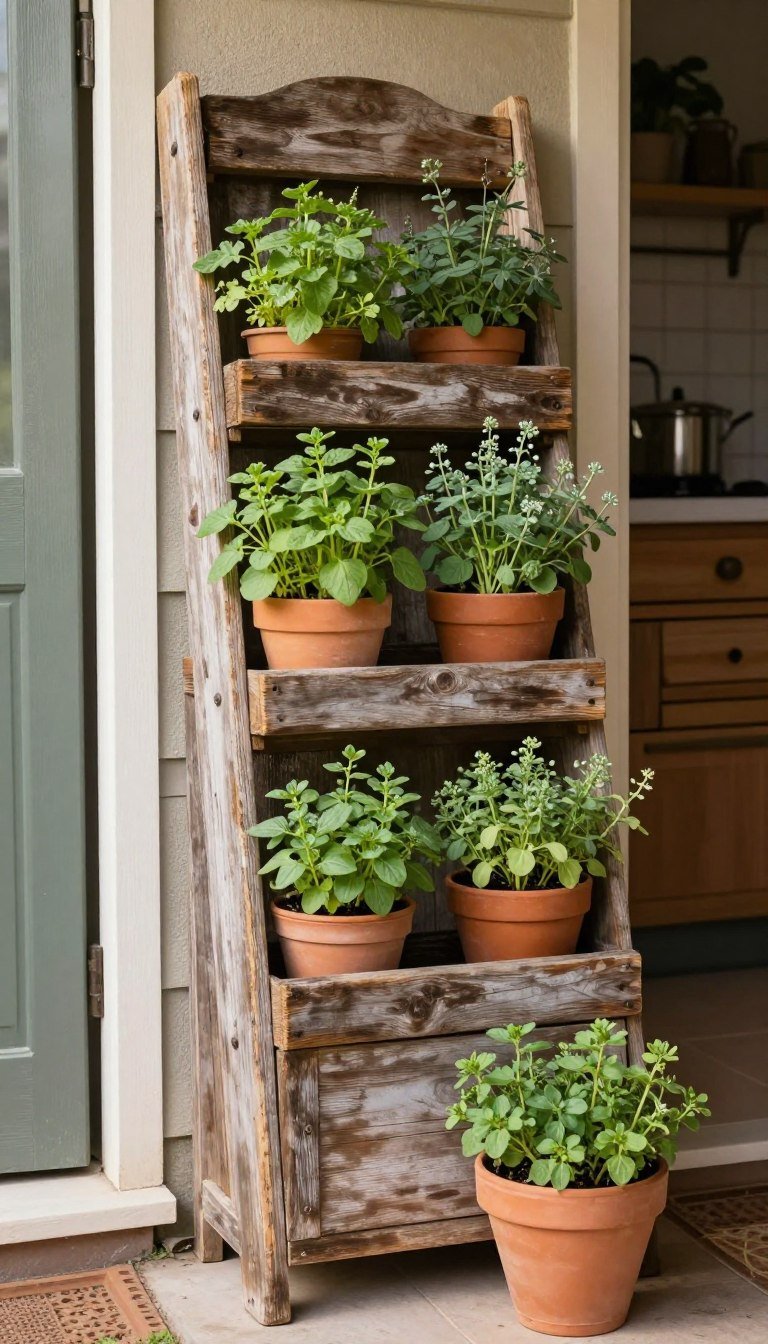
7. Use a Tiered Plant Stand in a Corner
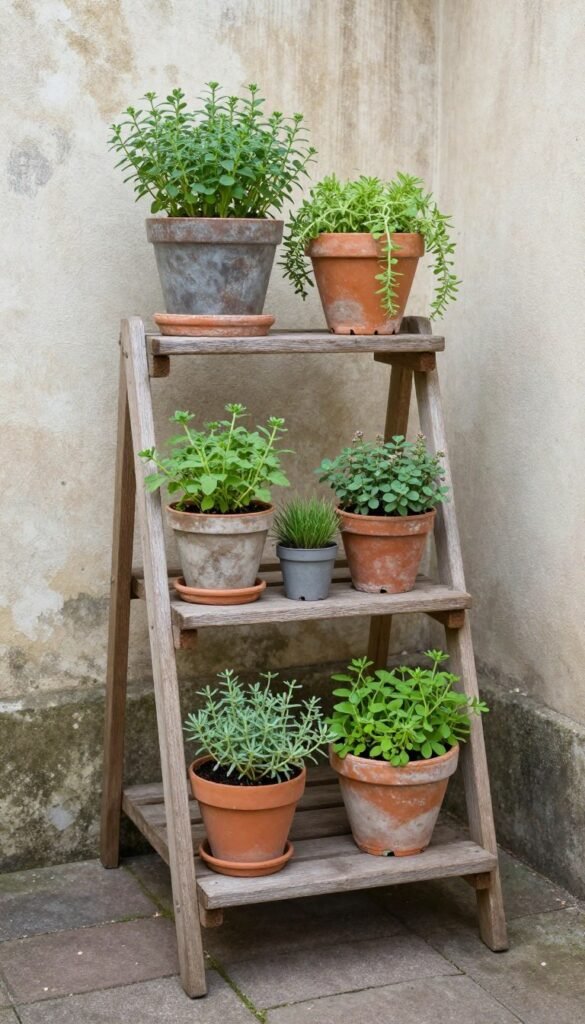
If drilling into a wall isn’t possible, a tiered plant stand gives you vertical growing space without permanent fixings. Wooden stands, vintage shelves, and old metal plant racks all work beautifully.
Put taller herbs toward the lower levels so they don’t shade smaller plants above them, and allow trailing herbs to spill over the outside edges.
Best for renters: A freestanding herb garden can move with you, follow the sun through the season, and be rearranged whenever you want a different look.
8. Hang Baskets and Macramé Planters
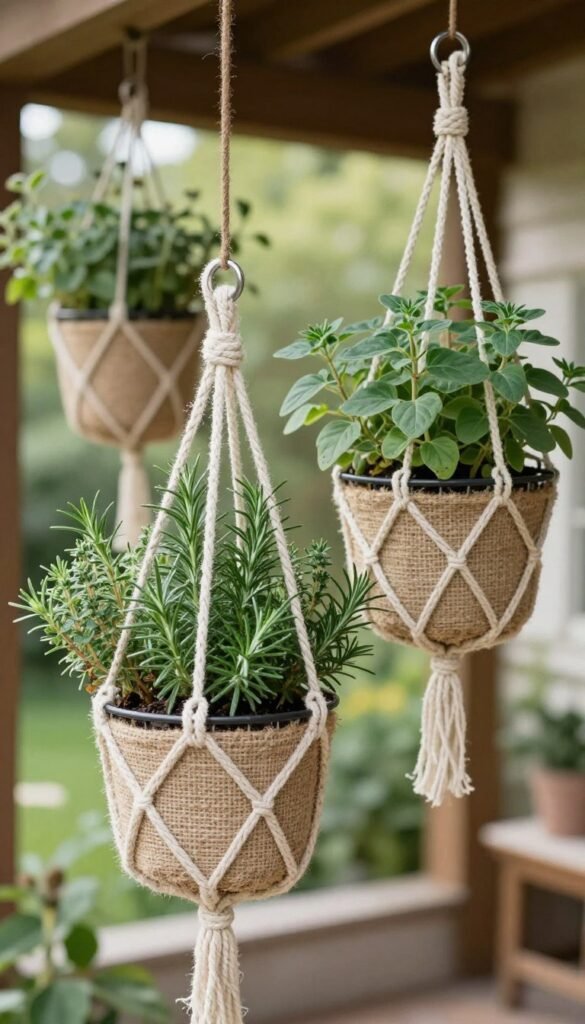
Hanging baskets make use of overhead space and work especially well for herbs that spill naturally over the sides. Oregano, thyme, mint, and trailing varieties of rosemary can all look beautiful in hanging containers.
Wire baskets lined with coir, jute macramé holders, and even old metal colanders can fit a rustic garden perfectly. Keep them low enough that watering and harvesting remain easy.
Safety detail: A freshly watered basket is considerably heavier than a dry one. Always use hooks and fixings designed to support its full wet weight.
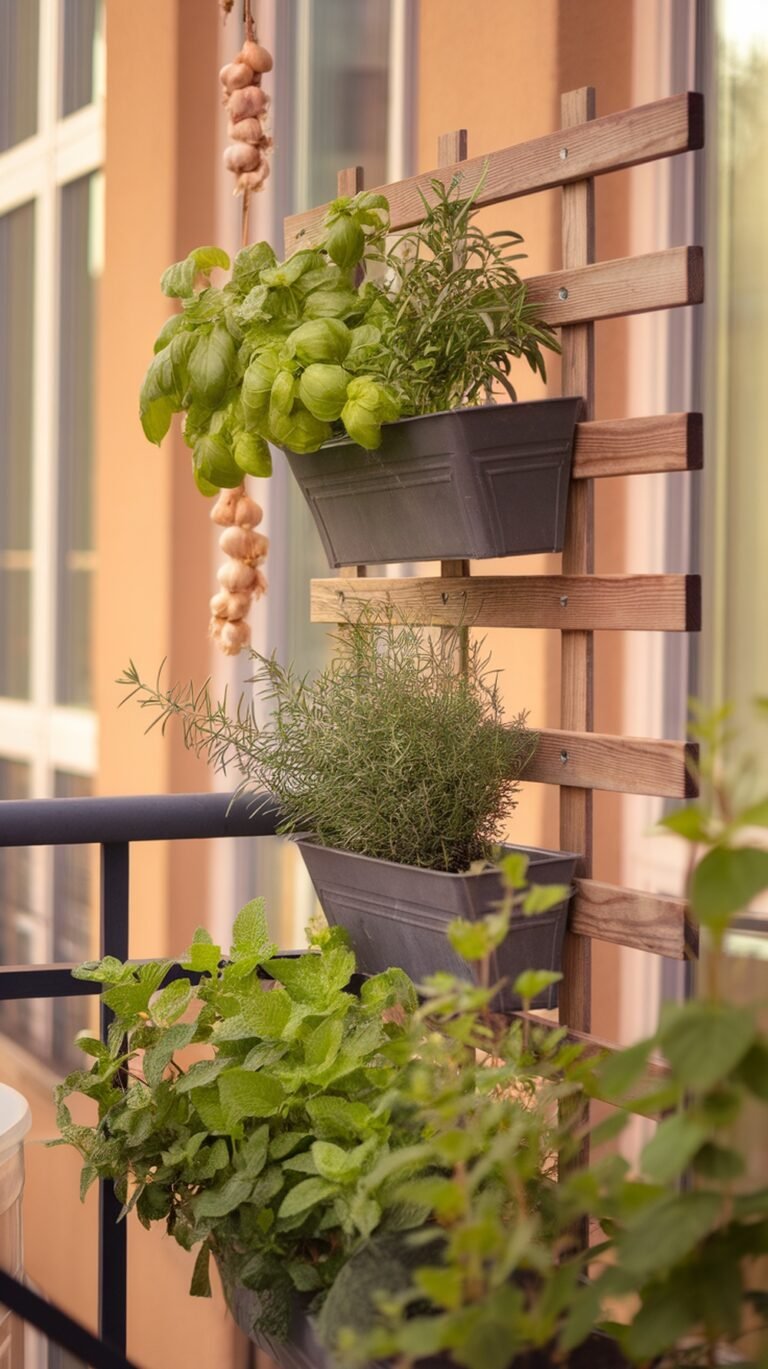
9. Add a Trellis With Hooks and Hanging Pots
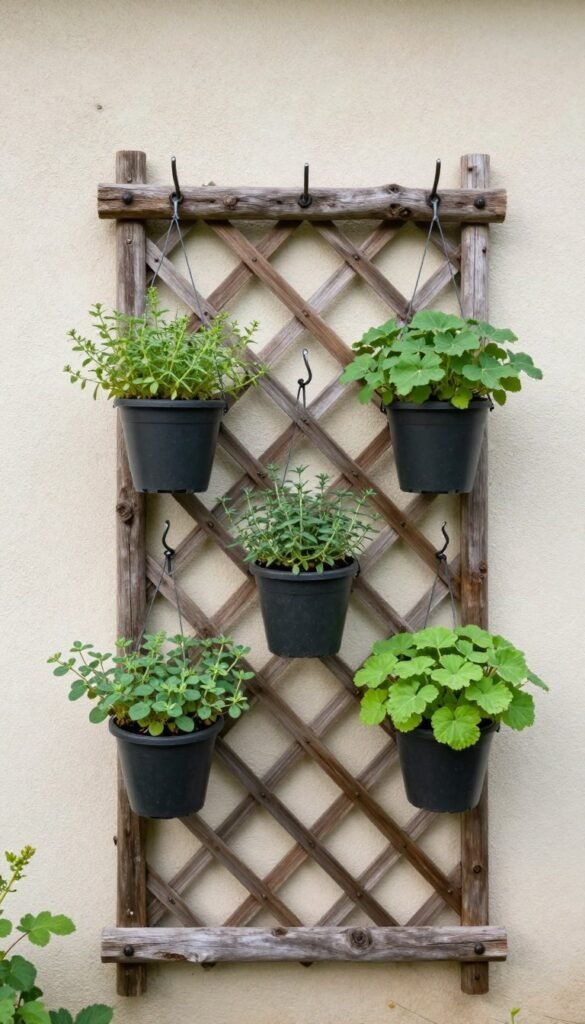
A sturdy trellis turns an ordinary wall or fence into a flexible hanging system. Pots can be moved around using S-hooks as herbs grow, seasons change, or different areas receive more sunlight.
Mount the trellis slightly away from the wall to improve airflow and use lightweight containers to avoid putting unnecessary pressure on the frame.
Small-space tip: A narrow trellis can fit beside a back door, utility area, or bin store — exactly the kind of overlooked vertical space that is useful in a compact yard.
10. Plant Into Repurposed Drawers, Toolboxes and Colanders
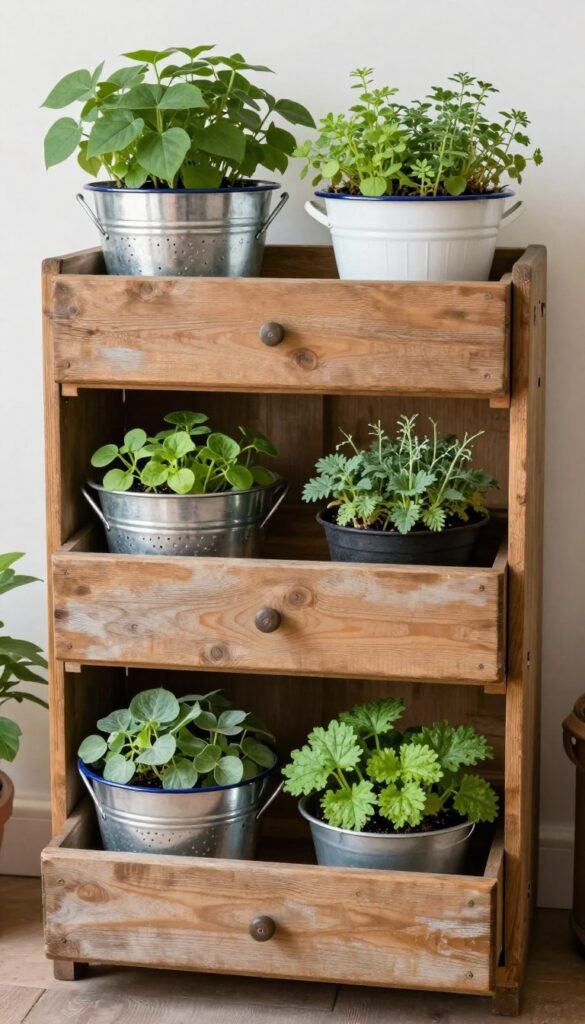
Old drawers, metal toolboxes, enamel basins, wooden trugs, colanders, and even worn watering cans can become characterful herb planters.
Colanders are particularly easy because drainage is already built in. Solid containers need several holes drilled into the base before planting, while wooden pieces may benefit from a simple liner to slow down deterioration.
Why it works: A mixture of weathered and mismatched containers gives a rustic herb garden a collected-over-time look that matching planters rarely achieve.
11. Fit Railing Planters to a Balcony
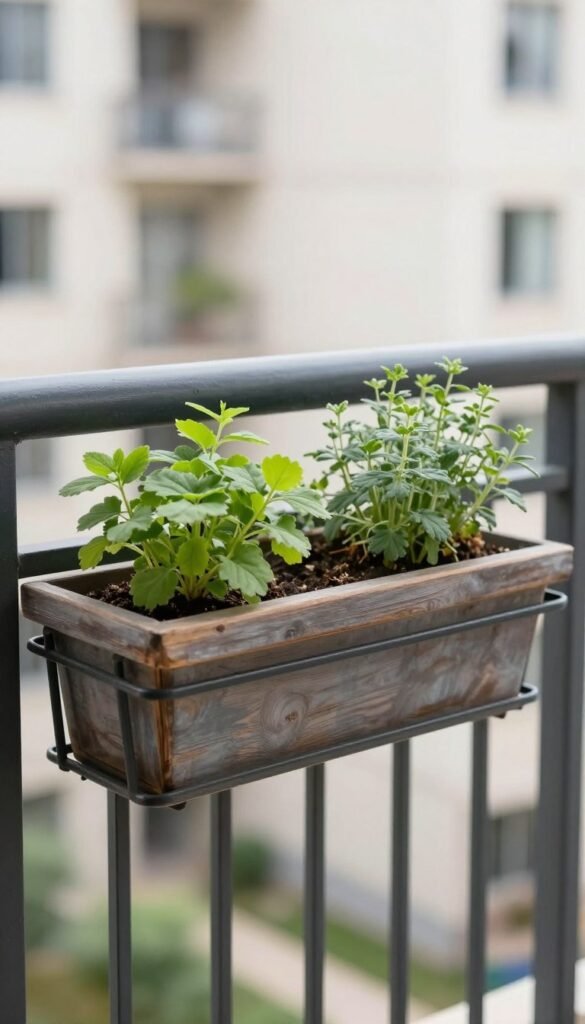
On a small balcony, the railing is valuable growing space. Saddle-style planters, hook-on pots, and railing boxes let you grow herbs without sacrificing the limited floor area.
Keep planters on the inside of the railing and secure them carefully against wind. A secondary clip or tie adds useful protection on exposed balconies.
Safety first: Avoid placing unsecured pots on the outside of balcony railings or high windowsills. Containers should always be positioned and fixed so they cannot fall.
12. Put Your Herb Garden Where You’ll Actually Use It
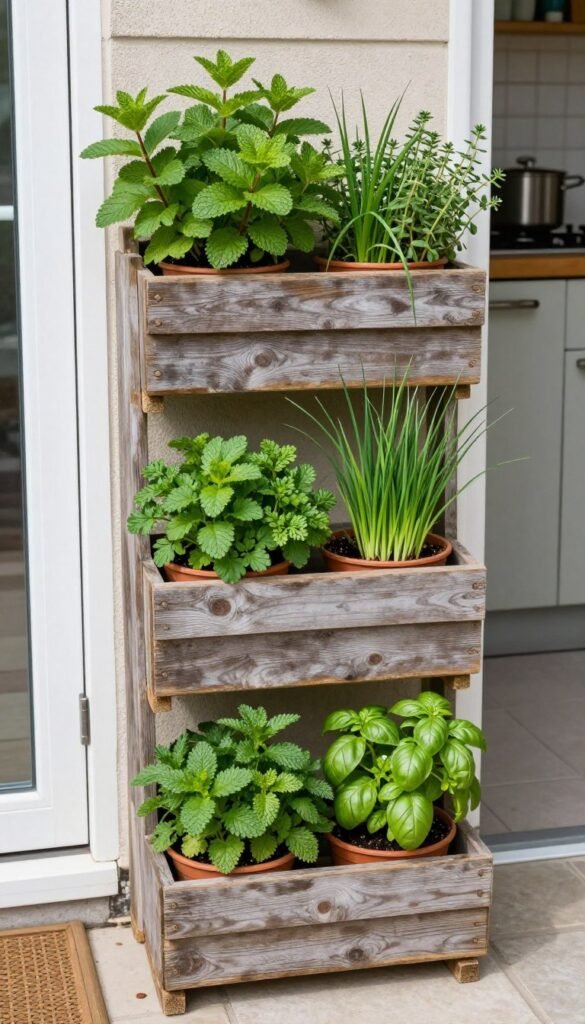
The position of your vertical herb garden matters almost as much as the planter itself. Herbs tucked into an inconvenient corner are much less likely to be watered, trimmed, or used while cooking.
A spot near the kitchen door is ideal if the light suits the herbs you’re growing. Rosemary, thyme, oregano, and basil generally appreciate a sunny position, while herbs such as parsley and mint can tolerate some partial shade. Shelter from strong wind and easy access to water are useful too.
Easiest upgrade: Put the herbs you use most — perhaps parsley, chives, basil, or thyme — in the easiest-to-reach pots. Save the upper and lower levels for herbs you use less often.
You Might Also Like
Best Herbs for a Vertical Garden
Most culinary herbs will grow in containers, but some are much better suited to shallow or compact vertical planters than others.
- Thyme: Compact, drought-tolerant, and happy in relatively small pots.
- Oregano and marjoram: Excellent for spilling over the edges of planters.
- Chives: Hardy, compact, and quick to regrow after cutting.
- Parsley: Reliable in medium-sized containers, tolerant of some partial shade, and happiest with consistent moisture.
- Mint: Vigorous and best kept contained, making individual wall pots ideal.
- Basil: Loves warmth and good light but needs more regular watering.
- Rosemary and sage: Better in the deepest and largest containers in your setup, with plenty of sun and good drainage.
Watering and Drainage Tips
Vertical gardens usually dry out more quickly than plants growing directly in the ground, particularly when the containers are small or exposed to wind.
- Make sure every container has drainage holes.
- Use a good-quality potting mix rather than heavy garden soil.
- Check small pots regularly during hot or windy weather.
- Group herbs with similar watering needs together when possible.
- Place trays or gravel underneath if runoff could stain paving or walls.
- Feed container-grown herbs lightly during the main growing season when needed, rather than overfeeding them.
Useful habit: Check the soil with your finger before watering rather than following a rigid schedule. The top row of a vertical garden may dry much faster than shaded pots lower down.
Vertical Herb Garden Ideas for Renters
You don’t need to drill holes or permanently alter a wall to create a useful vertical garden.
- Use a freestanding ladder or tiered plant stand.
- Stack crates securely instead of mounting them.
- Choose railing planters that hook into place.
- Use freestanding trellis panels with lightweight hanging pots.
- Place pots on a plant caddy so the whole garden can be moved.
- Add drip trays to protect balcony and patio flooring.
Budget-Friendly Vertical Herb Garden Ideas
A rustic herb garden is one of those projects where inexpensive and repurposed materials can actually make the finished result look better.
- Ask local shops or markets whether they have unwanted wooden crates.
- Save large food tins and turn them into hanging planters.
- Look for old ladders, drawers, baskets, and colanders secondhand.
- Grow herbs from seed instead of buying mature plants.
- Divide overcrowded supermarket herb pots into several smaller plants.
- Propagate herbs such as mint and rosemary from cuttings.
- Use simple wooden labels and natural twine instead of decorative garden signs.
Final Thoughts
A vertical herb garden can turn an overlooked wall, fence, railing, or corner into one of the most useful parts of a small outdoor space. You don’t need a large garden or an expensive purpose-built growing system to make one work.
Start with one sturdy structure, choose containers with reliable drainage, and plant the herbs you genuinely use in the kitchen. Keep your favorites within easy reach and match each herb to the sun, moisture, and container space it needs.
Whether you have a compact courtyard, apartment balcony, narrow side yard, or simply a spare section of fence, a little vertical space can be enough to grow a surprisingly useful — and beautiful — herb garden.
Garden Essentials
Discover useful and beautiful garden essentials, from planters and everyday tools to practical accessories and finishing touches for creating a garden you’ll love spending time in.
Shop Garden Essentials