10 Pantry Art Ideas That Make a Utility Space Feel Beautiful
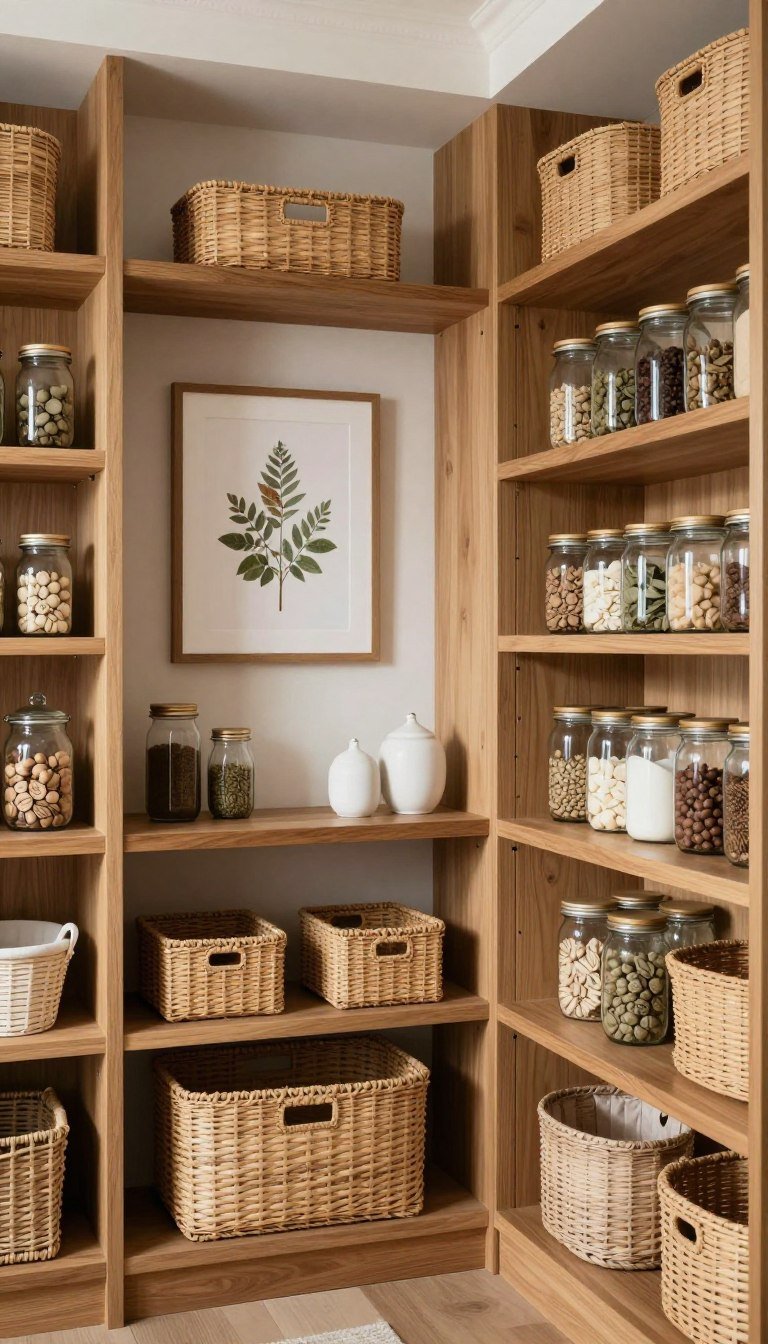
A pantry might be one of the hardest-working spaces in the home, but that does not mean every wall has to be devoted to shelves, labels, and cereal boxes. A little artwork can make even a practical food-storage space feel more considered and connected to the rest of your home.
The best pantry art does not compete with the storage. It fills an awkward blank wall, adds personality above a counter, or turns a small walk-in pantry into somewhere that feels intentionally decorated rather than purely functional.
You do not need much either. One beautifully framed print or a small coordinated pair can be enough, particularly in a pantry where jars, baskets, packaging, and open shelving are already providing plenty of visual detail.
From vintage botanical prints to understated typography and framed family recipes, these pantry art ideas add character without getting in the way of what the room actually needs to do.
Quick Guide: Choosing Art for a Pantry
- Small pantry: Choose one medium-sized print rather than squeezing lots of tiny frames into the available wall space.
- Country kitchen: Try botanical illustrations, vintage food prints, landscapes, or framed family recipes.
- Modern pantry: Keep artwork graphic and simple with neutral colors and clean frames.
- Butler’s pantry: Use more substantial artwork, antique-style frames, or a carefully arranged pair of prints.
- Budget refresh: Frame postcards, copies of family recipes, inexpensive prints, or attractive vintage-style food packaging.
- Busy shelving: Keep the artwork simple so it gives the eye somewhere to rest.
Practical detail: When hanging art in a working pantry, keep it clear of heat, excessive moisture, and food-preparation areas where it could become splashed or contaminated. It should not interfere with doors, shelving, switches, ventilation, or frequently used storage, and frames should be secured with fixings suitable for their weight and the wall construction.
1. Hang Vintage Botanical Prints
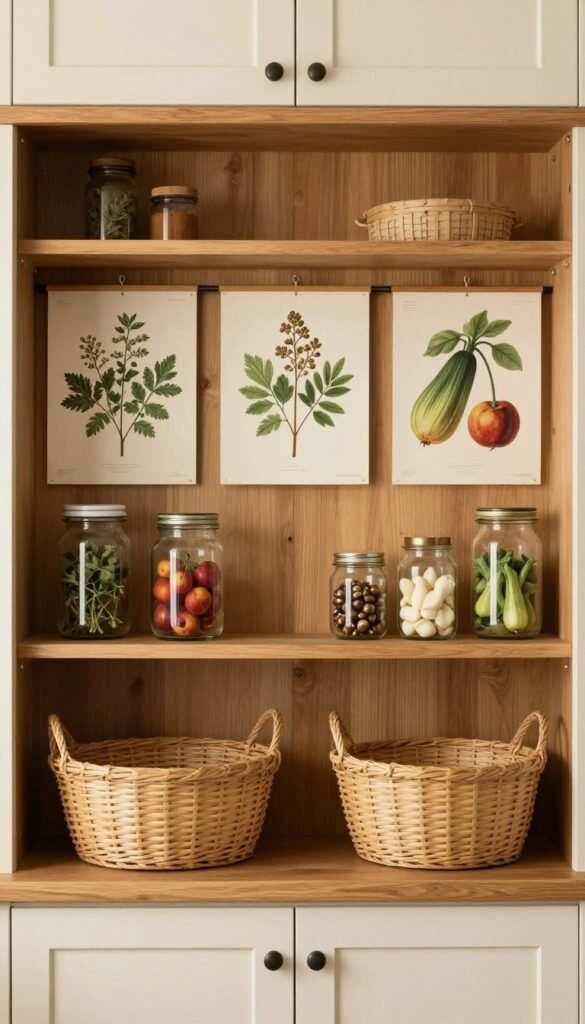
Vintage botanical artwork feels wonderfully natural in a pantry. Illustrations of herbs, fruit, vegetables, and edible plants create a gentle connection to food and gardening without making the room feel as though it has been decorated around a strict theme.
Look for prints with softly aged backgrounds and muted greens, browns, creams, or faded reds. Simple wood or antique-style frames help them sit beautifully alongside pantry shelving, woven baskets, glass jars, and other natural materials.
A pair of matching prints can fill a narrow section of wall, while one larger botanical illustration works well above a small counter or freestanding cabinet. If the pantry is already visually busy, keep the arrangement simple.
Pair Botanical Art With
- Warm wood shelving.
- Cream or sage cabinetry.
- Glass storage jars.
- Woven baskets.
- Brass or aged metal hardware.
Most timeless option: Botanical artwork gives a pantry a subtle connection to food and gardening without relying on obvious kitchen signs or novelty decor.
Small-space tip: On a narrow wall, two vertically arranged botanical prints can add height and character without taking away any useful storage.
2. Frame a Favorite Family Recipe
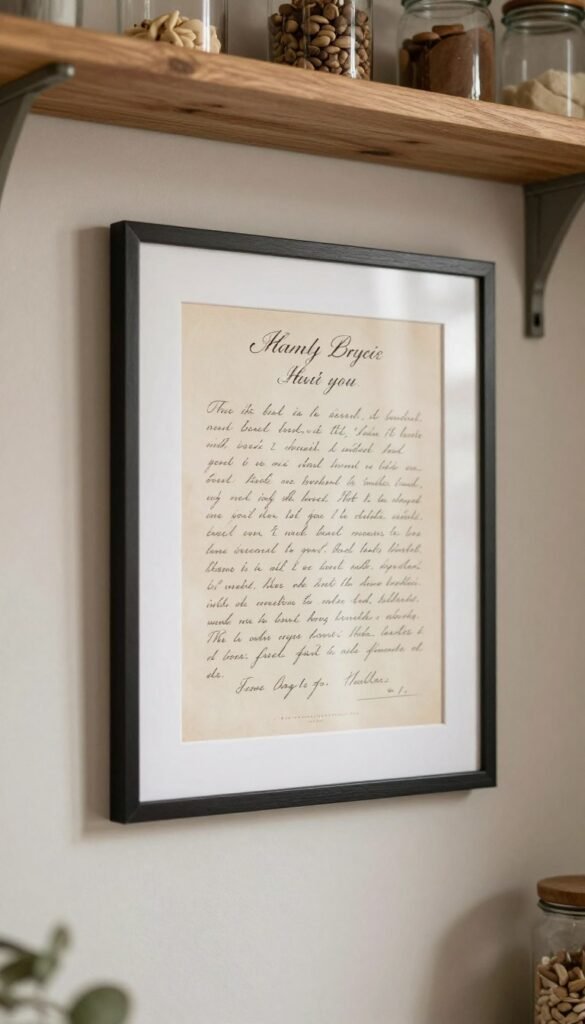
A handwritten family recipe can become surprisingly meaningful wall art. Instead of keeping an old recipe card tucked inside a drawer, display a copy where it becomes part of the kitchen and can actually be enjoyed.
A grandmother’s cake recipe, a much-used family dinner, or even an old handwritten shopping list can look beautiful when properly framed. The handwriting gives the piece a personality that a mass-produced print simply cannot replicate.
Consider displaying a high-quality copy rather than an irreplaceable original, particularly in a pantry where humidity, light, cooking residue, or accidental spills could eventually cause damage.
Make It Feel Intentional With
- A simple wood or brass-look frame.
- A generous mount or mat around the recipe.
- A neutral wall behind it.
- Minimal accessories underneath.
- One accompanying family photograph if it suits the space.
Why it works: Personal artwork makes a utilitarian pantry feel like part of the home rather than a room designed entirely around storage containers.
Budget-friendly idea: Photograph or scan a handwritten recipe and print a copy at a larger size. It protects the original while allowing the handwriting to become a much more substantial piece of art.
3. Create a Small Vintage Food Art Gallery
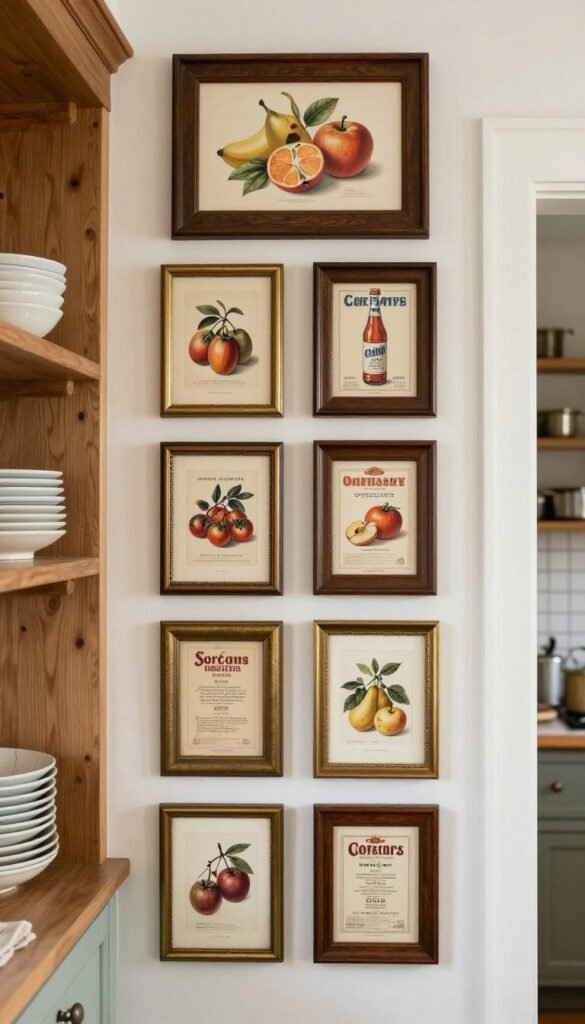
A pantry is one of the few places where vintage food artwork feels completely at home. Old fruit illustrations, market prints, café advertisements, and traditional food labels can create a charming collected gallery wall without feeling out of place.
Keep the arrangement fairly compact so it does not visually compete with rows of pantry shelving. Three to five pieces are often plenty for a smaller space, especially when the artwork is surrounded by jars, baskets, and everyday food packaging.
The frames do not need to match perfectly. A mixture of dark wood, aged brass, and simple black frames can make the collection look as though it has been gathered gradually over time rather than purchased as a matching set.
Ideas for a Pantry Gallery Wall
- Vintage fruit illustrations.
- Old vegetable or herb prints.
- Historic market artwork.
- Vintage-style food packaging or labels.
- Small traditional still-life prints.
Designer detail: Repeat one frame color, metal finish, or shade from the artwork across several pieces. That small connection helps a mixed collection feel intentional rather than random.
Best placement: A gallery works particularly well on an end wall or another section that is not already broken up by shelving. Give the collection enough room to read as one feature.
4. Use One Oversized Still-Life Print
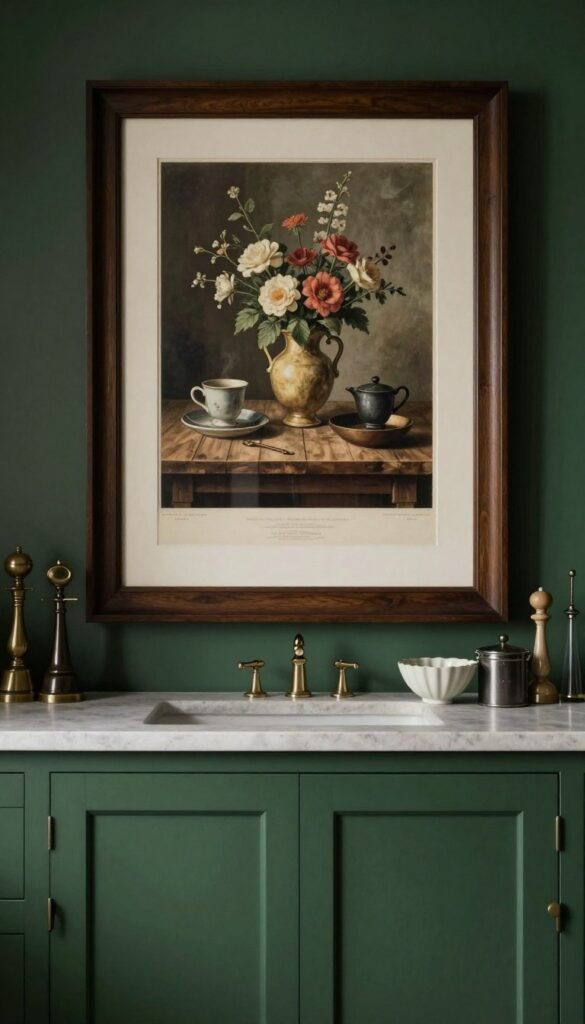
If your pantry already contains open shelving, baskets, jars, labels, and plenty of visual detail, one large artwork may be far more effective than a collection of smaller frames.
A traditional still life featuring fruit, bread, flowers, or simple kitchen objects can make a pantry feel unexpectedly sophisticated. It works particularly well in a butler’s pantry or larger walk-in space with a clear section of wall.
Choose a piece substantial enough to look deliberate rather than leaving a tiny frame floating in the middle of a large blank wall. Let the artwork become the decorative focal point and keep nearby styling restrained.
For a Quiet Luxury Pantry Try
- One large traditional still life.
- A dark wood or antique-style frame.
- Warm white, mushroom, or deep green cabinetry.
- Stone or stone-look surfaces.
- Minimal countertop accessories.
Creates this effect: One substantial piece of art can make a pantry feel more like a beautifully decorated room and less like an oversized cupboard.
Easiest styling rule: The busier the shelving, the simpler the wall art can be. One confidently scaled piece gives the eye somewhere to settle.
5. Add Simple Typography Art
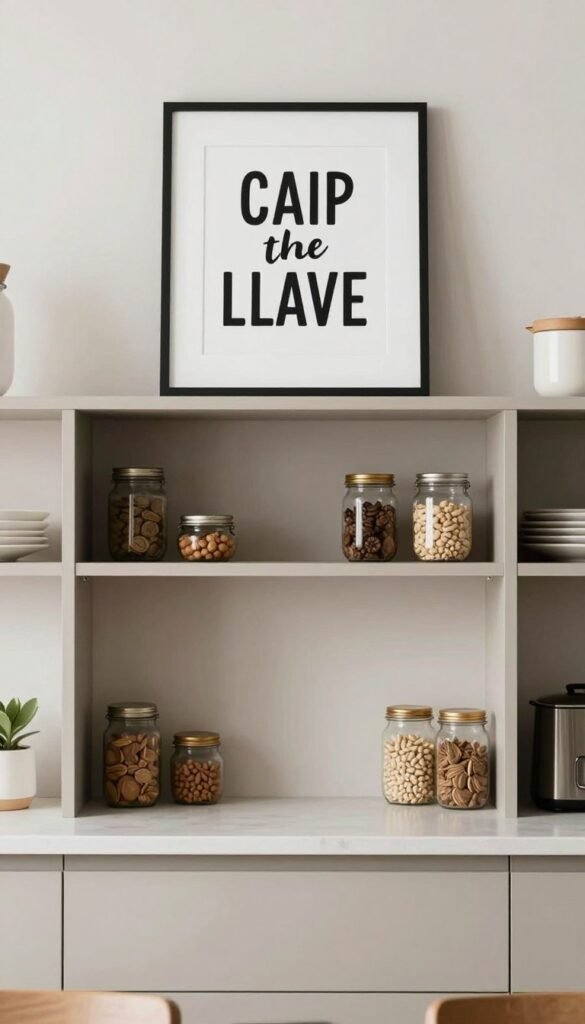
Typography can work beautifully in a pantry when it is kept understated. Instead of filling the walls with novelty sayings, choose one simple word, short phrase, or graphic that complements the style of the room.
Black typography on an off-white background suits a modern pantry, while a softly faded vintage-style typeface can work beautifully in farmhouse or cottage interiors. The simpler the artwork, the easier it is to combine with already-busy pantry storage.
One framed piece above a counter, stool, or small freestanding cabinet is usually enough. You do not need the pantry walls explaining that food lives here. The shelves have already made a fairly convincing case.
Keep Typography Art Looking Stylish With
- A simple color palette.
- One substantial frame.
- Plenty of empty space around the design.
- Clean, readable typography.
- Minimal surrounding wall decor.
Easiest upgrade: A single inexpensive print in a good frame can make a blank pantry wall feel finished without adding any more storage or furniture.
Most timeless option: Choose typography that is subtle enough to work as graphic art rather than relying on a heavily themed kitchen slogan. It will be much easier to live with if the pantry changes over time.
6. Display Vintage Herb Illustrations
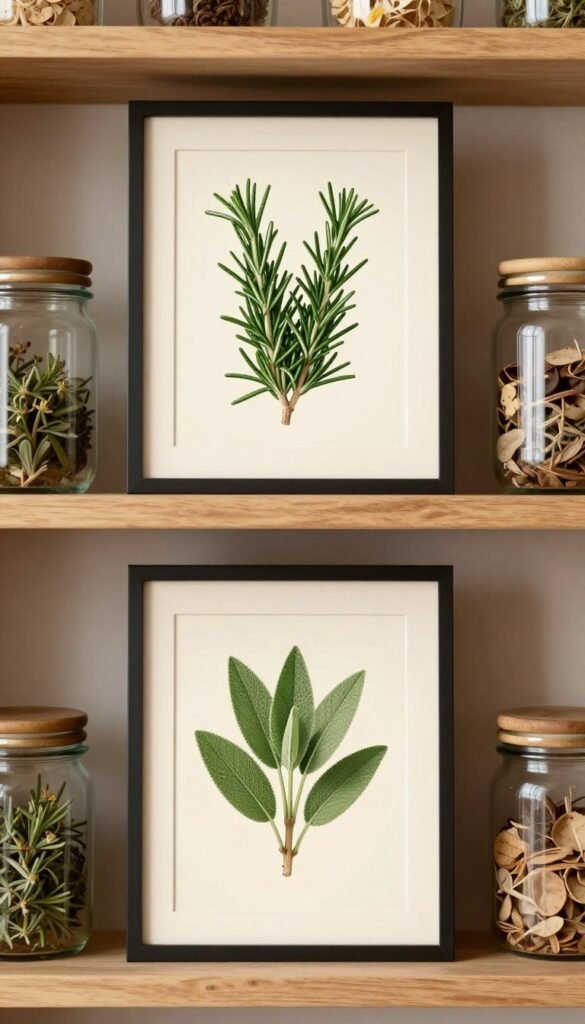
Herb illustrations are a natural choice for pantry walls because they sit somewhere between botanical artwork and traditional kitchen decor. Rosemary, thyme, sage, basil, and other familiar culinary herbs can look beautiful as vintage-style prints without making the room feel overly themed.
A pair or trio works particularly well on a narrow wall between shelves or above a small section of countertop. Keeping the frames consistent helps the arrangement feel calm and ordered, which is especially useful in a pantry already filled with jars, baskets, and food packaging.
For a softer country pantry, choose prints with aged cream backgrounds and wooden frames. In a more modern room, simple black frames can make traditional botanical illustrations feel surprisingly contemporary.
Herbs That Work Beautifully as Art
- Rosemary.
- Thyme.
- Sage.
- Basil.
- Lavender.
Most timeless option: A pair of traditional herb illustrations feels relevant to a pantry without turning the room into an overly themed kitchen space.
Small-space tip: If you only have a narrow strip of wall available, choose vertically proportioned prints and hang them one above the other rather than trying to squeeze in a wider arrangement.
7. Frame Beautiful Vintage Food Packaging
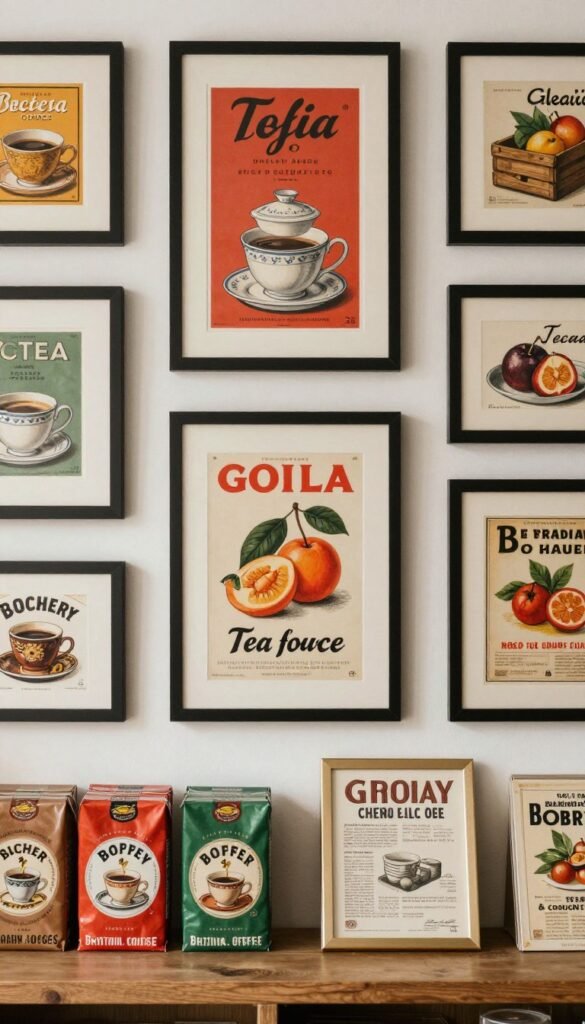
Old food packaging can be surprisingly decorative. Vintage tea labels, fruit crate artwork, biscuit tins, coffee packaging, and old grocery advertisements often contain beautiful typography and illustrations that deserve a second look.
Frame reproductions or suitable pieces in simple frames and arrange them as a small collection. This idea works particularly well in colorful, vintage, cottage, and eclectic kitchens where a little nostalgia feels completely at home.
Keep the selection coordinated by repeating a few colors. Faded red, mustard, green, cream, and black can create a wonderfully nostalgic palette without making the pantry look like an antique grocery shop.
Look for Artwork Inspired by
- Vintage tea packaging.
- Coffee labels.
- Fruit crate illustrations.
- Old bakery packaging.
- Historic grocery advertisements.
Budget-friendly version: Attractive reproductions, postcards, or packaging you already own can become inexpensive artwork once framed. A generous mount can make even a small piece feel much more substantial.
8. Add a Small Landscape Painting
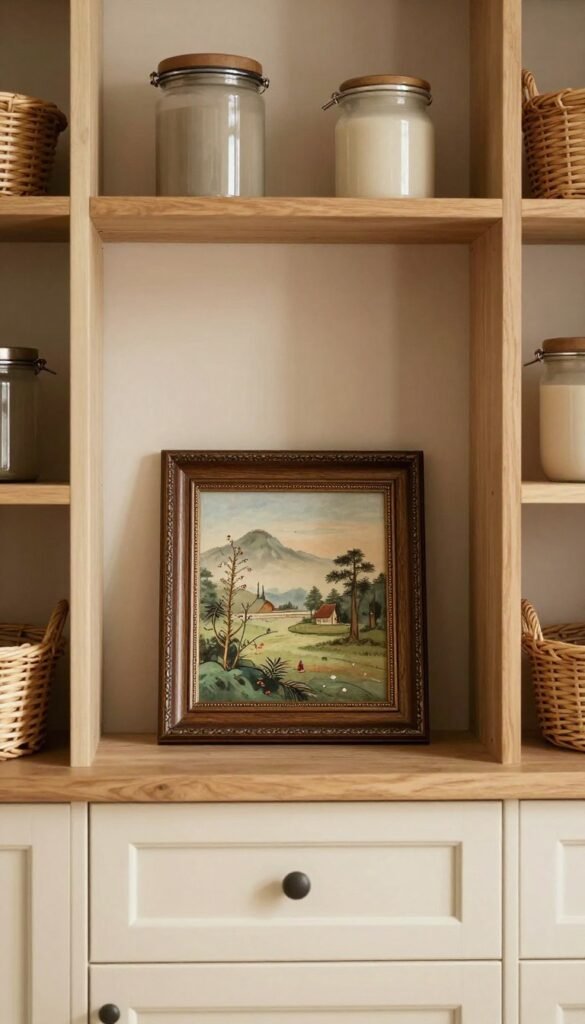
Pantry art does not actually have to feature food. A small landscape painting can make the room feel much more like part of the home, especially if the pantry is visible from the kitchen or another living area.
Choose a pastoral landscape, countryside scene, muted seascape, or traditional oil-style print. Deep greens, earthy browns, cloudy blues, and warm cream tones sit beautifully beside wood shelving and painted cabinetry.
This is also a lovely place to use a small piece of secondhand art that is not quite substantial enough for a living room wall but has far too much character to remain hidden in a cupboard.
Make a Small Painting Stand Out With
- An antique-style frame.
- A clear section of wall.
- Simple shelving nearby.
- Warm directional lighting where appropriate.
- A restrained surrounding color palette.
Designer detail: Using artwork that could comfortably hang in a living room is one of the easiest ways to make a pantry feel like a properly decorated room rather than a purely functional storage area.
9. Create a Black and White Pantry Art Collection
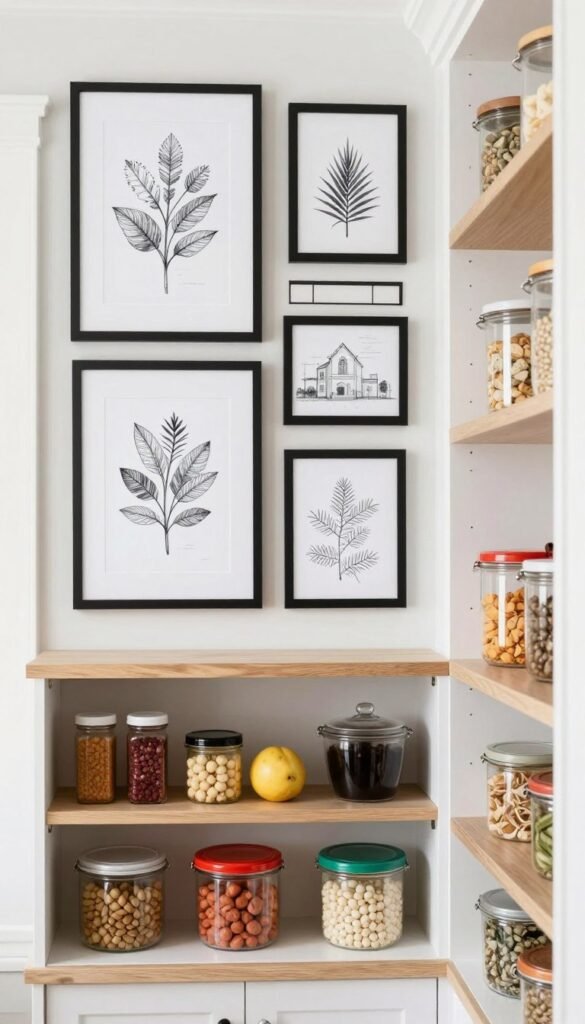
If your pantry already contains colorful packaging, labels, and food containers, black and white artwork can provide a quieter decorative layer. It adds personality without introducing another group of competing colors.
Mix simple line drawings, monochrome botanical illustrations, architectural sketches, or understated food photography. Using matching or closely related frames will help several different subjects read as one collection.
This approach is especially effective in modern farmhouse, Scandinavian-inspired, minimalist, and contemporary pantries where you want decoration without adding visual clutter.
Try a Collection of
- Botanical line drawings.
- Simple architectural sketches.
- Black and white food photography.
- Minimal typography.
- Monochrome vintage illustrations.
Why it works: Limiting the artwork to black and white allows storage baskets, jars, wood, and cabinetry to provide the warmth and color while the art adds structure.
10. Lean Framed Art on an Open Pantry Shelf
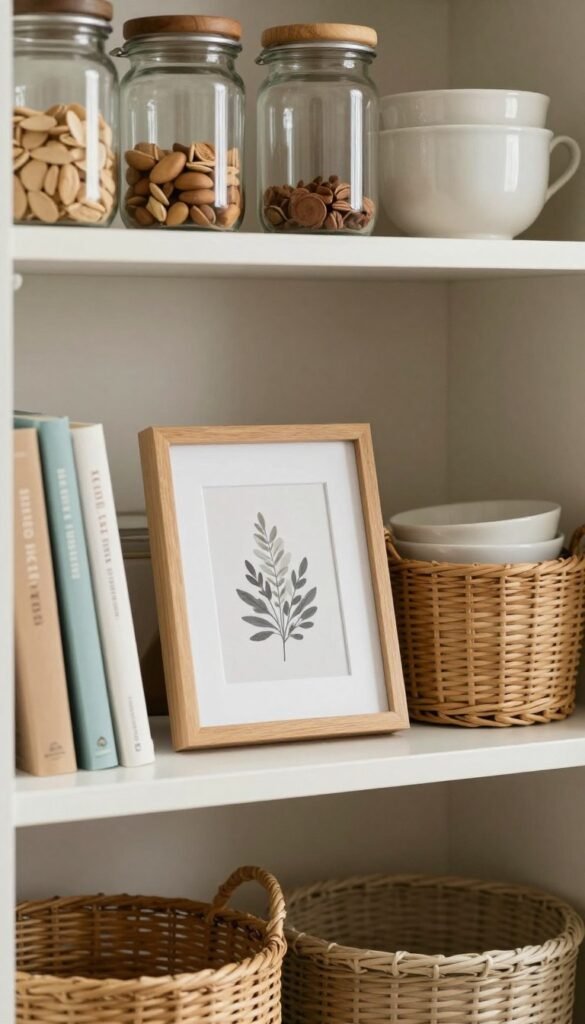
If you do not want to hang anything on the wall, a small framed print can be incorporated into open pantry shelving. Leaning art among jars, cookbooks, and ceramics gives utilitarian storage a more relaxed, collected appearance.
The key is not sacrificing useful storage simply to create a display. Choose one shelf where you already have a little breathing room and use a small piece of artwork as the finishing detail.
Make sure the frame is stable and positioned where it cannot easily be knocked over while you are reaching for food or kitchen supplies. In a busy pantry, decorative pieces should never make everyday storage awkward or unsafe.
Style the Shelf With
- One small framed print.
- A few glass storage jars.
- One ceramic container.
- A short stack of cookbooks if useful.
- Enough empty space to keep everything accessible.
Easiest upgrade: Moving one small piece of art you already own onto a pantry shelf can completely change how intentional the space feels without requiring any DIY.
How to Choose the Right Pantry Art
Pantries usually contain far more visual information than other rooms. Packaging, jars, baskets, shelves, labels, and appliances are already competing for attention, so the artwork often looks best when it provides a little visual calm.
- Busy open shelving: Choose one larger, simpler artwork.
- Minimal pantry: Add a small gallery wall or a more decorative vintage piece.
- Country pantry: Try botanical prints, landscapes, recipes, or vintage food illustrations.
- Modern pantry: Choose graphic black and white art or simple typography.
- Traditional pantry: Use still-life paintings, antique-style frames, and muted colors.
- Colorful pantry: Pull one or two colors from the cabinetry or surrounding kitchen into the artwork.
Practical rule: The more visually busy the storage is, the simpler the artwork can be. If the pantry is very streamlined, you have more freedom to introduce a decorative gallery or a stronger statement piece.
Where to Hang Art in a Pantry
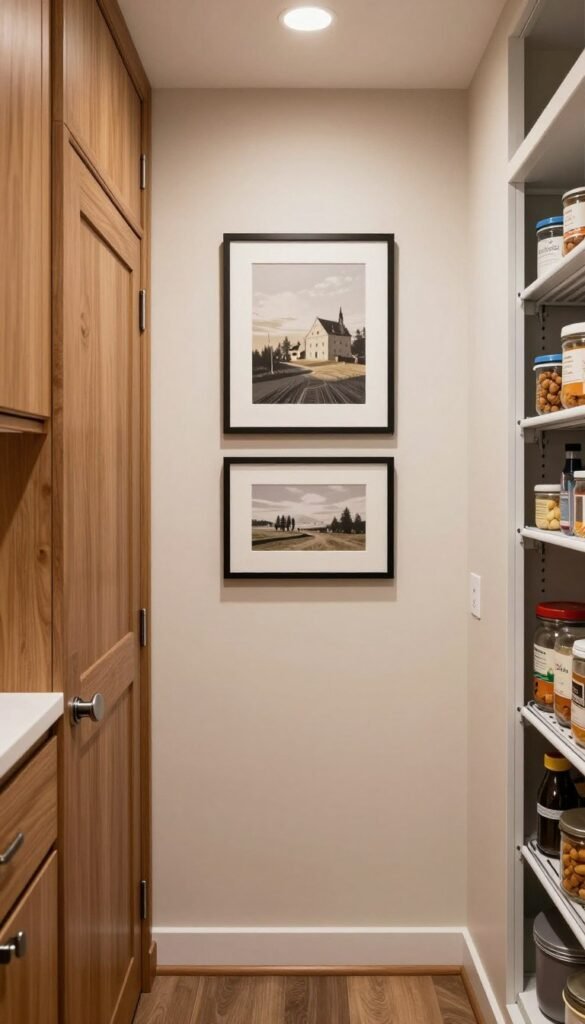
You do not need a huge empty wall. Some of the most effective pantry art fills small areas that would otherwise be forgotten, provided the artwork does not interfere with the practical use of the room.
- Above a countertop: Use artwork where it remains clear of food preparation, moisture, heat, and appliances.
- At the end of a narrow pantry: One statement print creates a natural focal point.
- Between shelving sections: A narrow botanical print can fill an awkward strip of wall.
- Above a freestanding cabinet: Use a substantial piece to visually connect the furniture to the wall.
- On an open shelf: Lean a small stable frame where it will not interfere with storage.
- Near the entrance: Artwork can make a walk-in pantry feel intentionally decorated from the moment you open the door.
Small-space tip: Do not feel obligated to fill every available wall. One carefully positioned artwork can have more impact than several small prints squeezed between shelves.
You Might Also Like
How to Make Pantry Art Look Expensive
The artwork itself does not need to be expensive. Presentation, scale, and placement usually make a much bigger difference than the price of the print.
- Use a generous mount: Giving a small print more breathing room can make it look much more substantial.
- Choose a proper frame: Wood, black, or antique-style finishes can elevate inexpensive artwork.
- Go slightly larger: A confidently scaled piece often looks more intentional than several tiny prints.
- Repeat materials: Connect the frame to nearby wood, brass, black hardware, or cabinetry.
- Leave breathing room: Avoid surrounding the artwork with too many decorative objects.
- Choose personal pieces: Family recipes, old photographs, and meaningful vintage finds can feel more special than generic wall decor.
Designer detail: Pay attention to scale before buying anything. A slightly larger frame with a generous mount can often make an inexpensive print look far more polished than a small artwork surrounded by empty wall.
Pantry Art Ideas for Small Spaces
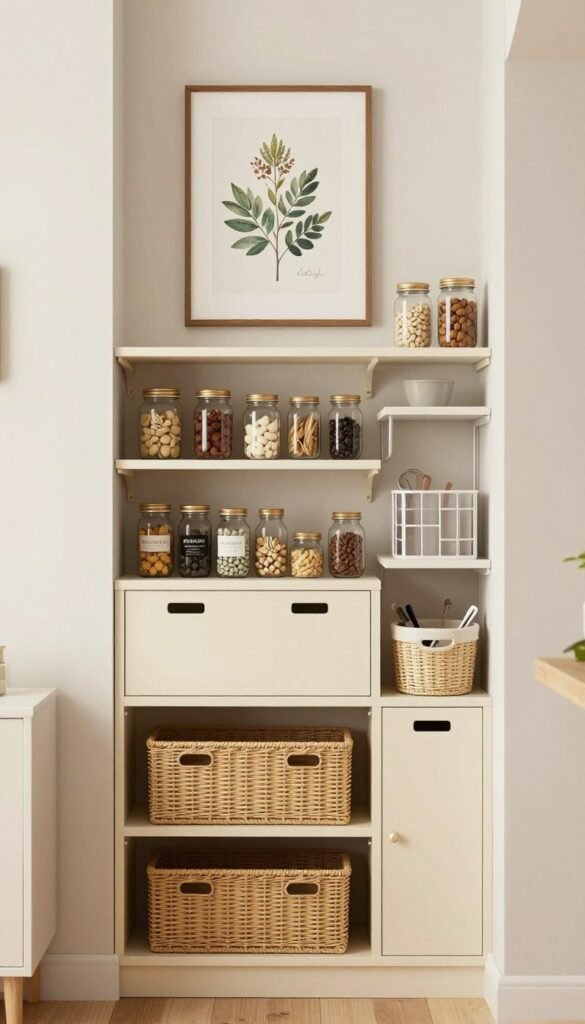
A tiny pantry may not have much spare wall space, but it also does not require much artwork to feel decorated. Concentrate on the areas that can take a little personality without compromising valuable storage.
- Hang one vertical print on the end wall.
- Use a narrow pair of botanical illustrations.
- Lean a small framed recipe on an open shelf.
- Use artwork above a small section of counter where practical.
- Choose one substantial piece rather than a crowded gallery wall.
- Coordinate the frame with shelving or cabinet hardware to make the room feel more cohesive.
Small-space tip: In a narrow pantry, one vertical artwork at the far end can create a focal point without taking a single inch away from useful shelving.
Common Pantry Art Mistakes to Avoid
Decorating a pantry should make the space feel better without making it harder to use. A few simple mistakes can quickly tip the balance in the wrong direction.
- Using too many small signs: One substantial artwork usually feels more polished than a wall full of novelty phrases.
- Covering useful storage space: Do not remove practical shelving simply because a wall would look nice with a picture on it.
- Hanging art too close to moisture or heat: Consider the practical conditions of the room before choosing a location.
- Making the pantry too themed: Not every piece of art needs to contain bread, vegetables, coffee, or the word “pantry.”
- Using frames that are too small: Tiny pieces can disappear against a wall surrounded by shelving and storage.
- Overstyling open shelves: Leave enough room to actually reach the food.
- Ignoring secure installation: Use appropriate fixings for the wall construction and frame weight, particularly around frequently used shelving.
An Easy Pantry Art Styling Formula
If you are unsure where to begin, keep the decorating formula simple. The pantry should still feel practical first and decorative second.
- Find one blank wall or quiet section of shelving.
- Choose one larger artwork or a small coordinated pair.
- Select a frame that relates to the cabinetry, shelving, or hardware.
- Repeat one color from the artwork elsewhere in the pantry.
- Keep the surrounding accessories simple.
- Make sure doors, storage, switches, and work areas remain easy to use.
- Stop before every empty space becomes another decorating opportunity.
Why it works: Treating the artwork as a finishing detail rather than the main event allows the pantry to stay practical while still feeling warm, personal, and properly decorated.
Final Thoughts
A pantry will always be a practical space, but practicality does not mean it has to feel forgotten. A single botanical print, framed family recipe, traditional still life, or small landscape can bring warmth and personality to a room dominated by shelves and storage.
The most successful pantry art feels like a natural extension of the rest of the home. Choose pieces you would happily display elsewhere rather than limiting yourself to artwork specifically marketed for kitchens and pantries.
Keep the arrangement simple, protect the practical function of the room, and give the artwork a little breathing space. Even the most hardworking utility space can feel beautiful when the decorative details are chosen with intention.