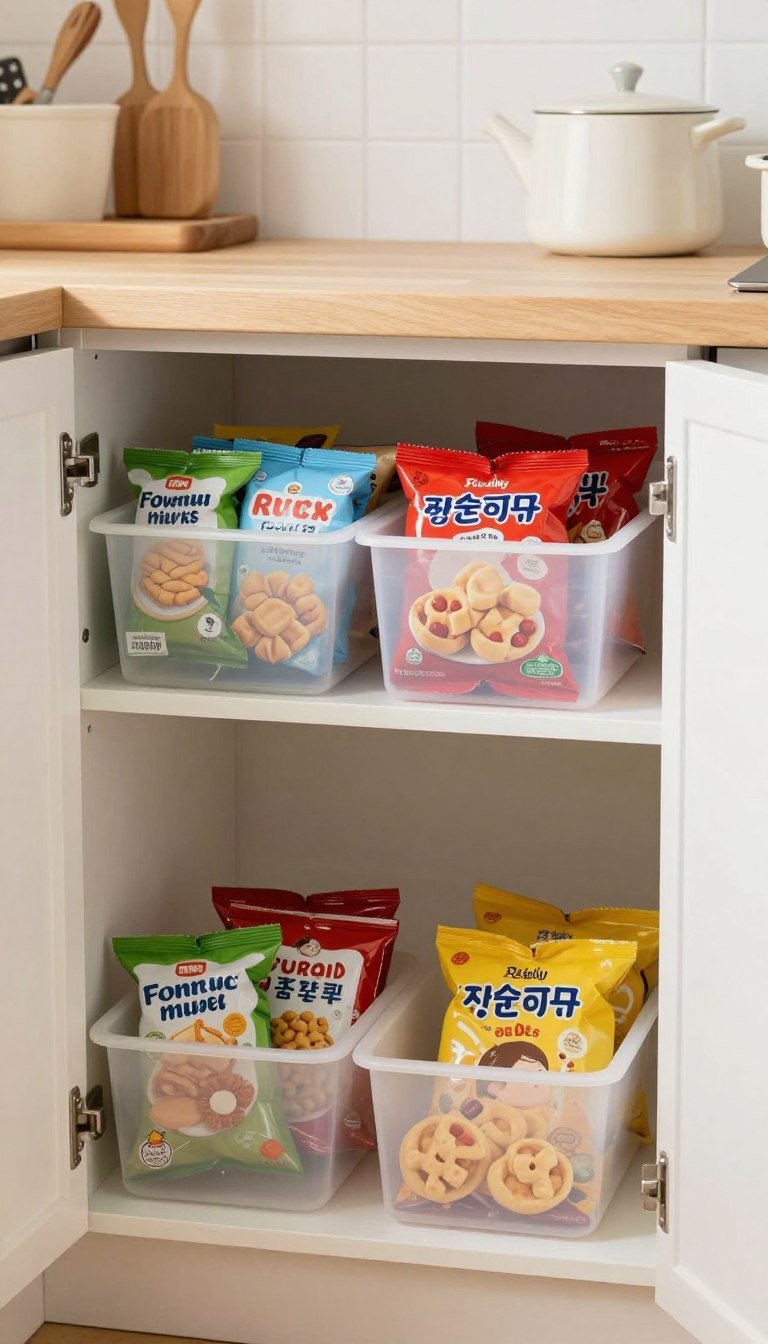
Kid Friendly Pantry Ideas That Make Snacks Easy to Organize
A family pantry can go from beautifully organized to complete snack chaos surprisingly quickly. One minute the baskets are neatly lined up, and the next there are half-open packets, empty boxes, and someone asking where the crackers are while standing directly in front of them.
A kid friendly pantry makes everyday snacks, breakfast foods, and lunchbox supplies easier to see, reach, and put away. The idea isn’t to give children unrestricted access to everything in the kitchen. It is to create a clearly defined area filled with parent-approved items that suit their ages and your household routine.
You don’t need a huge walk-in pantry to make this work either. One lower shelf, a kitchen cabinet, a few baskets, or even a compact rolling cart can create a useful family-friendly zone. The best systems are usually the simplest ones—the ones everyone can understand without needing a pantry map.
Quick Guide: Creating a Kid Friendly Pantry
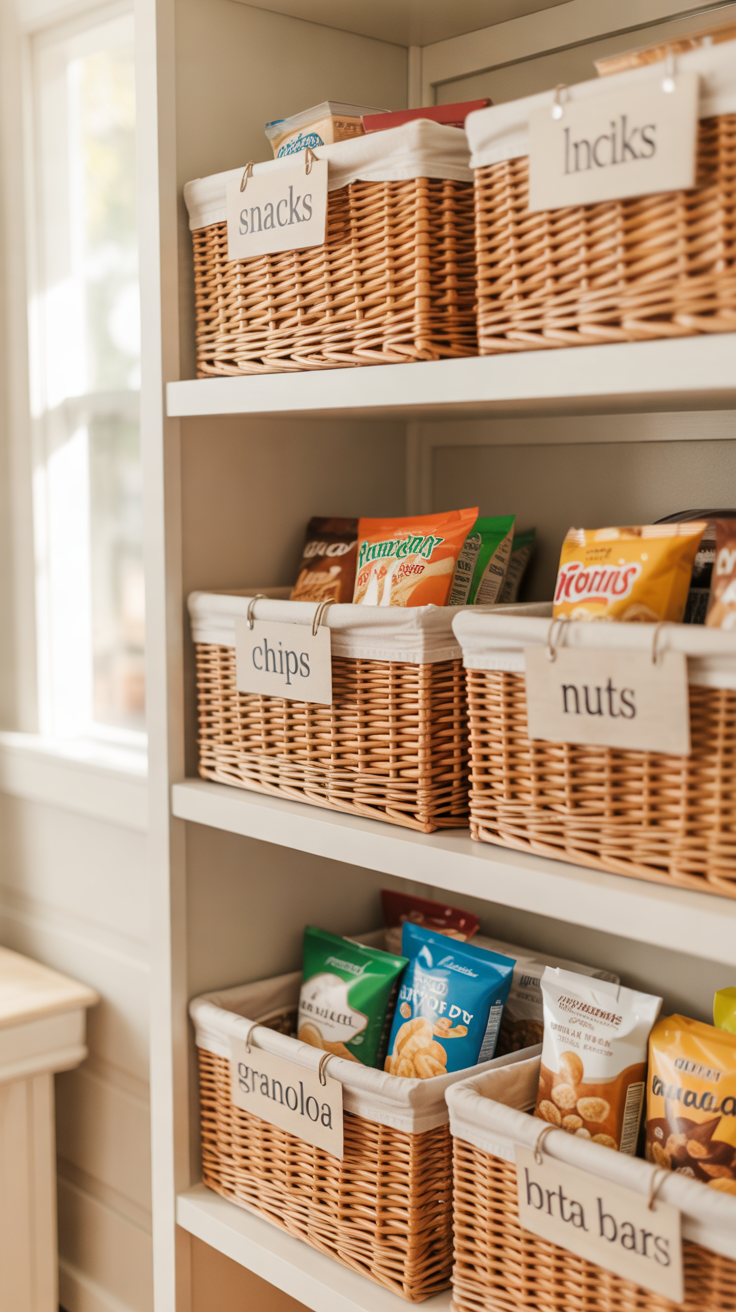
Before buying organizers, decide what you actually want children to be able to find and access. A small, well-planned zone is often much easier to maintain than reorganizing the entire pantry at once.
- For younger children: Keep only suitable parent-approved items within reach and store anything unsafe separately.
- For a small pantry: Dedicate one lower shelf, cabinet, or basket to everyday snacks.
- For busy mornings: Group breakfast and lunchbox foods into easy-to-recognize zones.
- For multiple children: Start with broad shared categories unless individual baskets would genuinely make your routine easier.
- For easy tidying: Choose open bins and lightweight baskets that are simple to return to the correct place.
- For less food waste: Keep suitable foods that need using sooner toward the front where everyone can see them.
Safety first: Organize the pantry around the ages and abilities of the children in your home. Medicines, alcohol, cleaning products, sharp objects, choking hazards, heavy containers, and anything else that could be unsafe should remain appropriately secured and out of reach. Keep foods stored according to their packaging, temperature, allergen, and food-safety guidance.
12 Practical Kid Friendly Pantry Ideas
1. Create a Dedicated Kids Snack Shelf
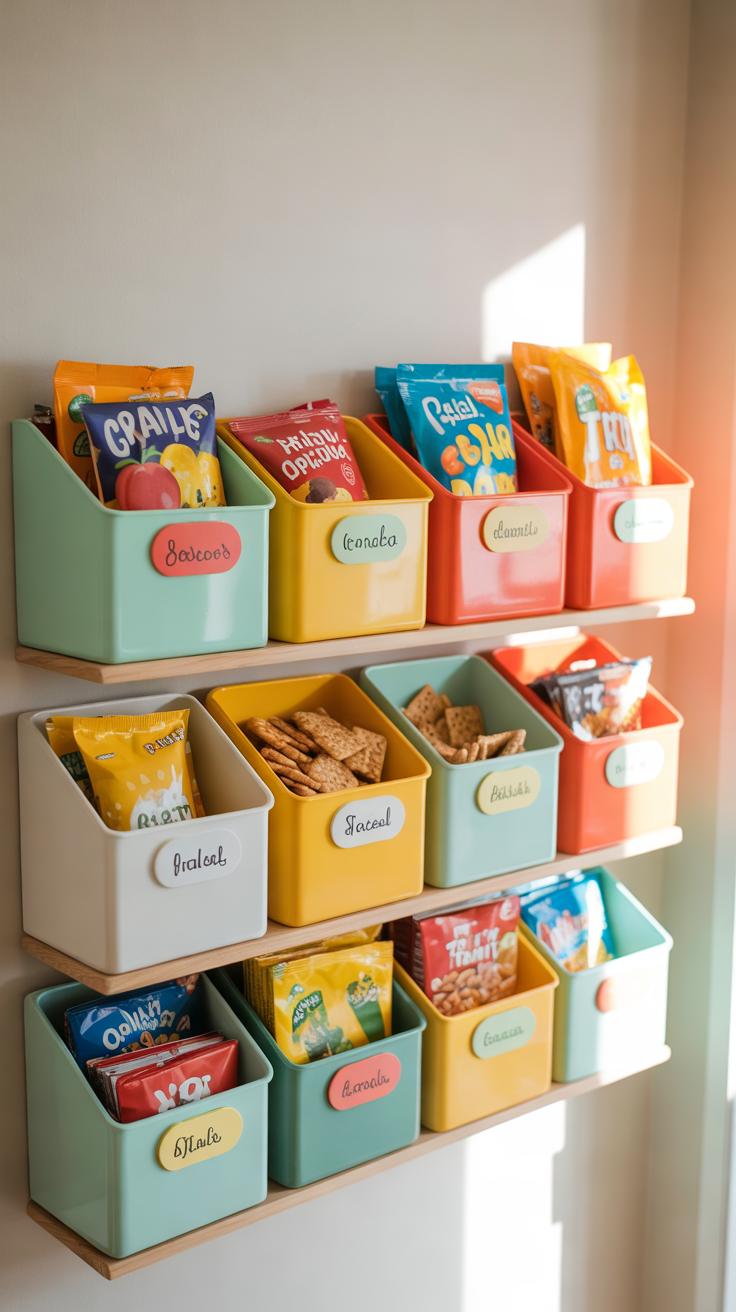
One of the easiest ways to make a pantry more kid friendly is to give everyday snacks their own clearly defined shelf. Instead of children searching through the entire pantry, they know exactly where the foods available to them are kept.
Choose a height that is appropriate for their age and abilities, then fill the area only with foods you are comfortable making accessible. Keeping these foods together also makes it much easier for adults to see what is running low before the last packet mysteriously disappears.
Resist the temptation to fill every inch of the shelf. A little empty space makes snacks easier to see and gives children enough room to put things back without rearranging several containers.
Keep the Categories Simple
- Crackers and savory snacks.
- Suitable fruit-based snacks.
- Breakfast items.
- Lunchbox extras.
- Occasional treats, if you want them included.
Easiest upgrade: Don’t reorganize the entire pantry if you don’t need to. Clearing and organizing one accessible shelf can be enough to create a useful kids snack station.
2. Use Open Bins for Grab-and-Go Snacks
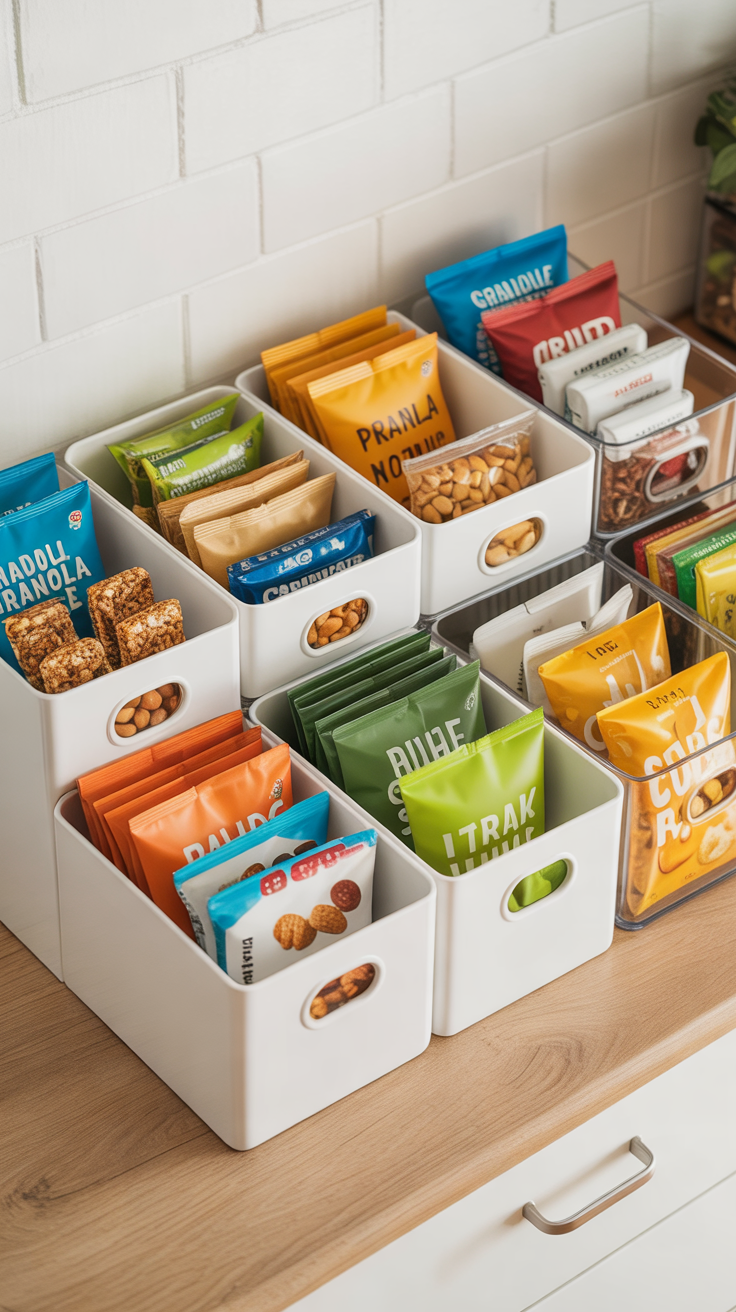
Open bins work particularly well in a family pantry because there is no lid to remove and very little confusion about where something belongs. Children can see the contents, take what they need, and return unused items without pulling half the shelf apart.
Use broad categories rather than assigning a separate container to every individual snack. A basket for lunchbox foods and another for everyday snacks is much easier to maintain than twelve tiny categories that nobody remembers by Tuesday.
Choose bins that sit securely on the shelf and are easy to handle. Avoid overloading them, and keep heavy containers in an adult-access area rather than placing them where a child might try to pull them down.
Useful Bin Categories
- Everyday snacks.
- Lunchbox foods.
- Breakfast.
- After-school snacks.
- Use-first foods.
Why it works: Open storage removes an extra step. When taking something out and putting it back are both easy, the organizing system has a much better chance of surviving everyday family life.
3. Add Picture Labels for Younger Children
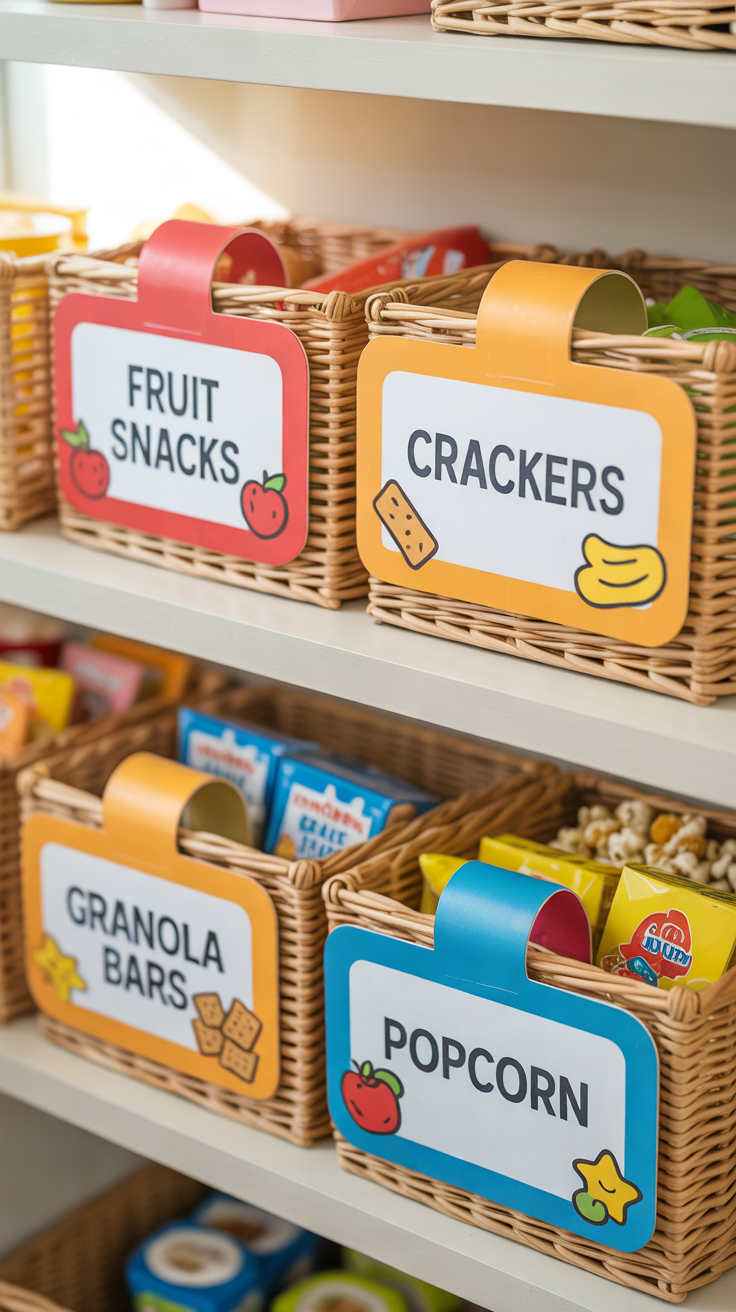
Pantry labels don’t have to rely entirely on reading. For younger children, adding a simple picture alongside the word can make it much easier to understand what belongs in each basket.
A cracker image on the savory snack basket or a simple breakfast symbol on another bin provides an immediate visual clue. It can be especially helpful when you are encouraging children to help put pantry items away.
Keep the wording and pictures obvious. The aim is to make the pantry easier to understand, not to create a complicated filing system for every snack flavor in the house.
Simple Label Ideas
- Snacks.
- Breakfast.
- Crackers.
- Lunchbox.
- Treats.
Practical detail: Use the words your family naturally uses. Familiar labels are far more useful to children than beautifully styled categories nobody actually says out loud.
4. Make a Lunchbox Packing Station
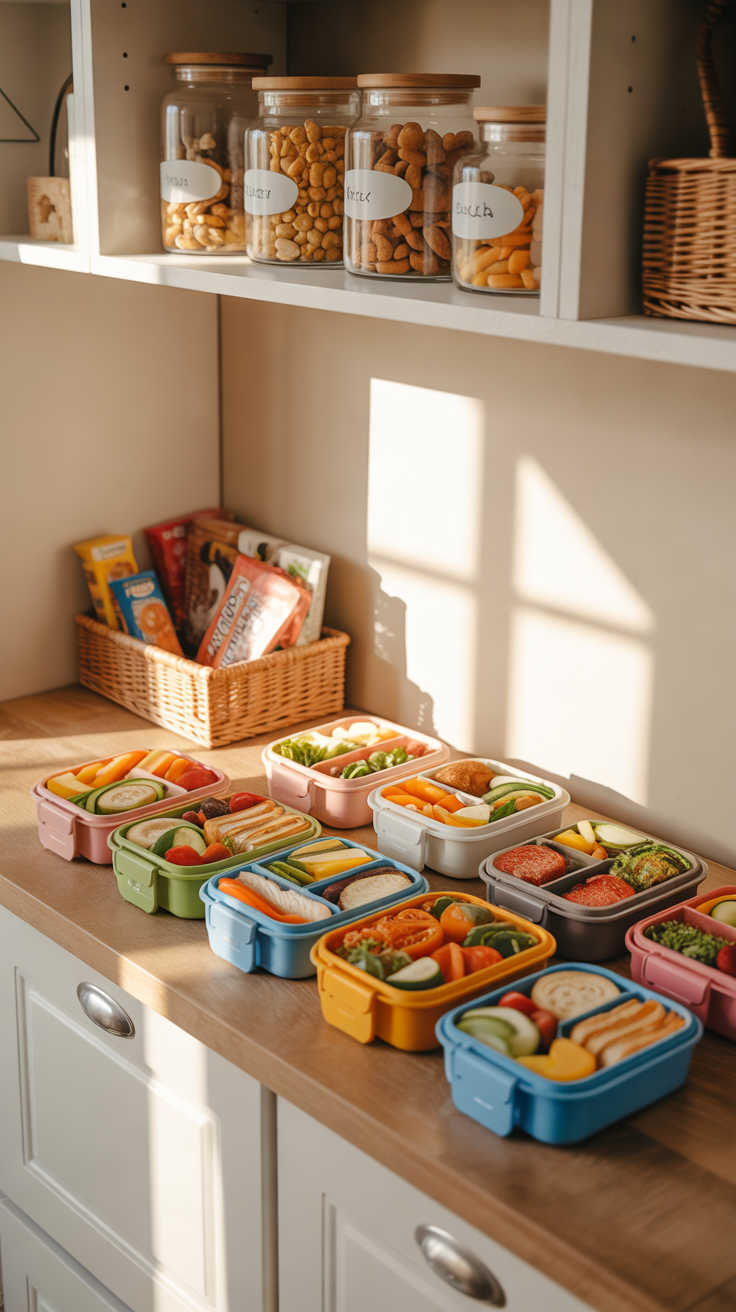
If school mornings regularly involve searching three cupboards for lunchbox extras, grouping the suitable shelf-stable foods together can make the routine considerably easier.
Create one small section specifically for packed lunches. You might have a basket for savory items, another for suitable fruit-based snacks, and another for other approved extras. Older children who help pack their own lunches can then see the available options without searching through the whole pantry.
Foods that need refrigeration should stay refrigerated rather than being moved into the pantry simply to complete the station. You can create a corresponding lunchbox section in the refrigerator if that makes mornings easier.
A Simple Lunchbox Zone Could Include
- Shelf-stable savory items.
- Suitable packaged fruit options.
- Approved snack bars or similar foods.
- Reusable lunch supplies.
- Napkins or other lightweight accessories.
Morning shortcut: Organizing by routine rather than strictly by food type means the things you regularly need at the same time are already together.
5. Use a Small Rolling Cart as a Kids Pantry
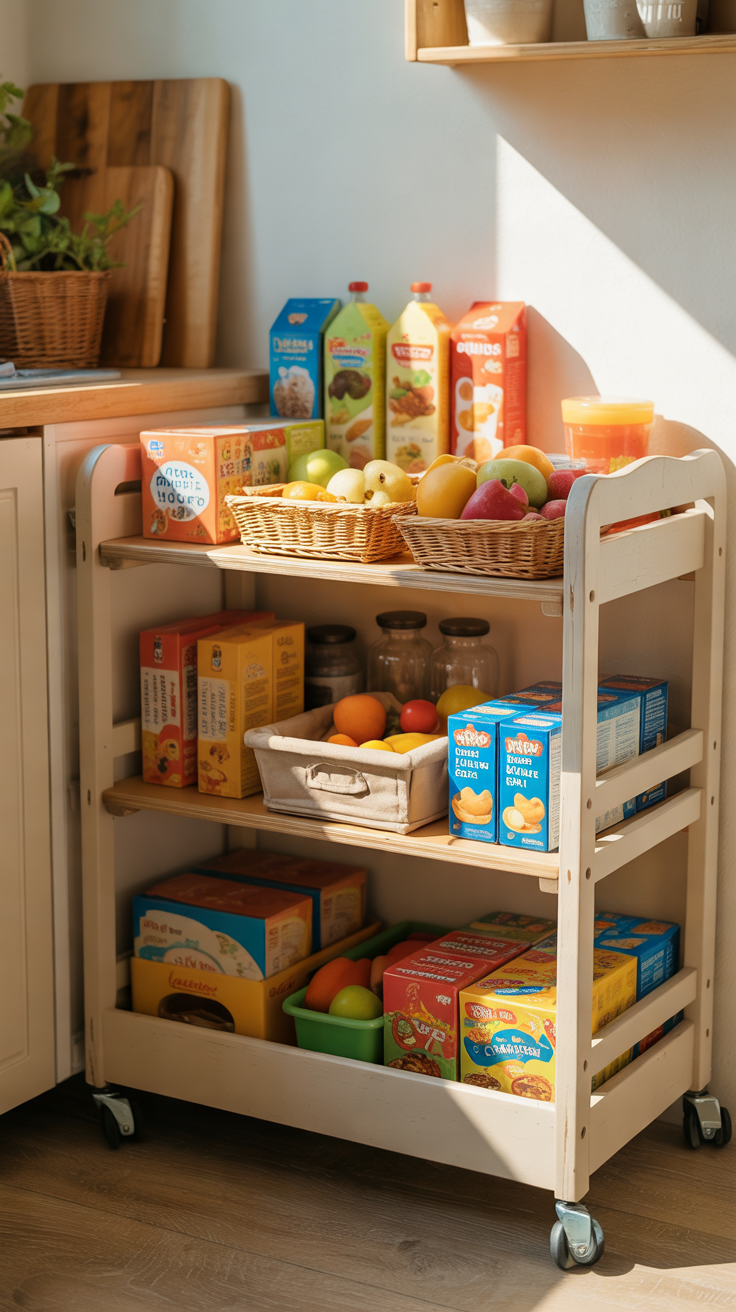
No spare pantry shelf? A compact rolling cart can create a separate snack and breakfast station without requiring a complete kitchen reorganization. It can work particularly well in a small kitchen, shallow pantry, or home where cabinet space is limited.
Keep the contents lightweight and position the cart somewhere it won’t obstruct a doorway or busy walkway. Stability matters too, particularly around younger children, so use or secure a mobile cart in a way that is appropriate for your household.
The tiers can be divided by routine rather than filled randomly. Giving snacks, breakfast foods, and lunchbox supplies their own levels makes the cart easier for everyone to understand.
Organize the Cart by Level
- One level for parent-approved everyday snacks.
- One level for breakfast foods.
- One level for lunchbox supplies.
- Keep heavy, breakable, or unsuitable items somewhere else.
Small space tip: A narrow cart can turn an awkward unused corner into practical storage, but don’t sacrifice safe movement around the kitchen just to squeeze in another organizer.
6. Create an After-School Snack Basket
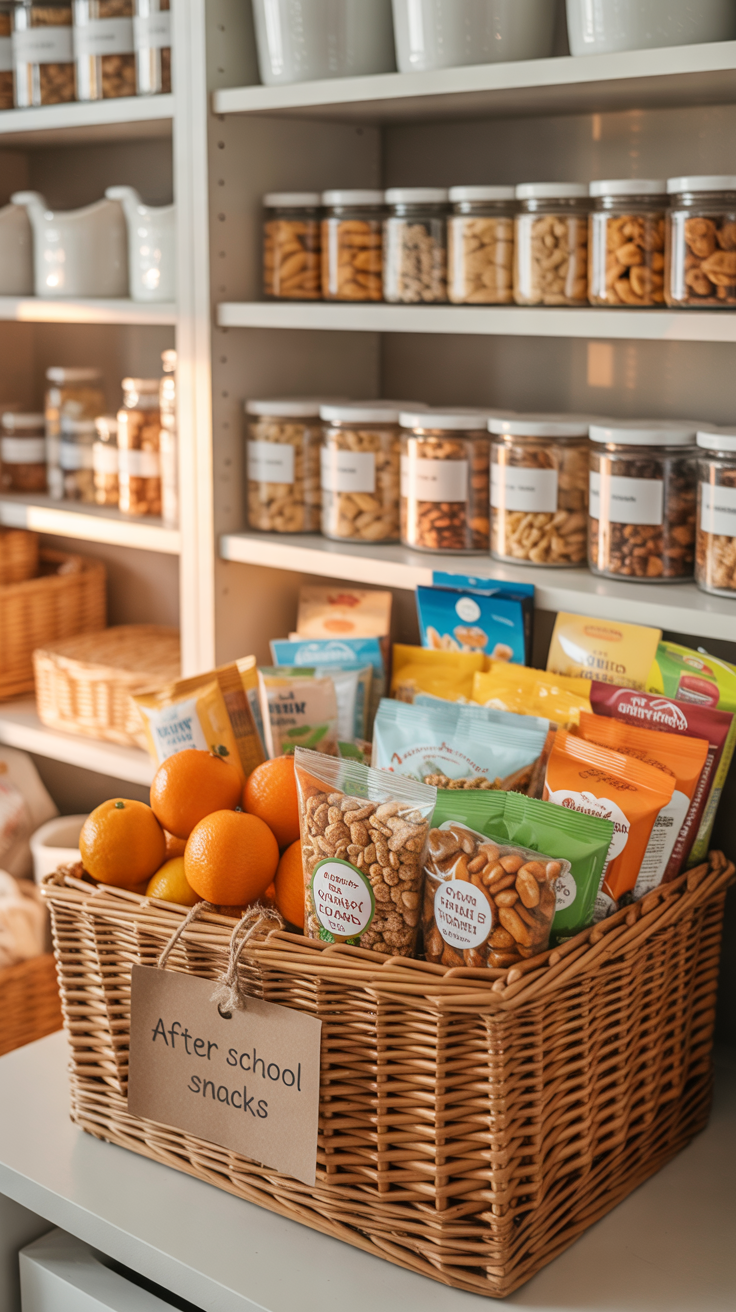
An after-school snack basket is a small organizing change that can make a surprisingly big difference. Instead of children searching through every pantry shelf when they get home, they know which foods have been set aside as suitable options.
Keep the basket stocked with a manageable selection rather than displaying every snack in the house. A smaller amount is easier to see, easier to rotate, and less likely to turn into a jumble of forgotten packets.
If some of your usual after-school foods need chilling, create a separate parent-approved snack section in the refrigerator using the same idea. Keeping pantry and refrigerated options clearly defined can make the whole routine easier.
Keep the Snack Basket Easy to Maintain
- Keep only a sensible amount in the basket.
- Move suitable foods with earlier dates toward the front.
- Remove empty boxes and wrappers promptly.
- Restock from your main pantry supply rather than overfilling the basket.
- Check packaging, dates, and storage instructions as you restock.
Budget friendly version: Repurpose a basket or washable container you already own before buying a matching set. A simple system that works is far more valuable than perfectly coordinated storage.
7. Create a Breakfast Grab-and-Go Zone
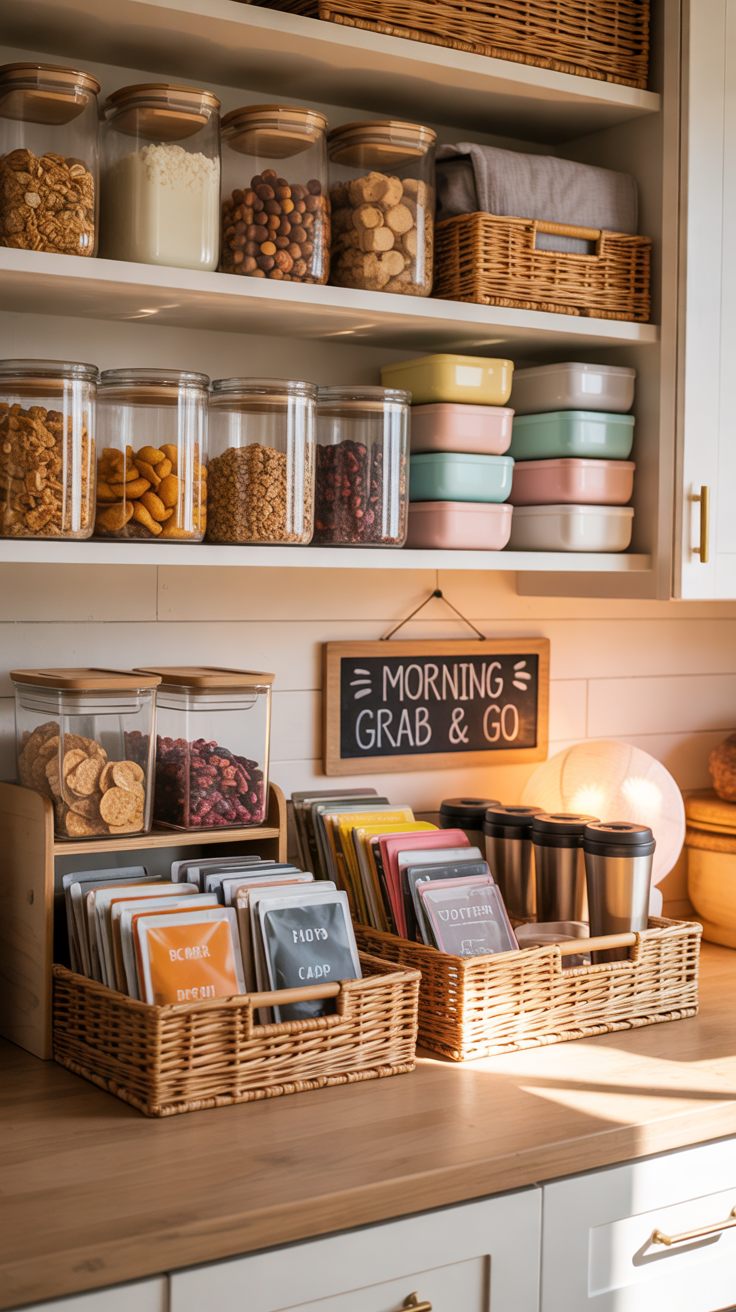
Breakfast is much easier when the foods you regularly use are grouped together. Instead of cereal on one shelf, oatmeal somewhere else, and breakfast bars hiding behind the pasta, create one clearly defined breakfast zone.
For children who are old enough to help prepare their own breakfast, keep appropriate foods within easy reach. Anything heavy, breakable, hot, sharp, or otherwise unsuitable should stay in an adult-controlled area.
If it suits your kitchen, you can also keep lightweight bowls, napkins, or other appropriate breakfast supplies nearby. The aim is simply to reduce unnecessary searching during already-busy mornings.
What to Keep in the Breakfast Zone
- Cereal or other regular family breakfast staples.
- Oatmeal packets where appropriate.
- Parent-approved breakfast bars.
- Shelf-stable breakfast extras.
- Lightweight reusable supplies if suitable for your children.
Why it works: Organizing around a routine puts the things you regularly need at the same time in one place, which can make mornings feel much less scattered.
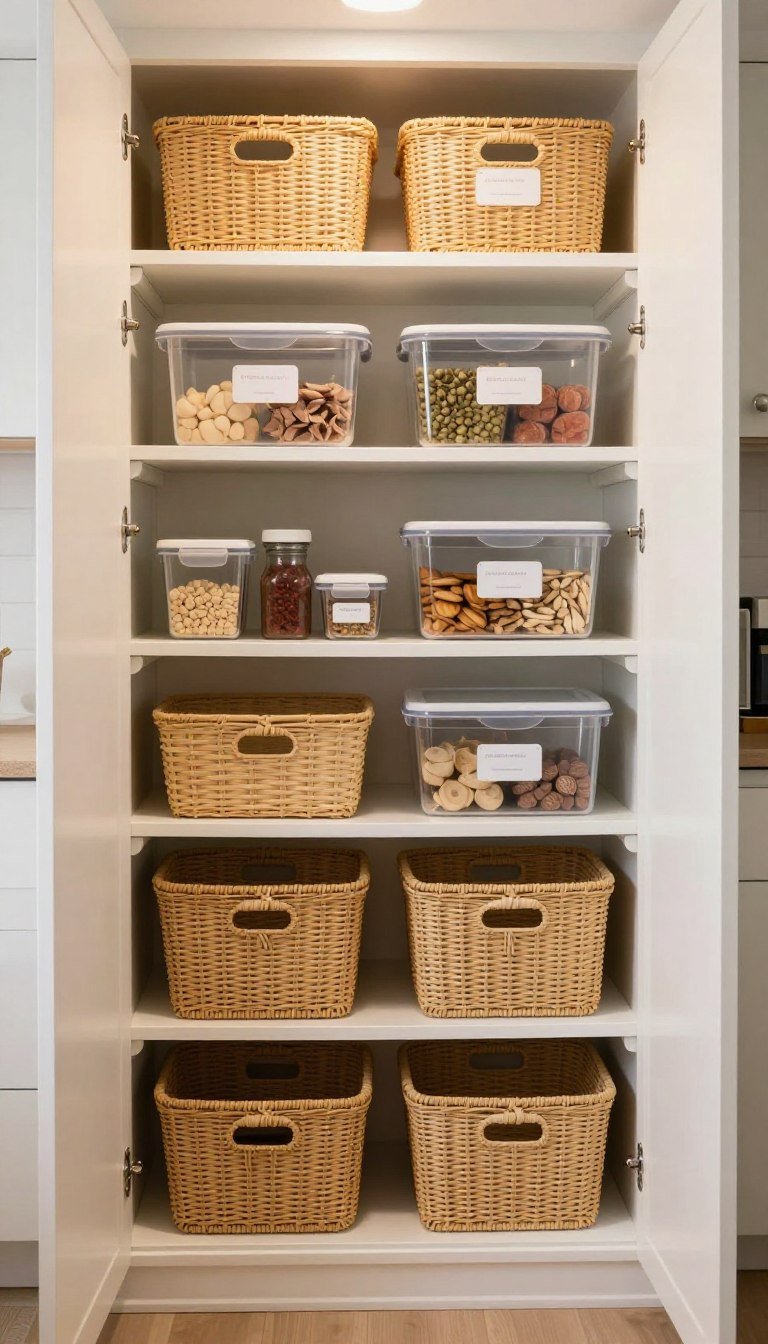
8. Use Clear Bins So Kids Can See What Is Available
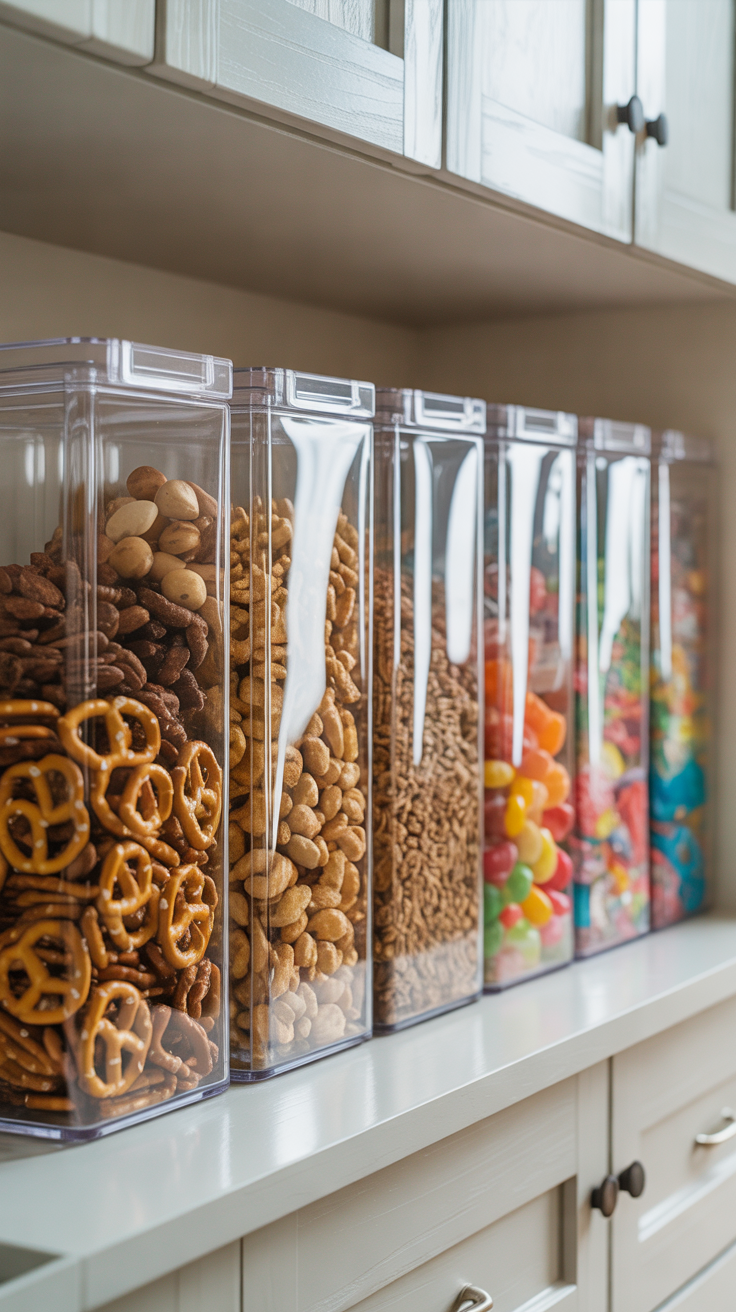
Clear bins can be particularly useful in a family pantry because everyone can see what is inside without pulling the container from the shelf. They also make it much easier to notice when something needs restocking.
There is no need to decant every snack into a matching container. Packaged foods can simply sit inside clear open bins, which keeps useful ingredient, allergen, date, and storage information on the original packaging.
Choose sturdy containers that fit comfortably on the shelf and are easy to clean. Avoid stacking heavy bins in places where children may be tempted to pull them down themselves.
Clear Bins Work Well For
- Individually packaged snacks.
- Breakfast foods.
- Lunchbox supplies.
- Crackers and savory snacks.
- Backup supplies stored on adult-access shelves.
Practical detail: Visibility is often more useful than perfect styling. If you can immediately see what you already have, you are less likely to buy another box while three are hiding at the back.
9. Make a First-to-Eat Snack Bin
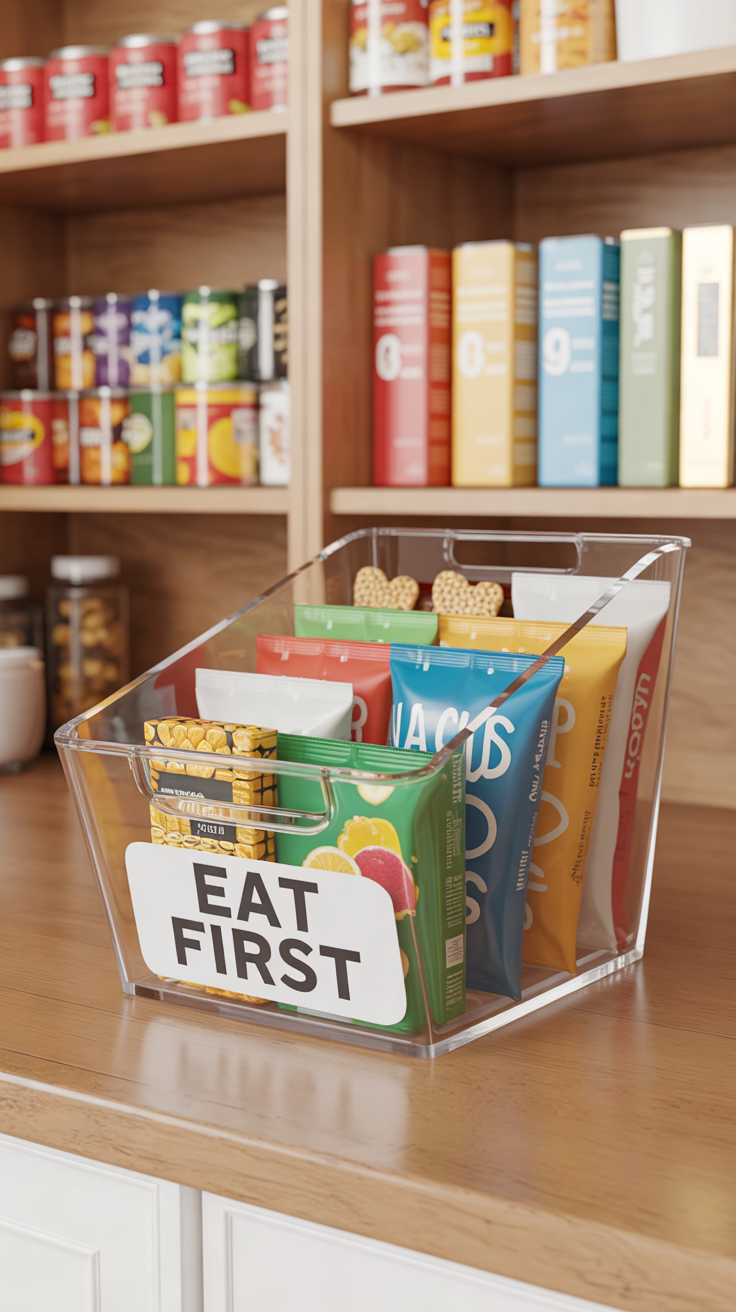
A small “eat first” or “use first” basket can help stop perfectly good food from being forgotten. Place suitable packaged foods that you would like the family to finish sooner in one obvious spot.
This is particularly useful when a new box has been opened before the previous one is finished or when you have several packets with different dates. Older items stay visible instead of gradually disappearing into the mysterious depths of the pantry.
The basket is a reminder rather than a substitute for checking the food itself. Always look at dates, packaging condition, allergen information, and storage guidance when deciding whether something is suitable to eat.
Use This Basket For
- Older packages that should be used before newer ones.
- Suitable foods approaching their best-before date.
- Small quantities left from multipacks.
- Foods that tend to disappear behind larger packages.
No-cost upgrade: You don’t need a special organizer for this. Repurpose a small basket you already own and add a simple “Use First” label.
10. Give Each Child a Personal Snack Basket
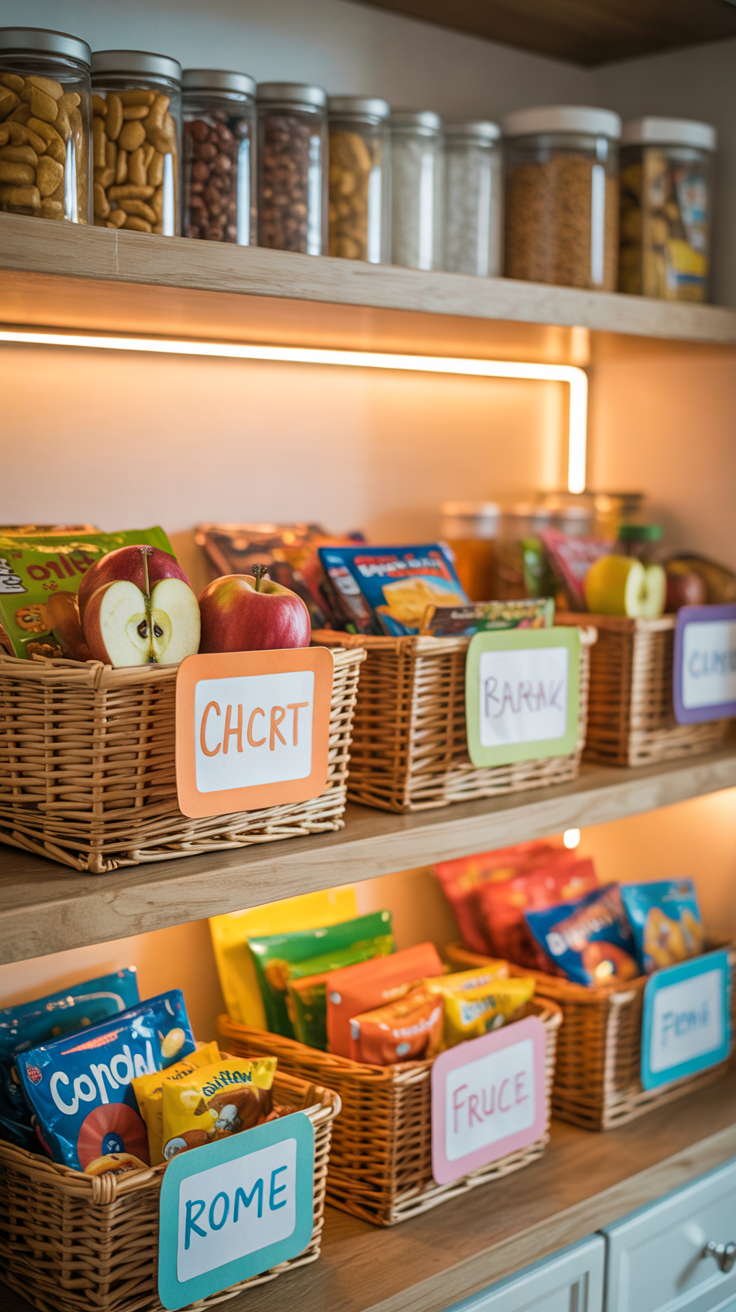
For some families, individual snack baskets can make the pantry easier to manage. Each child gets a clearly labeled container filled with appropriate foods selected by a parent or caregiver.
This can be helpful when children are different ages, have different routines, or regularly need different food options. It can also prevent one child from accidentally finishing something that was intended for someone else’s lunchbox.
You don’t need individual baskets simply because you have more than one child, though. If one shared snack area is easier for your household, keep the simpler system.
Where food allergies or medical dietary requirements are involved, pantry organization should support the safety plan already used by your household. Separate baskets, colors, and labels should not be relied upon as the only protection against accidental exposure.
Keep Personal Baskets Simple
- Add each child’s name or an easy-to-recognize symbol.
- Choose lightweight containers that are easy to handle.
- Keep useful packaging and food information available.
- Leave enough empty space for children to see the contents.
- Review and restock the baskets regularly.
Best for: Individual baskets are most useful when children genuinely need different snack options. Otherwise, a shared family zone will usually be simpler to maintain.
11. Turn a Lower Cabinet Into a Mini Kids Pantry
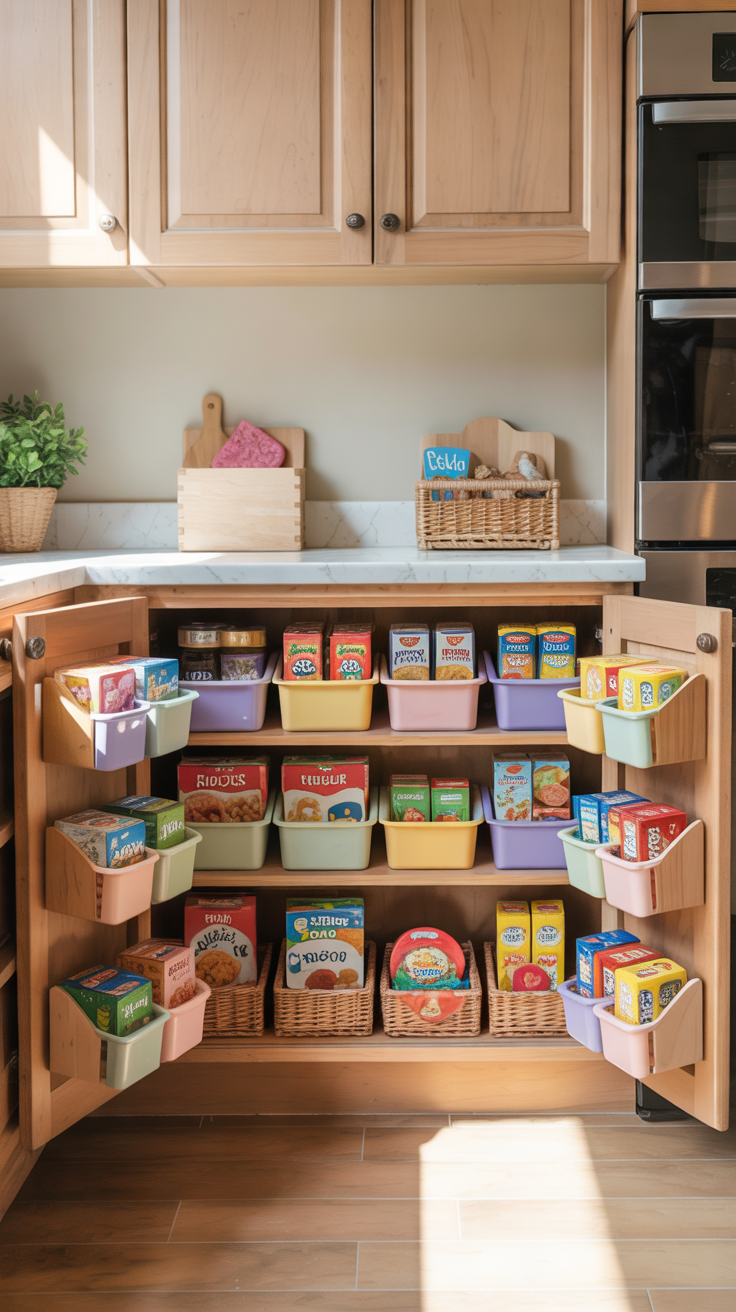
If you don’t have a walk-in or freestanding pantry, a lower kitchen cabinet can provide enough space for a compact kids snack zone. This is a particularly practical solution for apartments, small kitchens, and homes where every shelf has to earn its place.
Clear the cabinet completely before you start and remove anything that should not be accessible to children. Then use a few lightweight baskets to separate approved snacks, breakfast foods, and lunchbox supplies.
Keep the layout simple enough that everything can be returned without carefully rearranging the entire cabinet. If putting away one packet requires moving four baskets first, the system is probably doing too much.
A Small Cabinet Could Hold
- One basket of parent-approved snacks.
- One breakfast basket.
- One lunchbox supply basket.
- A small use-first section.
Small space tip: You don’t need a Pinterest-sized walk-in pantry to create useful zones. One well-organized cabinet can be far more practical than a large pantry with no clear system.
12. Create a Simple Snack Restocking System
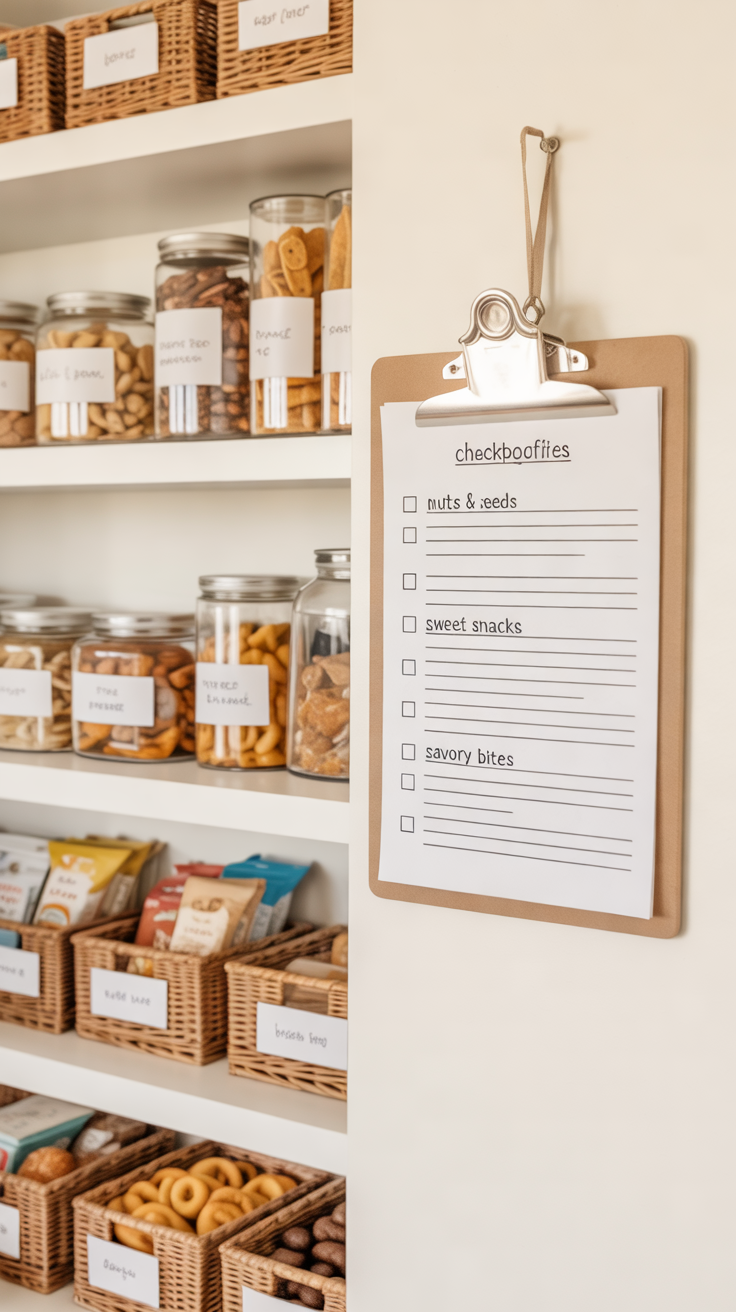
The secret to keeping a kid friendly pantry organized isn’t buying more containers. It is having an easy way to refill the accessible area without cramming the entire grocery shop into it.
Keep a manageable amount of parent-approved food in the children’s zone and store suitable backup supplies separately. When a basket gets low, refill it from the backup stock rather than trying to fit every multipack onto the accessible shelf at once.
This creates a useful distinction between what is currently available and what has been purchased for later. It also makes it much easier to spot what is genuinely running low.
Try This Restocking Routine
- Keep a manageable amount in the kids snack zone.
- Store suitable backup supplies separately.
- Move older stock forward before adding newer items.
- Remove empty boxes and packaging.
- Check dates and package condition as you restock.
- Add low-stock foods to the shopping list as soon as you notice them.
Why it works: Separating backup stock from the everyday snack zone prevents accessible bins from becoming overfilled while giving you a much clearer picture of what the family actually has.
You Might Also Like
What Should Go in a Kid Friendly Pantry Zone?
There is no universal list of foods that belongs in every children’s pantry area. Suitable choices depend on a child’s age and abilities, individual dietary needs, allergies, household preferences, and the foods your family normally eats.
Rather than copying someone else’s perfectly styled snack drawer, think in broad categories and fill them with foods you already consider appropriate for your household.
- Everyday snacks: Foods you are comfortable making readily accessible.
- Breakfast: Appropriate shelf-stable foods regularly used in the morning.
- Lunchbox: Suitable foods that can be quickly added to packed lunches.
- After school: A manageable selection of parent-approved options.
- Use first: Suitable foods that should be finished before newer stock.
- Backup: Additional supplies stored separately from the everyday grab-and-go area.
Useful rule: If you wouldn’t normally be comfortable with your child choosing a particular item independently, it probably doesn’t belong in their accessible pantry zone.
What Should Stay Out of a Kids Pantry Zone?
Accessibility should always be based on the ages, abilities, and needs of the children using the space. Some things belong in secure or adult-controlled storage even if keeping them elsewhere is slightly less convenient.
- Medicines and supplements.
- Alcohol.
- Cleaning products and household chemicals.
- Sharp tools or utensils.
- Heavy or breakable containers that could fall.
- Foods that are not appropriate for the child’s age or individual needs.
- Items that require refrigeration or another specific storage condition.
For younger children in particular, consider choking hazards and how individual foods need to be prepared or served. Placing a food on an accessible shelf does not automatically make it appropriate for independent eating.
How to Organize Kids Snacks in a Small Pantry
A small pantry can actually encourage a simpler organizing system because every container has to justify the space it takes up. Instead of creating a separate bin for every possible snack, give the categories you use most often a clearly defined home.
- Use one lower shelf: Reserve it for the foods you want children to access.
- Choose narrow bins: Measure the shelf before buying organizers so you don’t lose valuable space.
- Organize by routine: Snack, breakfast, and lunchbox zones are often more useful than lots of tiny categories.
- Keep backups elsewhere: Don’t fill valuable accessible space with unopened multipacks.
- Use cabinet doors carefully: Lightweight organizers can provide extra storage where suitable, provided they don’t interfere with hinges, closing, or safe access.
- Declutter regularly: Empty boxes and unnecessary packaging can take up a surprising amount of space.
Small pantry rule: Measure first and buy organizers second. Beautiful baskets aren’t terribly helpful when the pantry door no longer closes.
How to Keep a Kids Snack Pantry Organized
The best pantry system isn’t the one that looks perfect immediately after you organize it. It is the one your household can still use without thinking about it three weeks later.
- Keep categories broad: Fewer categories make putting things away easier.
- Don’t overfill containers: Leave enough room to see and reach the contents.
- Rotate suitable stock: Move older items forward so they are less likely to be forgotten.
- Remove empty packaging: Empty boxes don’t need permanent pantry accommodation.
- Do a quick weekly check: Straighten the bins, check dates and packaging, and note anything running low.
- Change the system as children grow: What works for a preschooler may be completely unnecessary a few years later.
Maintenance tip: If the pantry takes half an hour to reset every week, simplify it. A good family organizing system should save time rather than create another household job.
Common Kid Friendly Pantry Mistakes to Avoid
A family pantry needs to work harder than one organized purely for photographs. Avoiding a few common mistakes can make the space safer, simpler, and much easier to maintain.
- Creating too many categories: Simple zones are easier for children and adults to understand.
- Putting everything within reach: Accessibility should be deliberate and appropriate for the child.
- Using heavy bins on high shelves: Organize according to weight and safe access as well as appearance.
- Removing useful food information: If you decant food, retain the information needed for identification, allergens, dates, preparation, and storage.
- Overfilling the snack area: Too much food and too little space quickly turns organized baskets into clutter.
- Forgetting food rotation: Keep older suitable foods visible so they are more likely to be used before newer stock.
- Organizing for appearance rather than your family: Matching containers are optional. Being able to find breakfast on Monday morning is considerably more useful.
An Easy Kid Friendly Pantry Formula
If you want to reorganize the pantry without turning it into an all-weekend project, start with the simplest possible system and add to it only when you discover that your family genuinely needs something more.
- Choose one area: Start with an appropriate shelf, cabinet, basket, or pantry section.
- Make it suitable: Remove anything that should not be accessible to children.
- Create three basic categories: Snacks, breakfast, and lunchbox supplies are enough for many families.
- Add simple storage: Use open or clear bins that fit the available space comfortably.
- Label only where useful: Add simple words or pictures that make categories easier to understand.
- Create a use-first spot: Keep suitable older foods visible so they aren’t forgotten.
- Separate backup supplies: Keep extra stock elsewhere rather than overfilling the accessible bins.
- Reset it regularly: Spend a few minutes checking, rotating, tidying, and restocking rather than waiting for the pantry to become chaotic again.
Final Thoughts
A kid friendly pantry doesn’t require rows of expensive matching containers or an enormous walk-in space. What matters is making the foods and supplies your family uses most often easy to find while keeping anything unsuitable appropriately secured.
Start with one snack shelf, a few open baskets, and simple categories. Add a breakfast zone, lunchbox station, individual baskets, or a use-first bin only if those ideas genuinely make your family’s routine easier.
Most importantly, create a system that is easy to put back together. If children can understand where suitable items belong and adults can quickly see what needs using or restocking, the pantry has a much better chance of staying organized long after the labels go on.