10 Tiny House Cottage Interior Ideas Full of Cozy Charm
There is something especially comforting about a tiny house that feels like an old country cottage. Soft colours, natural wood, vintage details, and layered textures can turn even the smallest home into a peaceful retreat filled with warmth and character.
The beauty of cottage style lies in its simplicity. Instead of filling every available corner, it focuses on useful furniture, meaningful accessories, practical storage, and timeless materials that become more beautiful with age.
Whether you are decorating a new tiny home or refreshing a compact interior, these cottage-inspired ideas show how comfort and character can flourish without making the space feel crowded.
Quick Guide: Cottage Style for Tiny Homes
| Design element | Best choices |
|---|---|
| Colours | Warm white, cream, sage green, dusty blue, oatmeal, and natural wood |
| Materials | Linen, oak, pine, wicker, cotton, stone, and reclaimed timber |
| Furniture | Vintage finds, built-in benches, farmhouse tables, and pieces with hidden storage |
| Lighting | Wall sconces, table lamps, lantern pendants, and plenty of daylight |
| Finishing touches | Fresh flowers, pottery, quilts, woven baskets, and botanical artwork |
The secret is balancing practical living with gentle decorative details. Each piece should add beauty, function, or ideally both.
Before You Start Decorating
- Choose one main colour palette: Repeating the same tones throughout the home creates a better sense of flow.
- Measure before buying: Check walkways, ceiling height, and the space needed to open drawers and doors.
- Prioritise storage: Add practical storage before bringing in more decorative accessories.
- Use natural texture: Layer linen, timber, wicker, and wool instead of relying on lots of patterns.
- Decorate slowly: A collected cottage interior feels more authentic than one filled all at once.
Quick win: Clear one shelf or surface completely, then return only the items you genuinely love or use. This instantly makes a tiny room feel calmer.
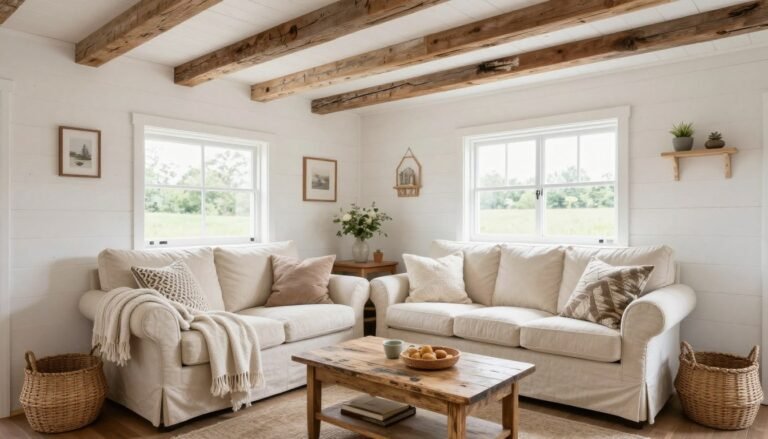
1. Whitewashed Living Room With Rustic Beams
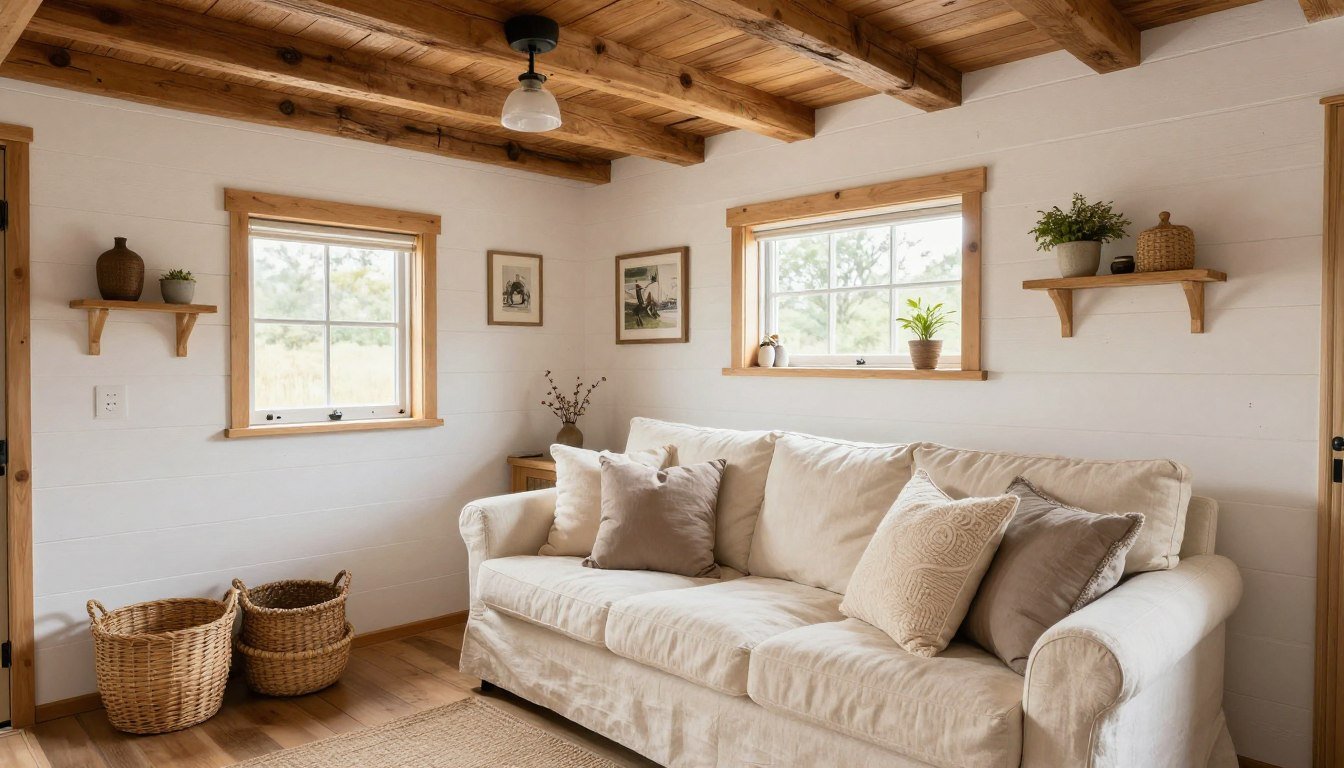
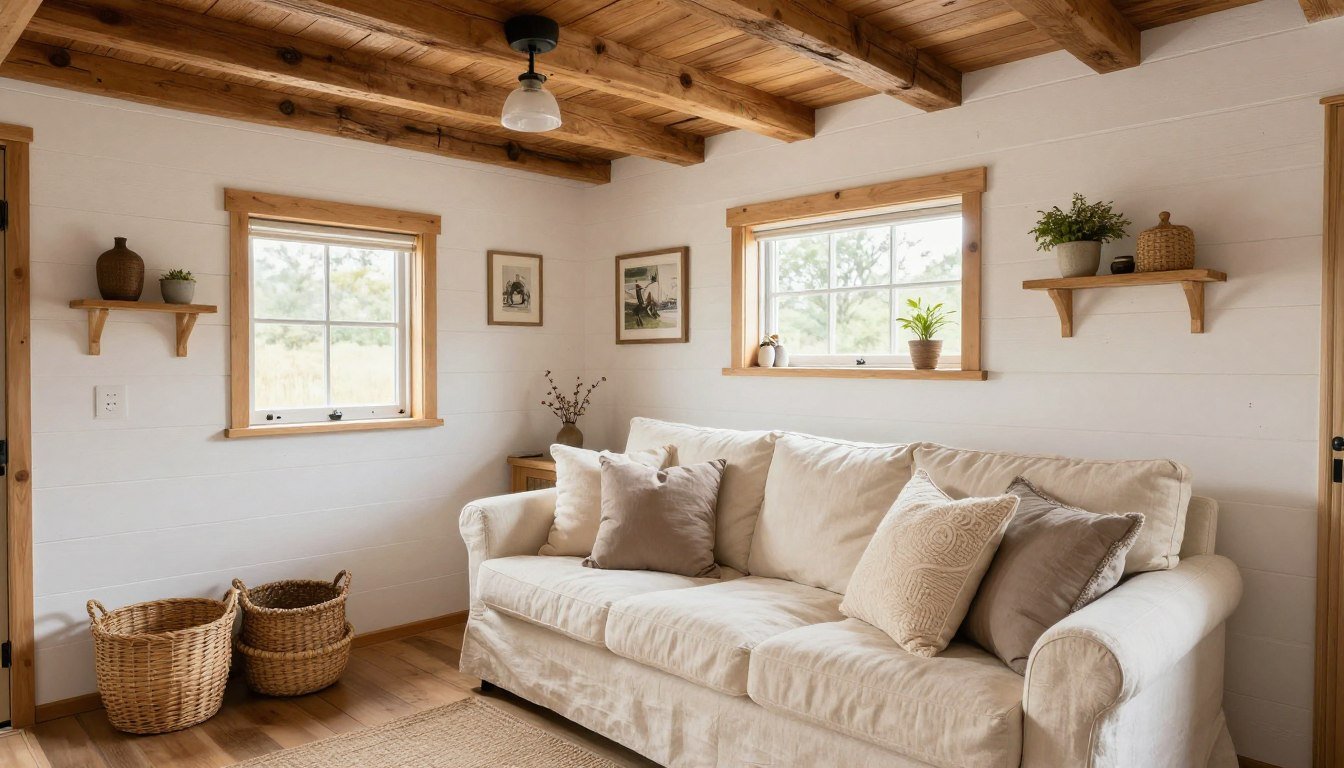
Whitewashed walls are perfect for a compact living room because they reflect natural light while allowing exposed timber beams to remain the main feature. The contrast between pale walls and aged wood creates an interior that feels bright without losing its rustic warmth.
Layer the room with linen cushions, a soft wool throw, and one or two woven baskets. These natural textures add comfort while keeping the colour palette calm and cohesive.
The result feels airy, inviting, and timeless rather than overly decorated.
Why It Works
- Reflects natural light around the room.
- Highlights beautiful architectural details.
- Creates a greater sense of height.
- Adds cottage character without visual clutter.
Small space tip: Choose sofas, chairs, and side tables with visible legs so more of the floor remains in view.
Designer detail: Repeat the beam colour in one or two smaller features, such as a wooden stool or picture frame, to make the scheme feel connected.
2. Farmhouse Kitchen With Open Shelving
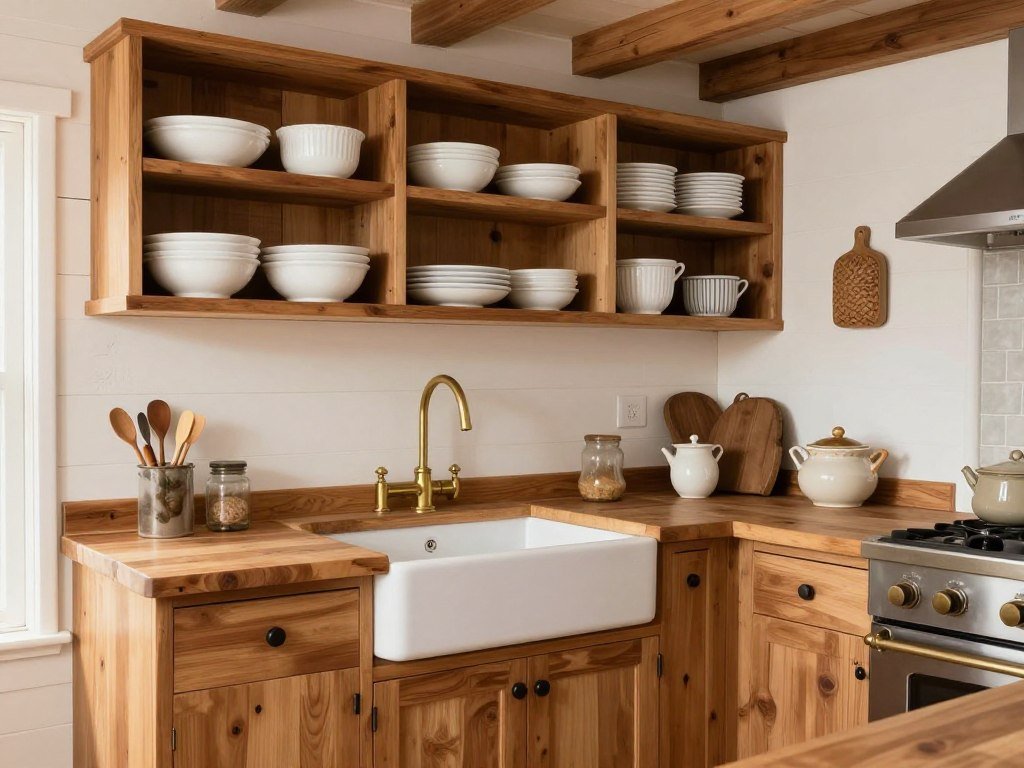
Open shelves can make a tiny kitchen feel lighter than rows of wall cabinets. They also allow practical everyday pieces, such as bowls, mugs, jars, and cookbooks, to become part of the decoration.
Wooden shelving, handmade pottery, a white farmhouse sink, and warm timber worktops create a relaxed country atmosphere without requiring a large kitchen.
The key is to keep the display edited. Store frequently used pieces on the lower shelves and leave a little breathing room around decorative items.
Cottage Kitchen Essentials
- Open oak or pine shelving.
- A white ceramic farmhouse sink.
- Stoneware bowls and mugs.
- Glass jars for everyday ingredients.
- Fresh herbs in small pots.
Designer detail: Group objects by colour or material so the shelves feel collected rather than chaotic.
Keep it practical: Avoid filling the shelves with items you rarely use. Everyday dishes are easier to keep clean and naturally suit the relaxed cottage look.
3. Built-In Window Seat With Hidden Storage
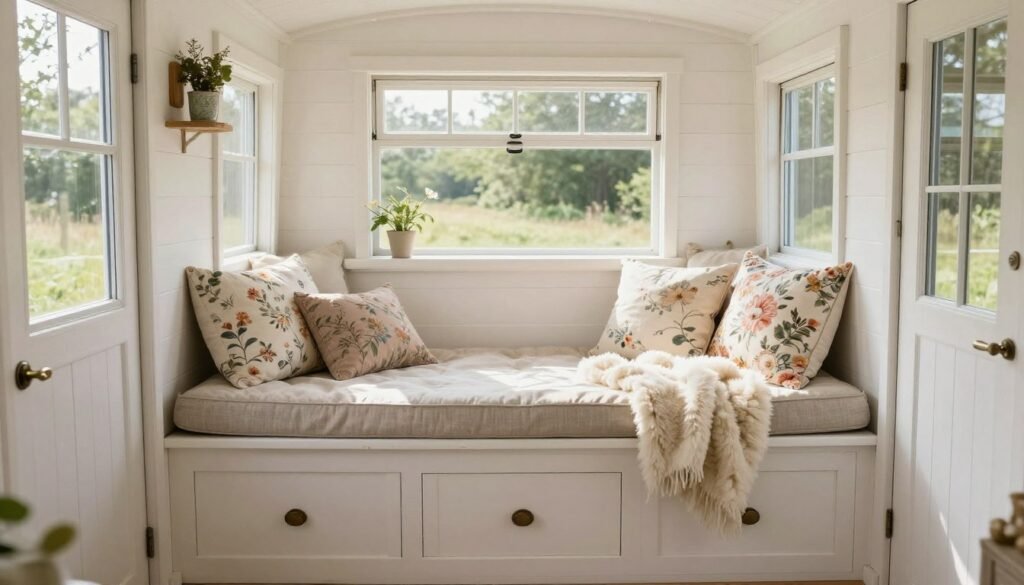
A window seat is one of the hardest-working additions in a tiny cottage. It provides comfortable seating, hidden storage, and a quiet place to enjoy natural light without requiring another freestanding chair.
Deep drawers or a lift-up seat can hold blankets, books, games, or seasonal accessories. Add a fitted cushion, one or two floral pillows, and a folded wool throw to create an inviting reading nook.
This simple feature turns an overlooked stretch of wall into one of the most useful and memorable areas in the home.
Perfect For
- Storing blankets and spare cushions.
- Creating a reading corner with natural light.
- Providing extra seating for guests.
- Making use of awkward windows or shallow alcoves.
Storage tip: Use drawers when there is enough clearance in front of the seat. Choose a lift-up top when the surrounding floor space is tighter.
Style it simply: Too many cushions can make a small window seat difficult to use. One fitted pad, two pillows, and a throw are usually enough.
4. Sage Green Cottage Kitchen
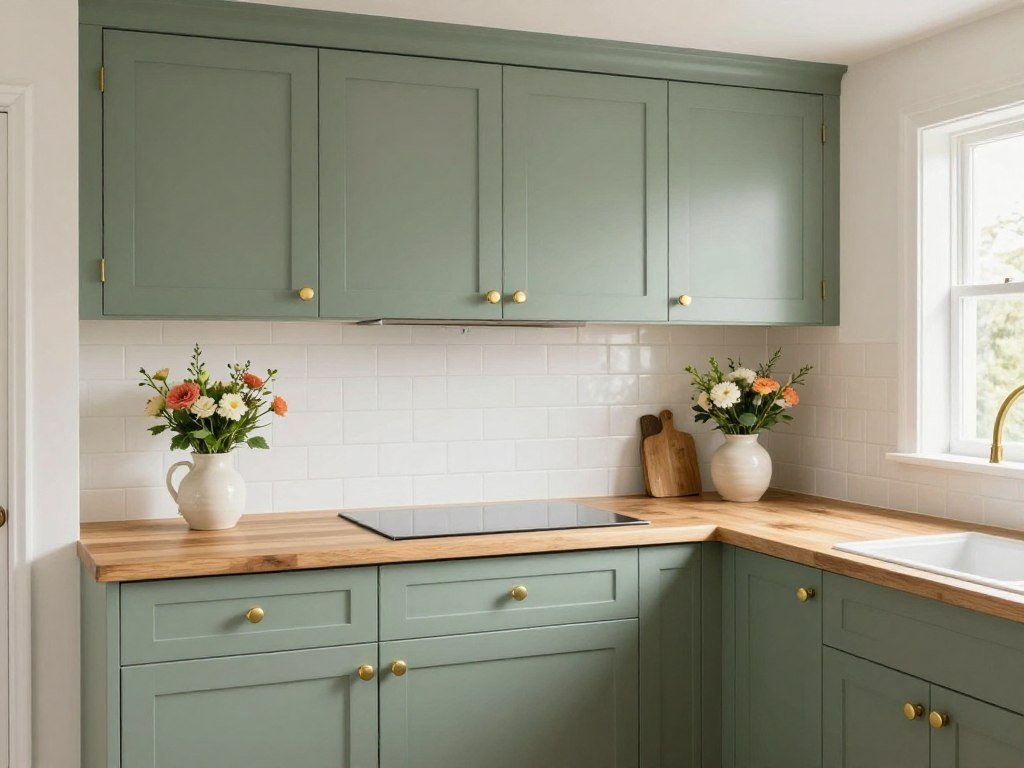
Sage green introduces gentle colour while preserving the calm atmosphere that makes cottage interiors so appealing. It works especially well in a tiny kitchen because it feels softer than a dark dramatic shade but more characterful than plain white.
Pair sage cabinetry with warm timber worktops, cream walls, and aged brass handles. The combination feels natural, timeless, and easy to coordinate with pottery, baskets, and linen textiles.
Because sage is a muted colour, it remains attractive throughout the seasons and sits comfortably beside both vintage and modern features.
Looks Best With
- Aged brass or antique-style handles.
- Oak shelves and timber worktops.
- Cream walls and warm white tiles.
- Natural linen tea towels.
- Stoneware accessories in neutral tones.
Budget-friendly version: Repaint existing cabinet doors rather than replacing the entire kitchen. New handles can complete the transformation at a relatively low cost.
Colour tip: Test several sage shades in the room before committing. The colour can appear cooler or greyer depending on the available natural light.
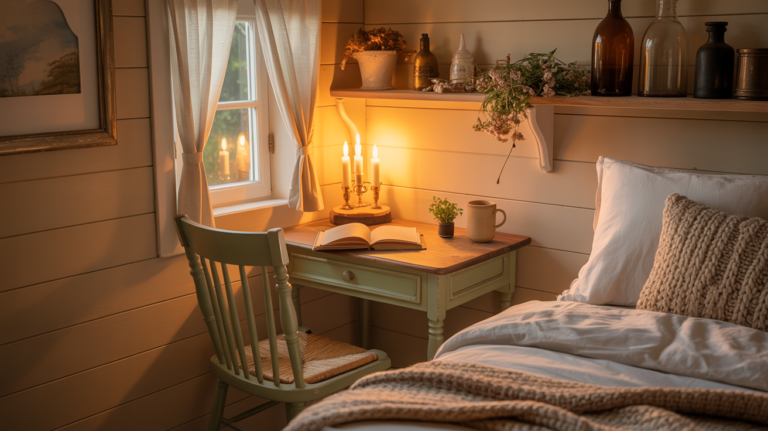
5. Loft Bedroom With Cozy Layers
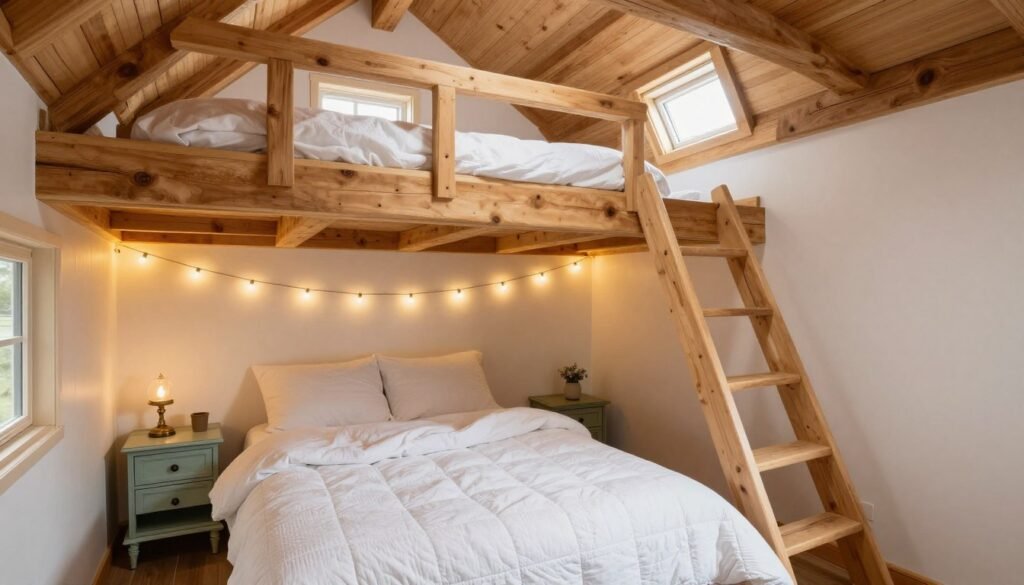
A loft bedroom naturally feels intimate, making it a beautiful setting for cottage-style layers. Exposed timber, crisp white bedding, a quilt, and soft lighting create a restful retreat without needing much furniture.
Keep the colour palette restrained so the low ceiling does not feel heavy. Warm white, oatmeal, faded blue, and muted floral patterns work particularly well.
Allow the bedding and timber to carry most of the visual interest instead of adding lots of decorative accessories.
Why It Feels Cozy
- Uses the natural intimacy of the loft.
- Combines crisp bedding with warmer textures.
- Keeps bulky furniture out of the sleeping area.
- Highlights exposed beams and timber details.
Designer tip: Install wall-mounted reading lights to free up bedside space and avoid placing lamps where they may be knocked over.
Keep it restful: Limit the loft to sleep-related items whenever possible. Store paperwork, laundry, and general household clutter elsewhere.
6. Cottage Dining Nook With Built-In Bench Seating
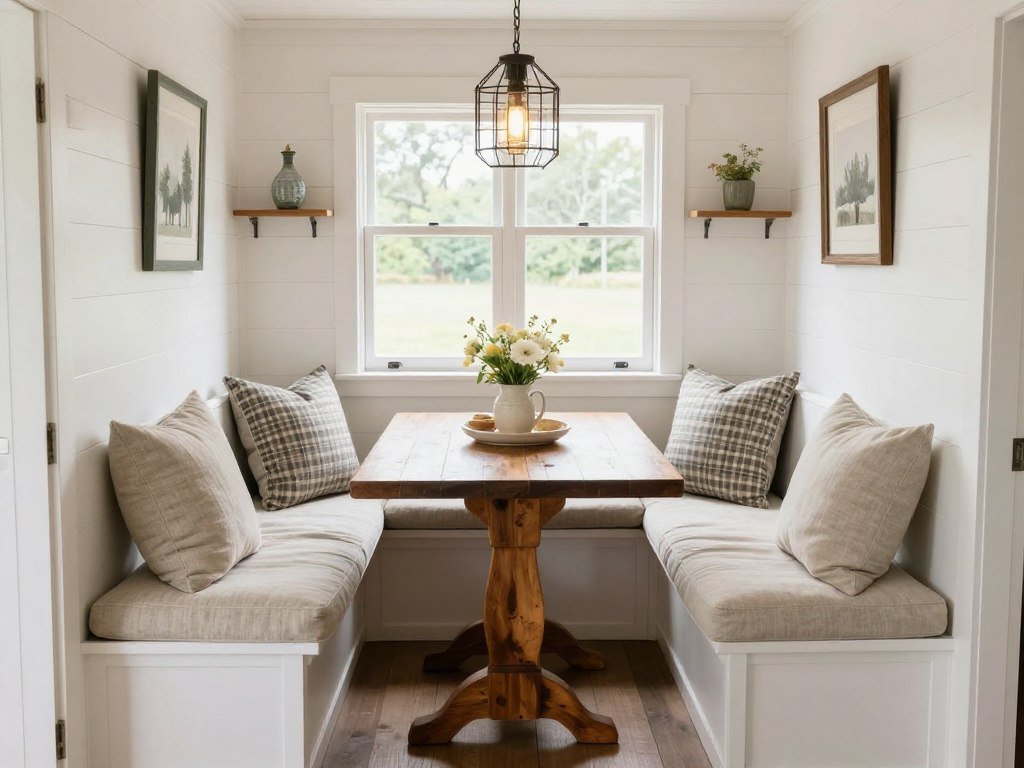
A built-in dining nook can transform an unused corner into a comfortable place for meals, conversation, and everyday tasks. Bench seating takes up less room than several chairs and can include valuable storage underneath.
Pair the bench with a compact farmhouse table and one or two lightweight chairs. Linen cushions soften the hard surfaces while maintaining a relaxed cottage look.
The finished nook feels intimate and welcoming while making efficient use of a difficult corner.
Why It Works
- Combines seating and storage.
- Uses corners efficiently.
- Creates a defined place for meals.
- Accommodates more people without adding bulky chairs.
Small space tip: A round pedestal table is easier to move around and eliminates legs at the corners where knees and chairs might collide.
Storage idea: Use the bench for table linens, serving dishes, craft supplies, or items needed only occasionally.
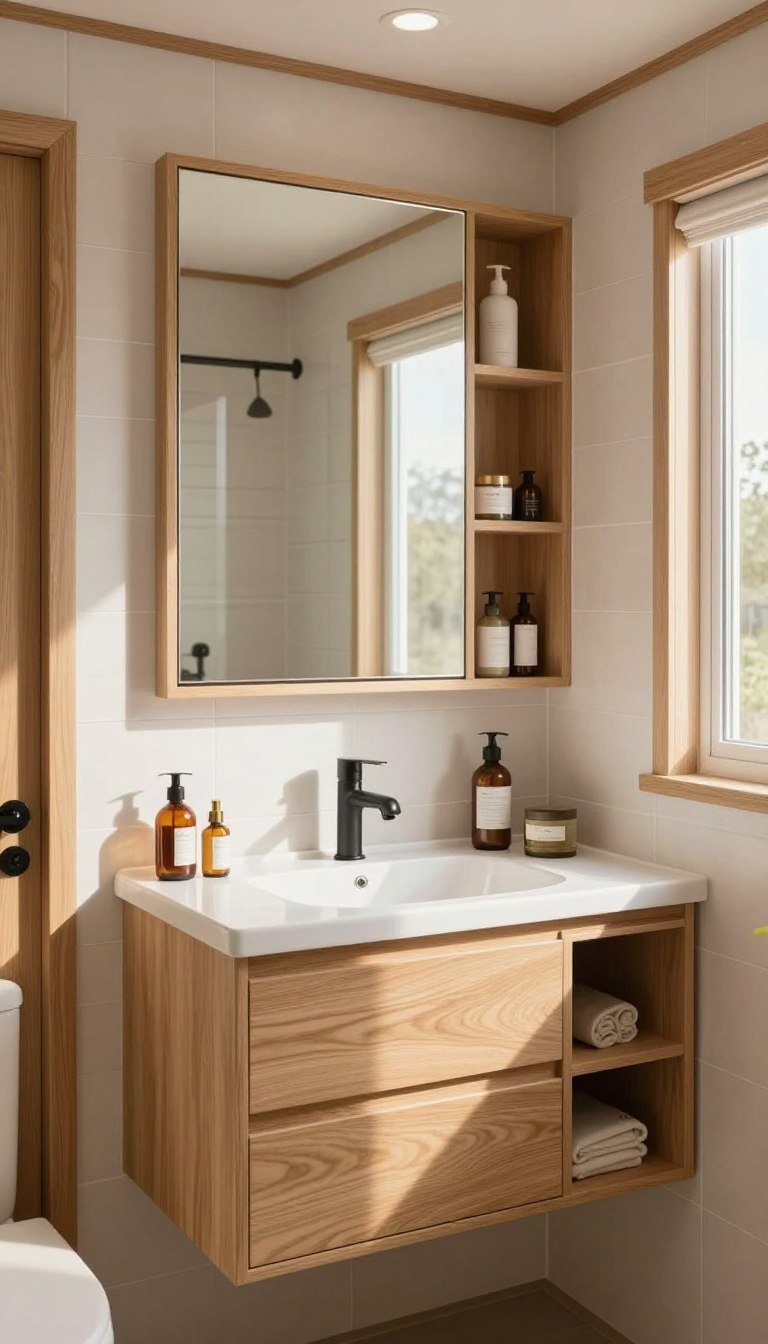
7. Cottage Bathroom With Beadboard Walls
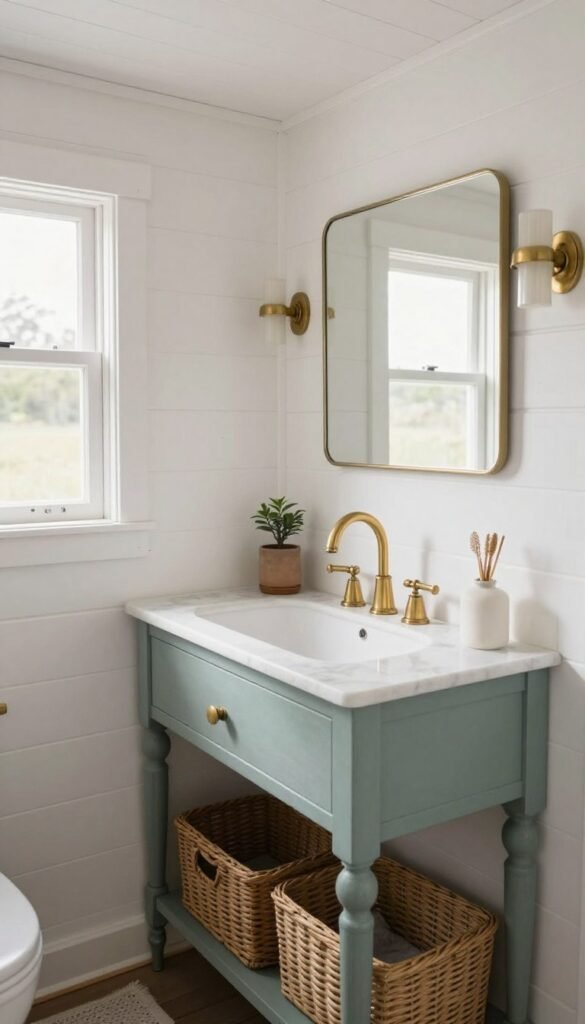
Beadboard introduces traditional cottage character without making a small bathroom feel overly decorative. Painted in warm white or cream, it adds texture while helping the room stay bright.
Combine it with a compact vintage-style vanity, brass fittings, a simple mirror, and one woven basket for towels or toiletries. Keeping the materials consistent allows the bathroom to feel detailed without becoming busy.
The result is practical, timeless, and softly connected to the rest of the cottage interior.
Looks Best With
- Brass taps and cabinet hardware.
- A compact painted or wooden vanity.
- Woven storage baskets.
- Neutral linen or cotton towels.
- A simple framed mirror.
Designer detail: Repeat one finish from the bathroom elsewhere in the home, such as aged brass or warm white paint, to create a more cohesive interior.
Practical note: Use finishes suitable for humid rooms, especially on timber, paintwork, and wall panelling.
Cottage Style Progress Check
At this point, the main design pattern is clear: use a soft backdrop, preserve natural timber, choose furniture that provides storage, and add character through a small number of carefully selected details.
You do not need to recreate every idea. Choose the features that solve practical problems in your own tiny home, then repeat the same colours and materials throughout the remaining rooms.
8. Open Pantry Filled With Natural Textures
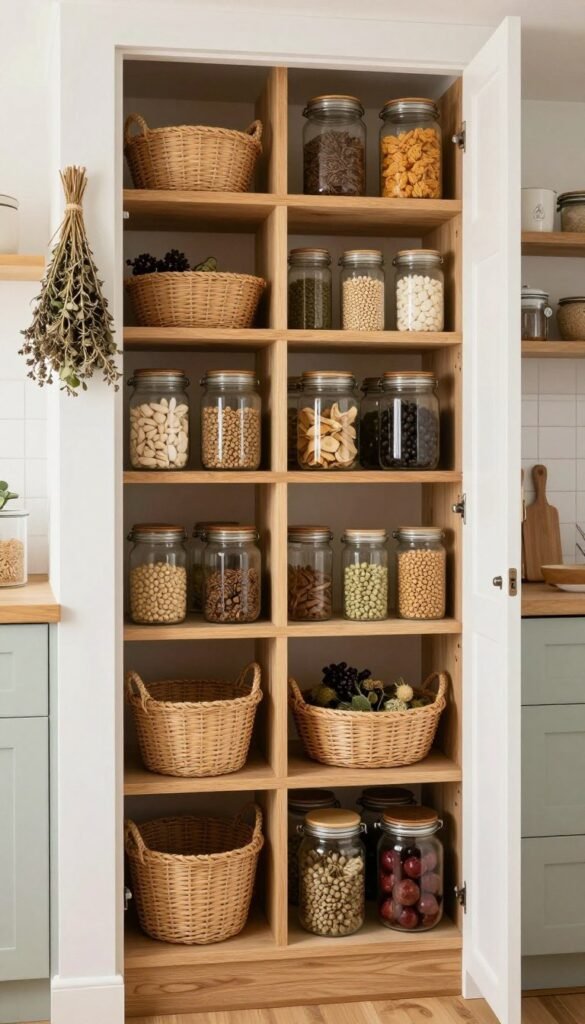
An open pantry makes everyday ingredients easy to reach while becoming part of the kitchen’s decoration. Matching glass jars, woven baskets, and wooden crates create a practical display that feels organised rather than cluttered.
Keep similar items together and leave a little empty space on each shelf. A carefully edited pantry always feels more relaxing than one packed from edge to edge.
Natural textures and coordinated storage help the pantry become another attractive feature of the cottage kitchen.
Pantry Essentials
- Matching glass storage jars.
- Woven baskets for produce.
- Wooden crates for larger supplies.
- Dried herbs or lavender.
- Simple handwritten labels.
Easiest upgrade: Decant dry foods into matching containers for an instant feeling of order.
Keep it functional: Display only ingredients you use regularly so the shelves stay practical as well as beautiful.
9. Reading Corner Full of Cottage Charm
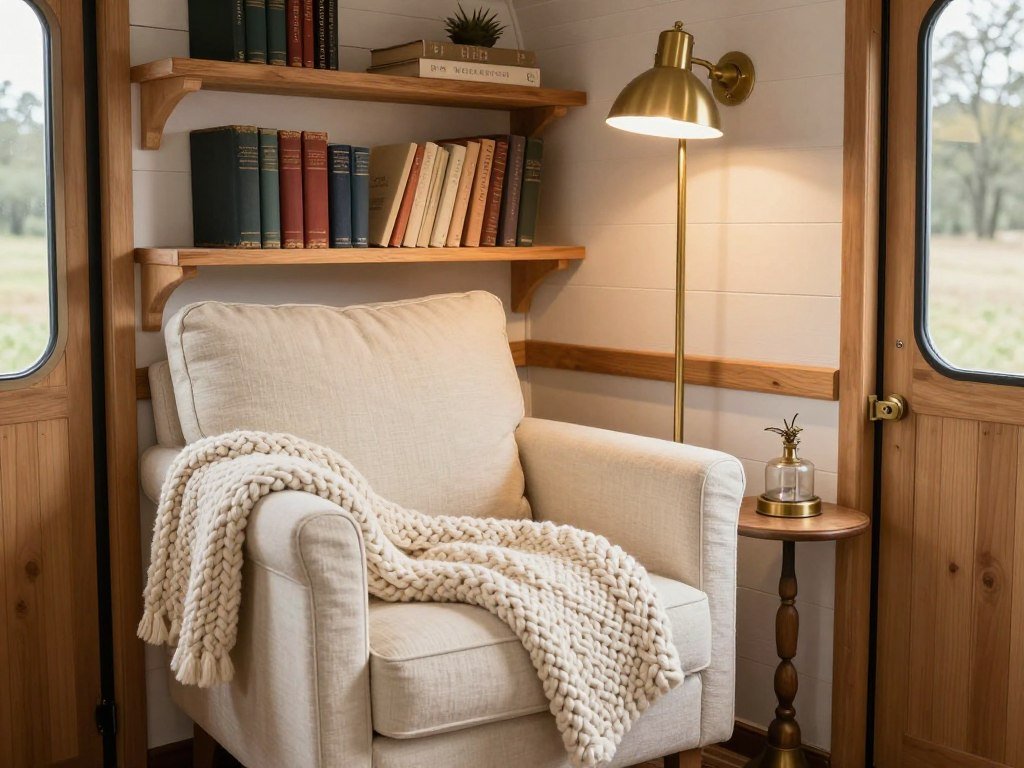
Even the smallest tiny house benefits from one quiet corner dedicated to relaxing. A comfortable chair, a knitted throw, and a small lamp can transform an unused space into somewhere you’ll naturally gravitate towards each evening.
Add a narrow bookshelf or floating shelves nearby so your favourite books remain within easy reach without taking over the room.
The space feels personal, welcoming, and perfectly suited to slow cottage living.
Why You’ll Love It
- Creates a peaceful retreat.
- Makes use of an unused corner.
- Adds warmth without adding clutter.
- Encourages slower daily routines.
Designer tip: Keep the side table small enough that the chair remains the main feature of the nook.
10. Vintage Decor With Fresh Seasonal Flowers
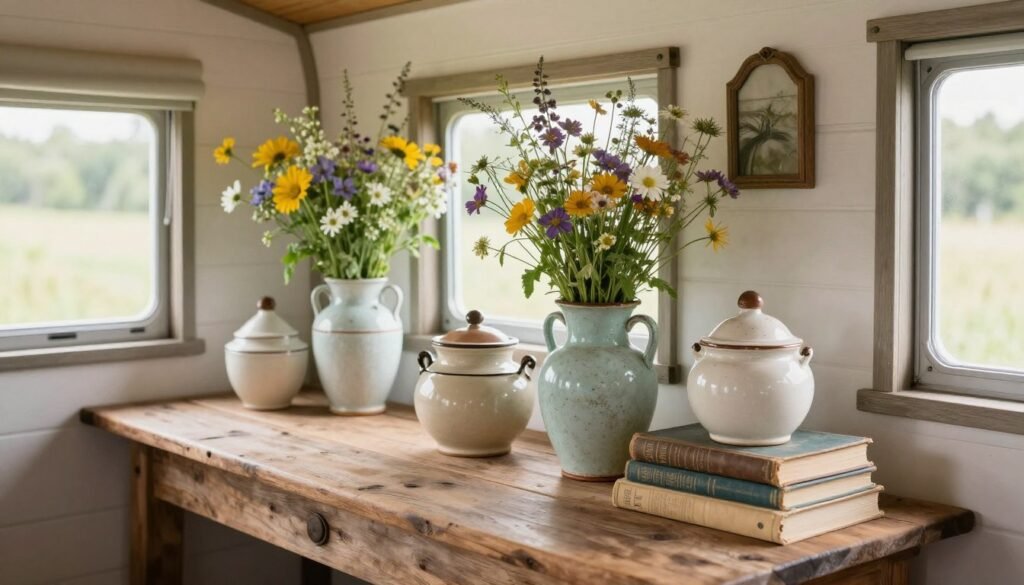
The easiest way to keep a cottage interior feeling fresh is to combine timeless vintage pieces with seasonal flowers or greenery. A simple jug of garden flowers can completely change the mood of a room.
Pair fresh stems with antique books, handmade pottery, and weathered timber accessories. These natural combinations create character without making shelves appear crowded.
Rotating flowers throughout the year keeps the home feeling alive while leaving the overall decorating scheme beautifully consistent.
Beautiful Finishing Touches
- Vintage pottery.
- Fresh seasonal flowers.
- Antique books.
- Handmade ceramics.
- Natural wooden trays.
Less is more: A handful of carefully chosen accessories creates a stronger impression than filling every available shelf.
How to Get the Cottage Look in a Tiny House
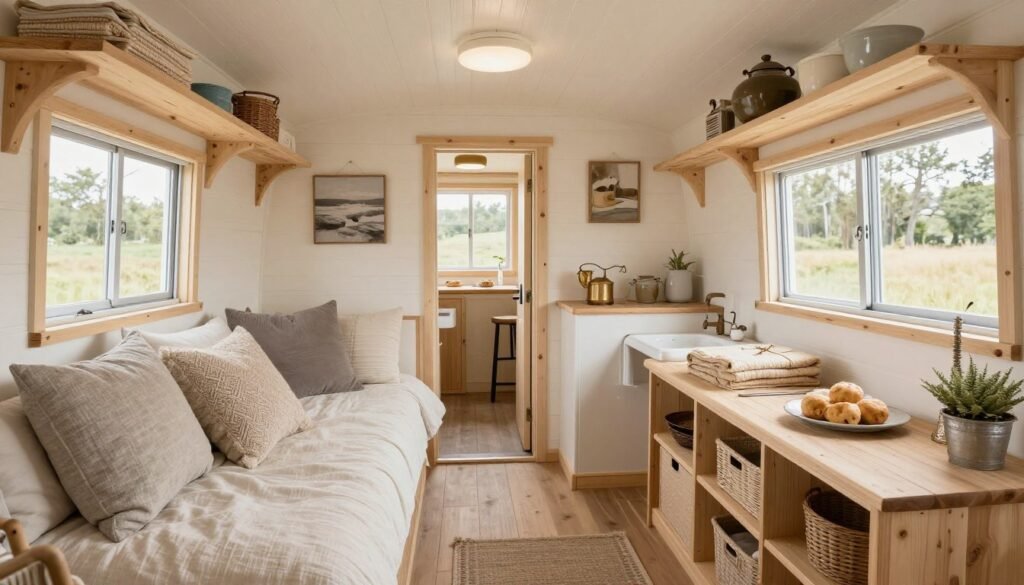
You don’t need a large budget or a complete renovation to create an authentic cottage interior. Most successful tiny cottages share a few simple design principles that can be introduced gradually over time.
Start With a Calm Colour Palette
Warm whites, creams, sage greens, dusty blues, and natural timber create a bright backdrop that helps every room feel connected. Repeating these colours throughout the home also makes compact spaces appear larger.
Choose Furniture That Works Hard
Look for benches with storage, built-in seating, compact farmhouse tables, and vintage furniture that offers drawers or shelves. Every piece should earn its place by providing both beauty and function.
Layer Natural Materials
Instead of filling rooms with accessories, create warmth through linen, timber, wool, wicker, cotton, and stone. Texture gives cottage interiors their inviting character without making them feel busy.
Keep Decorative Pieces Meaningful
Display vintage finds, family heirlooms, handmade pottery, or favourite books rather than buying decorations simply to fill empty spaces. A collected home always feels more authentic than one that appears overstyled.
Small Space Styling Tips
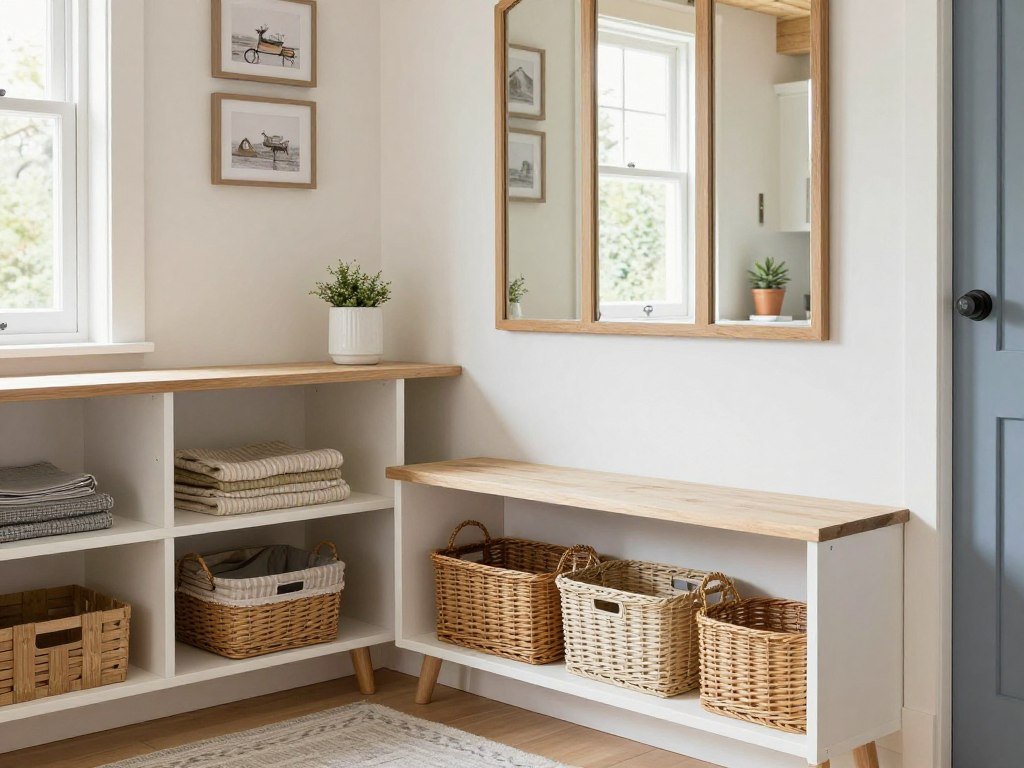
- Use mirrors to reflect natural daylight.
- Choose furniture with visible legs where possible.
- Store everyday items inside attractive baskets.
- Hang curtains close to the ceiling.
- Group accessories instead of spreading them around the room.
- Leave some shelves partly empty.
- Use wall lighting to free surface space.
- Decorate vertically with shelves and hooks.
- Repeat the same materials throughout the home.
- Hide everyday clutter inside built-in storage.
Remember: Empty space is part of the design. Giving each decorative piece room to breathe makes the entire home feel calmer.
Budget Friendly Cottage Updates
You can achieve much of the cottage look without replacing everything. Small changes often create the biggest visual difference.
- Paint existing cabinets instead of replacing them.
- Shop second-hand for solid wood furniture.
- Refresh vintage pieces with gentle cleaning rather than heavy refinishing.
- Replace modern handles with aged brass or ceramic knobs.
- Use glass jars, baskets, and pottery for everyday storage.
- Decorate gradually instead of buying everything at once.
Best investment: Spend money on quality furniture you’ll keep for years, then build the decorative layers around it over time.
Seasonal Cottage Decorating
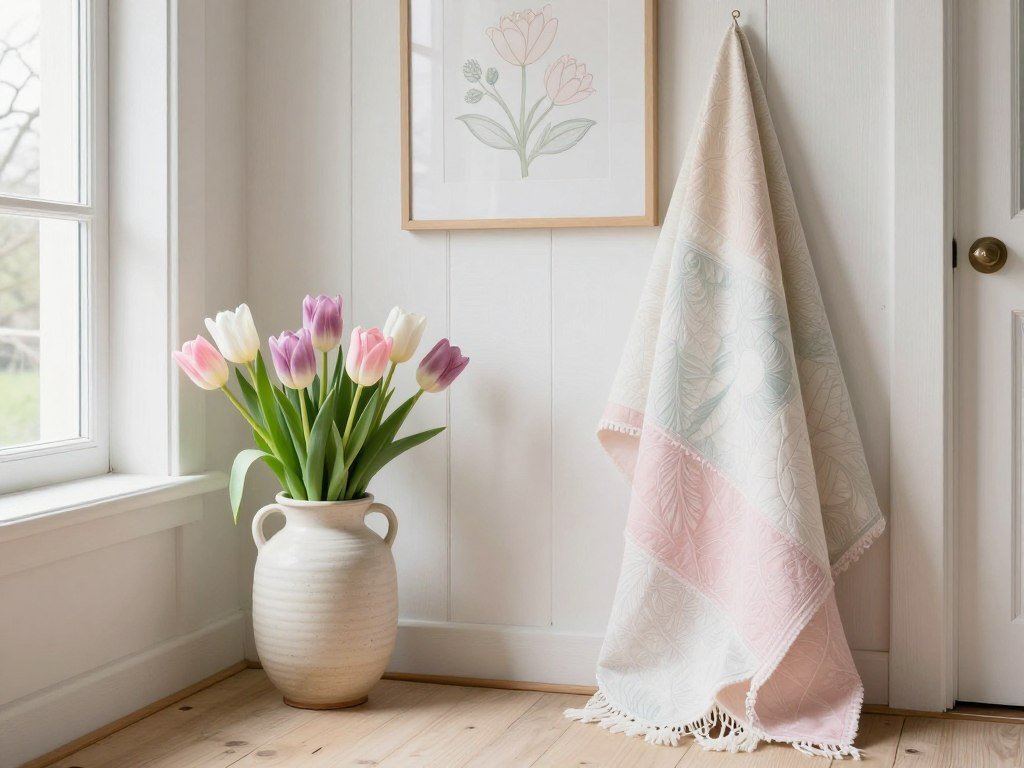
Instead of constantly buying new decorations, refresh your cottage throughout the year using simple seasonal changes.
- Spring: Fresh flowers, pale linens, and lighter textiles.
- Summer: Wildflowers, herbs, and open windows.
- Autumn: Chunky knit throws, dried foliage, and warm lighting.
- Winter: Wool blankets, candles, evergreen branches, and layered bedding.
Changing only a handful of decorative details keeps your home feeling fresh without creating unnecessary storage problems.
Tiny Cottage Decorating Checklist
- ✓ Use a soft, consistent colour palette.
- ✓ Prioritise natural wood and traditional materials.
- ✓ Add storage before adding more décor.
- ✓ Choose multifunctional furniture whenever possible.
- ✓ Layer linen, wool, wicker, and cotton for warmth.
- ✓ Display only meaningful decorative pieces.
- ✓ Bring in fresh flowers or greenery regularly.
- ✓ Leave some empty space so the room feels open.
Final Thoughts
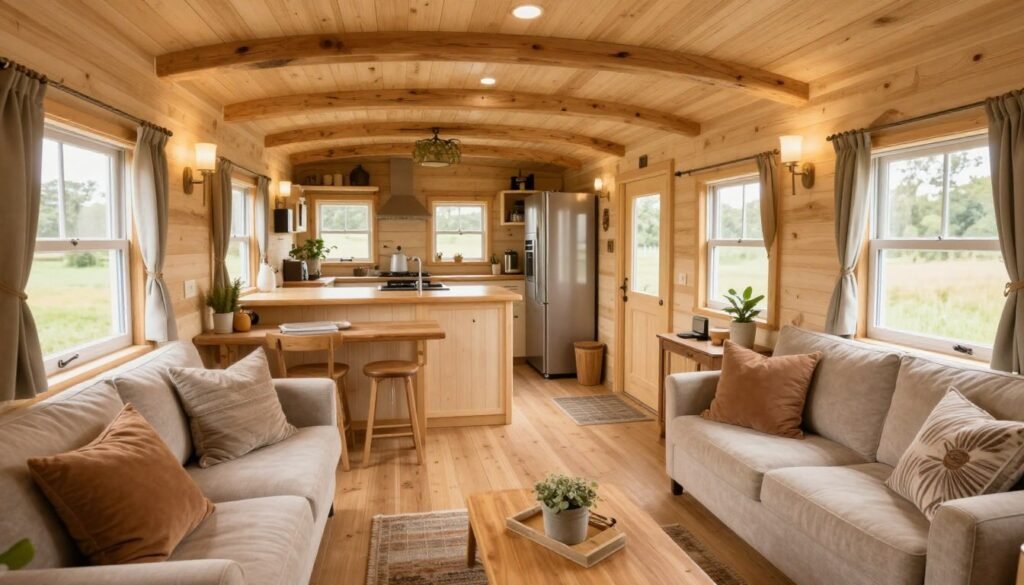
Creating a cottage-inspired tiny house is less about following strict decorating rules and more about choosing pieces that make your home feel warm, practical, and personal. Soft colours, natural materials, thoughtful storage, and carefully selected vintage details work together to create interiors that remain beautiful for years.
Start with one room, add improvements gradually, and focus on quality rather than quantity. Even the smallest tiny house can capture the timeless comfort of a traditional country cottage when every choice is made with intention.