5 Tiny House Workspace Ideas That Make Working From Home Easier
Working from home in a tiny house can feel challenging when your dining table, living room, and office all share the same limited space. The right layout, however, can make even the smallest corner comfortable, organised, and productive.
A floating desk keeps the floor clear, a fold-down workstation disappears after hours, and built-in storage prevents office supplies from taking over your home.
Whether you work remotely, run a small business, or need somewhere to manage household tasks, these ideas will help you create a practical workspace without losing the cosy character of your tiny home.
Quick Guide: Choosing the Right Tiny House Workspace
| If you need… | Choose… |
|---|---|
| The smallest possible footprint | A floating wall desk |
| Plenty of organised storage | A built-in office nook |
| A workspace you can hide | A fold-down wall desk |
| More room for equipment | An L-shaped corner desk |
| A softer cottage look | A compact vintage writing desk |
Consider how many hours you work, how much equipment you use, and whether the space needs to serve another purpose after work.
Before You Plan Your Workspace
- Measure the wall: Include windows, sockets, skirting boards, and nearby doors.
- List your essentials: Note the equipment and supplies you use regularly.
- Check the walkway: Allow room to move when the chair is pulled out.
- Think vertically: Plan shelves before adding floor cabinets.
- Plan your shutdown: Decide how work supplies will be hidden after hours.
Quick win: Empty the corner before choosing furniture so you can clearly see what will fit.
1. Bright Floating Desk Beside a Window
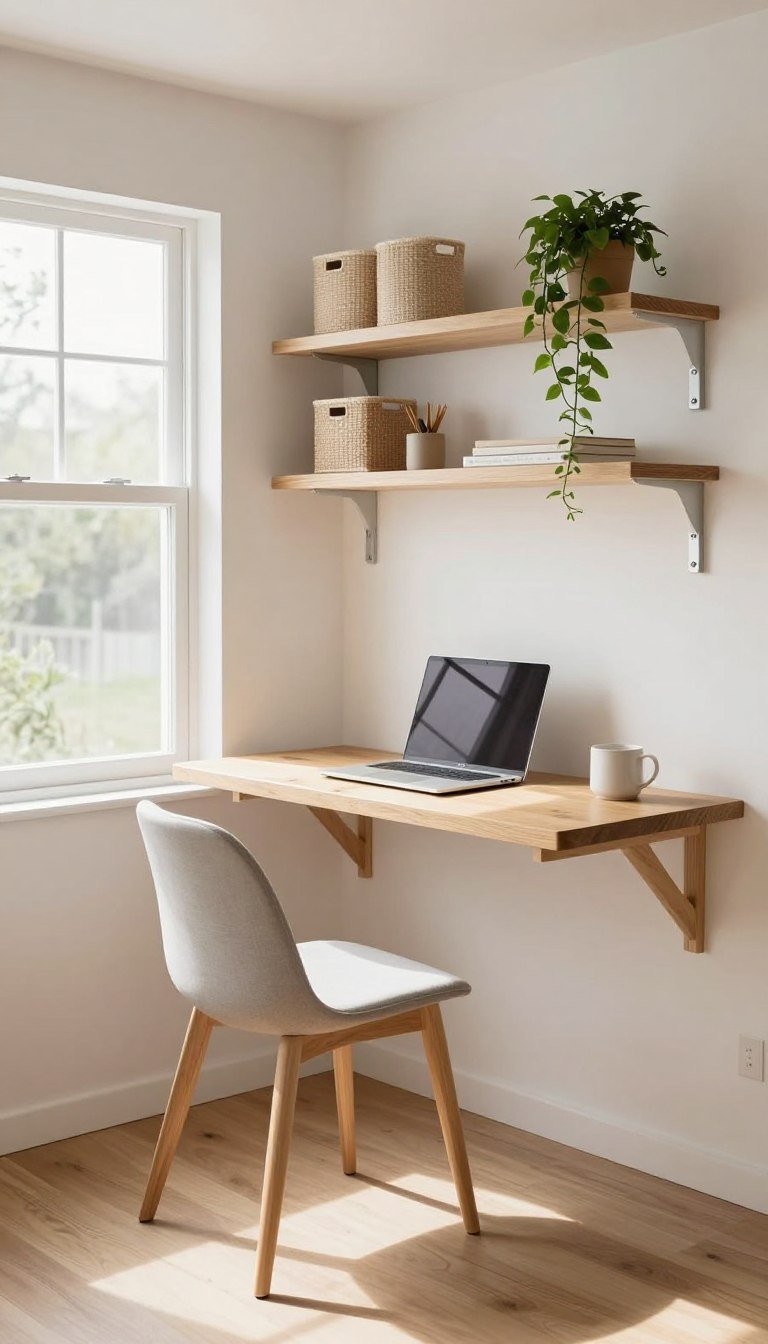
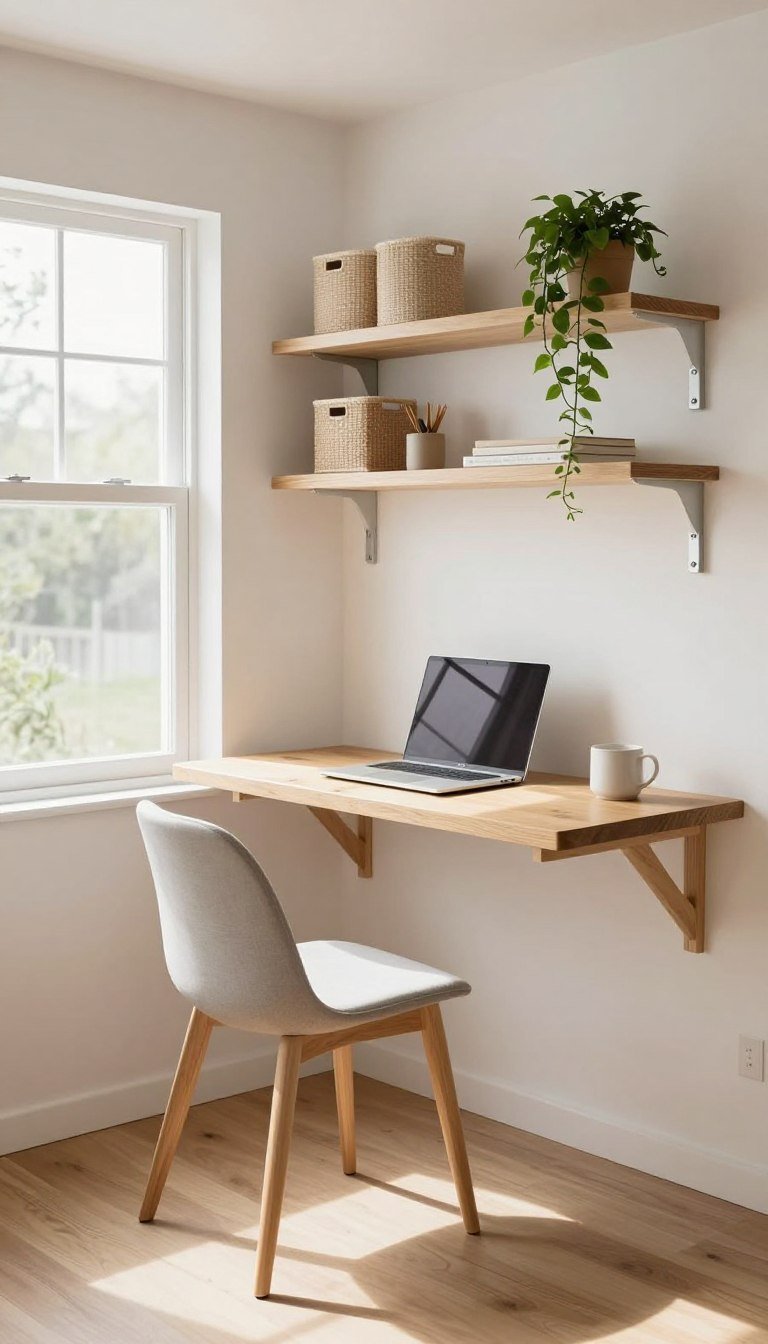
A floating desk provides a dedicated work surface without filling the floor with bulky furniture.
Position it beside a window for natural light, then add one slim shelf for notebooks, a basket, or a trailing plant. Keeping the desktop mostly clear allows the area to feel spacious once the chair is tucked away.
Why It Works
- Keeps valuable floor space visible.
- Fits narrow walls and shallow alcoves.
- Makes good use of natural daylight.
- Creates a clean, minimal appearance.
Small space tip: Choose a chair that slides beneath the desk so the walkway stays clear.
Measure carefully: A depth of 45 to 55 centimetres may suit a laptop, while a monitor and keyboard usually require more space.
Best For
- Laptop work and household admin.
- Narrow bedrooms or living rooms.
- Minimalist tiny house interiors.
2. Built-In Workspace With Floor-to-Ceiling Storage
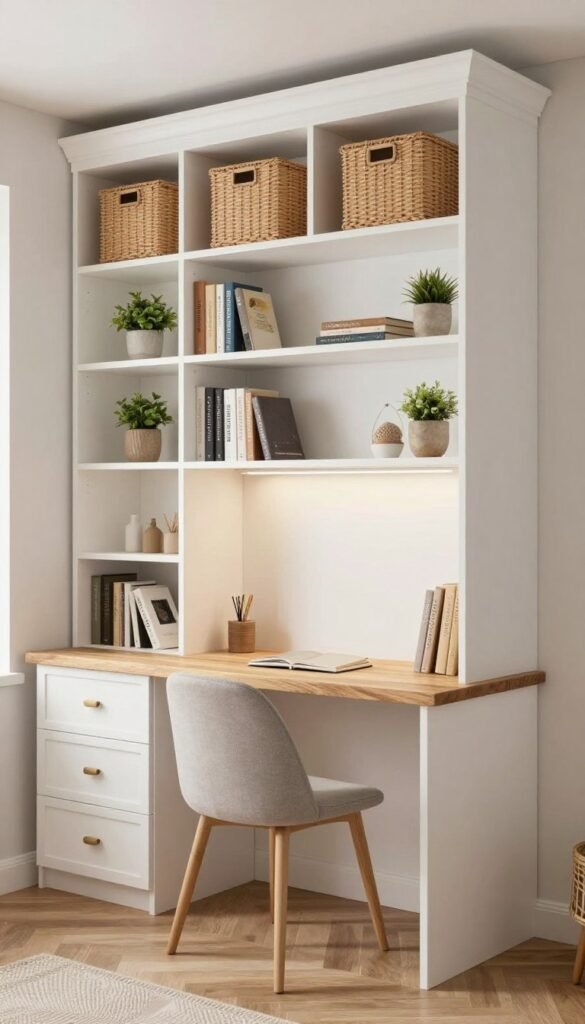
A built-in workspace can turn an awkward recess into an efficient home office. Combining a fitted desktop, drawers, cupboards, and shelves uses the full height of the room instead of relying on separate furniture.
Keep everyday supplies near the desk and place paperwork, spare technology, and occasional items in higher cupboards or labelled baskets.
This layout is particularly useful for anyone who works from home regularly and needs more than a laptop.
Built-In Benefits
- Uses the entire height of the wall.
- Provides useful concealed storage.
- Creates a neat, integrated appearance.
Designer detail: Paint the unit the same colour as the wall to make it feel less imposing.
Storage strategy: Display attractive books and baskets while hiding paperwork, cables, and equipment behind doors.
Worth Including
- A shallow stationery drawer.
- A cupboard for a printer or router.
- An opening for charging cables.
- An easy-to-reach reference shelf.
3. Fold-Down Office That Disappears
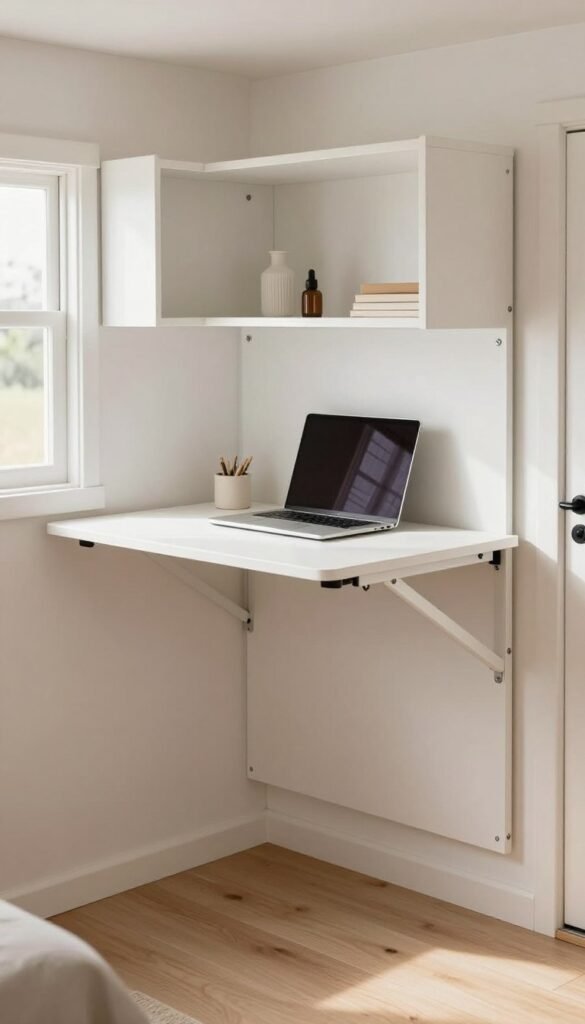
A fold-down desk is ideal when one room must function as an office, dining area, bedroom, or living space. Open it when work begins, then close it so the room feels like home again.
Internal shelves can hold notebooks, pens, chargers, and paperwork, preventing supplies from spreading across nearby surfaces. Closing the workstation also creates a helpful boundary between working and relaxing.
Perfect For
- Occasional remote work.
- Studio-style tiny homes.
- Shared living and working areas.
Easiest upgrade: Add a corkboard, magnetic strip, or shallow pocket inside the cabinet.
Check before buying: Confirm that the desktop is deep enough and that the wall fixings can support the total weight.
End-of-Day Reset
- Save and close your work.
- Return supplies to their compartments.
- Clear away your mug and notebook.
- Fold the desk closed.
4. Cozy Corner Workspace With Vertical Storage
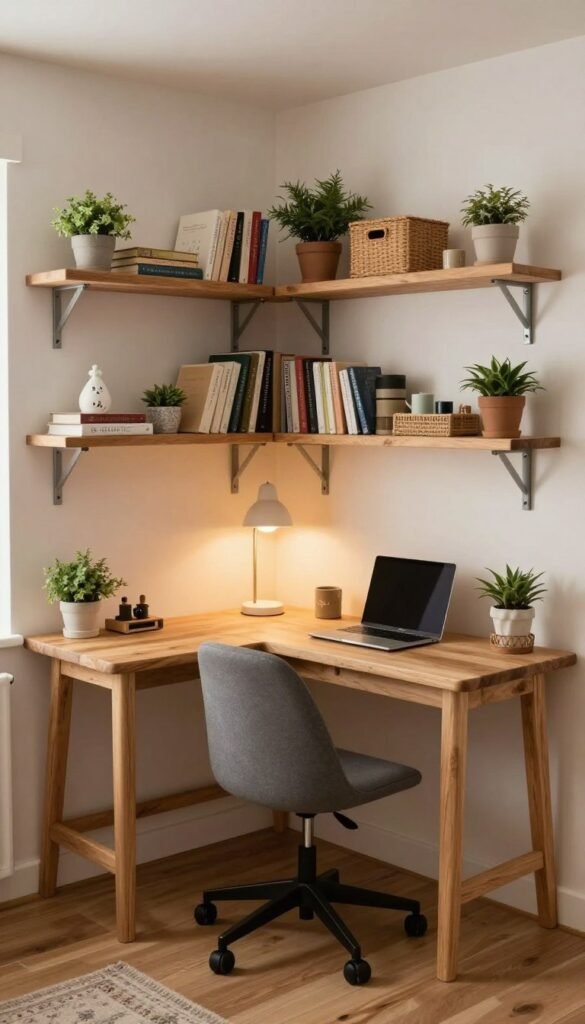
An L-shaped desk uses two adjoining walls and provides separate areas for a laptop, paperwork, craft materials, or a second monitor.
Floating shelves make use of the wall without requiring a large cabinet. Matching baskets keep smaller items contained, while a lamp, plant, or single piece of artwork makes the corner feel inviting.
Why It Works
- Uses an otherwise empty corner.
- Provides more room than a straight desk.
- Keeps the centre of the room open.
Designer detail: Match the shelves to the desktop so the workspace feels coordinated.
Keep it comfortable: Leave enough room to turn, sit down, and reach both sides without straining.
Useful Zones to Create
- A main computer zone.
- A writing or paperwork area.
- A shelf for everyday supplies.
- A basket for items awaiting filing.
5. Vintage Cottage Desk With Hidden Storage
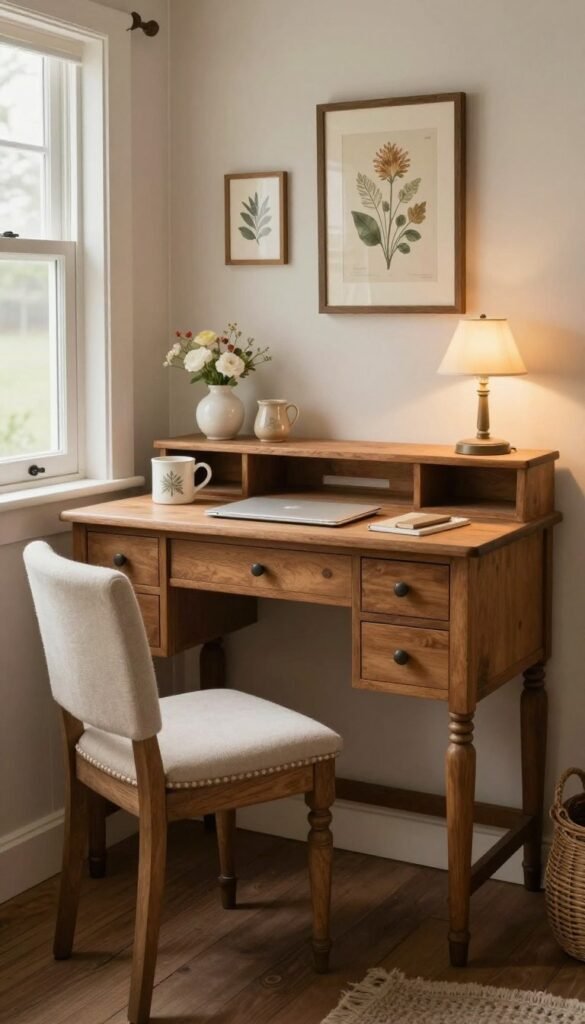
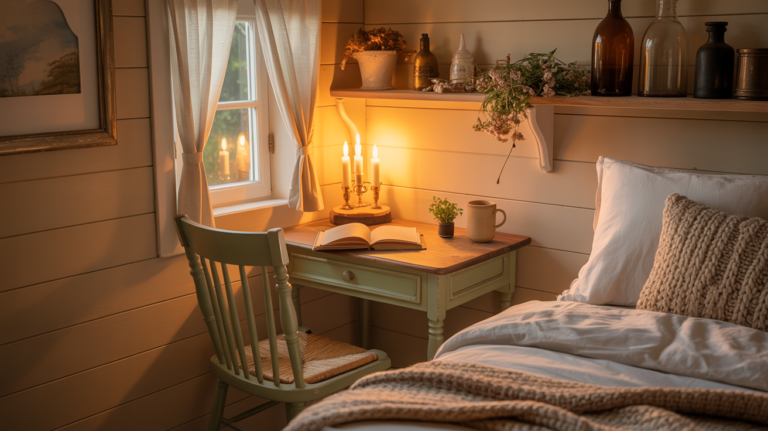
A vintage writing desk brings character to a tiny house while providing a practical place to work. Slim antique desks are often shallower and visually lighter than modern office furniture.
Use the drawers for stationery, chargers, and notebooks, then limit the desktop to essentials. After work, the desk can function as an attractive console rather than looking like a permanent office station.
Best Styled With
- A compact upholstered chair.
- An adjustable desk lamp.
- One framed botanical print.
- Ceramic or wooden accessories.
Most timeless option: Look for a solid wood desk with a narrow profile and working drawers.
Budget idea: Refresh a second-hand desk with light sanding, a protective finish, or new handles.
How to Create a Productive Tiny House Office
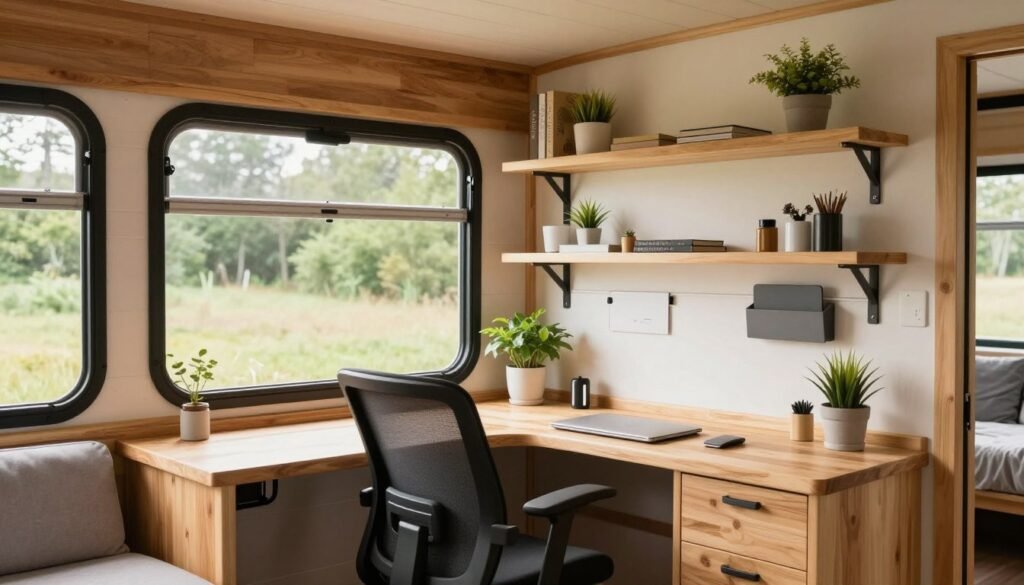
A compact workspace can be just as effective as a full-sized office when it supports the way you work. Begin with the equipment you genuinely need, then build the layout around it.
- Prioritize natural light. Position the desk near a window when possible.
- Keep essentials close. Store frequently used supplies within easy reach.
- Hide occasional items. Place spare cables and paperwork in drawers or baskets.
- Protect the walkway. Keep chairs and storage away from the room’s main route.
- Create a shutdown routine. Clear the desk at the end of the day.
Productivity tip: Keep only the tools needed for your current task on the desktop.
Light Your Workspace Properly
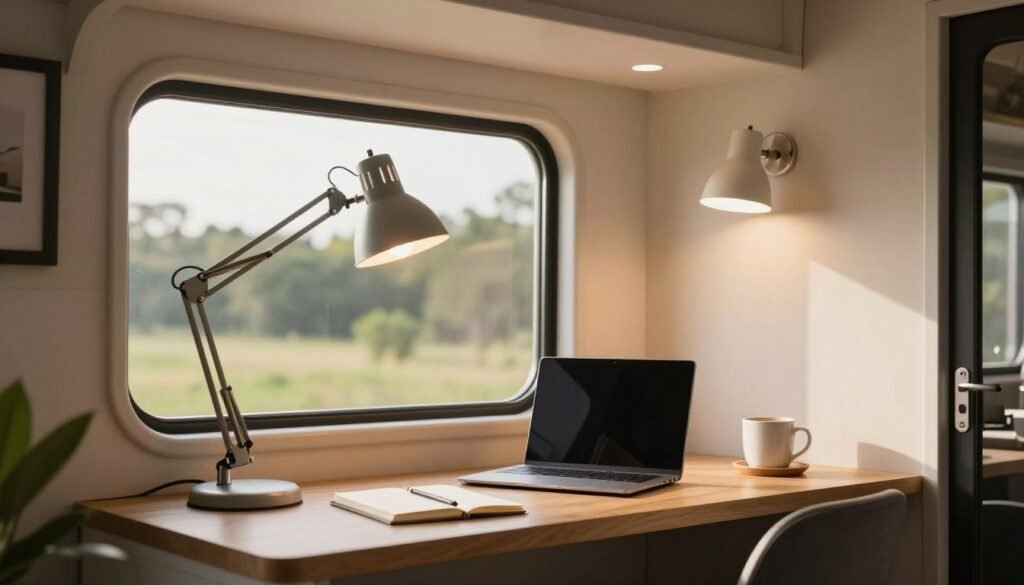
Good lighting makes a small workspace more comfortable and can reduce eye fatigue. Use daylight when possible, then add focused and ambient lighting for darker mornings and evenings.
Position the monitor so daylight reaches it from the side rather than directly in front or behind. An adjustable lamp can then direct light where it is needed.
Lighting Essentials
- Natural light from a nearby window.
- An adjustable lamp for focused tasks.
- Warm ambient lighting for evenings.
- A screen positioned away from glare.
Small space solution: Use a wall-mounted or clamp lamp when the desktop is too small for a lamp base.
Use Smart Storage Around the Desk
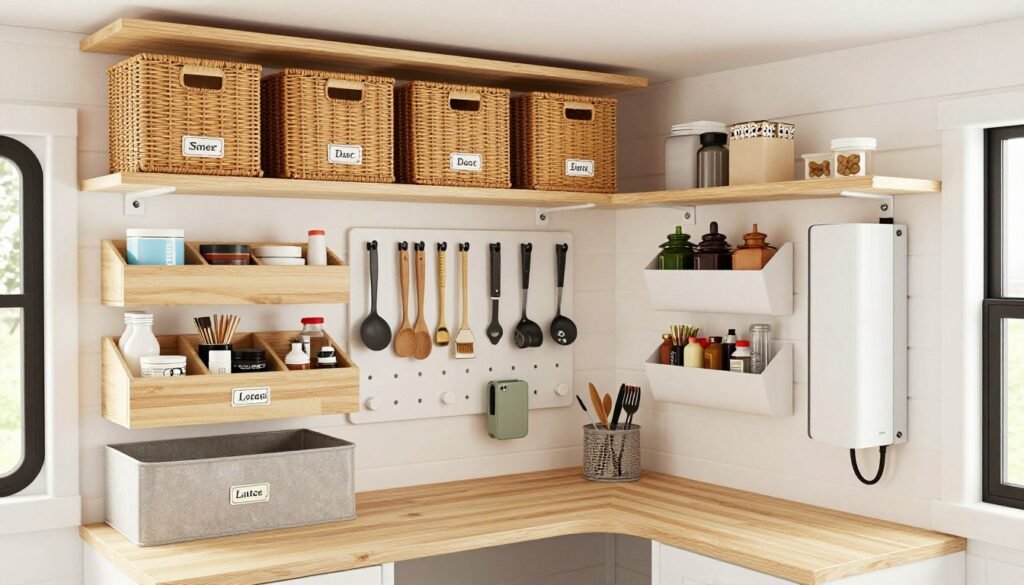
Effective storage prevents a compact workspace from spreading into the rest of the home. Use walls, drawers, and concealed compartments instead of large freestanding cabinets.
Install a shelf for regularly used books, add drawer dividers for small items, and use a wall-mounted holder for paperwork that needs attention.
Storage Ideas That Work
- Floating shelves for books and baskets.
- Drawer dividers for stationery and technology.
- Pegboards for frequently used tools.
- Wall pockets for active paperwork.
- Under-desk trays for cables and power strips.
Keep it calm: Use matching containers so open storage looks coordinated.
Make Comfort a Priority
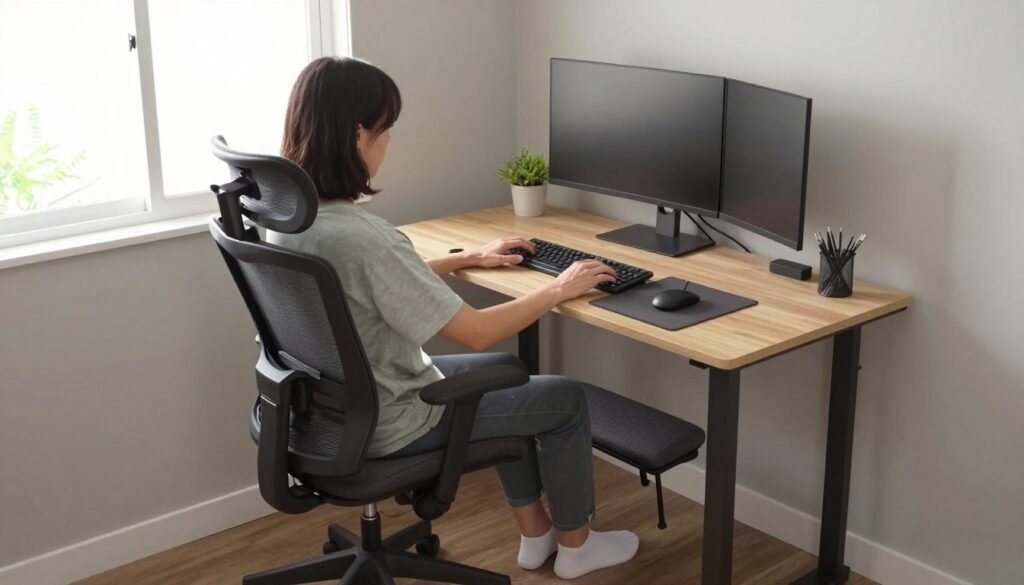
A tiny workspace must still be comfortable, especially when used for several hours each day. Your chair should support your lower back, your feet should rest comfortably, and your keyboard should be easy to reach.
Raise a laptop or monitor when needed so you are not constantly looking down.
Comfort Checklist
- Keep the desk close to seated elbow height.
- Position the top of the screen near eye level.
- Choose a chair with back support.
- Keep the keyboard and mouse within reach.
- Stand and move regularly.
Space-saving compromise: Choose a supportive chair without wide arms so it can slide beneath the desk.
Create a Multipurpose Workspace
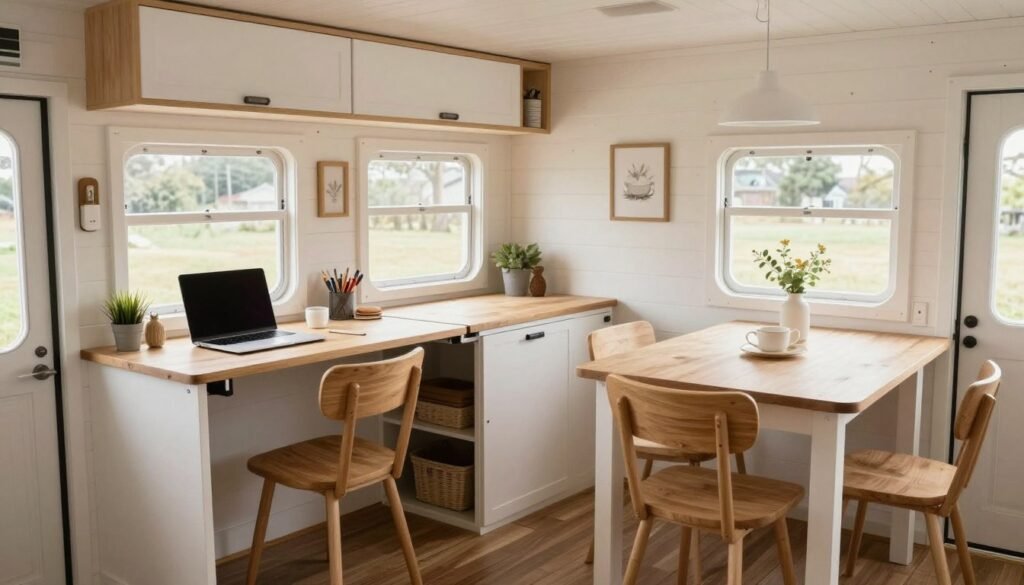
In many tiny houses, a workspace must share a room with dining, sleeping, or relaxing. Successful layouts make it easy to change the room’s function without rearranging everything each day.
A dining table can become a temporary desk, while a writing desk can double as a console. Fold-down furniture and mobile storage allow the room to change quickly.
Multipurpose Strategies
- Choose fold-away or wall-mounted furniture.
- Use a desk that can double as a console or dining surface.
- Store supplies in one portable basket or trolley.
- Put paperwork and technology away after work.
Best habit: Complete a daily reset so the room feels relaxing again.
Add Personality Without Adding Clutter
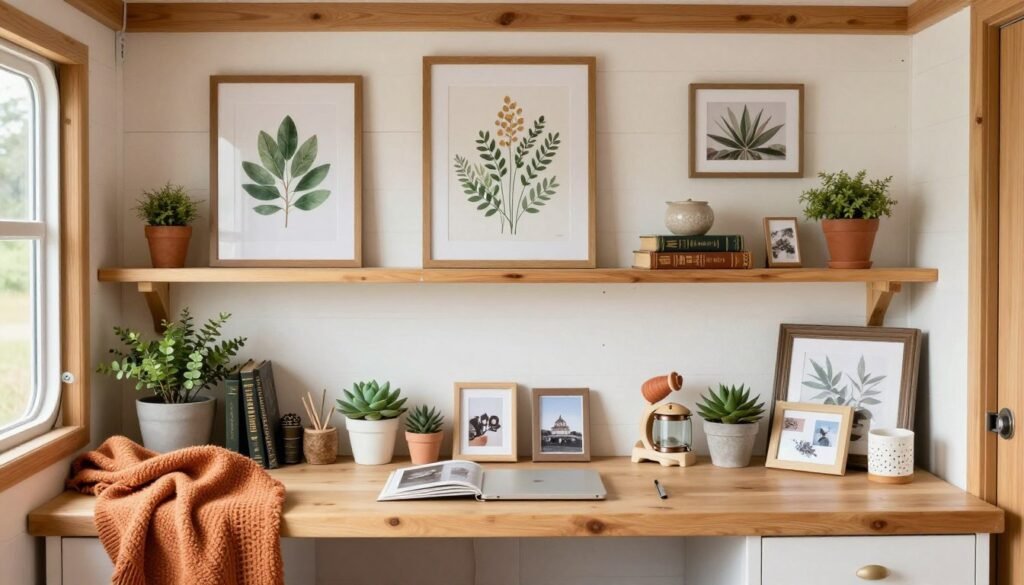
A few carefully chosen details can make the workspace more enjoyable without distracting from work.
Hang one piece of artwork, add a compact plant, or use a favourite ceramic mug for pens. The aim is to connect the workspace to the rest of your home rather than create a corporate-looking office.
Personal Touches That Fit
- One framed print or photograph.
- A small plant or vase of greenery.
- A ceramic cup for pens.
- A simple pinboard.
Editing rule: When you add a decorative item, remove something else to keep the area calm.
Manage Technology and Cables
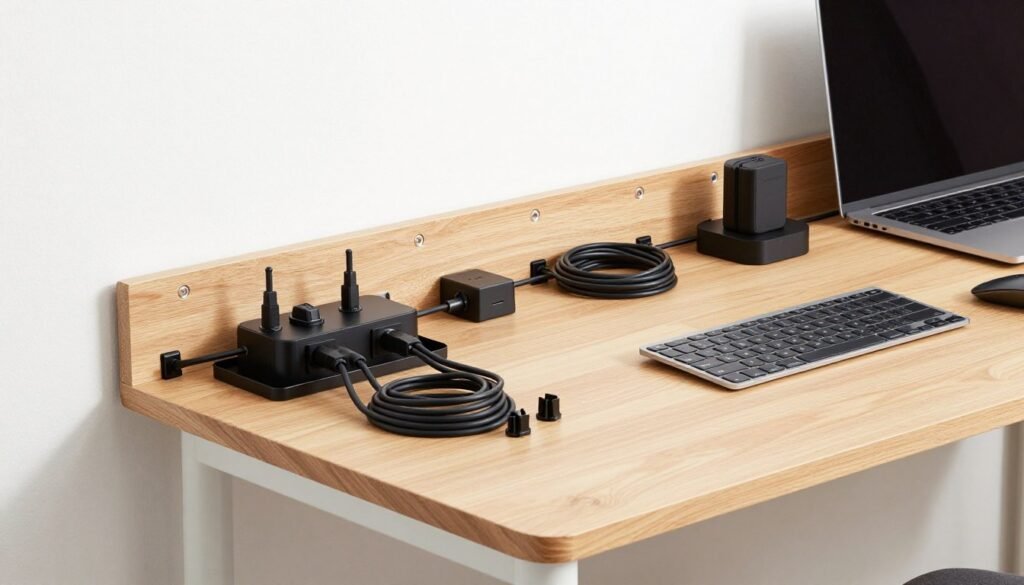
Cables can make a small workspace look untidy. Guide wires along the back of the desk with clips and use an under-desk tray for power strips and excess cable.
Wireless accessories can reduce visible cords, while keeping chargers in one designated place stops them collecting across the home.
Cable Management Tips
- Use clips along the rear edge of the desk.
- Mount the power strip beneath the surface.
- Bundle excess cable with reusable ties.
- Label similar-looking chargers.
- Store spare cables in one container.
Adapt the Workspace Through the Seasons
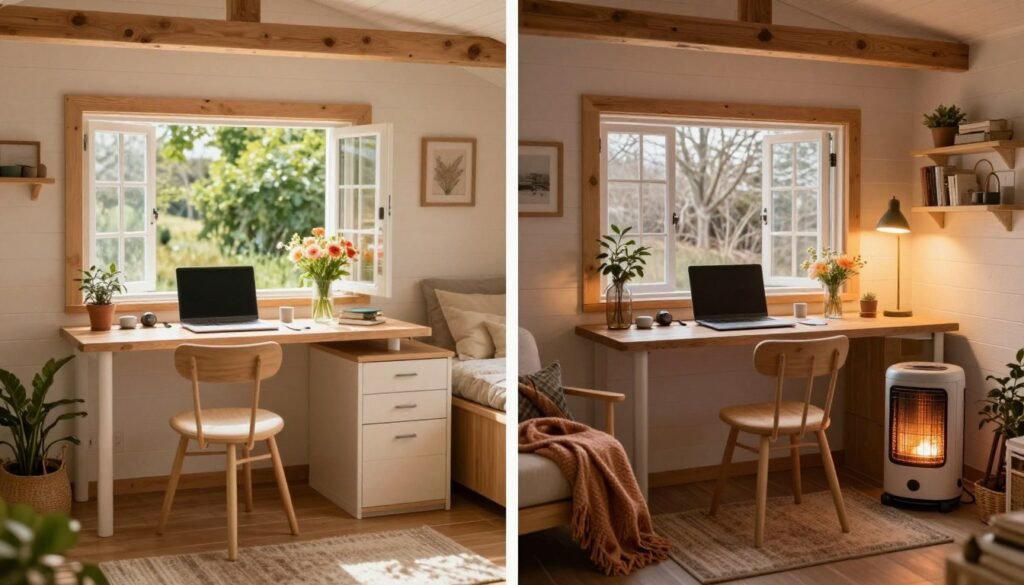
A workspace beside a window may become hot and bright in summer but feel dim during winter. Use blinds to control glare, adjust task lighting as daylight changes, and add a lightweight throw or cushion during colder months.
Simple Seasonal Adjustments
- Use blinds or curtains to reduce glare.
- Adjust the screen as the light changes.
- Add brighter lighting during winter.
- Keep the area ventilated in warm weather.
Follow a Simple Weekly Organization Routine
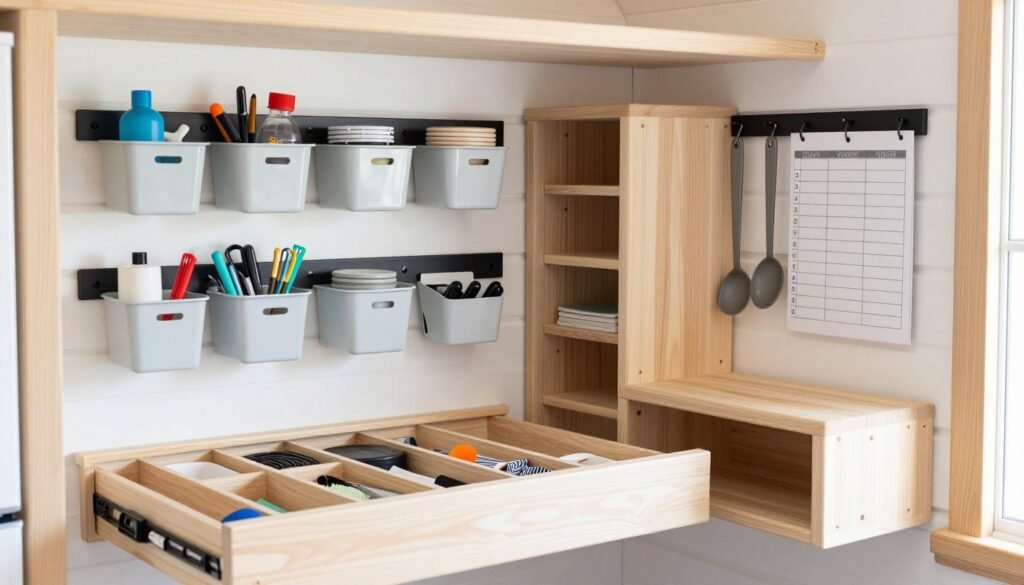
A few minutes at the end of each week can prevent papers, cables, mugs, and stationery from taking over the desk.
- Return supplies to their containers.
- File or recycle loose paperwork.
- Remove cups and unrelated household items.
- Wipe the desktop and screen.
- Prepare essentials for the following week.
Five-minute reset: Set a timer and focus on clearing the desktop rather than waiting for clutter to build.
Support Your Wellbeing While You Work
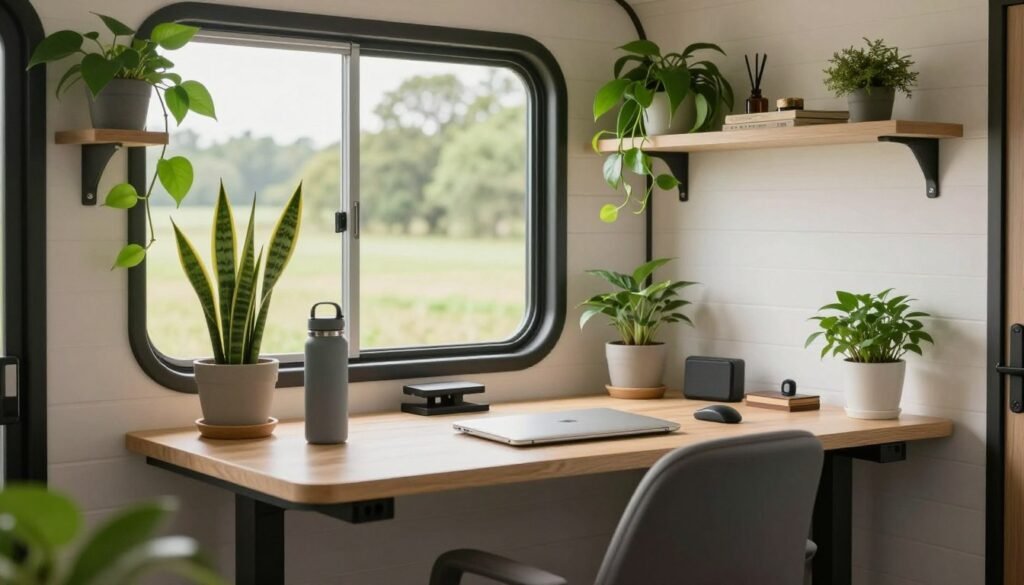
A good workspace should support wellbeing as well as productivity. Natural light, fresh air, regular movement, and clear boundaries can make home working more sustainable.
Keep water nearby, change position regularly, and look away from the screen throughout the day. When work ends, close the laptop and clear the desk so the office does not dominate your home life.
Daily Wellness Habits
- Keep water within easy reach.
- Stand and stretch regularly.
- Rest your eyes by looking into the distance.
- Take lunch away from the desk.
- Create a clear finish time.
Create a Tiny Workspace on a Budget
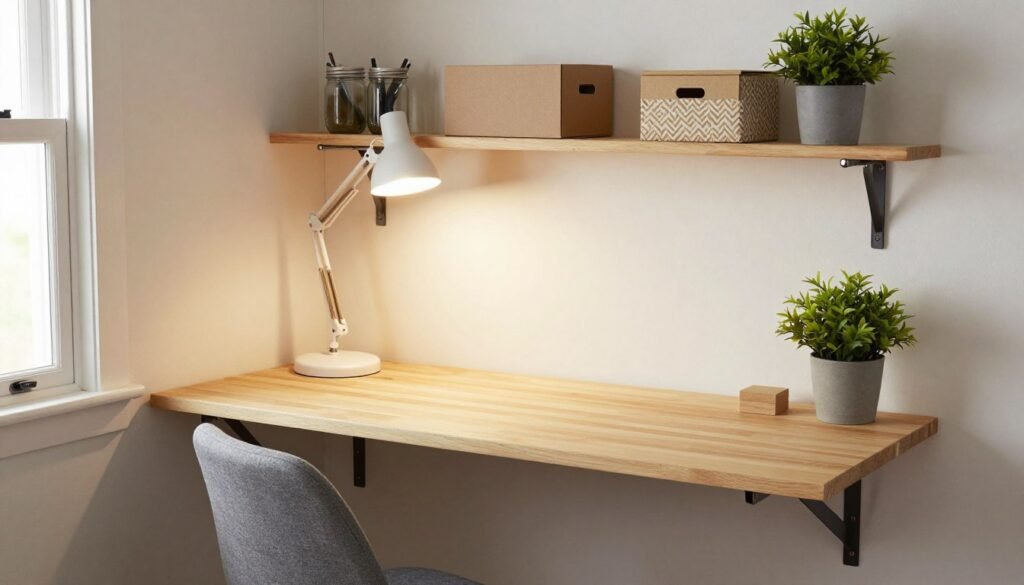
An effective tiny house office does not require expensive custom furniture. Wall-mounted surfaces, second-hand desks, and repurposed storage can create a comfortable workspace for less.
Look for compact furniture in charity shops, local marketplaces, and resale stores. Spend first on comfort and stability, then improve the appearance with paint, baskets, and affordable wall storage.
Budget-Friendly Ideas
- Build a floating desk from a sturdy board and brackets.
- Shop second-hand for compact wooden desks.
- Refresh furniture with paint or new handles.
- Repurpose jars, boxes, and baskets.
- Add one shelf instead of a large bookcase.
- Prioritize a comfortable chair.
Best value approach: Complete the desk, chair, lighting, and storage before buying decorative accessories.
Tiny House Workspace Checklist
- ✓ The desk does not obstruct the walkway.
- ✓ The chair stores neatly after work.
- ✓ The screen and keyboard are comfortable to use.
- ✓ Everyday supplies have designated storage.
- ✓ Cables are controlled and kept off the floor.
- ✓ There is enough natural or task lighting.
- ✓ Work items can be hidden after hours.
- ✓ The area suits the style of the home.
Final Thoughts
A well-planned workspace can make working from a tiny house far more comfortable. Whether you choose a floating desk, built-in office, fold-down workstation, corner setup, or vintage desk, the best solution is one that fits your home and routine.
Begin with a stable surface, comfortable seating, suitable lighting, and enough storage to control clutter. Once these essentials are working, add a few personal details that make the area feel warm and inspiring.
One small improvement may be enough to transform the space. A clearer desk, better lamp, hidden cable tray, or simple shelf can create a workspace that feels organised and at home in your tiny house.