12 Victorian Small Bedrooms Full of Character and Charm
A small bedroom does not need to lose its personality. Victorian-inspired interiors prove that rich color, patterned wallpaper, antique furniture, decorative lighting, and layered fabrics can all work beautifully in a compact room.
The secret is choosing where to add detail. Let one or two elements lead the design, then give the rest of the room space to breathe. A beautiful wallpaper, an iron bed, or a deep paint color can provide enough Victorian character without filling every corner with furniture and decoration.
These small Victorian bedroom ideas show how to combine period-inspired details with practical layouts, useful storage, and enough visual breathing room for everyday life.
Quick Guide: Decorating a Small Victorian Bedroom
Choose One Leading Feature
For a very small bedroom, begin with one element that gives the room its character. This might be patterned wallpaper, an antique-style bed, original architectural detail, or a dramatic paint color.
- Keep as much of the floor clear as possible.
- Repeat two or three main colors around the room.
- Use vertical storage rather than several low furniture pieces.
- Choose fewer decorative pieces with more presence.
Pick a Mood
Victorian-inspired bedrooms can be dark and dramatic or soft and romantic. Forest green, burgundy, navy, chocolate, and charcoal create a richer mood, while sage, cream, dusty rose, and faded florals produce something gentler.
- Introduce warm or dark wood for depth.
- Add antique brass or aged metal details.
- Balance very dark walls with lighter fabrics.
- Repeat accent colors so the room feels connected.
Protect the Character
If the room already has original fireplaces, molding, floorboards, or other period details, allow them to become part of the design where practical. Modern storage can then be added around those features rather than hiding the very details that make the room special.
- Measure furniture before buying it.
- Plan clear pathways around the bed.
- Test paint and wallpaper samples in the actual room.
- Keep useful surfaces relatively uncluttered.
Small-space rule: Victorian character does not have to come from lots of furniture. Color, pattern, lighting, artwork, and architectural detail can create much of the atmosphere without taking up any additional floor space.
12 Victorian Small Bedrooms Full of Character
1. Create a Moody Green Victorian Bedroom
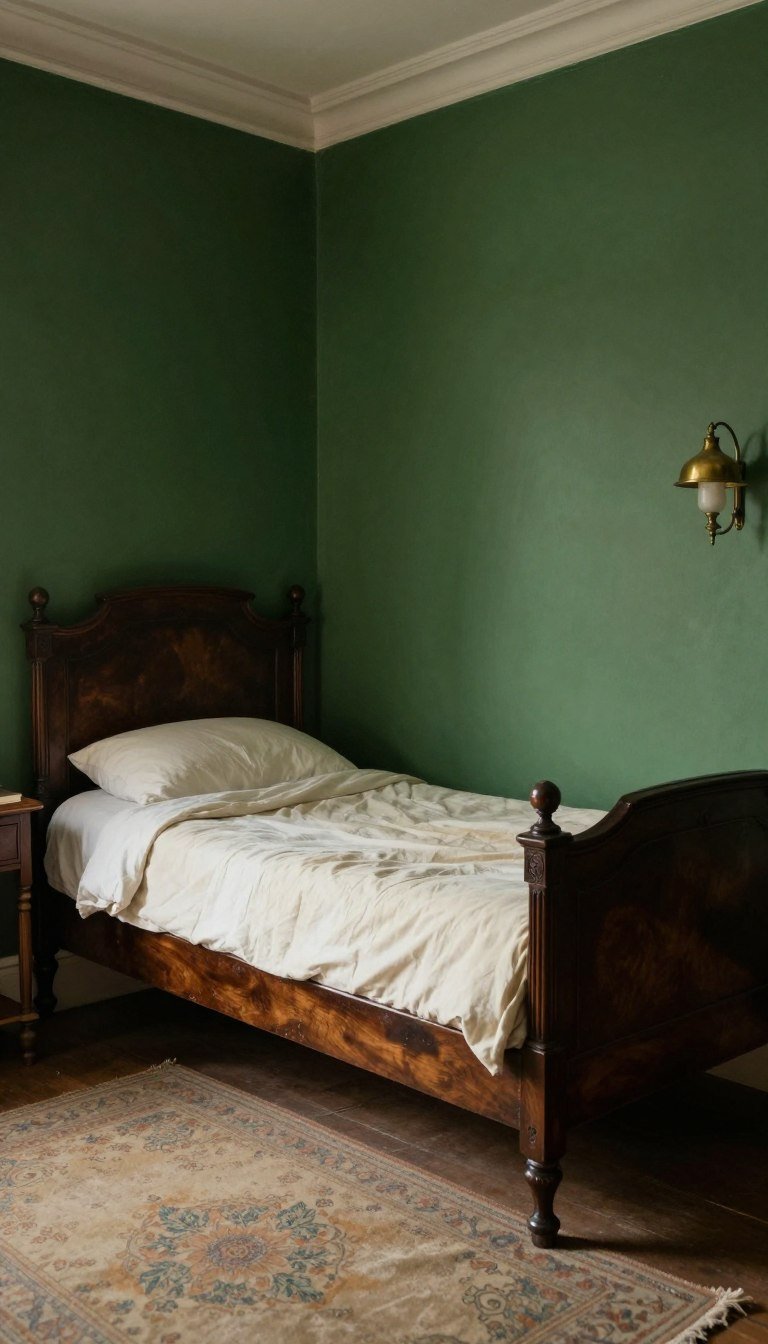
Deep green feels wonderfully rich in a Victorian-inspired bedroom without having quite the severity of black. It works particularly well with dark or medium-toned wood, aged brass, cream fabrics, and softly faded patterns.
Try pairing green walls with an antique or antique-style wooden bed, cream bedding, warm bedside lighting, and a faded patterned rug. You already have plenty of atmosphere, so the remaining furniture can stay relatively simple.
If you are concerned about a small bedroom feeling too dark, introduce larger areas of light fabric rather than lots of tiny pale accessories. An ivory quilt, cream curtains, or a lighter rug will provide a cleaner contrast.
Why it works: Green has enough depth to create a moody Victorian feeling, while its connection to natural colors helps it sit comfortably beside wood, botanical patterns, and aged metals.
Small-space tip: Test the green on several walls before painting the entire bedroom. The same shade can look dramatically different beside a window, in a shadowed corner, and under evening lighting.
2. Use Victorian Floral Wallpaper Behind the Bed
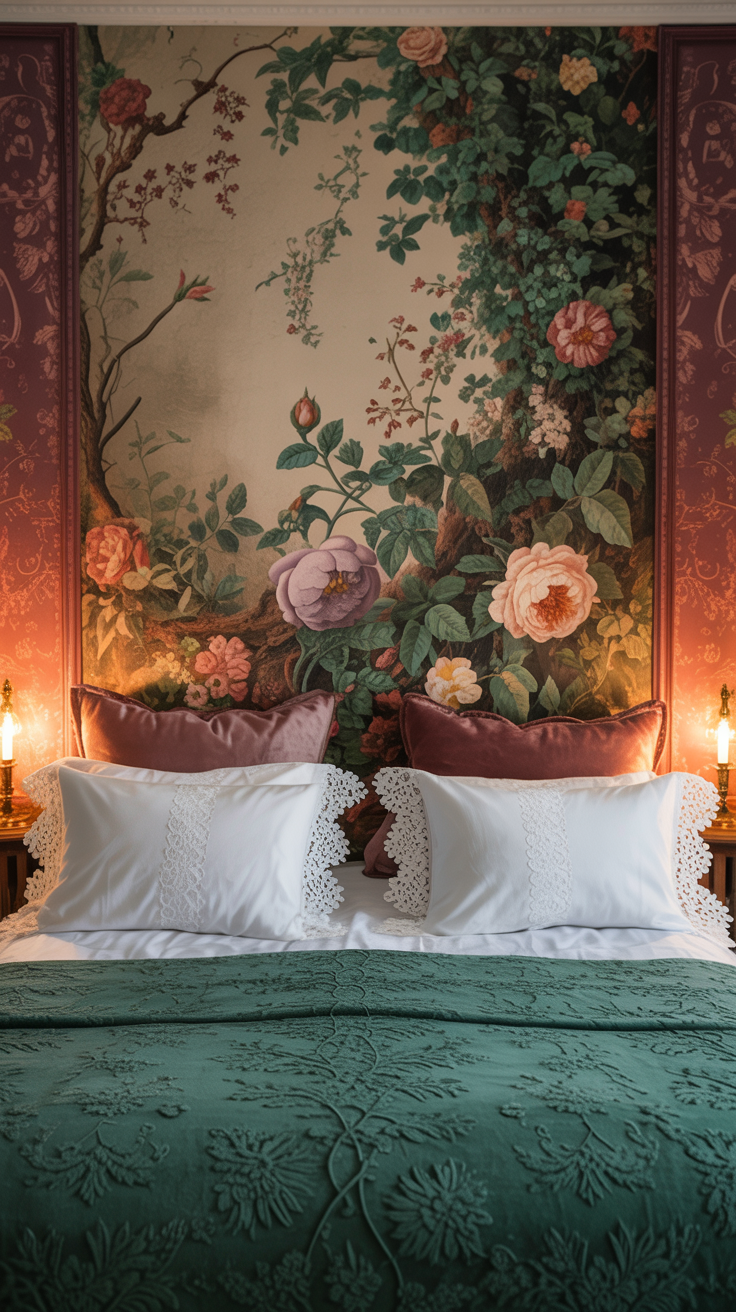
Patterned wallpaper is one of the easiest ways to give a plain bedroom Victorian character because it adds color, pattern, and detail without using any floor space. Covering the wall behind the bed provides plenty of impact without necessarily surrounding the entire room in pattern.
Look for florals, trailing botanicals, damask-inspired designs, or softly faded rose patterns. Designs with slightly muted colors are particularly easy to combine with antique wood and traditional furniture.
Once the wallpaper is in place, let it do most of the decorative work. Plain or lightly textured bedding, simple curtains, and one or two traditional accessories can prevent a compact room from becoming visually overloaded.
Balance Floral Wallpaper With
- Plain cream or ivory bedding.
- One warm wood furniture piece.
- Simple bedside lighting.
- A restrained rug.
- One or two colors repeated from the wallpaper.
Designer detail: Pulling one quieter shade from the wallpaper onto the remaining walls can make a feature wall feel connected to the whole room rather than added as a separate decoration.
Small-space tip: If the wallpaper is particularly detailed, resist the temptation to add lots of framed pictures above it. The pattern may already be providing all the wall decoration the bedroom needs.
3. Choose an Antique-Style Iron Bed
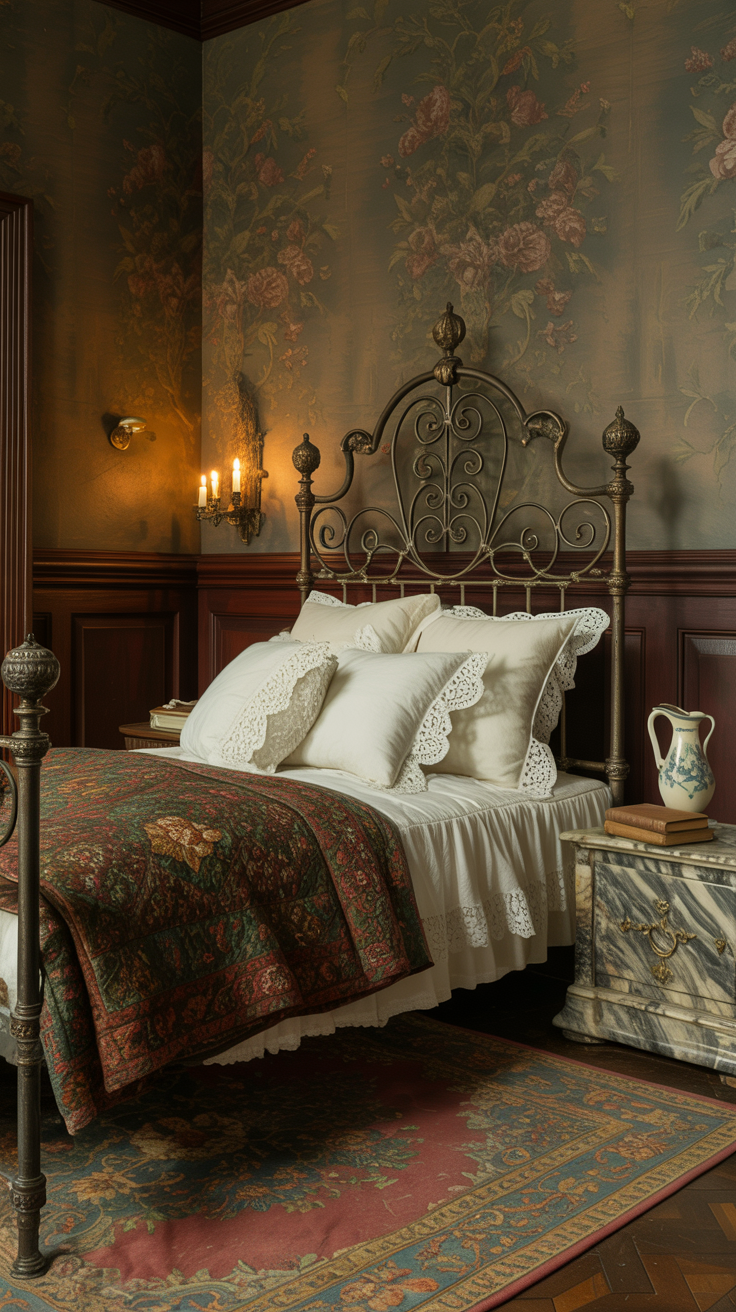
An antique-style iron bed can give a small bedroom immediate period character without the visual weight of a large solid headboard. Because you can see through much of the frame, the bed can feel lighter even when its silhouette is decorative.
Black creates a stronger traditional contrast, while aged brass, cream, or softly painted finishes can move the room towards a gentler Victorian cottage look. Layer the bed with a quilt, linen, or subtle floral textiles rather than trying to make every element ornate.
The bed itself is already a strong decorative feature, so the surrounding furniture can stay simple. A small bedside chest, one lamp, and a carefully chosen framed picture may be all you need.
Style an Iron Bed With
- Cream or softly patterned bedding.
- A small wooden bedside table.
- A faded traditional rug.
- Warm bedside lighting.
- One or two vintage-inspired accessories.
Why it works: The open framework provides decorative detail without creating the same solid visual block as a heavy upholstered or wooden headboard.
Most timeless option: Keep the bed frame traditional but the bedding relatively relaxed. This gives you Victorian character without making the room feel like a period set.
4. Try Dusty Pink and Antique Wood
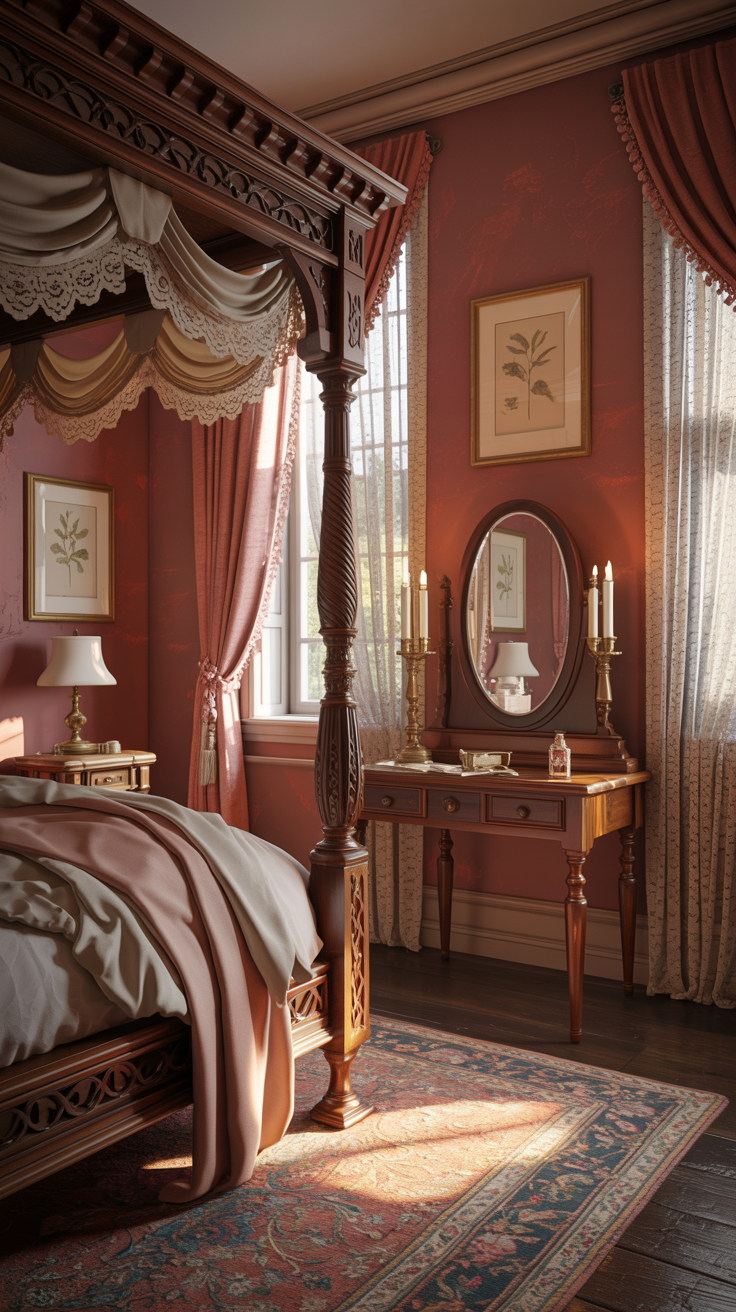
Dusty pink offers a softer way to bring Victorian influence into a small bedroom. Choose a muted, slightly earthy shade rather than a sugary pink, then ground it with dark or medium-toned antique wood.
Warm cream, faded florals, botanical artwork, and aged brass all sit comfortably within this palette. You can keep the actual furniture fairly minimal because the contrast between the pink walls and old wood already supplies plenty of character.
This combination is particularly useful when you want a romantic bedroom that still feels grown-up. A little pattern goes a long way, so consider using florals on either the bed, curtains, or artwork rather than automatically using them everywhere.
Build the Palette With
- Dusty or faded pink walls.
- Dark or medium-toned wood.
- Warm cream textiles.
- Aged brass details.
- Small touches of muted green or burgundy.
Creates this effect: The soft wall color keeps the bedroom romantic, while darker wood prevents the scheme from becoming overly sweet.
Small-space tip: If you already have a dark wooden bed or wardrobe, dusty pink can provide enough contrast that you may not need many additional decorative pieces.
5. Use Picture-Frame Molding to Add Victorian Character
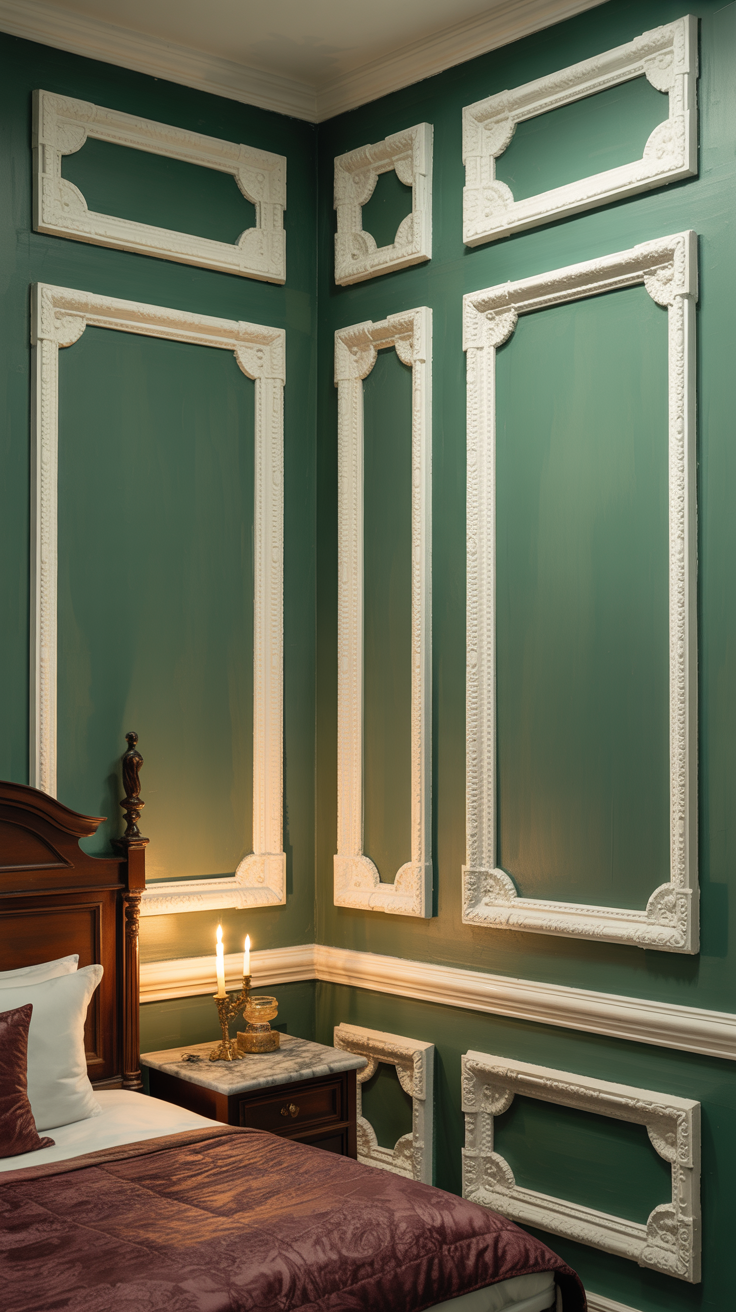
Picture-frame molding introduces architectural detail without adding another busy pattern. It can work particularly well in a compact bedroom where you want the walls to have character but do not necessarily want patterned wallpaper.
Use it behind the bed as a feature or continue it around the room if the proportions allow. Painting the molding and wall in the same color creates a quieter, more sophisticated effect and allows the shadows of the trim to provide the detail.
Map out the panels with removable tape before installing anything. This makes it much easier to judge the proportions around the bed, doors, windows, outlets, and existing architectural features.
Keep the Molding Balanced With
- Simple bedding.
- One substantial artwork or mirror.
- Warm wood furniture.
- Traditional bedside lighting.
- A restrained color palette.
Designer detail: Plan the molding around the furniture rather than treating the wall as an empty rectangle. A panel centered behind the bed can make the whole arrangement feel much more intentional.
Practical detail: Check for concealed electrical wiring and plumbing before drilling, nailing, or fixing trim to the wall. Use an installation method suitable for the wall construction and molding material.
6. Create a Cozy Victorian Cottage Bedroom
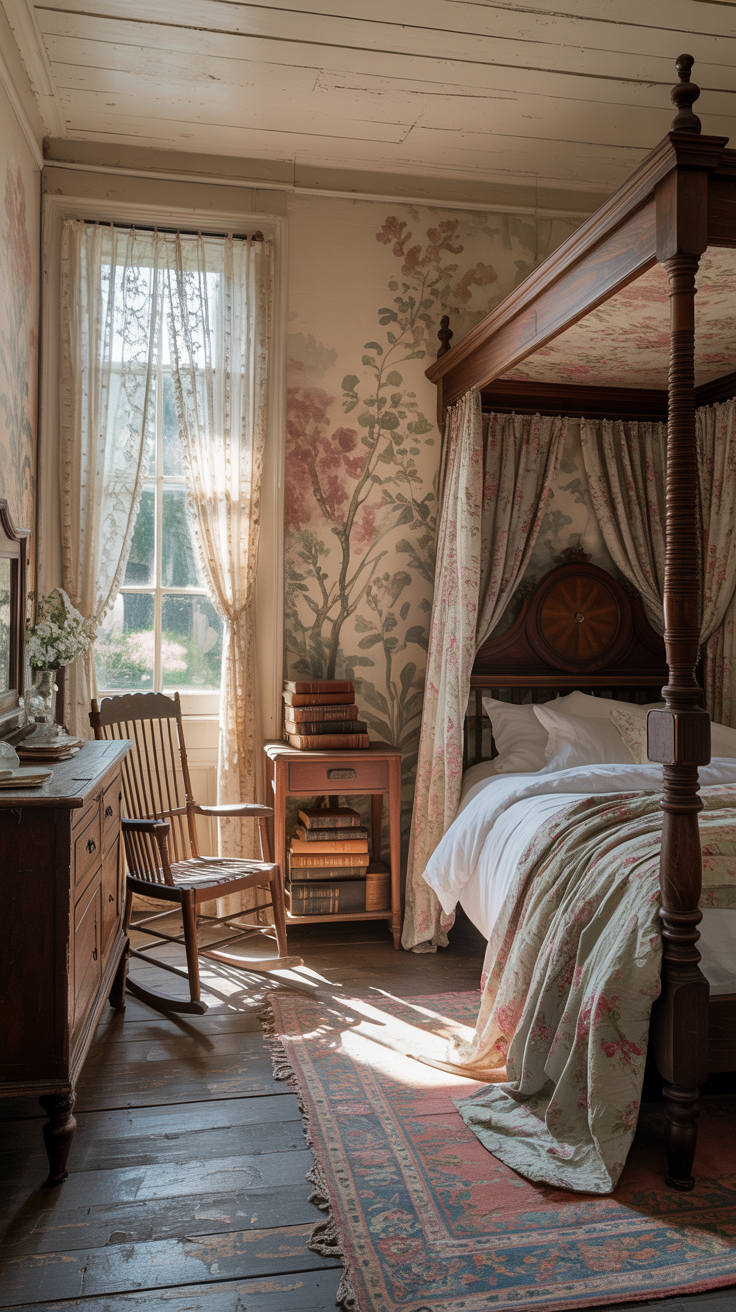
For a softer interpretation of Victorian style, borrow from the cozy cottage side of the period. Faded florals, old wood, quilts, botanical prints, and gently collected furniture can create a room that feels layered without becoming formal.
The furniture does not need to match. In fact, a small chest used as a bedside table can sit happily beside a different wood bed or wardrobe as long as the colors and materials have something in common.
Keep decorative objects limited on bedside surfaces and other areas you use every day. Let the pattern appear on the bed, rug, curtains, or artwork while the floor and practical surfaces stay relatively clear.
For a Cozy Collected Look Try
- Faded floral textiles.
- Old or antique-style wood furniture.
- A traditional quilt.
- Botanical or landscape artwork.
- Warm bedside lamps.
Why it works: Repeating similar colors and natural materials allows mismatched furniture and patterns to feel collected rather than chaotic.
Small-space tip: Choose furniture for what it can do as well as how it looks. A bedside chest with drawers or an antique-style trunk that provides storage earns its place far more easily in a compact bedroom.
7. Create a Burgundy Victorian Bedroom
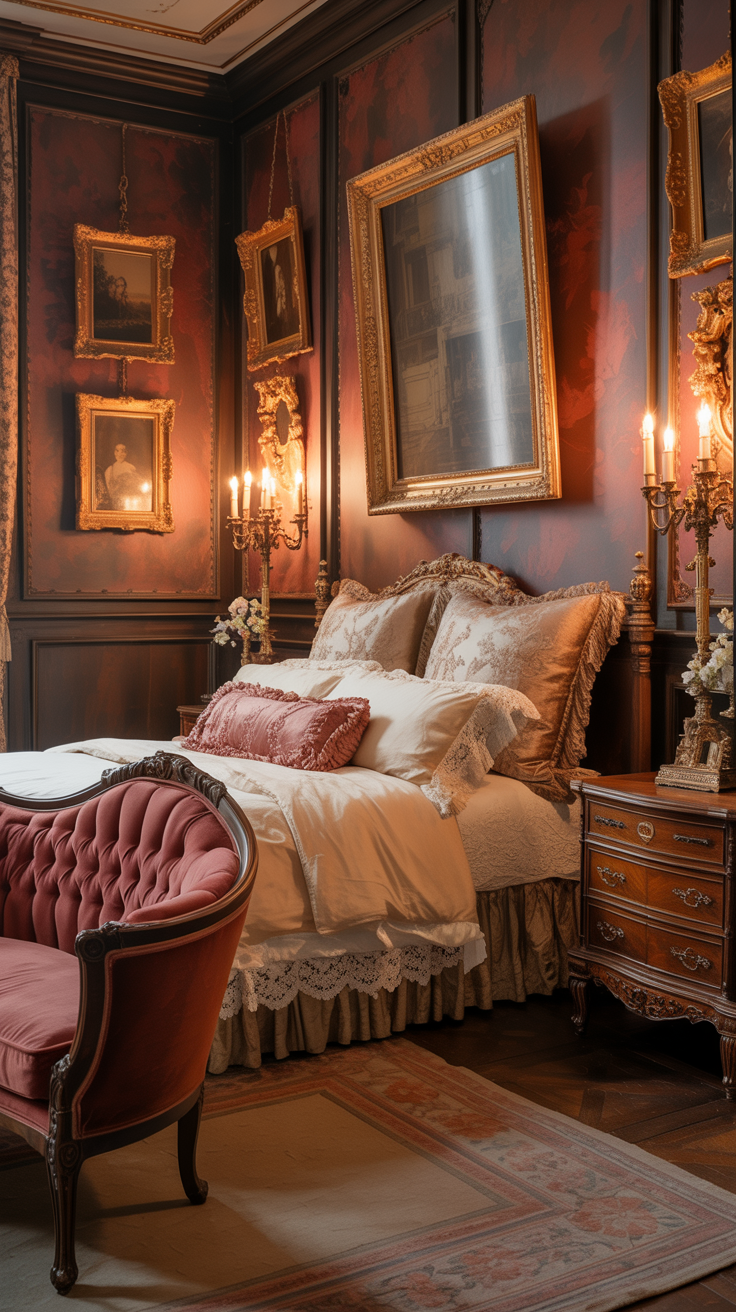
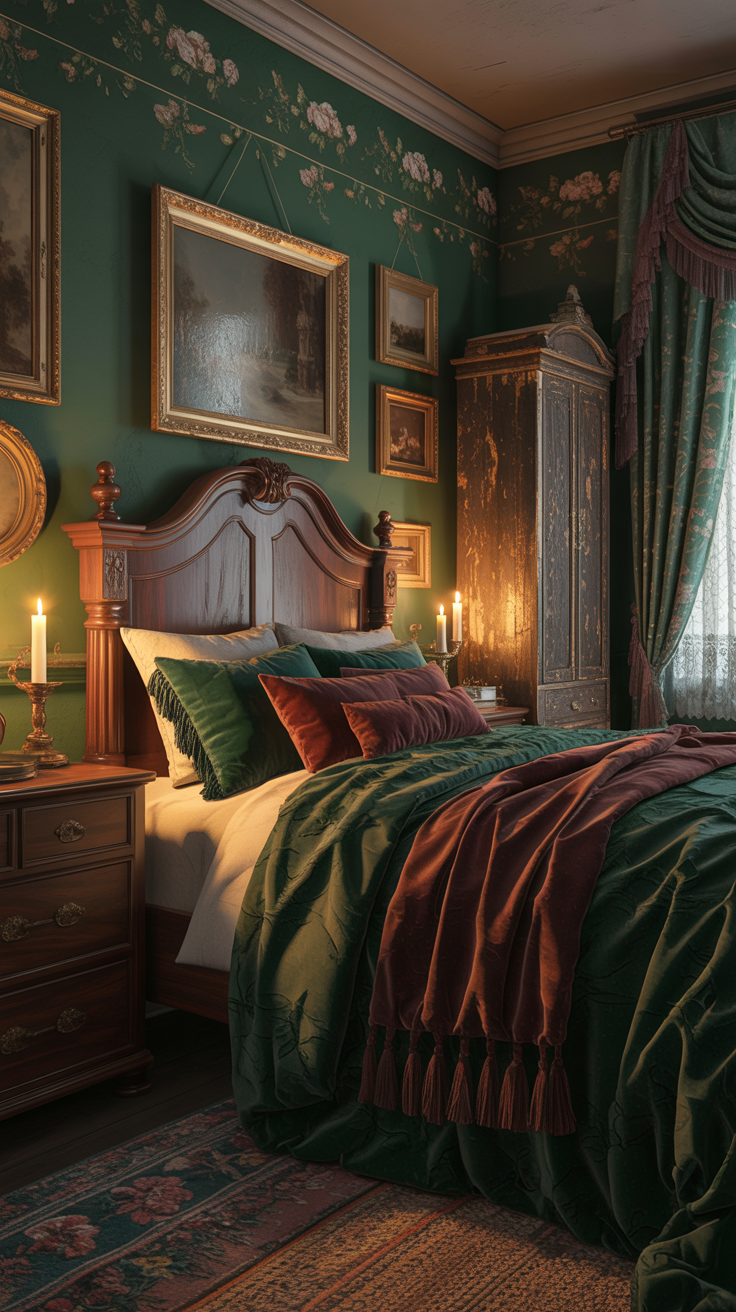
Burgundy brings instant richness to a Victorian-inspired bedroom. It has enough depth to feel dramatic, but its warm undertones work beautifully with traditional wood furniture, aged metals, and softly patterned fabrics.
Pair burgundy walls with cream bedding, dark wood, antique brass, muted green, and faded floral patterns. If covering the entire room feels too intense, use burgundy behind the bed and keep the remaining walls warm cream or another soft neutral.
Lighting becomes particularly important with such a deep color. Bedside lamps, wall lights, or other warm ambient lighting can bring out the richness of the walls and stop the bedroom from feeling flat after dark.
Balance Burgundy With
- Cream or ivory bedding.
- Dark or medium-toned wood.
- Muted olive or sage green.
- Antique brass details.
- Softly faded floral patterns.
Why it works: Burgundy creates the depth associated with traditional Victorian interiors while cream and warm wood keep the room comfortable rather than overly formal.
Small-space tip: Use one or two substantial areas of cream rather than scattering lots of pale accessories around the room. The contrast will feel calmer and more deliberate.
8. Use a Victorian Fireplace as the Focal Point
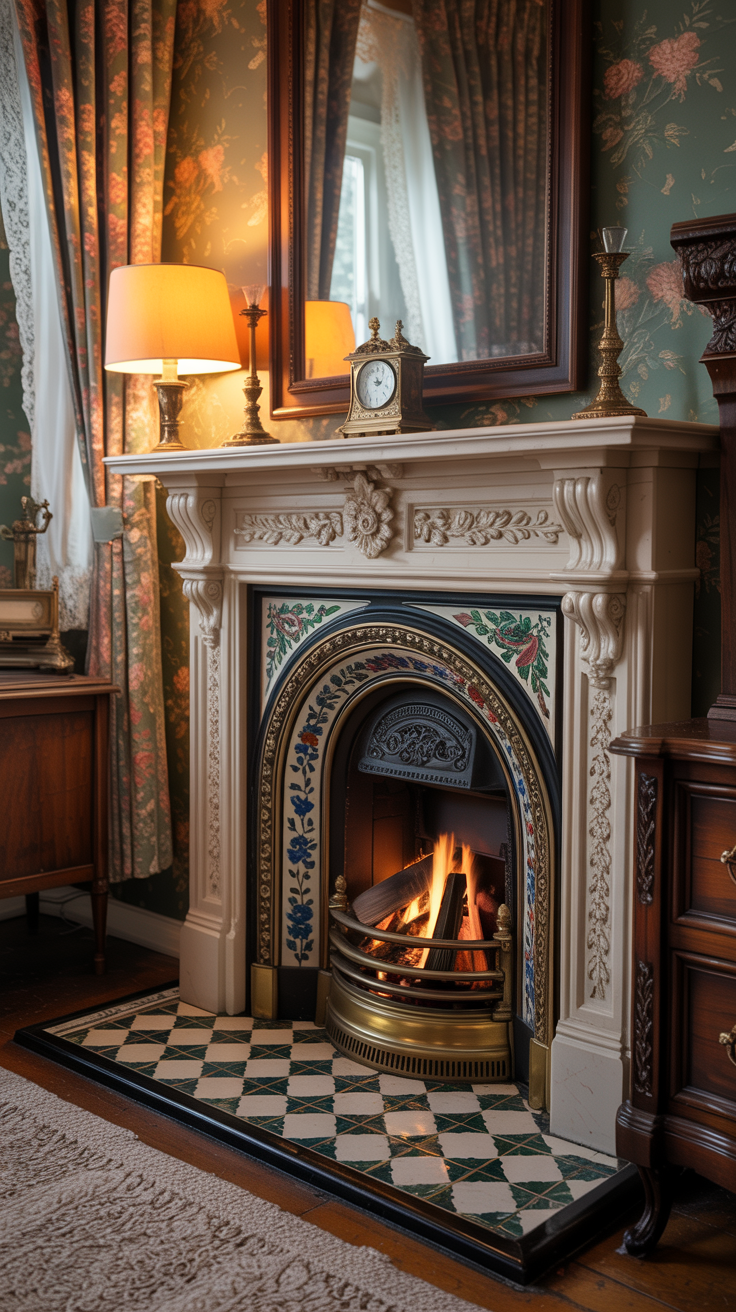
If your bedroom has an original fireplace, let it lead the design. Even a non-working fireplace can provide architectural character that would be difficult to recreate with newly added decorative pieces.
Keep the styling fairly simple so the fireplace itself remains the feature. An antique-style mirror, one framed picture, or a simple vase may be all the mantel needs, particularly in a compact bedroom.
You can then repeat the fireplace materials elsewhere in the room. A dark iron insert might connect to a black bed frame, while wood, tile, or brass details can be echoed through furniture and lighting.
Style the Fireplace With
- One appropriately scaled mirror.
- A single framed artwork.
- A simple vase or small decorative object.
- Colors repeated elsewhere in the bedroom.
- Enough empty space for the original details to remain visible.
Designer detail: Avoid filling the mantel with lots of tiny objects. One or two larger pieces usually make an original fireplace feel more important and less cluttered.
Safety note: If the fireplace is operational or you plan to return it to use, arrange an appropriate professional assessment and follow applicable fire, ventilation, clearance, chimney, and building requirements. Decorative styling should never interfere with the safe operation of a working fireplace.
9. Try Sage Green With Victorian Florals
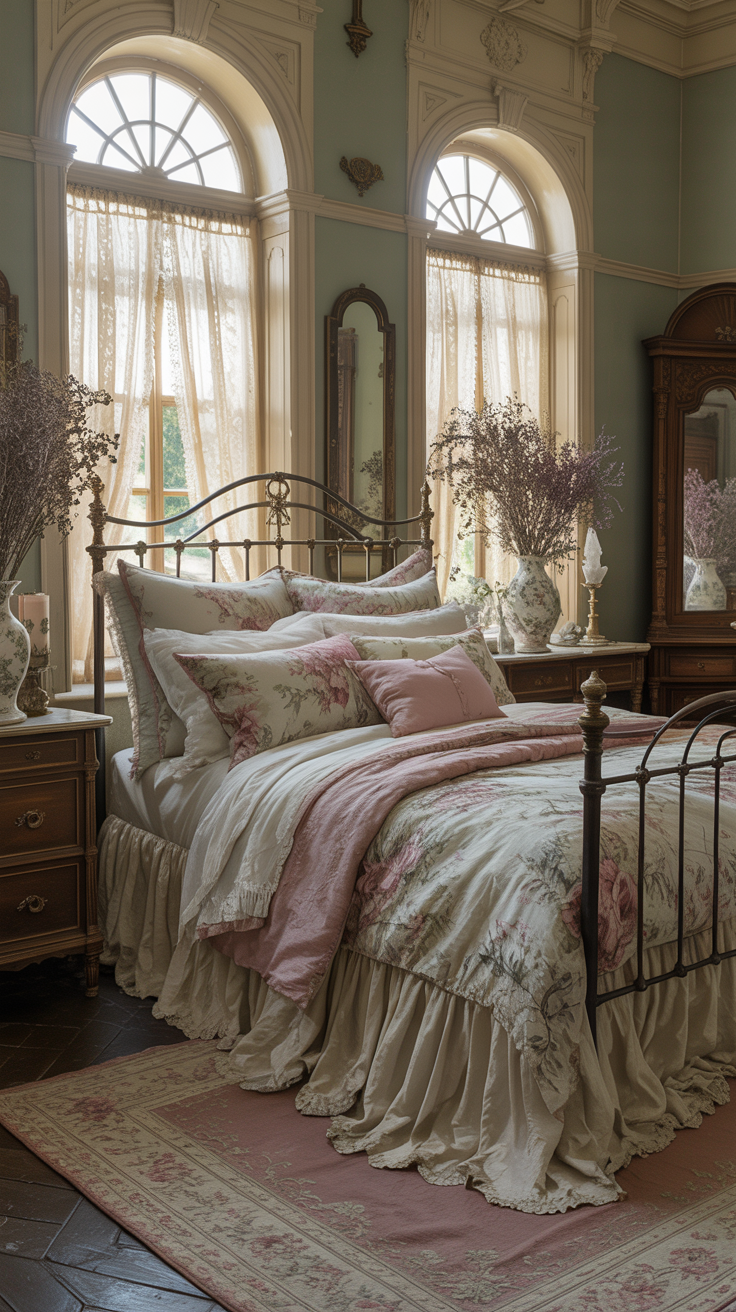
Sage green is a lovely choice if you want Victorian character without creating a particularly dark bedroom. It has enough color to give the walls presence while remaining soft enough to work with traditional florals and antique furniture.
Use sage on the walls, then bring pattern into the room through bedding, curtains, or one upholstered piece. Warm cream, faded pink, burgundy, natural wood, and antique brass all sit comfortably alongside it.
Keeping the palette restrained is particularly useful in a small room. Several traditional details can work together beautifully when the same handful of colors appears throughout the space.
A Soft Victorian Palette
- Sage green walls.
- Warm cream bedding.
- Faded pink or burgundy florals.
- Medium-toned wood.
- Small antique brass accents.
Most timeless option: Use florals in one or two places rather than covering every surface in pattern. Sage provides enough color that the rest of the room can remain relatively quiet.
10. Use an Ornate Mirror to Add Victorian Elegance
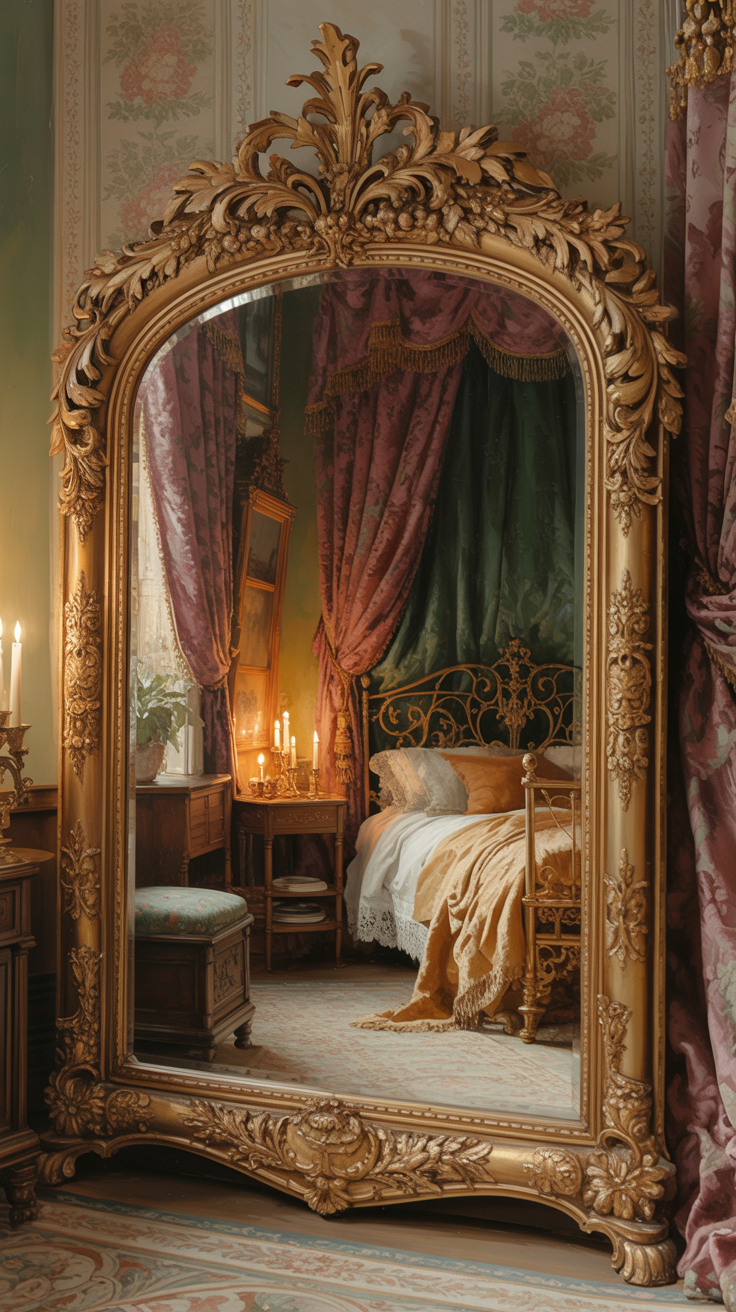
An ornate mirror is an excellent way to add Victorian elegance without taking up valuable floor space. The decorative frame brings in period-inspired detail while the reflective surface can help move light around a compact bedroom.
Antique gold, aged brass, dark wood, and softly distressed finishes all work well. Choose a frame with enough presence to become a feature rather than surrounding it with lots of smaller wall decorations.
Position the mirror where it reflects daylight or an attractive part of the room rather than automatically placing it on the largest available wall. What the mirror reflects is almost as important as the frame itself.
Good Places for a Victorian Mirror
- Above a non-working fireplace where suitable.
- Above a chest of drawers.
- Opposite or adjacent to a useful source of daylight.
- On a narrow wall that needs one strong feature.
Small-space tip: One generously sized mirror can look calmer and more intentional than several small decorative mirrors scattered around the bedroom.
Safety detail: Heavy mirrors need secure fixings appropriate for their weight and the wall construction. Check for concealed wiring and plumbing before drilling, and follow the mirror or fixing manufacturer’s installation guidance.
11. Create a Dark Victorian Bedroom With Charcoal and Wood
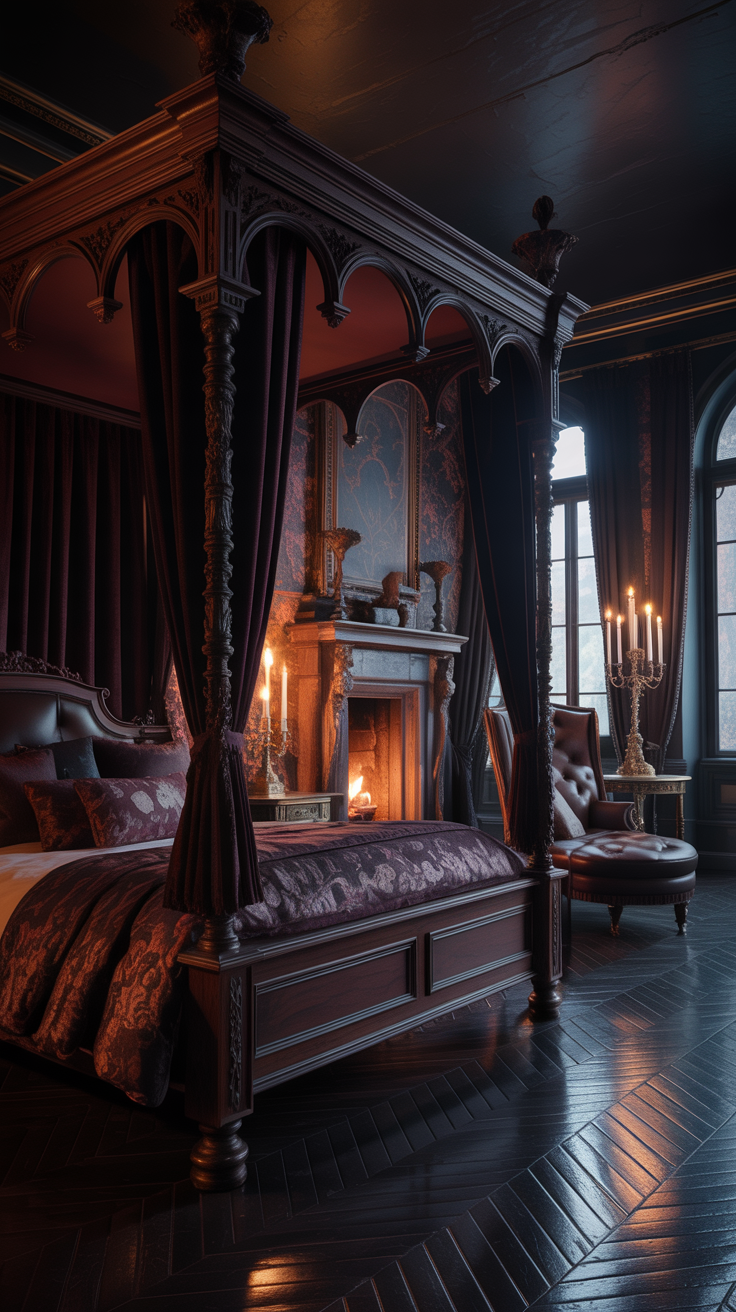
Charcoal creates an intimate backdrop for antique wood, traditional artwork, and warm metallic details. It is a strong alternative to black when you want a dark Victorian bedroom with a slightly softer finish.
Add cream bedding and a lighter rug for contrast, then use bedside lamps or wall lights to reveal the different textures around the room. Warm light is particularly effective against charcoal because it prevents the scheme from feeling flat.
Use a few larger areas of cream rather than lots of pale accessories. A substantial quilt, curtains, or rug will create cleaner contrast and allow the darker walls and wood furniture to remain the main features.
For a Moody but Balanced Room Try
- Charcoal walls.
- Dark antique-style wood.
- Cream or ivory bedding.
- A faded lighter rug.
- Warm layered lighting.
Why it works: The charcoal and wood create depth, while larger areas of light fabric provide enough contrast to keep a compact bedroom comfortable.
12. Layer Floral Bedding for a Romantic Victorian Bedroom
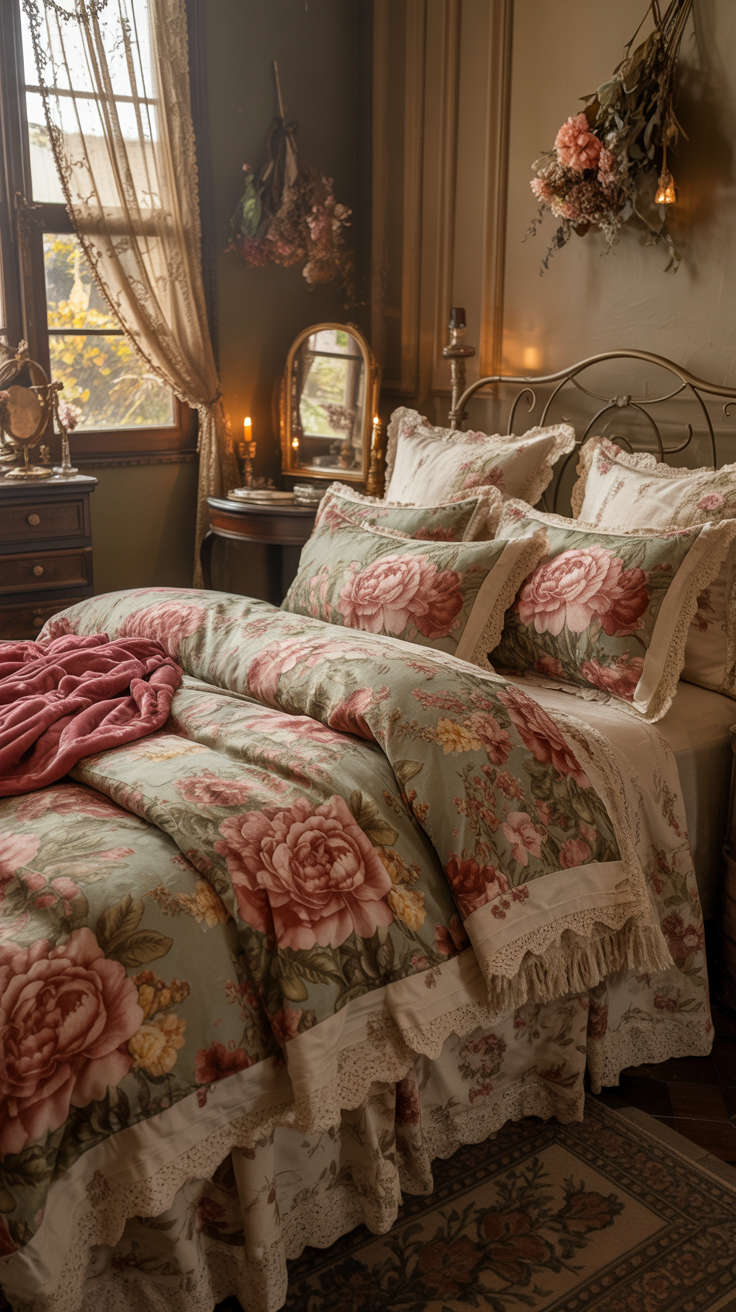
If you rent or simply do not want to change the walls, let the bed provide most of the Victorian character. A floral quilt, duvet cover, or bedspread can introduce pattern and color without making a permanent change to the room.
Start with one floral textile, then take two or three colors from the pattern for the remaining bedding. Plain cushions and a folded throw will make the bed feel layered without turning it into a mountain of pillows that has to be dismantled every night.
Connect the bed to the rest of the bedroom with one or two botanical prints, a traditional landscape, warm wood, or an antique-style lamp. A few repeated details are enough to make the scheme feel intentional.
Build a Romantic Bed With
- One floral quilt, duvet cover, or bedspread.
- Plain sheets and pillowcases.
- Two or three colors repeated from the floral pattern.
- One folded throw for additional texture.
- A small amount of traditional artwork nearby.
Budget-friendly version: Changing the bedding can completely shift the character of a plain bedroom without the cost or commitment of wallpaper, molding, or new furniture.
Small-space tip: Keep the number of decorative cushions under control. Layered textiles can create softness and pattern without sacrificing half the room to somewhere to put the cushions at bedtime.
Best Colors for a Small Victorian Bedroom
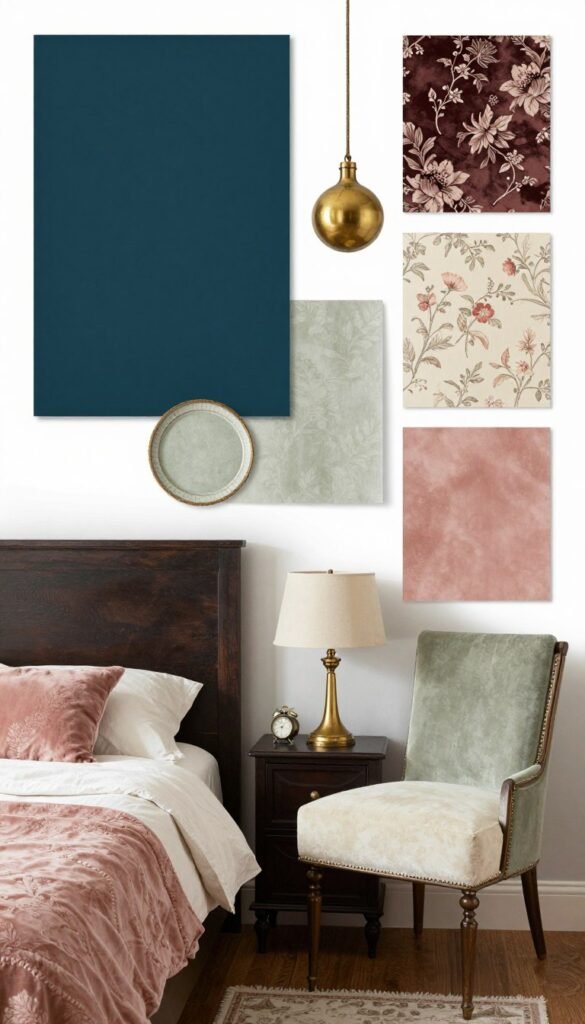
Victorian-inspired style gives you far more choices than beige and white. Deep jewel tones, muted colors, and warm neutrals can all work in a compact bedroom when the overall palette stays intentional.
- Dark and dramatic: Forest green, burgundy, charcoal, navy, and chocolate brown.
- Soft and romantic: Dusty rose, faded rose, sage, cream, and muted blue.
- Warm and traditional: Olive, ochre, rust, warm cream, and dark wood.
- Quiet and elegant: Mushroom, taupe, warm gray, ivory, and antique brass.
Try limiting the room to two or three main colors, then repeat them through the bedding, rug, artwork, curtains, and smaller details. This allows you to use pattern without making a small bedroom feel chaotic.
Before you paint: Test colors in the actual bedroom and look at them throughout the day. Window direction, flooring, curtains, and artificial lighting can dramatically change how deep greens, reds, blues, and charcoals appear.
You Might Also Like
How to Make a Small Victorian Bedroom Feel Bigger
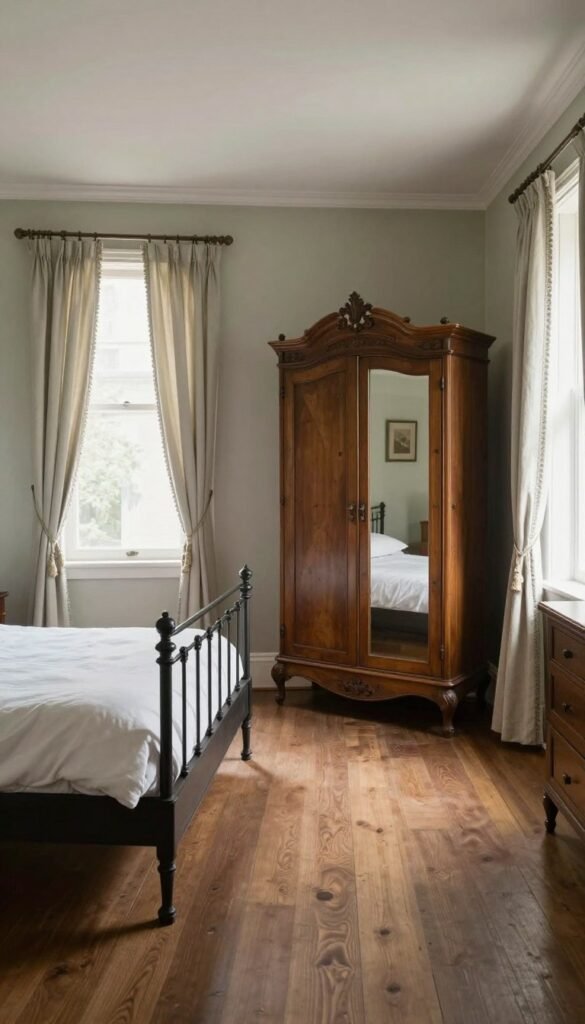
You do not need to remove every dark color, pattern, or historic detail to make a compact bedroom feel more comfortable. Good proportions and sensible furniture choices usually matter far more than making every surface pale.
- Avoid oversized bedside furniture: Choose pieces that leave enough room to move comfortably around the bed.
- Consider an open-frame bed: An iron or similarly open design can reduce visual weight.
- Use taller storage: One well-proportioned vertical piece may use floor space more efficiently than several low units.
- Position mirrors carefully: Place them where they reflect useful light or an attractive view of the room.
- Keep pathways clear: A bedroom feels smaller very quickly when you have to squeeze around furniture.
- Use fewer, larger decorations: One substantial mirror or artwork can feel calmer than many tiny objects.
Victorian style can still be richly layered without becoming cluttered. Concentrate the detail on walls, fabrics, lighting, and a few carefully chosen accents while keeping the floor and everyday surfaces relatively open.
Most useful first step: Measure the bed, furniture, doors, windows, and comfortable walking space before buying anything new. A beautifully styled chest of drawers is not much help if the bedroom door can no longer open properly.
Storage, Mistakes, and a Simple Victorian Formula
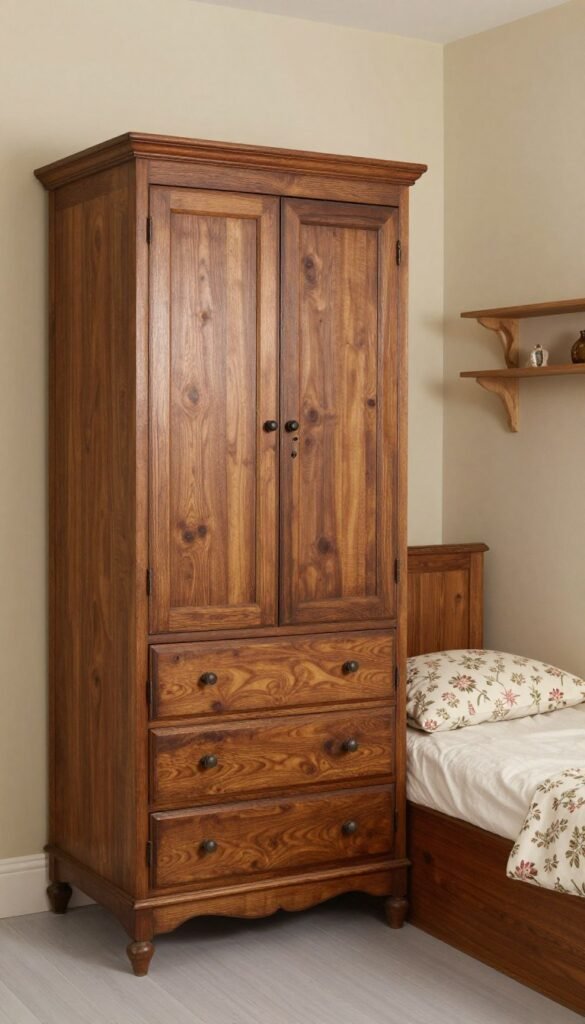
Victorian Bedroom Storage Ideas for Small Spaces
Storage is where romantic bedroom design meets daily life. The goal is to keep enough of the everyday clutter out of sight without filling the room with bulky furniture.
- Antique-style chest of drawers: Provides useful storage while contributing to the Victorian look.
- Under-bed storage: Makes use of otherwise wasted space without adding another visible furniture piece.
- Tall wardrobe: Uses vertical space and can be more efficient than several smaller storage units.
- Bedside chest: Gives you drawers as well as a surface for a lamp and book.
- Storage bench: Can provide hidden storage if there is genuinely enough space at the end of the bed.
- Wall shelving: Useful for books or a few decorative objects where floor space is particularly limited.
Practical detail: Wall-mounted furniture and shelving should be installed with fixings suitable for the wall construction and expected load. Check for concealed electrical wiring and plumbing before drilling or fixing anything to the wall.
Common Small Victorian Bedroom Mistakes to Avoid
- Using too much furniture: Leave enough clear floor space for the room to function comfortably.
- Making every surface patterned: Give florals, wallpaper, and traditional textiles some quieter areas around them.
- Buying furniture without measuring: Antique and antique-style pieces can be surprisingly deep or wide.
- Using only one overhead light: Bedside lamps, wall lights, and other appropriate ambient lighting create a much softer room.
- Trying to make every detail historically perfect: A Victorian-inspired bedroom still needs to work for modern life.
- Overloading the room with ornaments: A few stronger decorative pieces usually create more impact than lots of small objects.
Why it matters: The goal is not to fit as many Victorian details as possible into one bedroom. It is to choose the details that create the most character while preserving comfort, storage, and clear movement around the room.
An Easy Small Victorian Bedroom Formula
If you love Victorian interiors but are unsure where to begin, keep the first version of the room simple. You can always add another layer later if the bedroom still feels too plain.
- Choose one leading feature: wallpaper, molding, a rich paint color, or an antique-style bed.
- Add one warm wood furniture piece.
- Choose cream or softly patterned bedding.
- Introduce one vintage-style mirror or artwork.
- Add warm bedside lighting.
- Bring in a faded rug or floral textile.
- Keep the remaining surfaces relatively clear.
The finished effect: The room should feel layered and characterful without every individual item competing for attention. If one element is particularly ornate, allow the pieces around it to become quieter.
Final Thoughts
A small Victorian bedroom does not need to feel like a miniature museum. The most inviting rooms borrow the richness of Victorian interiors while leaving enough space for modern life.
Choose the details that give you the most character for the least physical space: floral wallpaper, rich paint, an iron bed, antique wood, an ornate mirror, traditional artwork, or layered bedding. You certainly do not need all of them at once.
If the room already has period features, give them space to shine rather than competing with them. If it does not, one or two carefully chosen additions can create the atmosphere without trying to recreate an entire historic interior.
Whether you prefer dark green and burgundy or dusty rose and soft sage, a carefully edited scheme can make a compact bedroom feel cozy, distinctive, and full of character while still being comfortable enough for everyday life.