12 Balcony Herb Garden Ideas for Growing Fresh Herbs in Small Spaces
You don’t need a big garden to grow fresh herbs. A sunny balcony, a few pretty pots, and a little planning can give you everything from basil and parsley to rosemary, thyme, and mint. And there’s something lovely about stepping outside to pick fresh herbs for dinner.
Whether you have a tiny apartment balcony or a little more outdoor space, these 12 balcony herb garden ideas will help you make the most of it. Think terracotta pots, vertical gardens, compact shelves, and clever growing corners that look beautiful without taking over your entire balcony.
Quick Guide: Planning a Balcony Herb Garden
- Sunny balconies: Try rosemary, thyme, oregano, and sage in well-draining pots.
- Partially shaded spaces: Parsley, chives, and mint can be good options.
- Small balconies: Use vertical planters, narrow shelves, or compact plant stands.
- Windy balconies: Choose stable containers and shelter delicate herbs.
- Beginners: Start with three or four herbs you regularly cook with.
- Easy maintenance: Group herbs with similar light and watering needs.
Before you start: Check your building’s rules before attaching planters or shelving. Wet compost can make pots surprisingly heavy, so keep containers secure, especially near railings, and leave doors and drainage points clear.
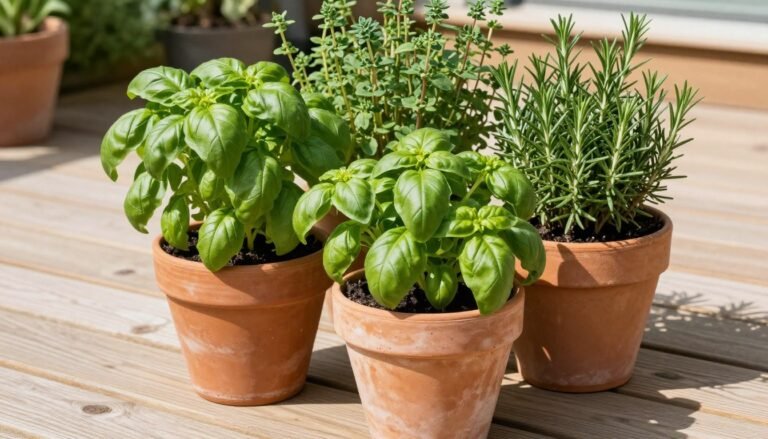
1. Create a Collection of Terracotta Herb Pots
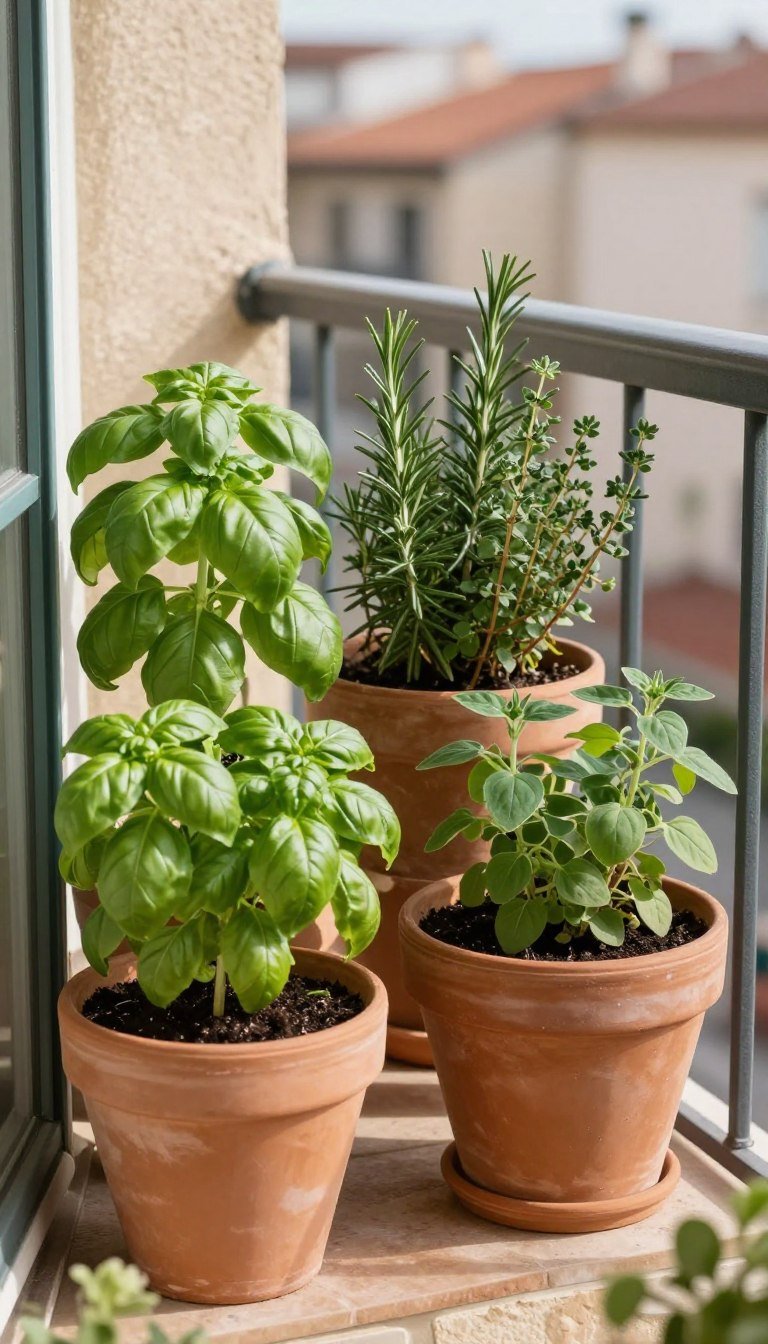
There’s something effortlessly charming about a collection of terracotta pots filled with fresh herbs. They bring a relaxed Mediterranean feel to a balcony, especially when you mix different sizes and let the greenery spill naturally over the edges.
Try grouping rosemary, thyme, oregano, basil, and parsley in individual containers. This makes it easier to give each herb the watering it needs, rather than treating them all the same.
Arrange taller plants toward the back and smaller pots in front, making sure everyone gets enough sunlight. Terracotta can dry out quickly in warm weather, so check the soil regularly.
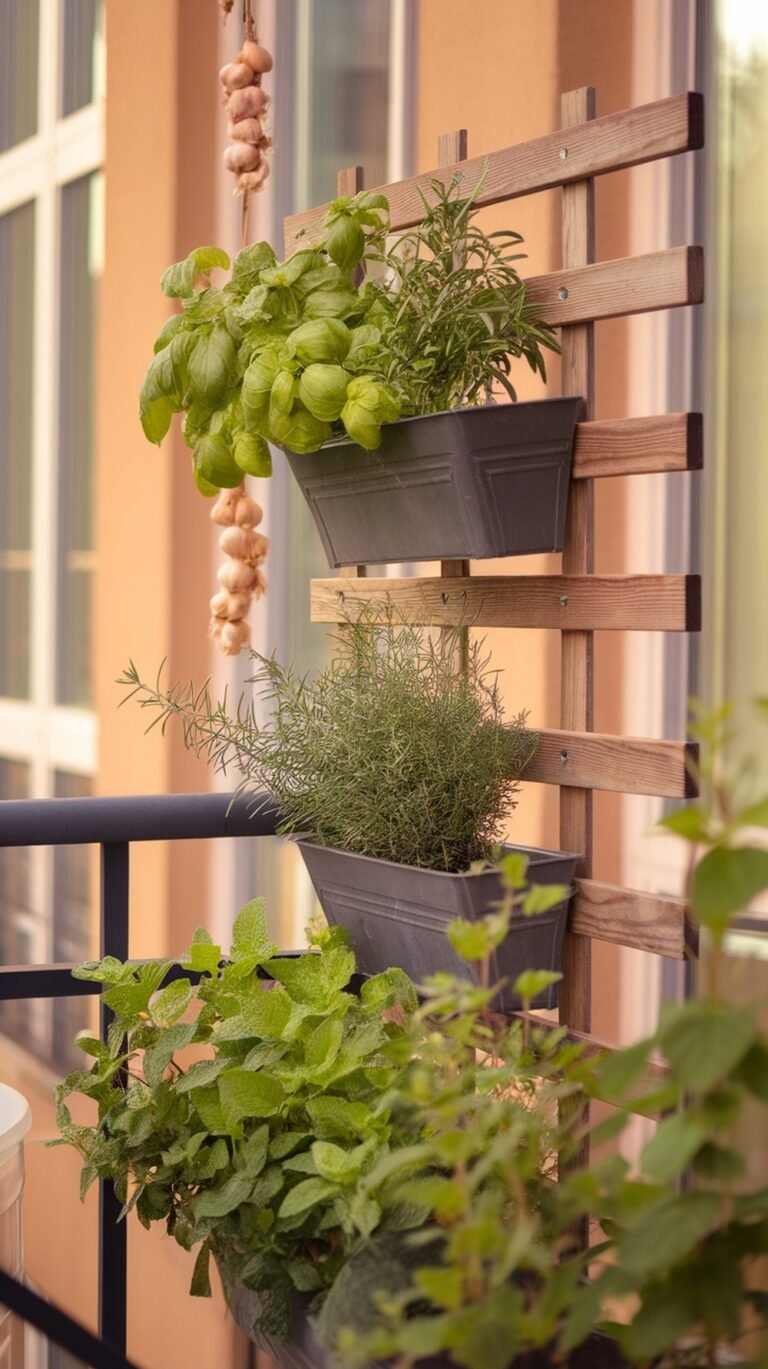
2. Build a Vertical Herb Garden
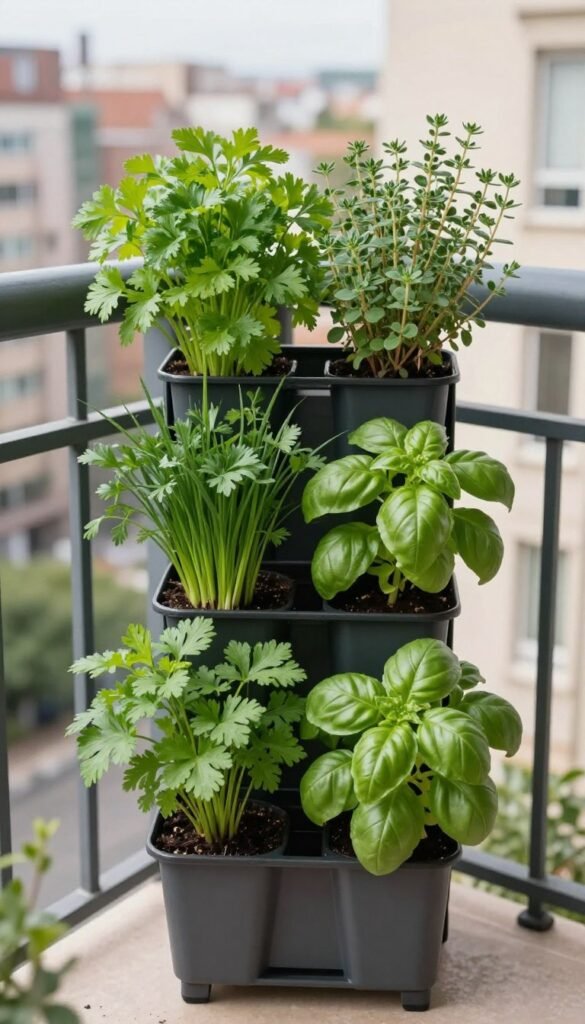
When floor space is precious, growing upward makes perfect sense. A vertical herb garden lets you grow several varieties in one narrow area while leaving room for a chair, a little table, or simply somewhere to stand without knocking over a pot.
Look for a freestanding vertical planter with individual growing pockets. Parsley, chives, thyme, oregano, and compact basil varieties can work beautifully, provided they receive suitable light.
Remember that upper pockets may dry out faster than lower ones. Check each level separately, and choose a stable planter suitable for your balcony’s exposure to wind.
3. Turn a Plant Stand Into a Herb Garden
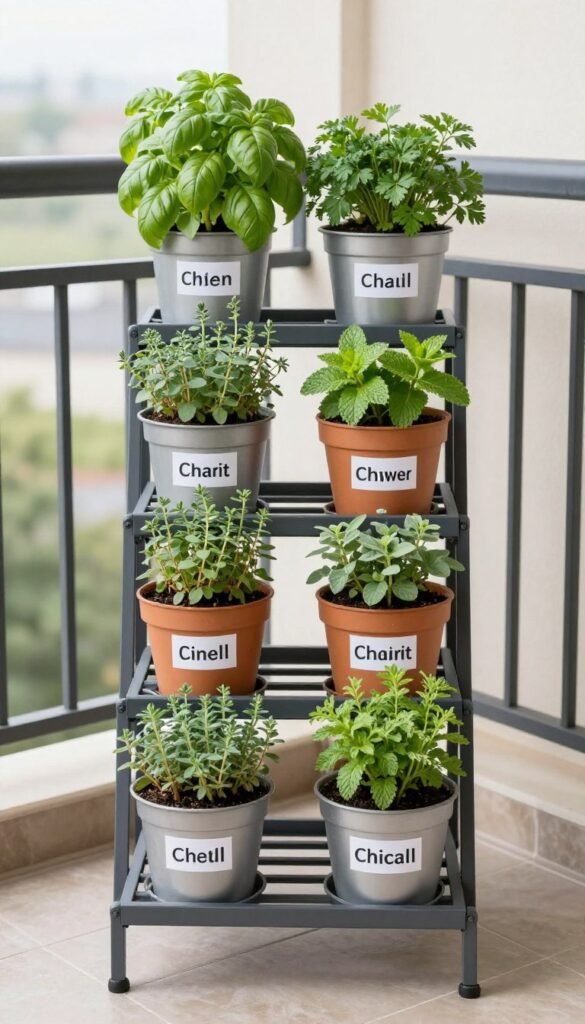
A tiered plant stand is a lovely way to turn a handful of herb pots into a proper little balcony garden. It adds height, keeps everything together, and makes even a narrow outdoor space feel thoughtfully arranged.
Use the different levels to give each herb the light it prefers. Sun-loving varieties can go on brighter shelves, while plants that tolerate some shade may be happier lower down.
Choose a sturdy outdoor stand, keep heavier pots toward the bottom, and leave enough room for the herbs to grow. A few simple plant labels are a nice finishing touch, particularly when your seedlings all look suspiciously similar.
Budget-friendly idea: If you already own a suitable outdoor plant stand, use that before buying a specialist herb-growing system.
4. Grow Herbs in a Balcony Railing Planter
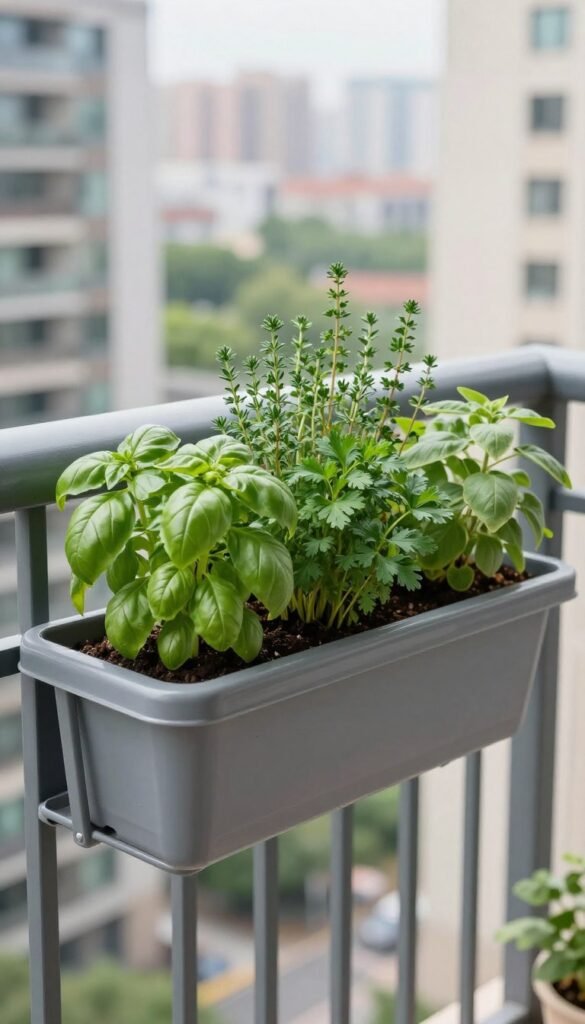
Railing planters are brilliant for tiny balconies where there simply isn’t room for more pots on the floor. They turn an overlooked area into a row of fresh greenery without sacrificing your seating space.
Compact herbs such as chives, parsley, thyme, and oregano are worth considering. Choose varieties suited to the amount of sunlight your railing receives, and remember that exposed planters can dry out quickly.
The important part is installation. Use a planter designed for your particular railing, follow building rules, and make sure it cannot come loose or fall. Keep drainage controlled so water doesn’t drip onto neighbours below.
5. Give Mint Its Own Container
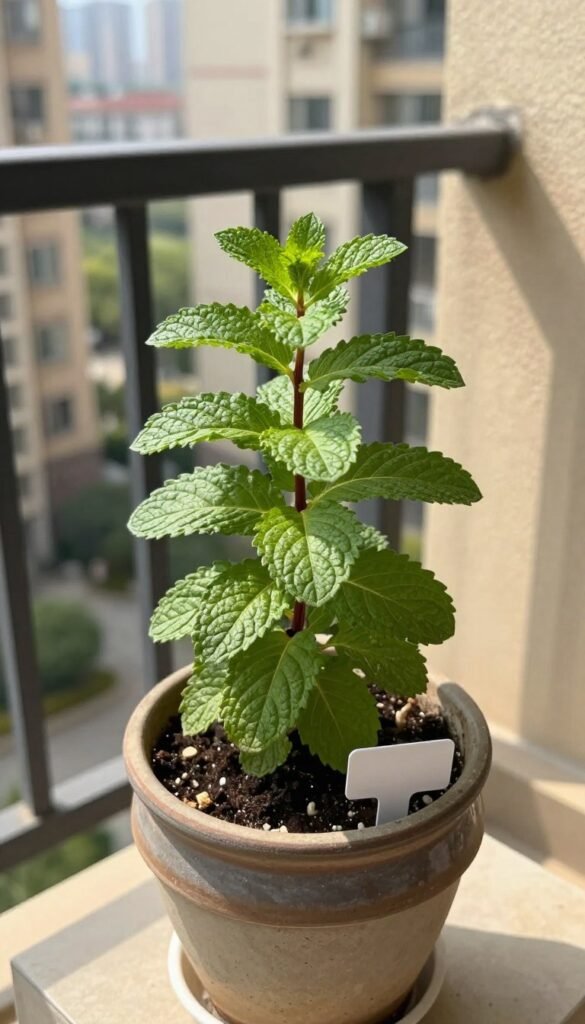
Mint is one of those herbs that’s almost too enthusiastic about growing. Give it a shared planter and it may soon start taking over, so a separate pot is usually the easiest solution.
Choose a generously sized container with drainage holes and place it somewhere with suitable light. Mint generally appreciates more consistent moisture than Mediterranean herbs, so keeping it separate also makes watering easier.
It’s wonderful to have close to the kitchen for fresh mint tea, summer drinks, salads, and desserts. If you grow several varieties, label the pots so you can tell your peppermint from your spearmint.
6. Create a Mediterranean Herb Corner
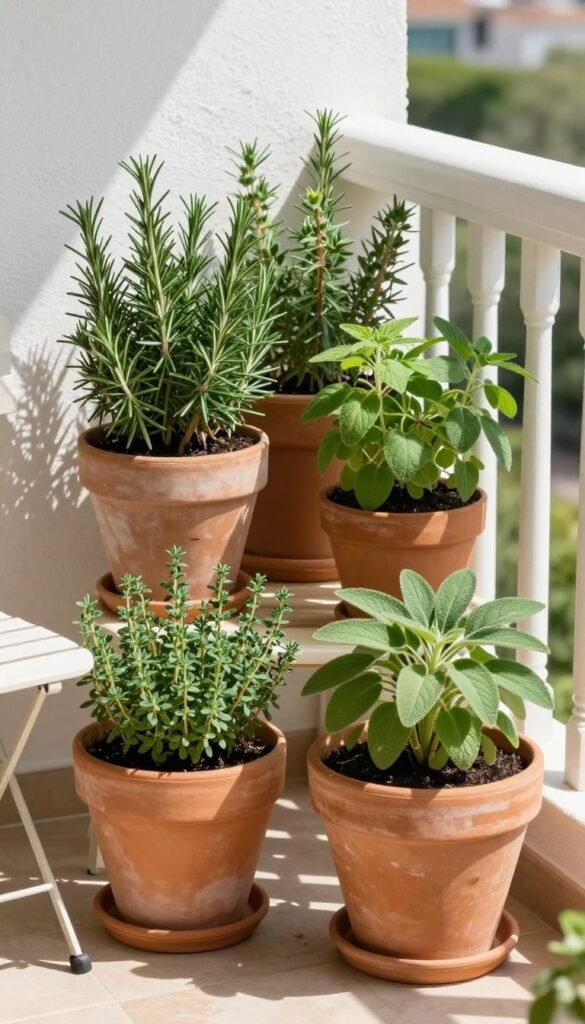
If your balcony gets plenty of sunshine, why not turn one corner into a little Mediterranean herb garden? Rosemary, thyme, oregano, and sage create a beautiful mixture of silvery leaves, deep greens, and wonderfully fragrant foliage.
Group the herbs in terracotta pots of different sizes, keeping them in separate containers so you can adjust watering when needed. These herbs generally prefer well-draining conditions, making them a lovely combination for a sunny balcony.
For an extra touch of Mediterranean charm, add a small café chair or bistro table if you have room. The result feels more like a relaxed little outdoor retreat than a collection of cooking ingredients.
Styling tip: Stick to a simple palette of terracotta, warm stone, and natural greenery for a timeless look that doesn’t feel cluttered.
7. Grow Herbs in a Narrow Balcony Window Box
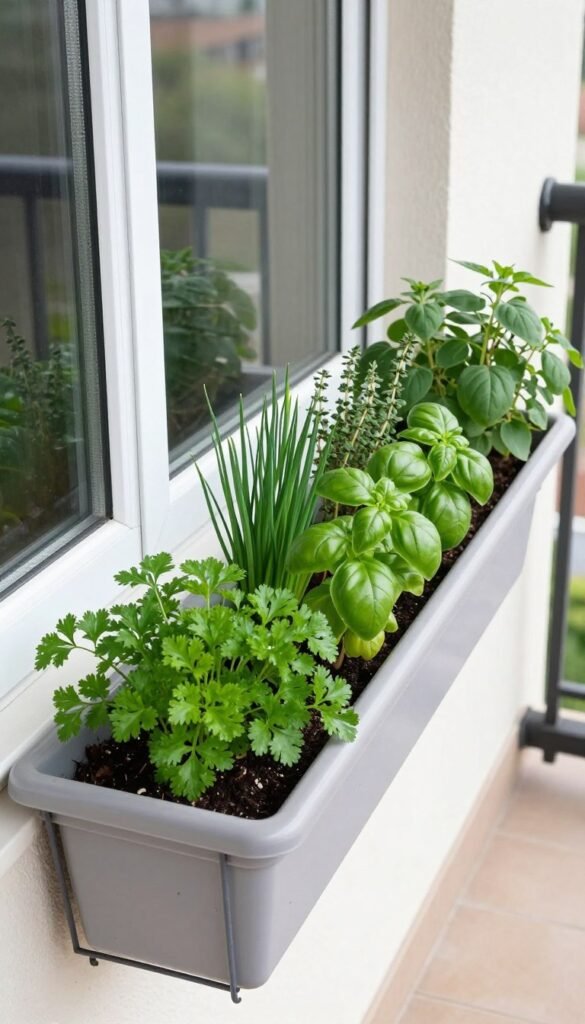
A long, narrow window box is perfect when you want to grow several herbs without filling the balcony with individual pots. It creates a lovely ribbon of greenery along a suitable ledge or shelf while leaving precious floor space untouched.
Try parsley and chives together, or choose compact varieties with similar growing needs. If you’re mixing several herbs in one planter, make sure they’ll be happy sharing the same soil and watering routine.
Choose a container with good drainage and enough room for the plants to grow. Any elevated planter must be securely supported, particularly on a windy balcony.
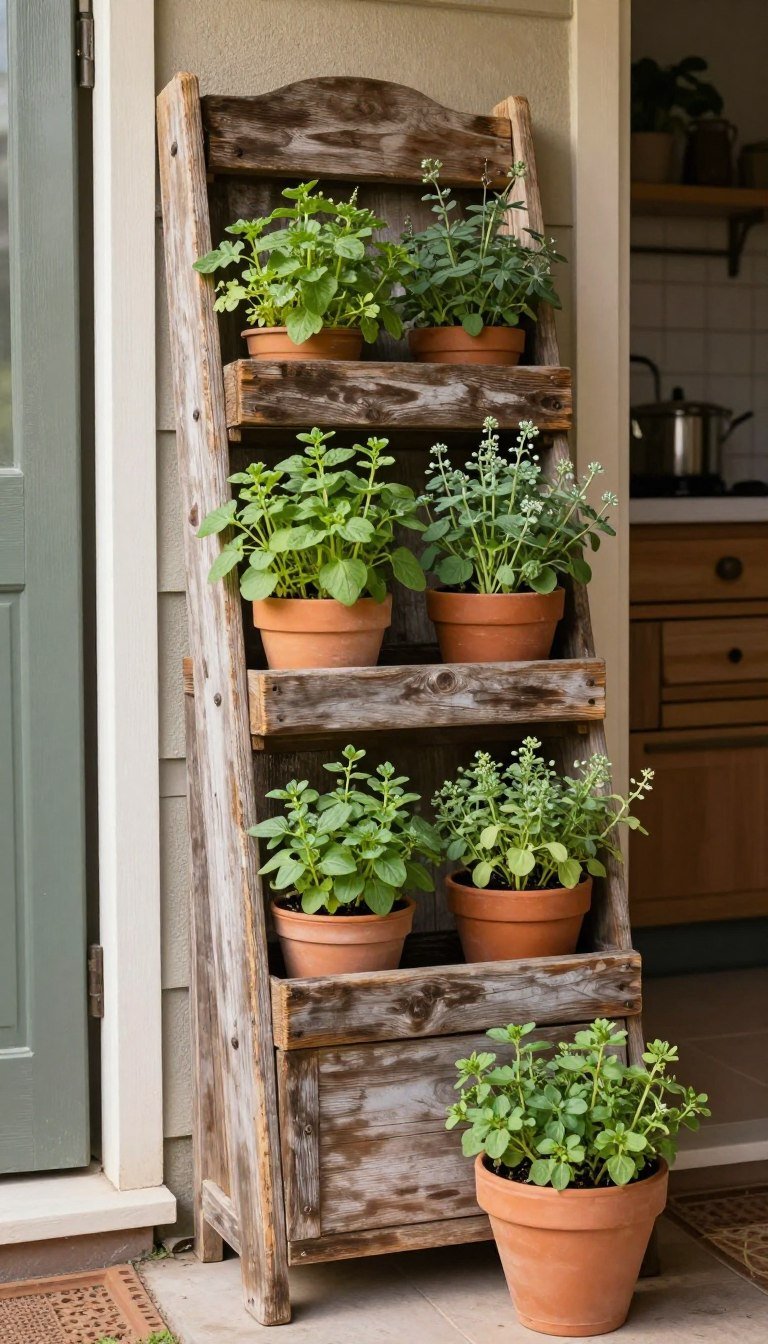
8. Turn a Small Ladder Shelf Into an Herb Garden
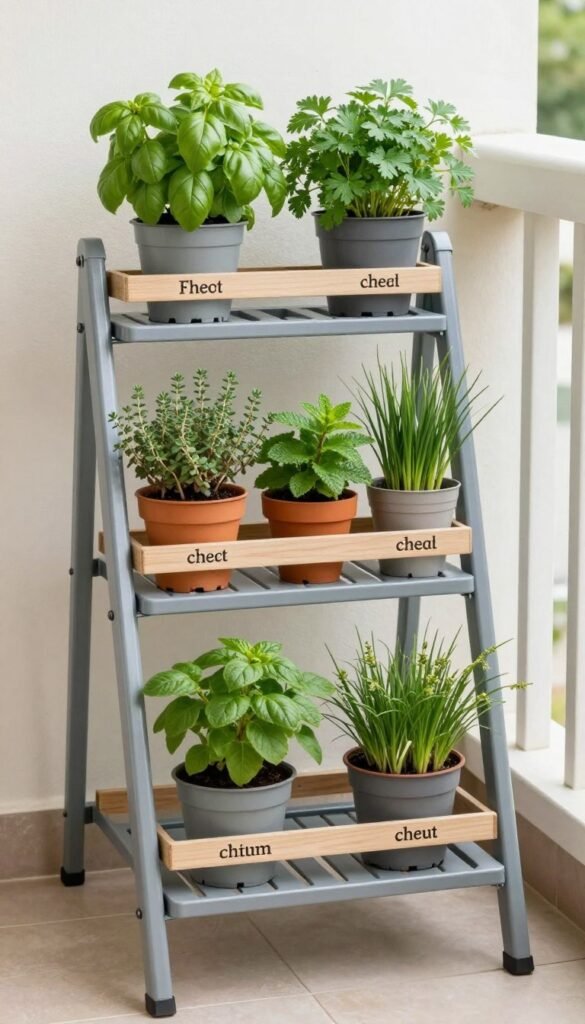
A little ladder shelf filled with herb pots can make even the smallest balcony look beautifully put together. The different levels add height and interest, while keeping your plants neatly grouped in one corner.
Place sun-loving herbs on the brighter shelves and varieties that tolerate some shade lower down, depending on how the light reaches your balcony. Mix a few terracotta pots with simple plant labels for a relaxed, cottage-inspired look.
Choose a sturdy shelf suitable for outdoor use, keep heavier pots toward the bottom, and make sure the unit is stable in windy conditions.
Budget-friendly idea: An existing outdoor shelving unit can work just as well as a specialist herb stand.
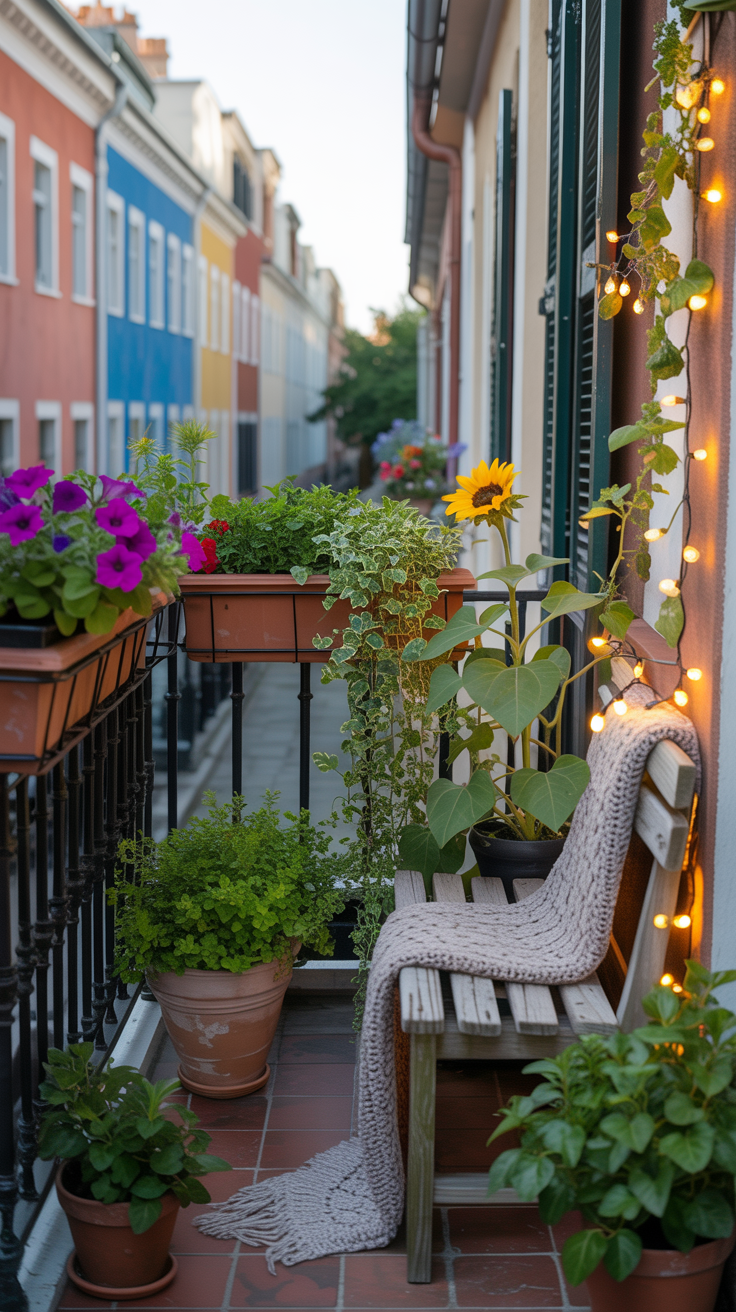
9. Create a Balcony Herb Garden Around a Small Table
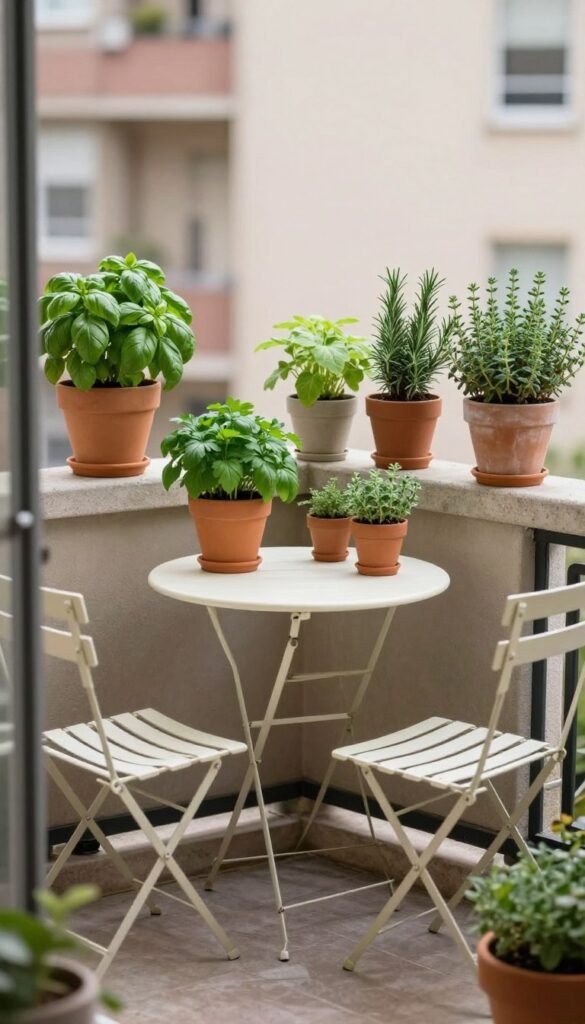
Who says a herb garden has to look like a gardening project? Arrange a few pots around a small bistro table and suddenly your balcony feels like a charming little outdoor café.
Try rosemary in a larger pot, with smaller containers of thyme, basil, or parsley nearby. Varying the heights and pot sizes makes the arrangement feel natural rather than overly coordinated.
Just leave enough space to pull out the chairs and move comfortably. Fresh herbs are lovely, but nobody wants to navigate an obstacle course of parsley every time they sit down with a coffee.
10. Grow Herbs on a Wall-Mounted System
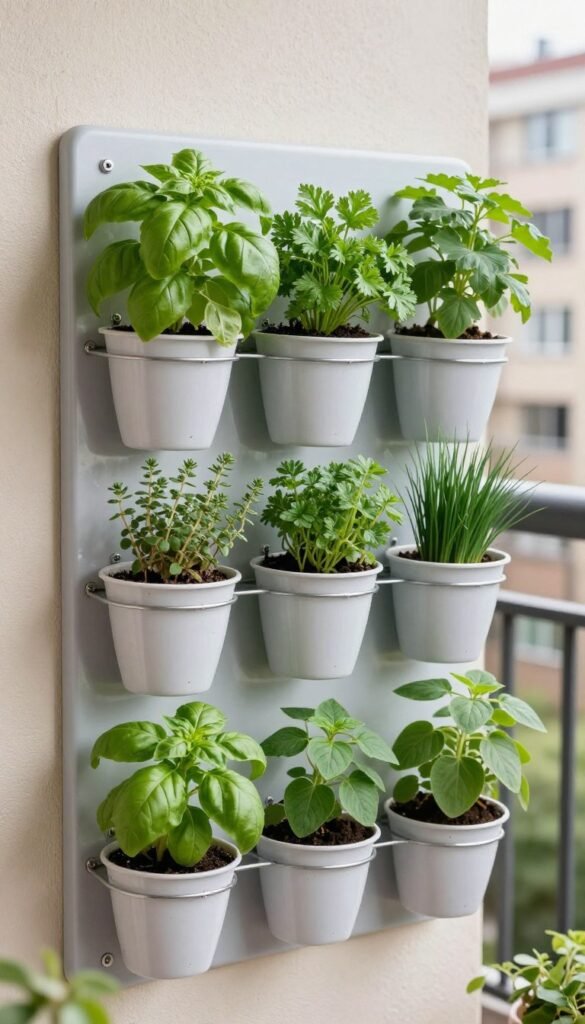
If your balcony has an empty wall, it could become one of the most useful growing spaces you have. A wall-mounted herb garden creates a beautiful display of greenery without taking up valuable floor space.
Choose a purpose-made system with individual planting pockets or pots, and arrange herbs according to the light they receive. Compact parsley, chives, thyme, and oregano can all be worth considering.
Before installing anything, check your building’s rules and make sure the wall, fixings, and planter are suitable for the fully watered weight. Drainage matters too, especially where water could run down the building or onto neighbouring balconies.
11. Create a Shady Balcony Herb Garden
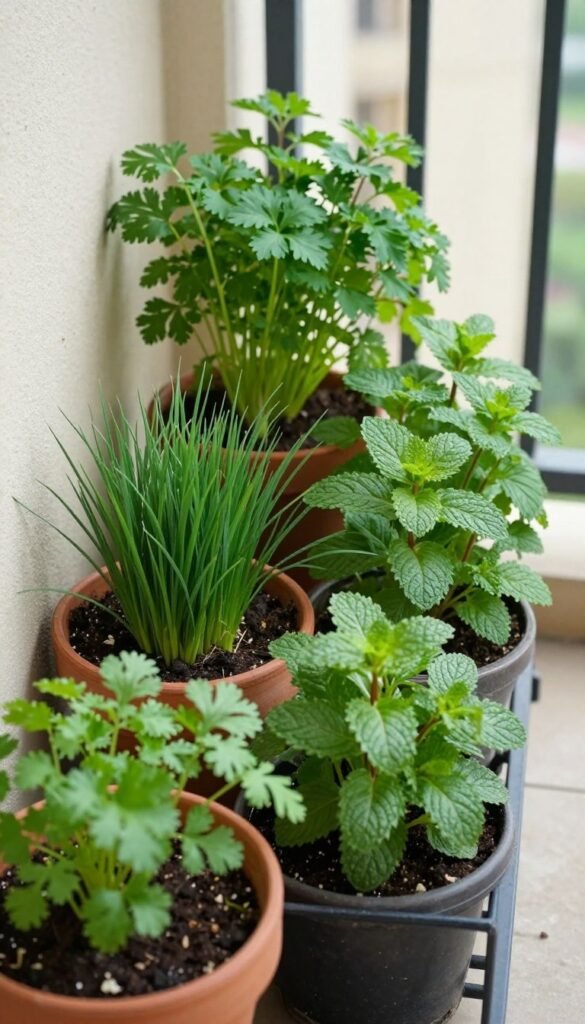
Not every balcony enjoys sunshine from morning until evening, but that doesn’t mean you have to give up on growing herbs. Some varieties are quite happy with a little less direct sun.
Parsley, chives, and mint are good herbs to consider for a partially shaded balcony. Coriander may also work well, depending on the season and your local climate.
Watch where the sunlight falls throughout the day before arranging your pots. Even a balcony that feels shady might have one bright corner that’s perfect for a small collection of herbs.
Growing tip: Partial shade is different from deep shade. Most culinary herbs still need a reasonable amount of daylight to grow well.
12. Create a Mini Kitchen Herb Garden Near the Balcony Door
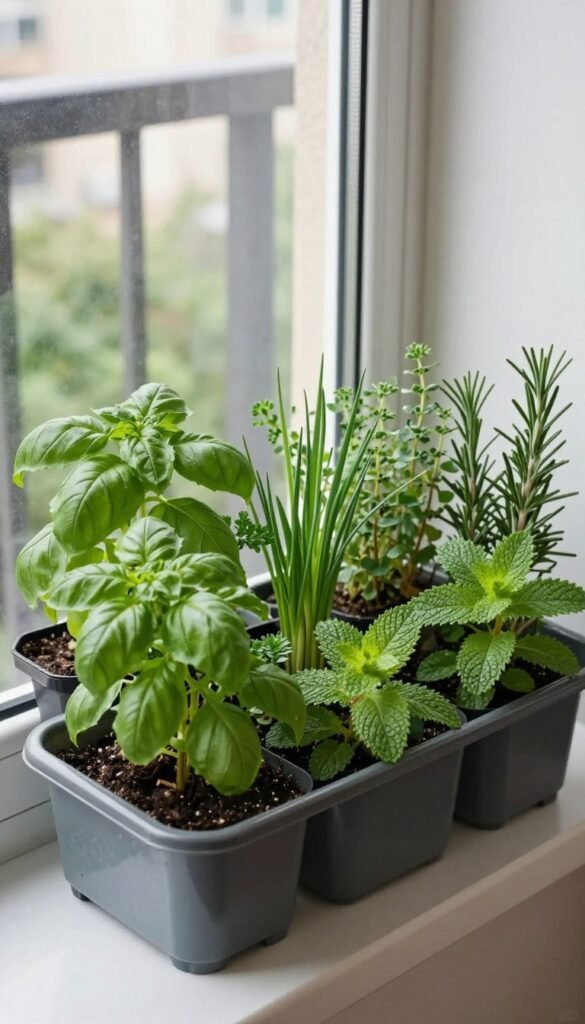
One of the nicest things about growing herbs is being able to pick a few fresh leaves while you’re cooking. Keeping your most-used herbs near the balcony door makes that little pleasure much more convenient.
Start with three or four favourites, perhaps basil for pasta, parsley for salads, chives for eggs, and thyme for roasted vegetables. Individual pots make it easier to give each plant the light and water it needs.
Arrange them on a compact stand or in a small group beside the door, without blocking the entrance. It’s a simple setup, but one you’re much more likely to use every day.
Which Herbs Grow Best on a Balcony?
The best choices depend on how much sunlight your balcony receives. Some herbs love a sunny, sheltered spot, while others can manage with a little less direct light.
- Sunny balconies: Rosemary, thyme, oregano, and sage generally enjoy plenty of sun and well-draining soil.
- Partially shaded balconies: Parsley, chives, and mint are worth trying.
- Warm, sheltered spots: Basil can thrive when temperatures are suitable and it’s protected from cold winds.
- Small containers: Look for compact varieties and make sure the pots provide enough growing room.
If you’re a beginner, start with herbs you already use in the kitchen. Three healthy, productive plants are much more rewarding than a dozen struggling ones.
How to Keep Balcony Herbs Healthy
Balcony herbs are generally straightforward to care for once you understand their individual needs. The biggest thing to remember is that containers can dry out much faster than garden beds, particularly in sunny or windy weather.
- Check the soil: Water according to each herb’s needs rather than following one schedule for every pot.
- Provide drainage: Choose suitable pots and avoid leaving roots sitting in water.
- Watch the wind: Move delicate herbs to a sheltered position when needed.
- Harvest regularly: Pick suitable amounts to encourage fresh growth without stripping the plants.
- Allow room to grow: Avoid overcrowding pots or shelves.
A quick look at your plants every day or two during warm weather is often enough to spot dry soil, tired leaves, or anything else that needs attention.
Common Balcony Herb Garden Mistakes to Avoid
A few small mistakes can make balcony gardening harder than it needs to be. Luckily, most are easy to avoid.
- Choosing herbs before checking the sunlight: Match plants to the conditions you actually have.
- Using pots without drainage: Many herbs struggle when their roots stay too wet.
- Mixing herbs with very different needs: Separate pots make watering easier.
- Ignoring wind exposure: Elevated balconies can be surprisingly breezy.
- Overcrowding the space: Leave room for walking, seating, and safe access.
- Using unsecured planters: Check building rules and make sure elevated containers are safely installed.
Final Thoughts
A beautiful balcony herb garden doesn’t need much space. A few terracotta pots, a narrow shelf, or a small vertical planter can turn an ordinary balcony into a lovely little growing area filled with fresh greenery and fragrance.
Start with the herbs you love cooking with, choose containers that suit your balcony, and let the garden grow gradually. Before long, you could be stepping outside for fresh basil, rosemary, or mint whenever you need it.
Save your favourite balcony herb garden ideas to Pinterest so you can find them again when you’re ready to create your own little outdoor herb garden.