10 Victorian Bedroom Color Schemes with Historic Character: Timeless Luxe
Victorian bedrooms were never afraid of colour. Deep greens, wine reds, dusky blues, warm creams, and rich wood tones helped create rooms that felt intimate, elegant, and beautifully layered rather than stark or overly coordinated.
The trick to bringing those historic palettes into a modern bedroom is finding the right balance. You can embrace dramatic walls and dark furniture for a richly traditional look, or borrow Victorian colours while using softer shades and lighter textiles for something easier to live with today.
From sumptuous burgundy and walnut to romantic sage and antique cream, these Victorian bedroom color schemes combine historic character with the kind of timeless luxury that still feels wonderfully inviting.
Quick Guide: Choose Your Victorian Bedroom Palette
- Rich and dramatic: Burgundy, walnut, antique gold, and warm cream.
- Romantic Victorian: Dusty rose, ivory, dark wood, and aged brass.
- Dark and sophisticated: Forest green, mahogany, midnight blue, and warm metallics.
- Light and elegant: Antique cream, sage, faded blue, and natural wood.
- Small bedroom: Keep the deeper historic colour on one focal area and balance it with lighter bedding, curtains, and ceilings.
Victorian-inspired rooms tend to look most convincing when the colours feel slightly softened rather than brand new. Muted, earthy versions of red, green, blue, pink, and plum pair naturally with antique wood, patterned textiles, brass, and traditional details.
1. Burgundy, Walnut and Antique Gold
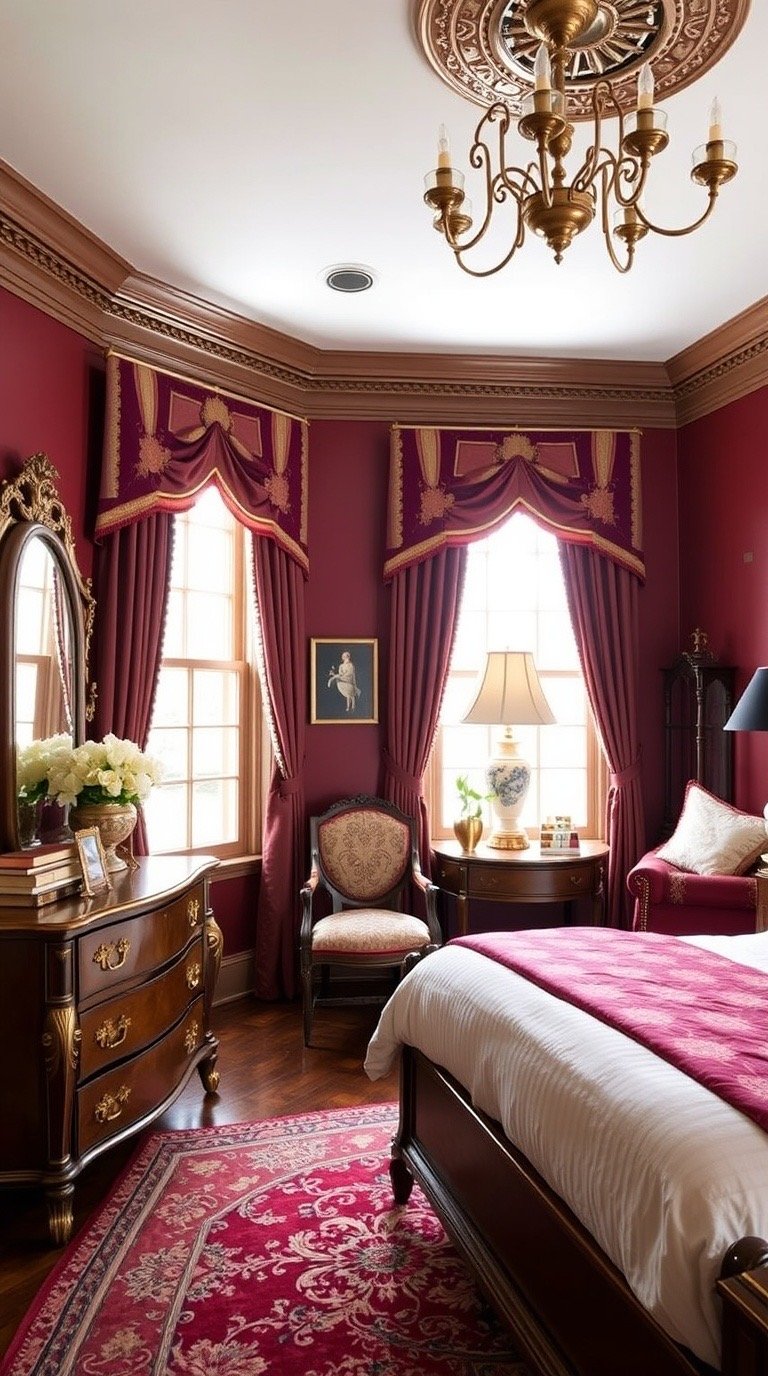
Few palettes capture Victorian richness quite like burgundy and dark walnut. A deep wine-red backdrop creates an enveloping atmosphere, while carved wooden furniture adds warmth and the substantial, collected-over-time feeling that suits Victorian interiors beautifully.
Antique gold works best as an accent rather than the dominant metallic. Introduce it through picture frames, lamps, drawer handles, or an ornate mirror, then soften the darker tones with warm cream bedding.
The combination feels especially luxurious in bedrooms with high ceilings, decorative mouldings, traditional fireplaces, or other period details.
Build the Palette With
- Deep burgundy walls.
- Dark walnut furniture.
- Antique gold details.
- Warm cream textiles.
Designer detail: Choose burgundy with brown, berry, or plum undertones rather than a bright scarlet red. It gives the room a softer, richer, and more established appearance.
2. Forest Green, Mahogany and Warm Cream
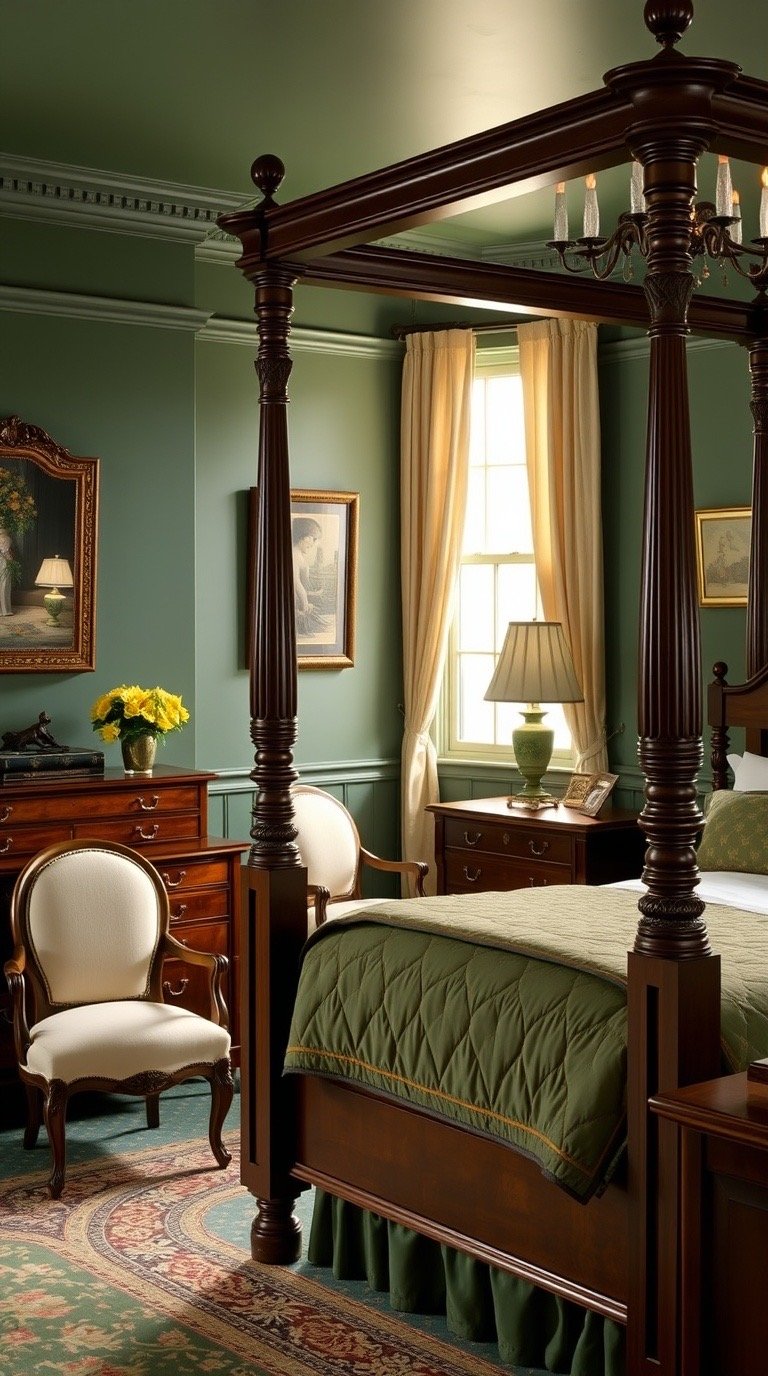
Forest green makes a gorgeous backdrop for rich Victorian furniture. Its depth works beautifully beside mahogany, creating a bedroom that feels cocooning and luxurious without the intensity of black.
Warm cream bedding provides essential contrast, while antique brass or bronze introduces a gentle glow. A traditional patterned rug containing green, cream, and reddish wood tones can help pull the whole scheme together.
If you’re nervous about painting every wall dark, use forest green behind the bed and repeat the colour through curtains, cushions, or botanical artwork.
Try This With
- Forest or bottle green.
- Mahogany furniture.
- Warm cream linen.
- Antique brass accents.
Small space tip: Keep the ceiling, bedding, and at least one larger surface light when using deep green in a compact bedroom. It preserves the drama while giving the eye somewhere to rest.
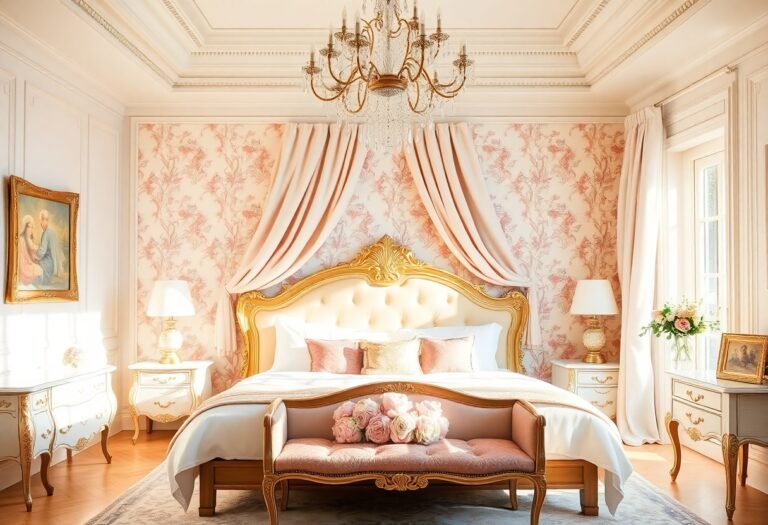
3. Dusty Rose, Ivory and Aged Brass
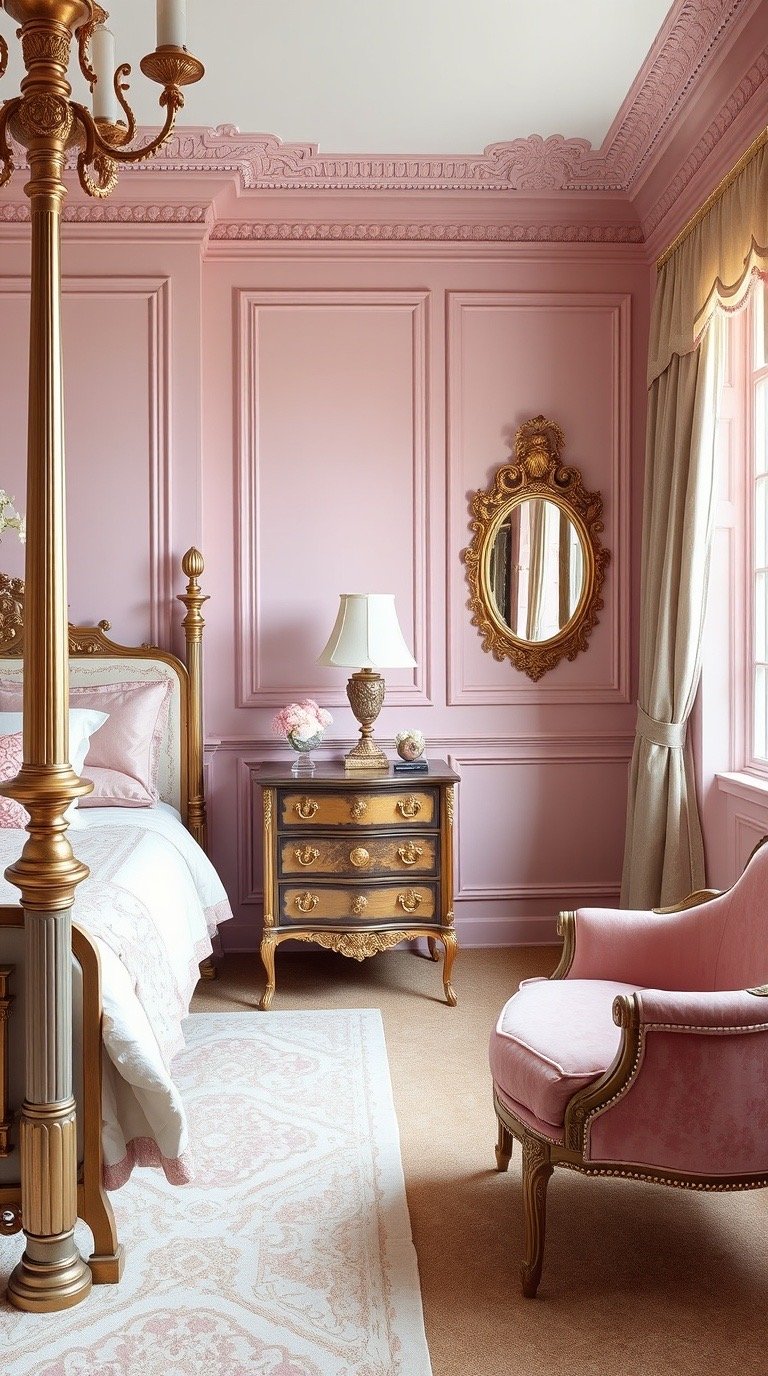
Dusty rose creates a softer, more romantic interpretation of Victorian style. The secret is avoiding sugary pinks and choosing a muted shade with grey, mauve, or brown undertones instead.
Pair it with ivory bedding, aged brass, dark antique wood, and small touches of faded floral pattern. An antique-style bed or carved bedside table gives the lighter palette enough visual weight to keep it feeling elegant rather than overly delicate.
This is a particularly lovely choice if you want Victorian character while maintaining a bedroom that still feels light and gentle.
Romantic Victorian Details
- Muted dusty rose.
- Soft ivory.
- Aged brass.
- Dark antique wood.
Most timeless option: Use ivory rather than brilliant white. Its warmer undertone sits more naturally beside dusty pink, brass, and traditional timber.
4. Midnight Blue, Walnut and Burnished Gold
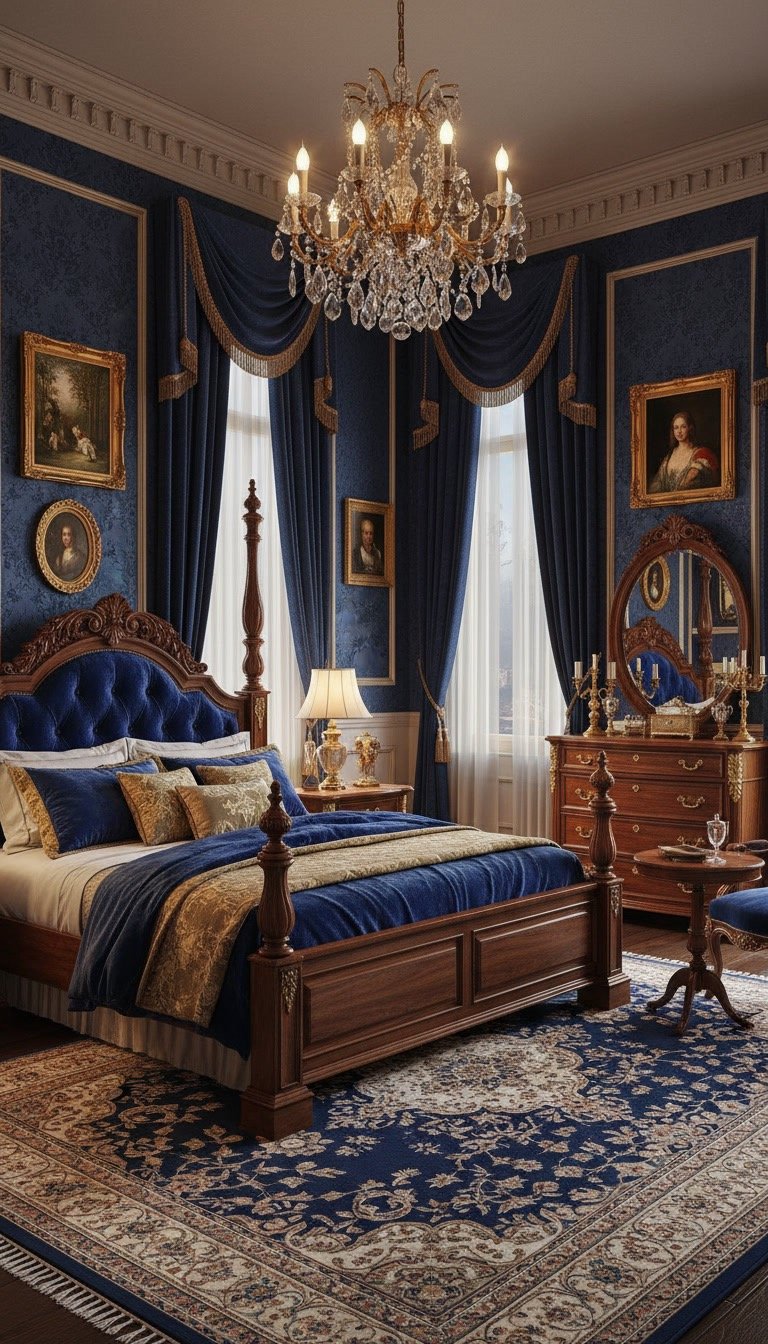
Midnight blue creates the same enveloping atmosphere as the deepest Victorian greens and reds but gives the room a slightly cooler, more sophisticated character. Against walnut furniture, the colour feels wonderfully rich rather than stark.
Bring in burnished gold through an ornate mirror, picture frames, curtain hardware, or traditional lighting, then introduce warm cream or muted beige through the bedding to soften the darker backdrop.
A patterned rug or cushion containing touches of burgundy, gold, or faded blue can make the palette feel even more layered and collected.
Luxury Colour Formula
- Midnight blue.
- Rich walnut.
- Burnished gold.
- Warm beige or cream.
Styling note: Warm metallic finishes work especially well with midnight blue because they prevent the room from feeling too cool or formal.
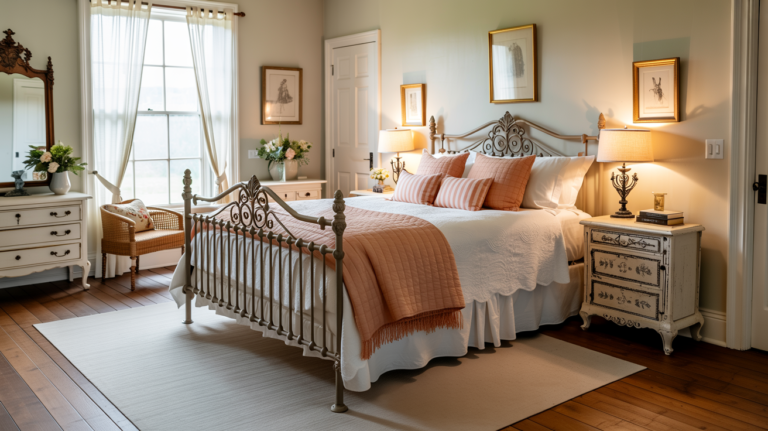
5. Sage Green, Antique Cream and Natural Wood
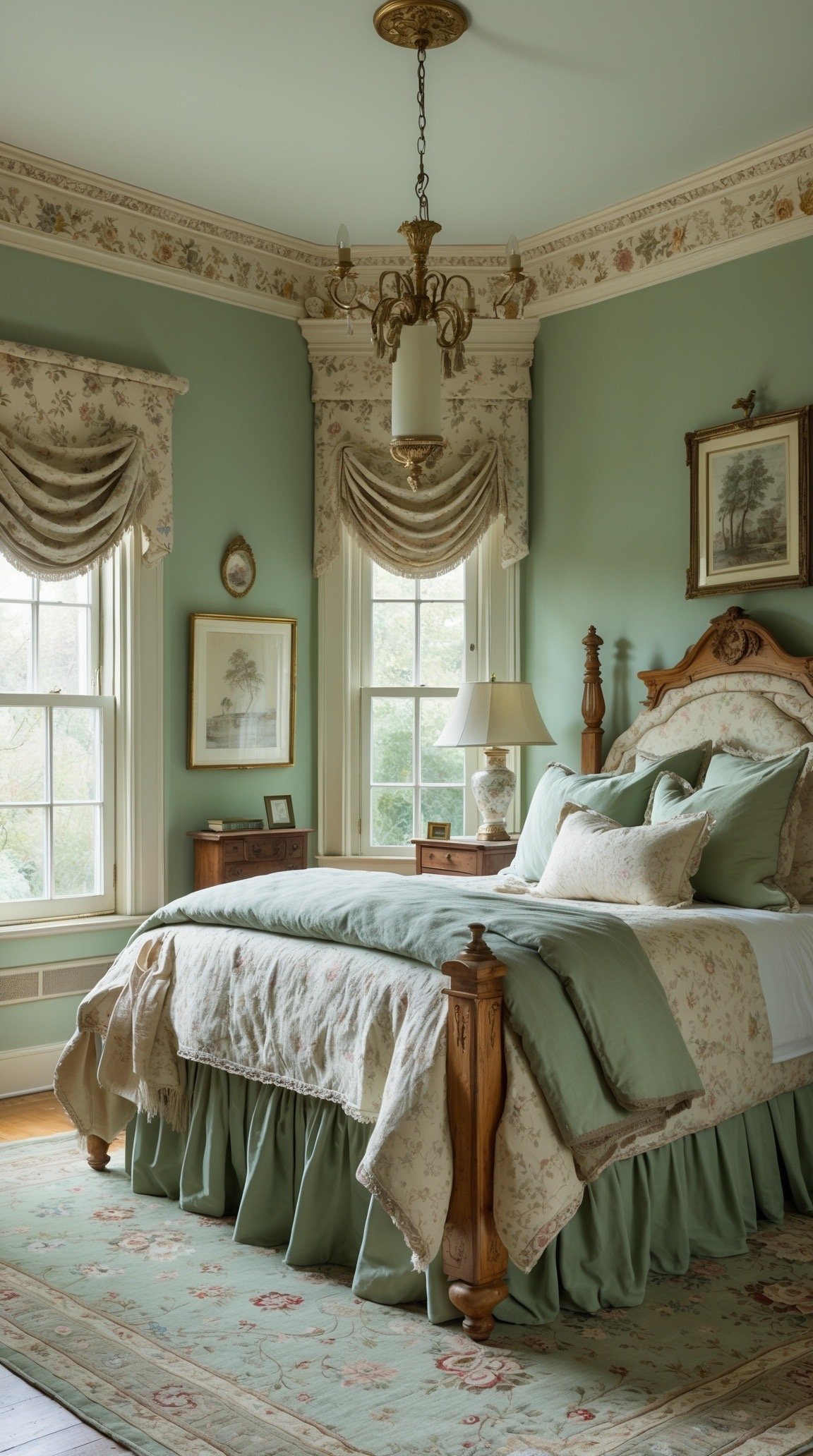
Victorian colour doesn’t always have to be dark. Sage green offers a lighter interpretation while still working beautifully with traditional furniture, botanical motifs, floral textiles, and warm natural wood.
Pair sage walls with antique cream rather than crisp white, then introduce medium-toned timber through the bed, dresser, frames, or bedside tables. A faded floral fabric adds just enough pattern to reinforce the historic character.
The finished bedroom feels calm, romantic, and full of old-world charm without sacrificing brightness.
Soft Victorian Palette
- Muted sage green.
- Antique cream.
- Medium natural wood.
- Faded botanical accents.
Small space tip: Sage is one of the easiest Victorian-inspired colours for a smaller bedroom because it introduces personality while reflecting considerably more light than forest green, plum, or burgundy.
6. Plum, Antique Gold and Dark Wood
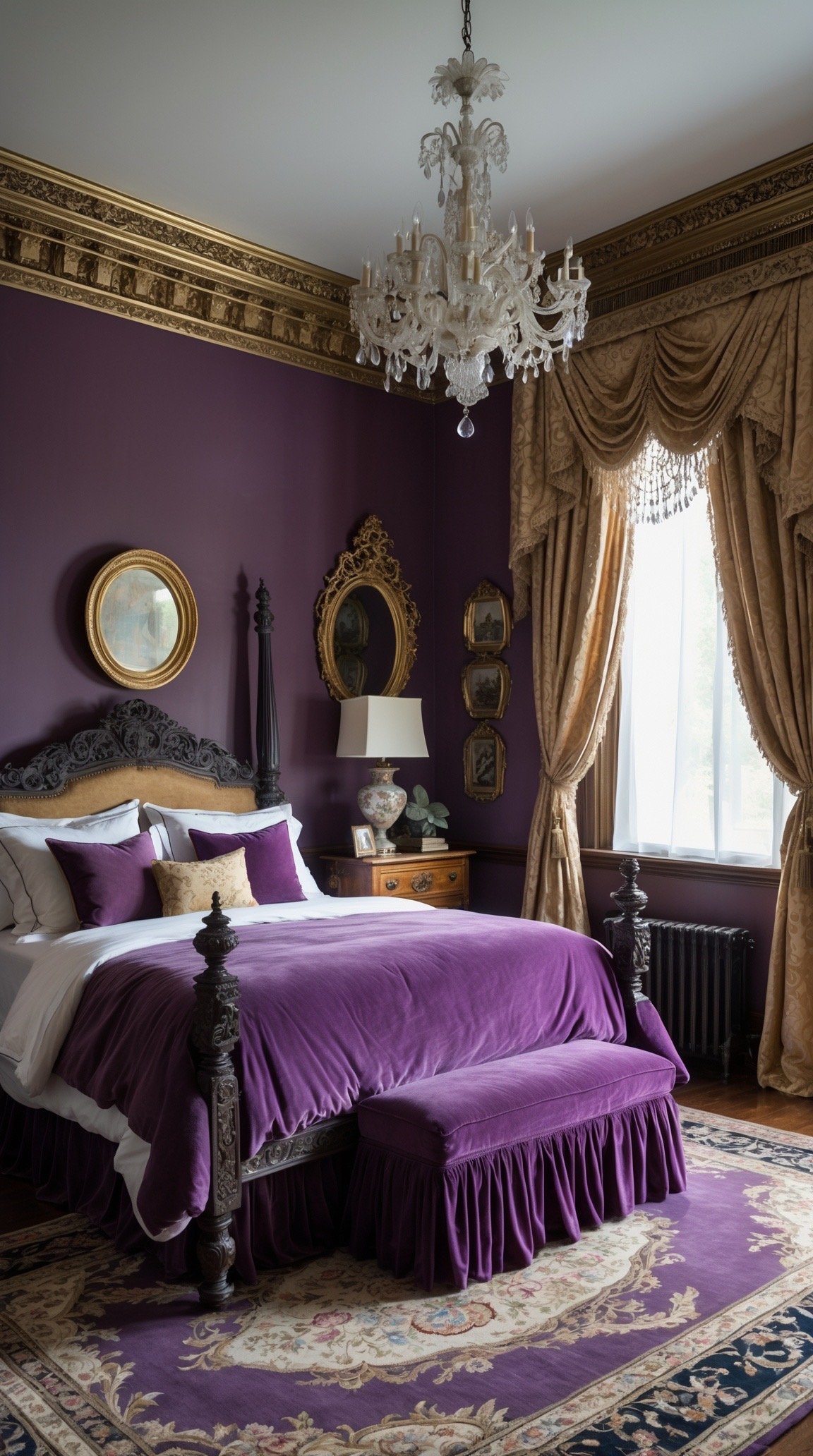
Plum is a beautiful alternative to burgundy when you want a Victorian bedroom that feels dramatic but slightly more romantic. Deep aubergine and muted purple tones bring richness without tipping into anything too bright or theatrical.
Dark carved furniture gives the room visual weight, while antique gold frames, lamps, and decorative details catch the light beautifully. Introduce cream or muted ivory through the bedding to give the deeper colours some breathing room.
Plum also works wonderfully with traditional floral patterns containing faded pink, green, gold, or burgundy details.
Pair Plum With
- Dark walnut or mahogany.
- Antique gold.
- Warm ivory.
- Muted botanical patterns.
Designer detail: Choose plum with brown or red undertones rather than a vivid purple for a richer, more established Victorian look.
7. Terracotta, Olive Green and Walnut
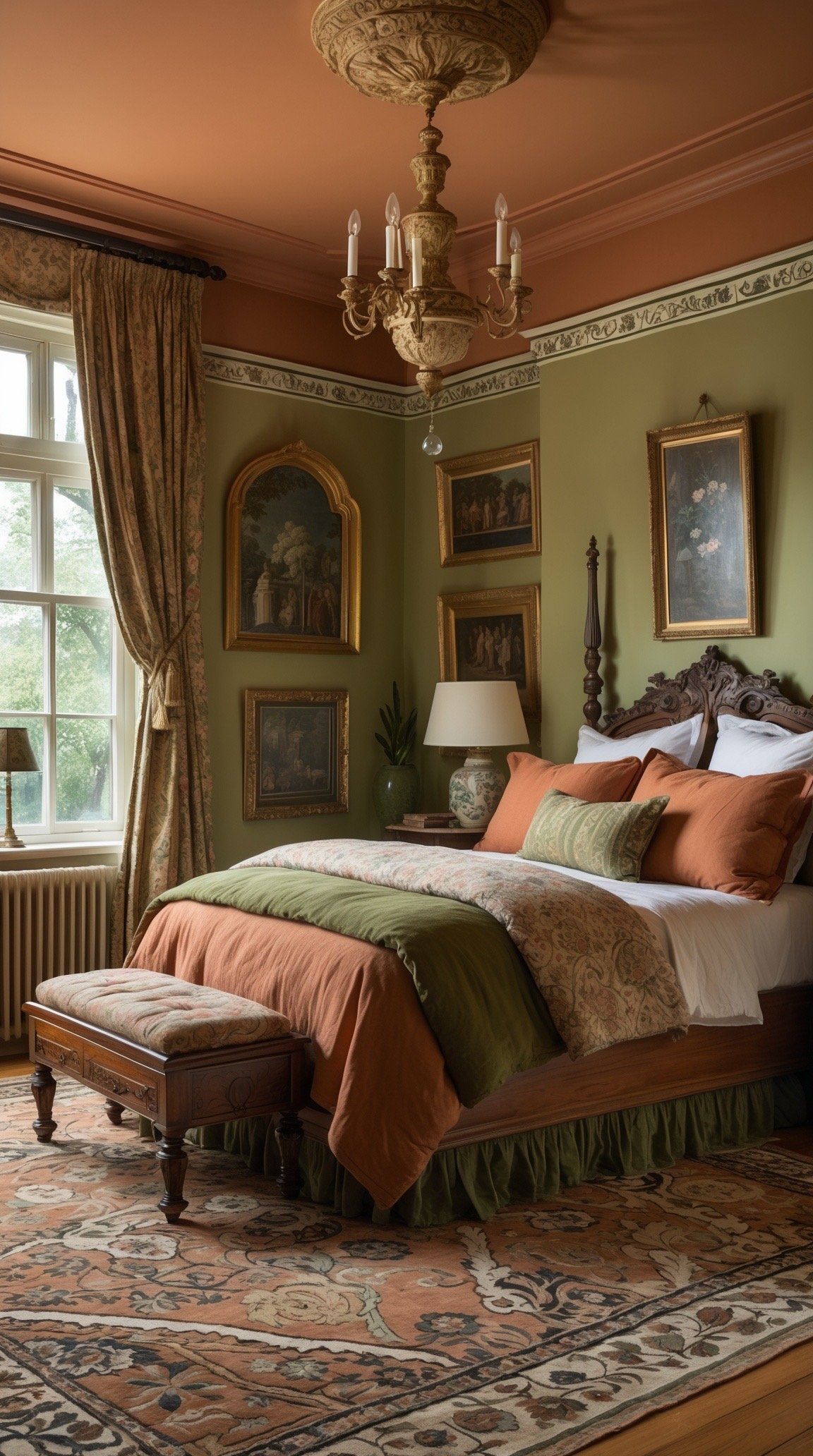
Terracotta and olive create a wonderfully earthy interpretation of Victorian colour. Instead of more formal jewel tones, these softened shades make the bedroom feel warm, layered, and inviting.
Use muted terracotta on the walls and bring in olive through curtains, cushions, or a traditional patterned rug. Walnut furniture anchors the scheme, while aged brass adds a subtle touch of period-inspired polish.
Because all three colours share warm, natural undertones, they sit together beautifully without looking overly coordinated.
Earthy Victorian Palette
- Muted terracotta.
- Deep olive green.
- Warm walnut.
- Aged brass.
Why it works: These nature-inspired shades complement traditional wooden furniture while feeling softer and more relaxed than burgundy, navy, or teal.
8. Powder Blue, Ivory and Mahogany
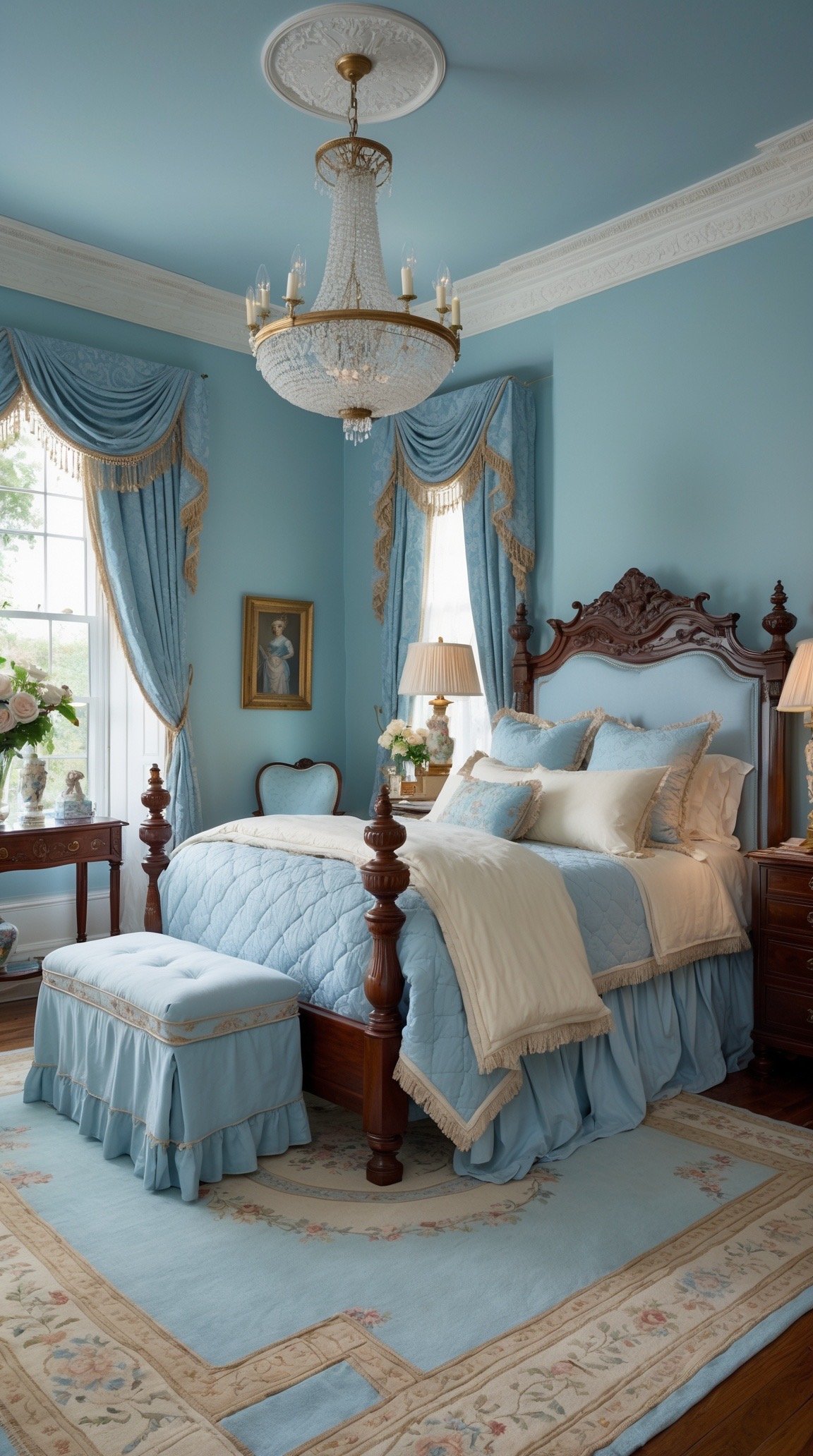
A faded powder blue offers a graceful way to lighten Victorian bedroom style. Against rich mahogany furniture, the softer wall colour creates enough contrast to showcase carved details without making the room feel heavy.
Choose a blue with a slightly greyed quality and combine it with ivory bedding, traditional floral fabrics, and small touches of antique brass. The muted finish keeps the scheme elegant and historic rather than overly pastel.
This palette works particularly well in bedrooms with limited natural light or where dark furniture already provides plenty of visual weight.
Light Victorian Formula
- Muted powder blue.
- Warm ivory.
- Rich mahogany.
- Antique brass.
Small space tip: A lighter wall colour lets you use substantial Victorian furniture without making a compact bedroom feel visually crowded.
9. Chocolate Brown, Cream and Muted Rose
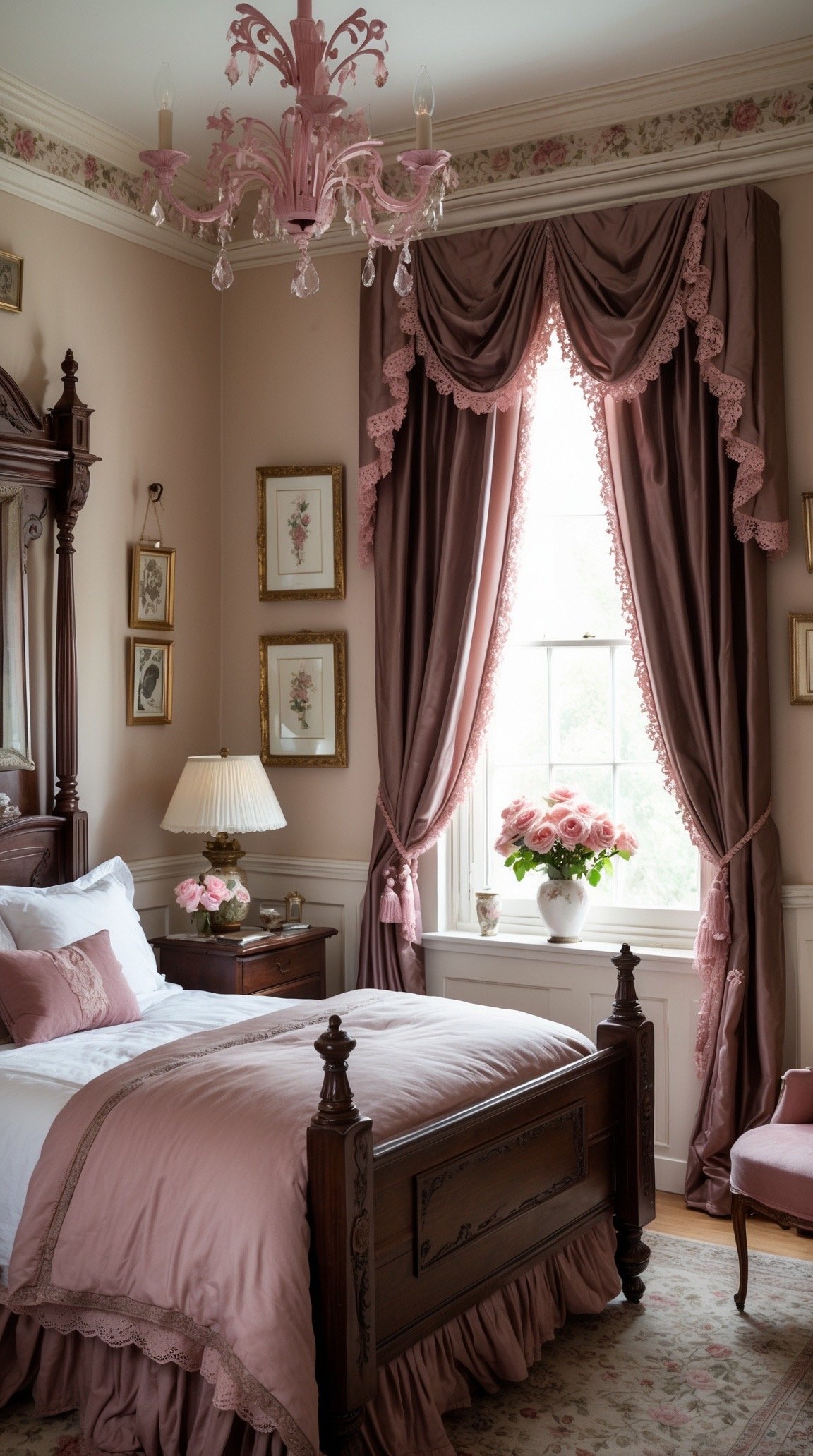
Chocolate brown creates an enveloping bedroom that feels luxurious without relying on more obvious Victorian jewel tones. Warm cream lifts the darker backdrop, while muted rose adds a gentle romantic note.
Bring rose into the room through floral cushions, curtains, an upholstered chair, or a traditional patterned rug rather than spreading it across every surface. Dark wood furniture blends naturally into the brown palette and adds to the layered effect.
Finish with a few aged gold or brass details to catch the light and keep the room feeling refined rather than rustic.
Warm Romantic Combination
- Chocolate brown.
- Warm cream.
- Muted dusty rose.
- Antique gold.
Quick swap: If chocolate walls feel too dark, keep the walls cream and introduce brown through the headboard, curtains, furniture, and textiles instead.
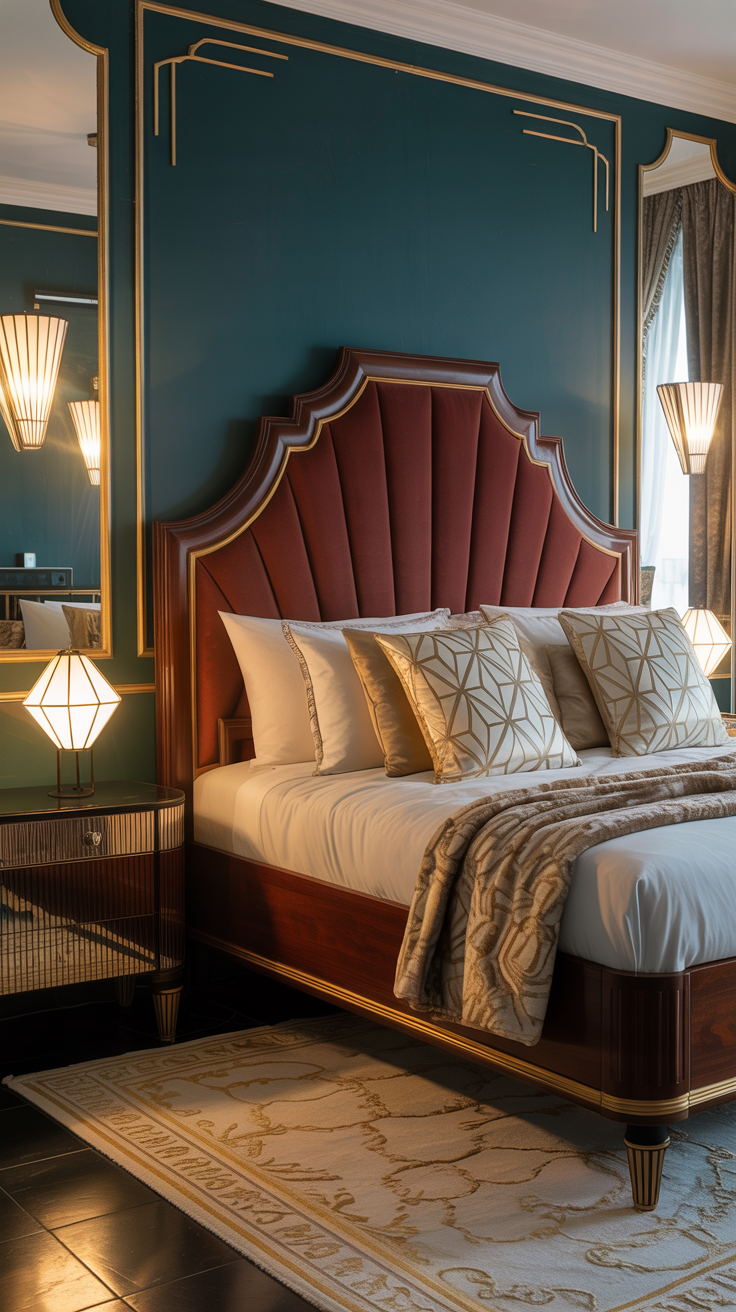
10. Deep Teal, Burgundy and Antique Brass
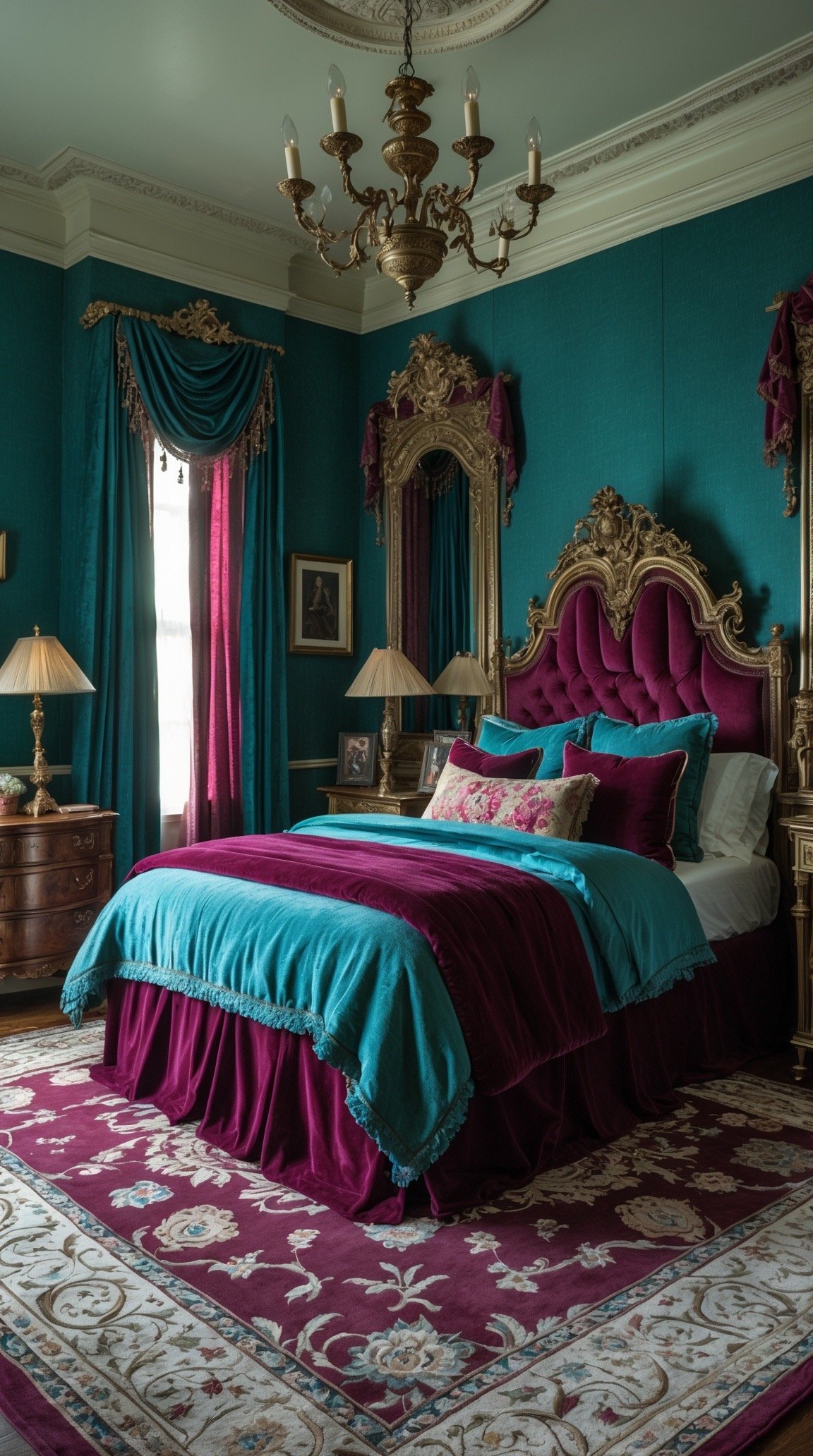
If you love maximum Victorian drama, deep teal and burgundy make a magnificent pairing. The blue-green backdrop feels rich and atmospheric, while burgundy introduces warmth through velvet cushions, curtains, upholstery, or a traditional rug.
Dark carved furniture can comfortably hold its own against both colours, while antique brass lighting and picture frames add small flashes of warmth. Keep the ceiling and bedding lighter if you want to stop the room from feeling too enclosed.
The finished palette feels sumptuous, collected, and unapologetically decorative—the sort of bedroom where minimalism has very politely been shown the door.
Maximum Victorian Drama
- Deep teal walls.
- Burgundy velvet.
- Dark carved wood.
- Antique brass.
Styling note: Let either teal or burgundy dominate and use the other as an accent. Giving both colours equal weight can make an already detailed room feel unnecessarily busy.
How to Choose Victorian Bedroom Colors
You don’t need to reproduce a museum room to capture Victorian character. The most inviting bedrooms borrow the richness of historic interiors while still considering the room’s size, natural light, furniture, and how you actually want the space to feel.
- Look for depth rather than brightness. Muted burgundy, forest green, plum, teal, and dusty rose generally feel more convincing than vivid versions of the same colours.
- Warm up pale shades. Antique cream and ivory complement traditional wood more naturally than brilliant white.
- Treat wood as part of the palette. Mahogany, walnut, and other warm woods contribute just as much colour as painted walls.
- Add pattern selectively. Florals, botanical motifs, damasks, and traditional rugs can introduce several shades without overwhelming the room.
- Repeat your metallic finish. Antique brass, bronze, and aged gold help the bedroom feel cohesive.
- Test dark paint first. Deep shades can look completely different in daylight and lamplight, so always sample them in the actual bedroom.
You Might Also Like
How to Use Dark Victorian Colors in a Small Bedroom
A small bedroom doesn’t automatically need pale walls. Deep colours can make compact spaces feel wonderfully intimate and luxurious when they’re balanced carefully.
- Try a deep colour behind the bed if you’re hesitant about painting every wall.
- Use warm ivory or cream bedding to create contrast against darker walls.
- Hang curtains high to emphasize the room’s vertical proportions.
- Position mirrors where they can reflect natural or artificial light.
- Keep bedside surfaces relatively clear when the furniture and walls are already detailed.
- Layer several warm lamps or wall lights instead of relying entirely on one overhead fixture.
Small space secret: You don’t necessarily need to make a tiny Victorian bedroom look bigger. Making it feel intentional, warm, and cocooning can be far more effective.
Easy Ways to Add Victorian Color Without Repainting
If you’re renting—or simply don’t fancy painting an entire bedroom burgundy—you can introduce plenty of Victorian colour through textiles and decorative pieces that are easy to change later.
- Add velvet cushions in burgundy, forest green, plum, or teal.
- Choose a traditional patterned rug containing several muted colours.
- Introduce floral or damask curtains.
- Drape an antique-style throw or quilt across the bed.
- Display botanical prints or vintage-inspired artwork in dark wood or aged gold frames.
- Add a small upholstered chair in a rich velvet or traditional floral fabric.
Budget tip: Start with textiles and artwork before replacing furniture. A traditional rug, velvet cushions, and a few vintage-style frames can shift the mood of a bedroom surprisingly quickly.
Final Thoughts
Victorian bedroom color schemes are at their best when they feel rich, layered, and a little romantic. Burgundy, forest green, midnight blue, plum, and teal create beautiful drama, while sage, dusty rose, powder blue, and antique cream offer a softer way to capture the same historic character.
The key is balance. Pair deeper colours with warm wood, traditional pattern, aged metallic finishes, and inviting textiles rather than trying to make every element compete for attention.
Whether you choose a dark jewel-box bedroom or a lighter romantic palette, start with the combination you genuinely love and build around it gradually. That’s often the easiest way to create a Victorian-inspired bedroom that feels luxurious, timeless, and beautifully personal.